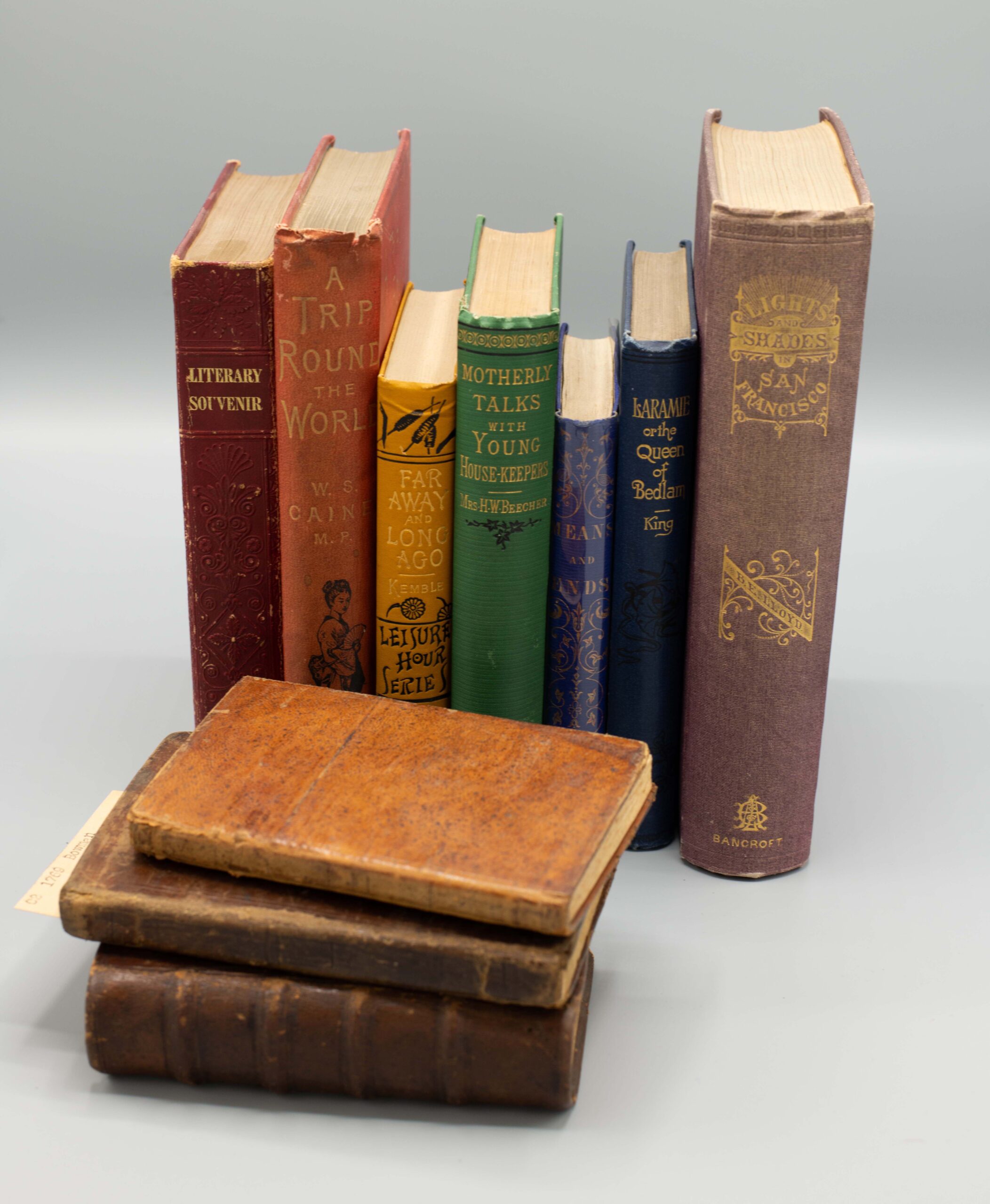
Boring but Bright
Boring but Bright
Even things that are, quite frankly, boring at face value can have an unexpected, if still utilitarian, colorful side. A clutch of checks bears a beautifully marbled edge that doubled as a security measure when matched with the stub book. Bright blue bills were printed in the Confederate States of America in the midst of extreme wartime deprivations, perhaps to lend an air of legitimacy. Even quotidian things, like a file to hold your business receipts, might bear a pop of color to draw your eye to the alphabetical organizing schema.
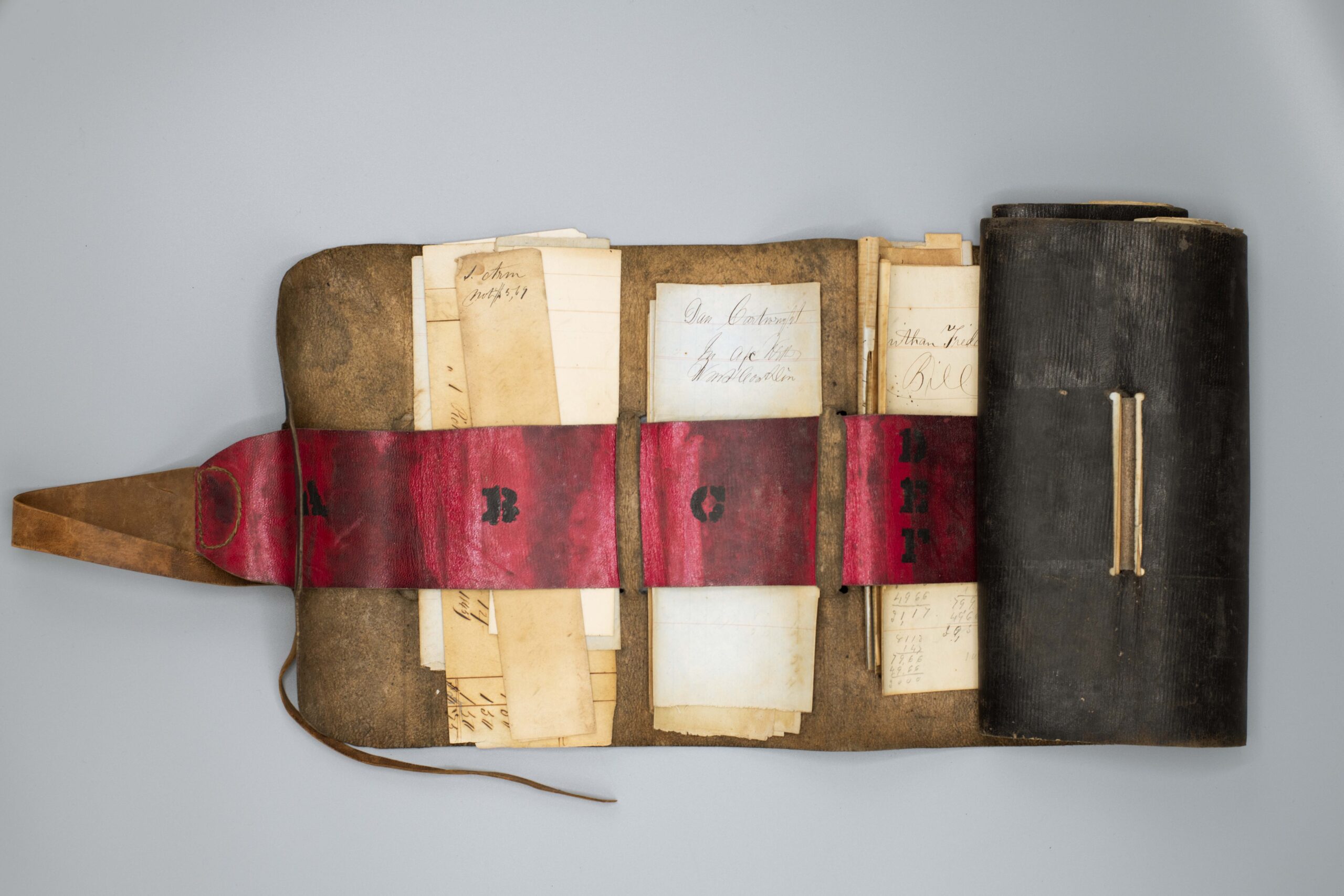
William Conklin Receipt File. Castile, New York, [ca. 1840s-1850s].
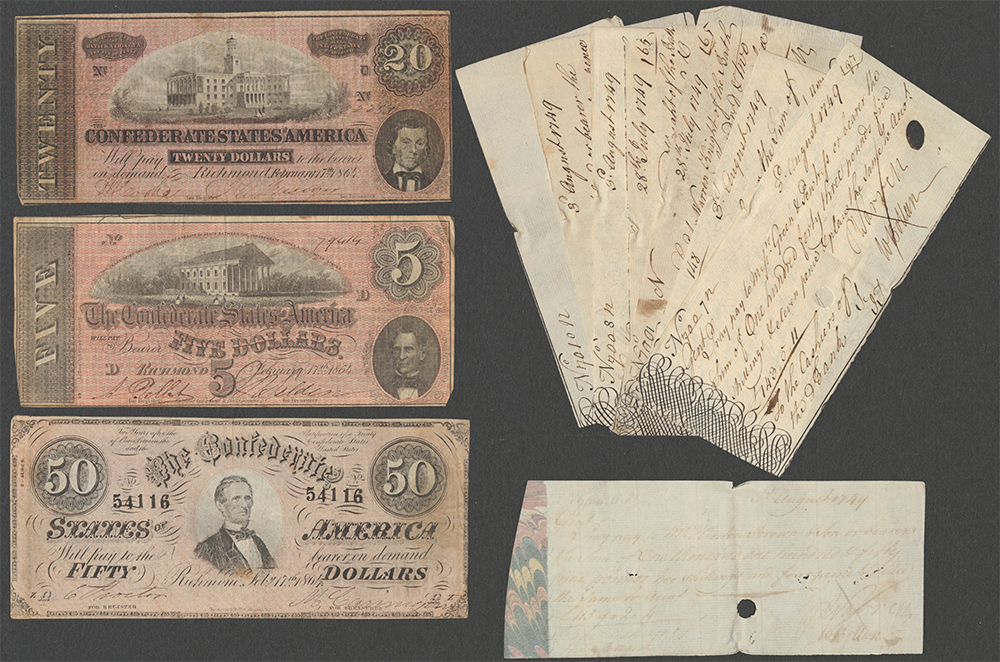
[Various denominations of Confederate Currency], 1864. Currency Collection.
[Checks from Peter Warren and William Bolan on the Bank of England], July 28 – August 3, 1749. Peter Warren Papers. [Finding Aid]
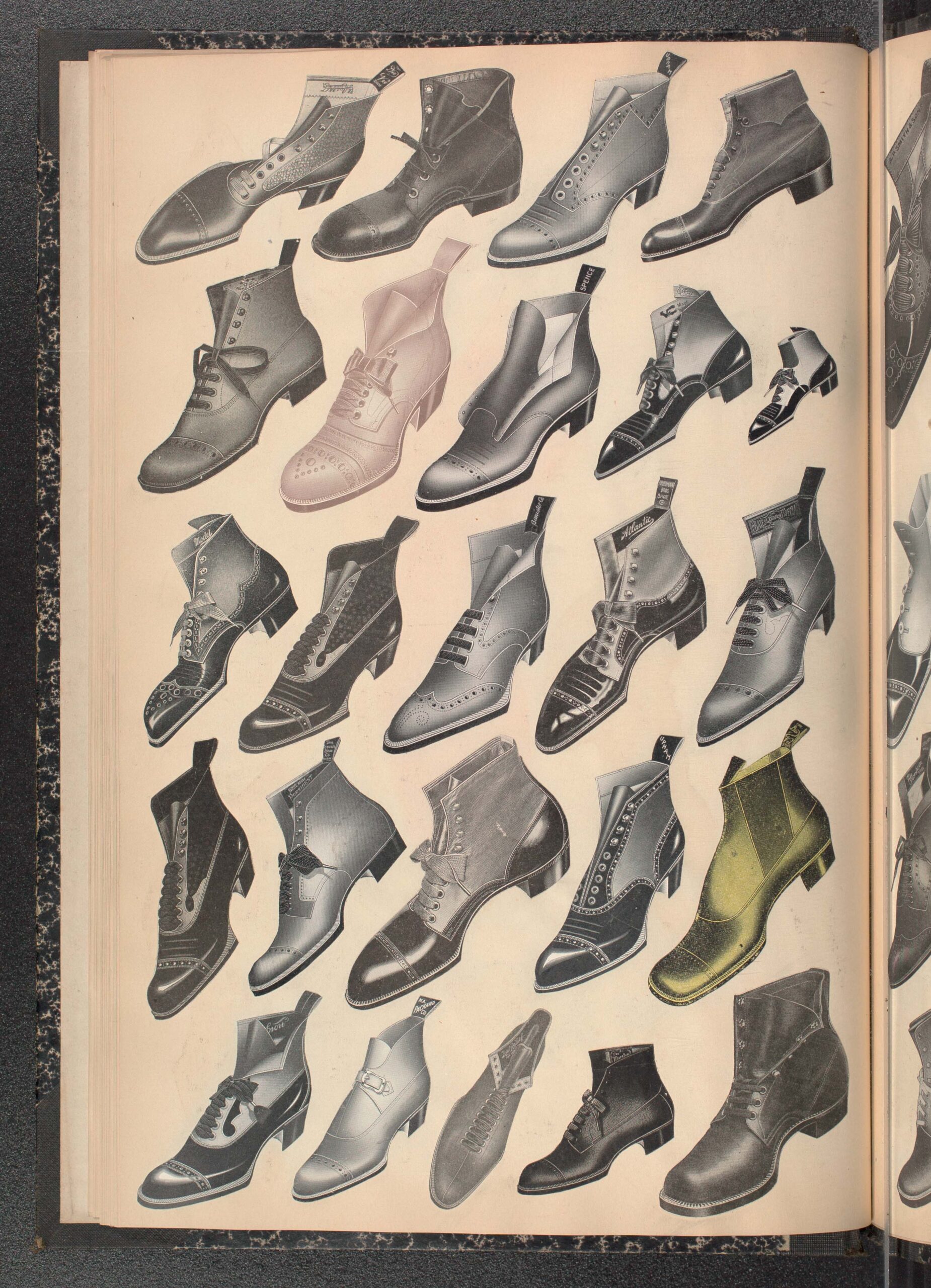

Shoe Scrapbook, [ca. early 20th century].
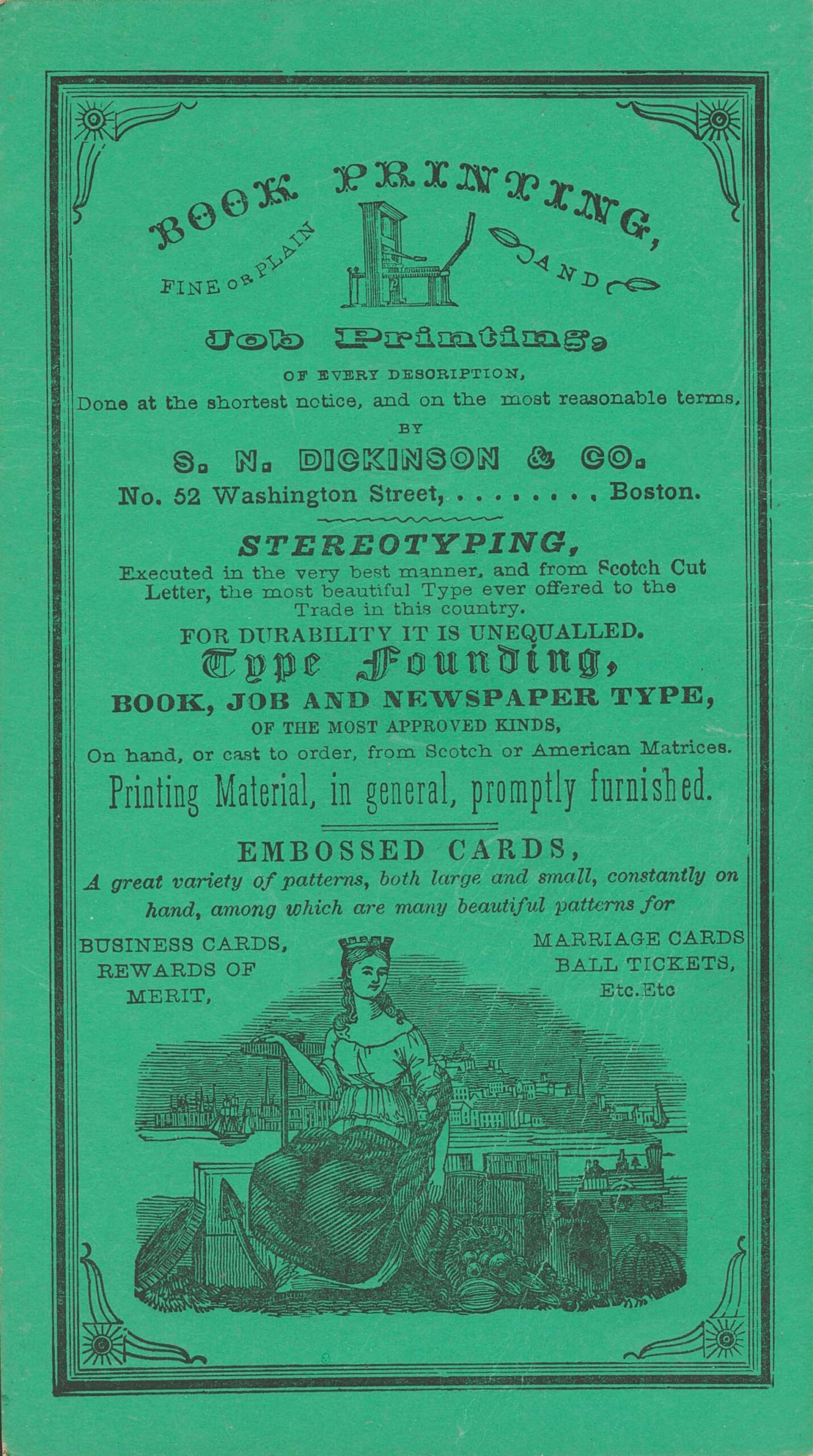
S. N. Dickinson & Co. Book Printing, trade card. Boston, [ca. mid-19th century]. Ephemera Collection.
Speaking of pops of color, note how your eye is drawn to the colored shoes in this dizzying scrapbook either made by a salesperson plying their wares or a very enthusiastic footwear aficionado. Color stands out and advertising has always had a penchant for the dramatic, including in early America. Consider these eye-watering trade cards. One for the Eagle Pencil Company even features a mechanical element to reveal the newly installed Statue of Liberty. The bright yellow pencils themselves stand in stark contrast to the rather dreary industrial scene that is featured on the box they would have been sold in.
As printing technologies evolved, trade cards were intentionally produced to be visually stunning as an encouragement for customers to save and display them. This is exactly what Clara Crumpton of San Francisco, California, did in the late 19th century. The colorful fabric pages of her scrapbook are filled with die-cut images, clippings from magazines, all right alongside trade cards advertising oil stoves, clothing patterns, and drug stores.
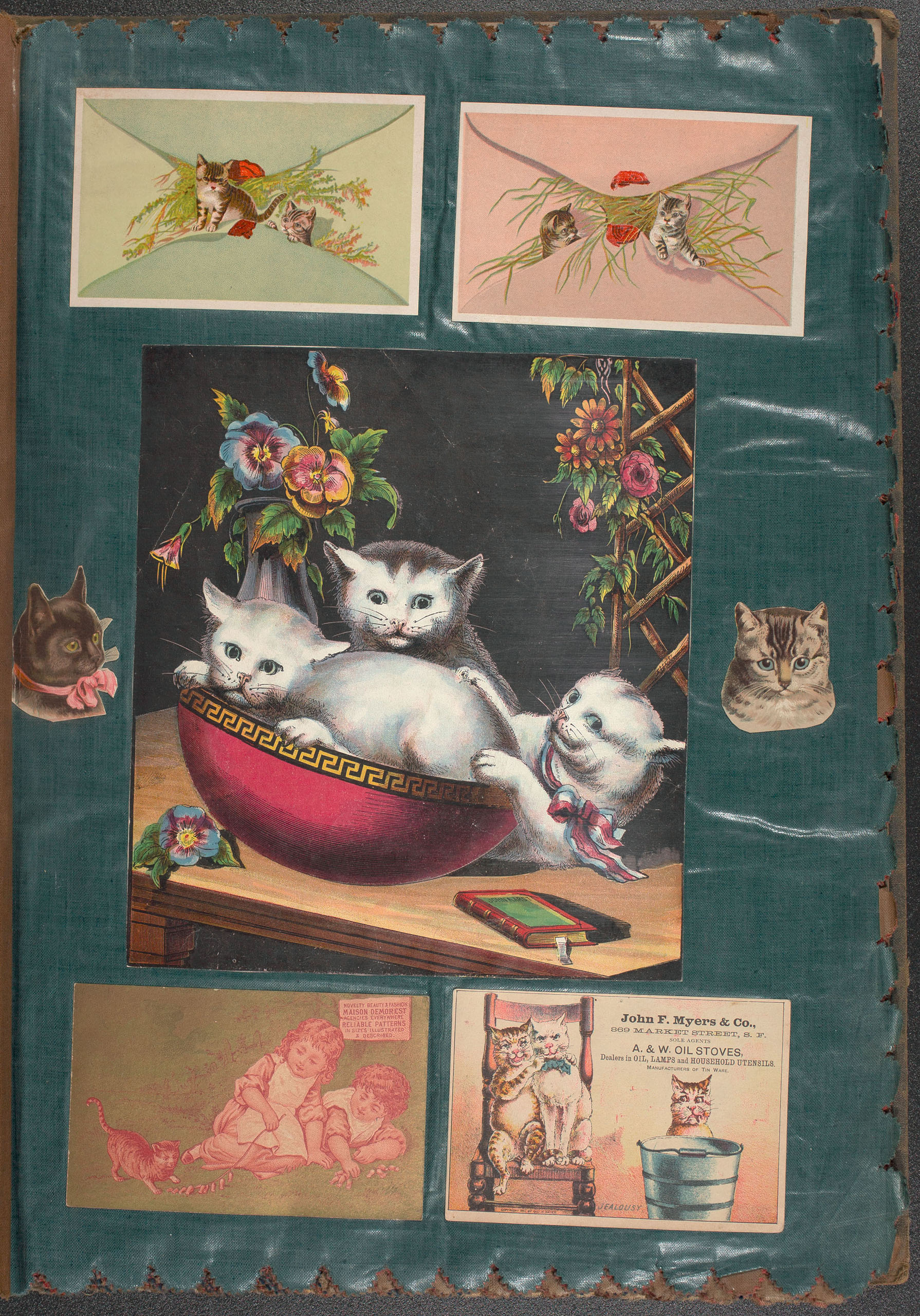
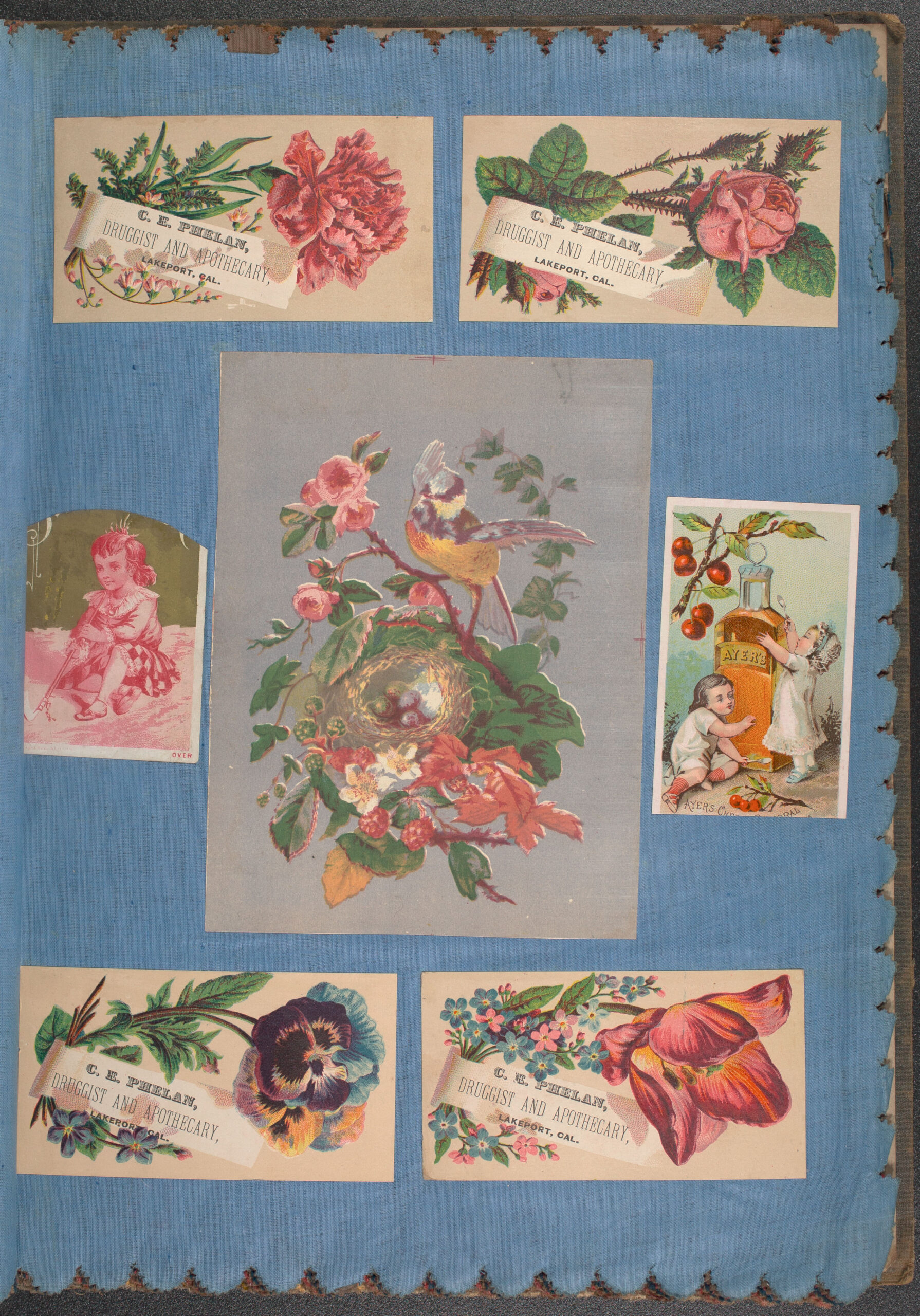
Clara Crumpton Scrapbook, [ca. 1880s?]
Businesses leaned in to the power of color to ply their wares, perhaps none better than optician J. K. Ritter.
Color played a role in every part of American life, and even the dullest things could still be exceptionally bright.
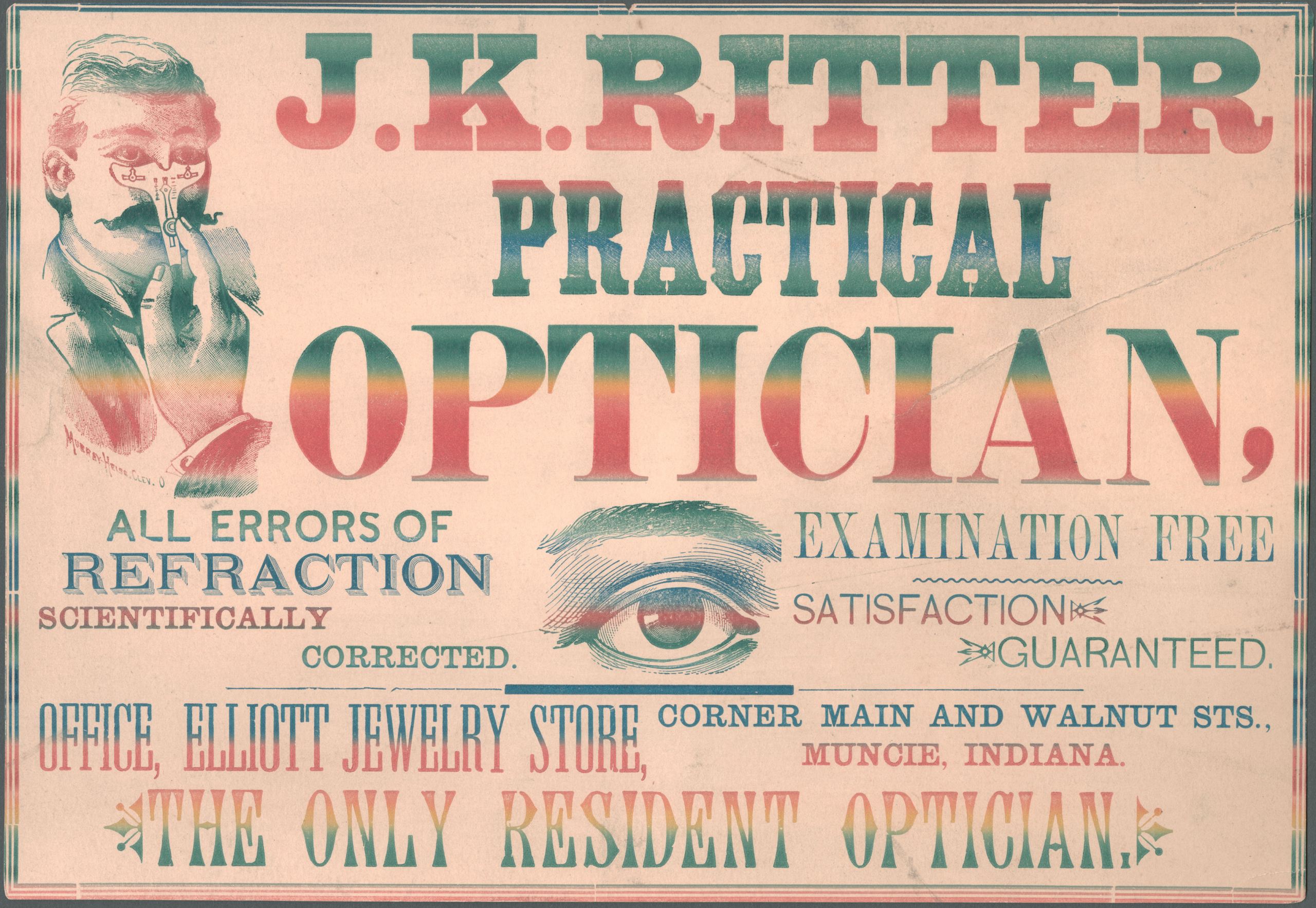
J.K. Ritter Practical Optician, chromolithographic advertisement. ([Cleveland, Ohio] : [Murray and Heiss], [between 1878 and 1890?])
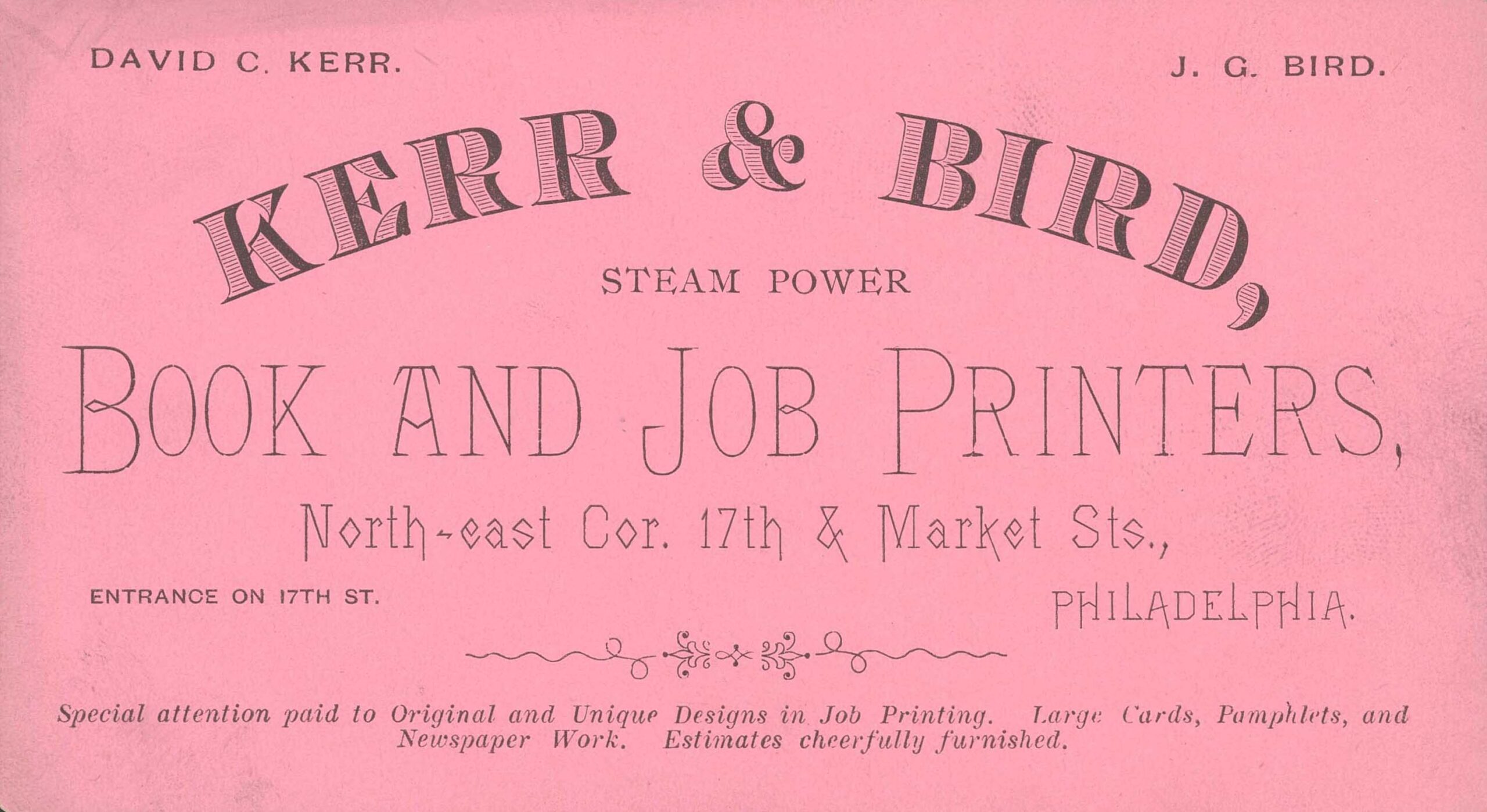
Kerr & Bird Book and Job Printers, trade card. Philadelphia, [ca. late-19th century?]. Ephemera Collection.
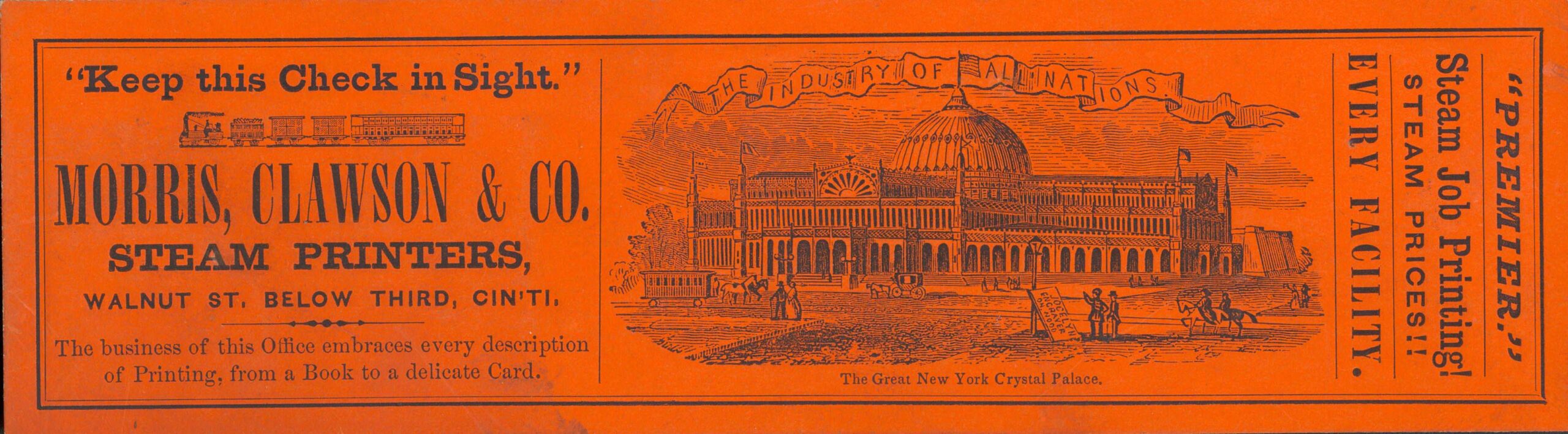
Morris, Clawson, & Co. Steam Printers, trade card. Philadelphia, [ca. mid-19th century]. Ephemera Collection.
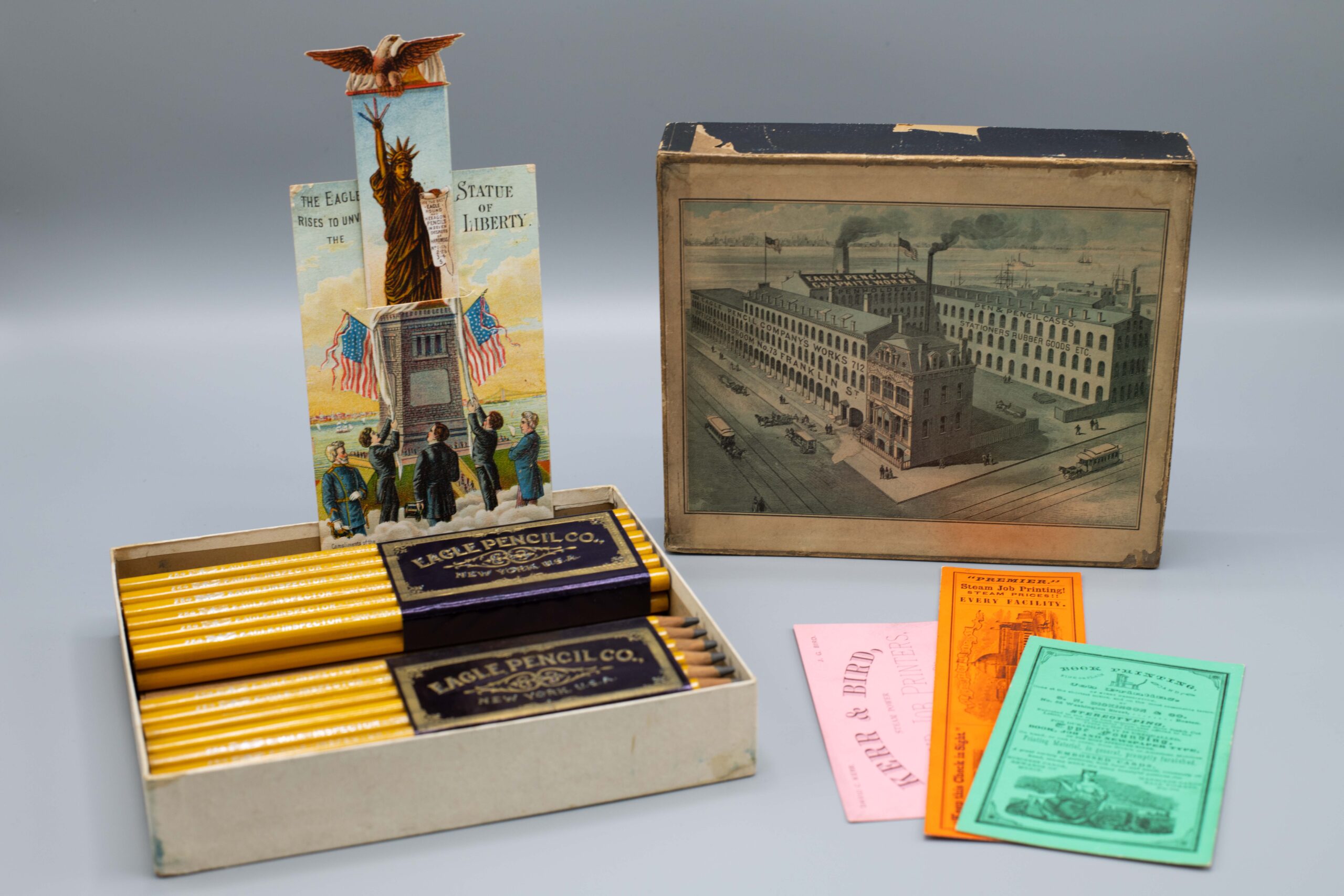
Eagle Pencil Company, box of pencils. New York, [ca. late-19th century]. Ephemera Collection.
Photographed alongside examples of trade cards.
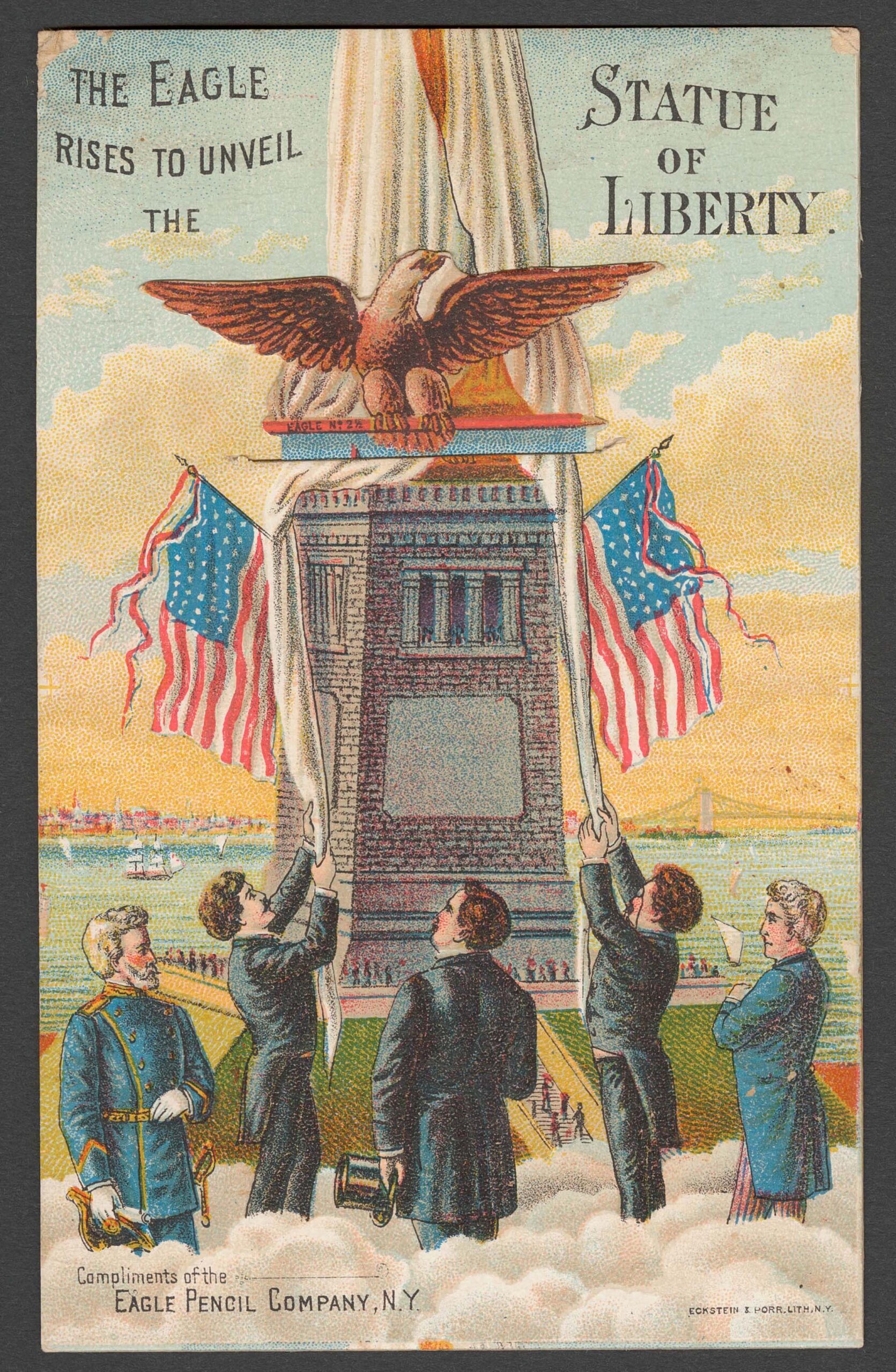
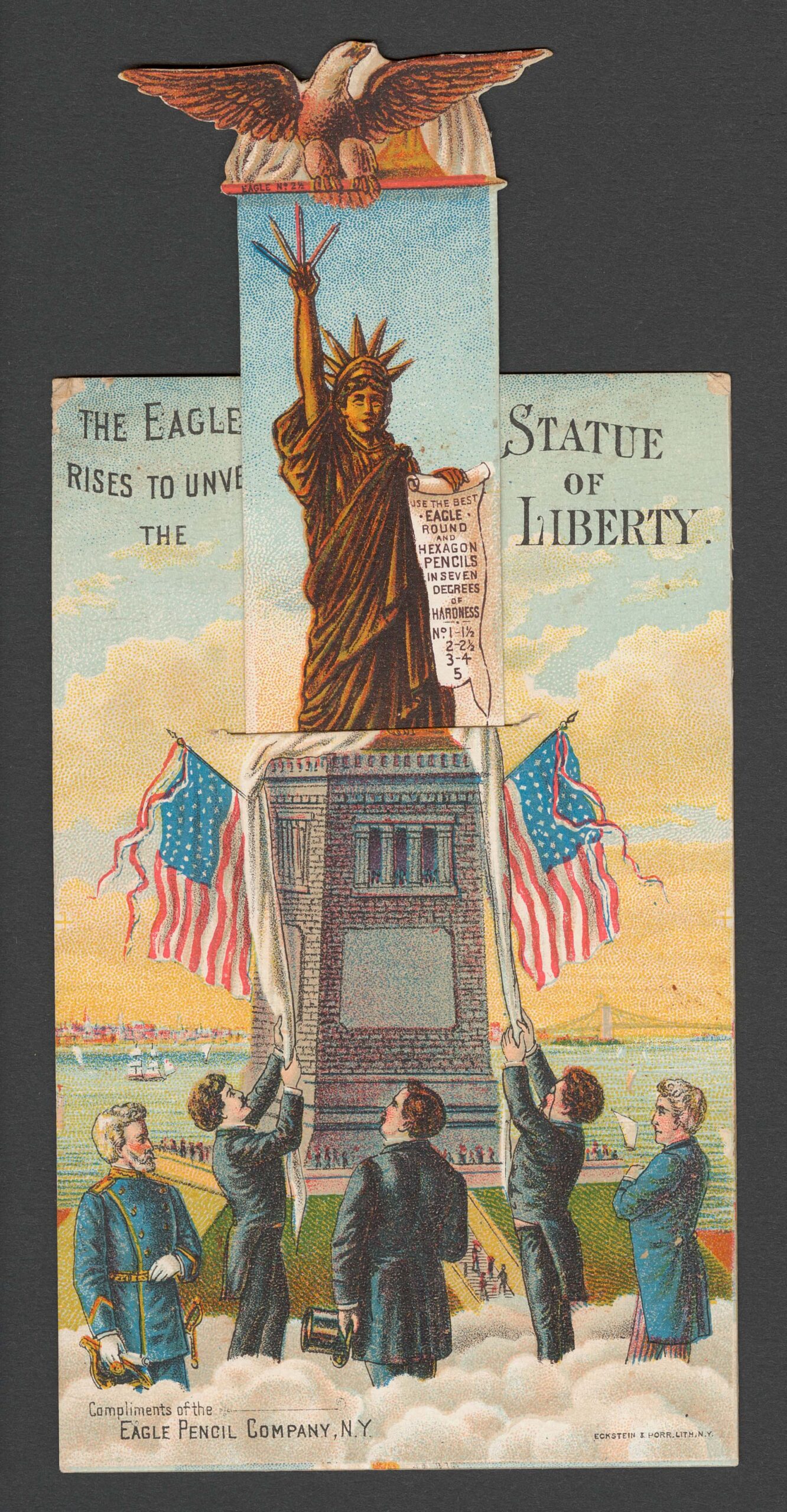
Eagle Pencil Company, trade card. New York, [ca. 1886]. Gerald T. and Charlotte B. Maxson Printed Ephemera Collection. [Finding Aid]
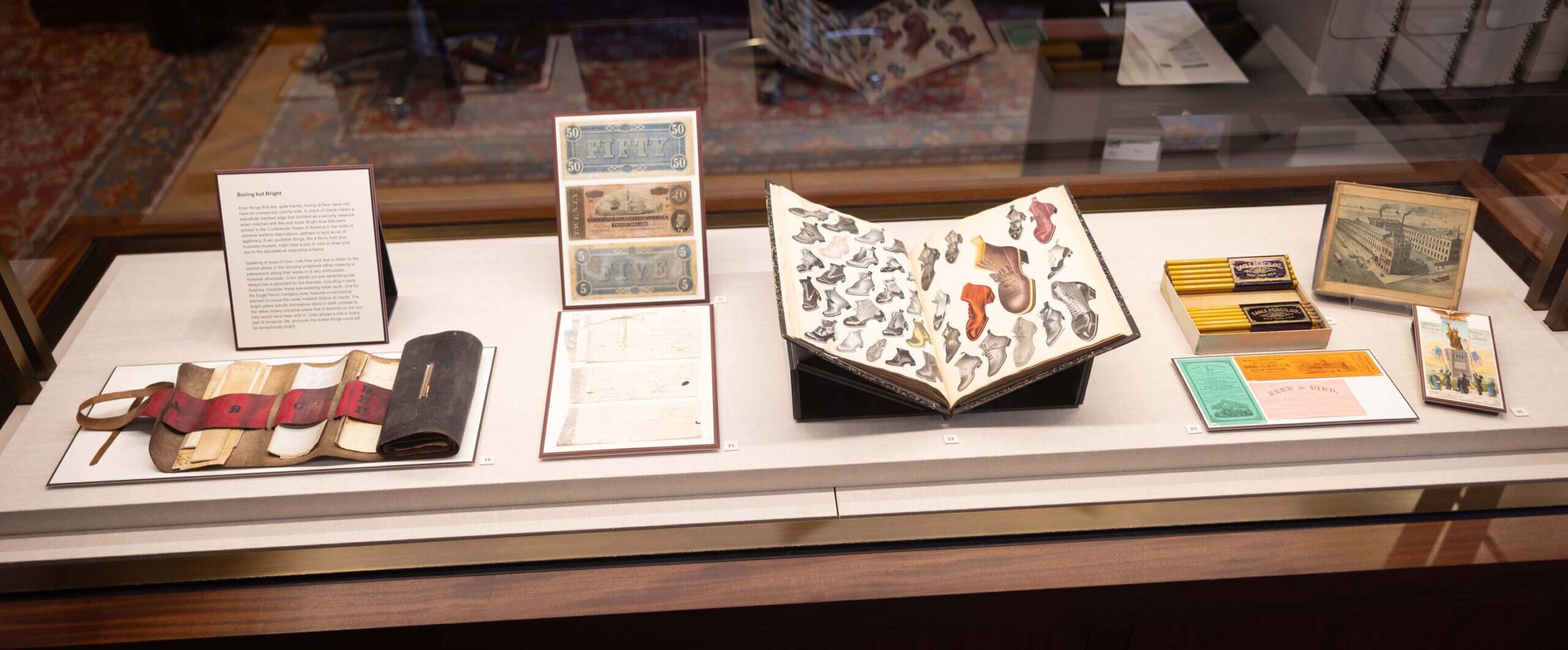
Photo by Marc-Gregor Campredon, Office of University Development, Regents of the University of Michigan.