The Election Day Experience
The Election Day Experience
Election Day in early America was a very different experience than it is today. In smaller towns in particular, voting was a communal event, whether people were voting by voice or with paper ballots. As is shown in George Caleb Bingham’s famous painting “The County Election,” election days could be fairly rowdy affairs, often with freely flowing alcohol used to either lure voters to the polls or to celebrate election results.
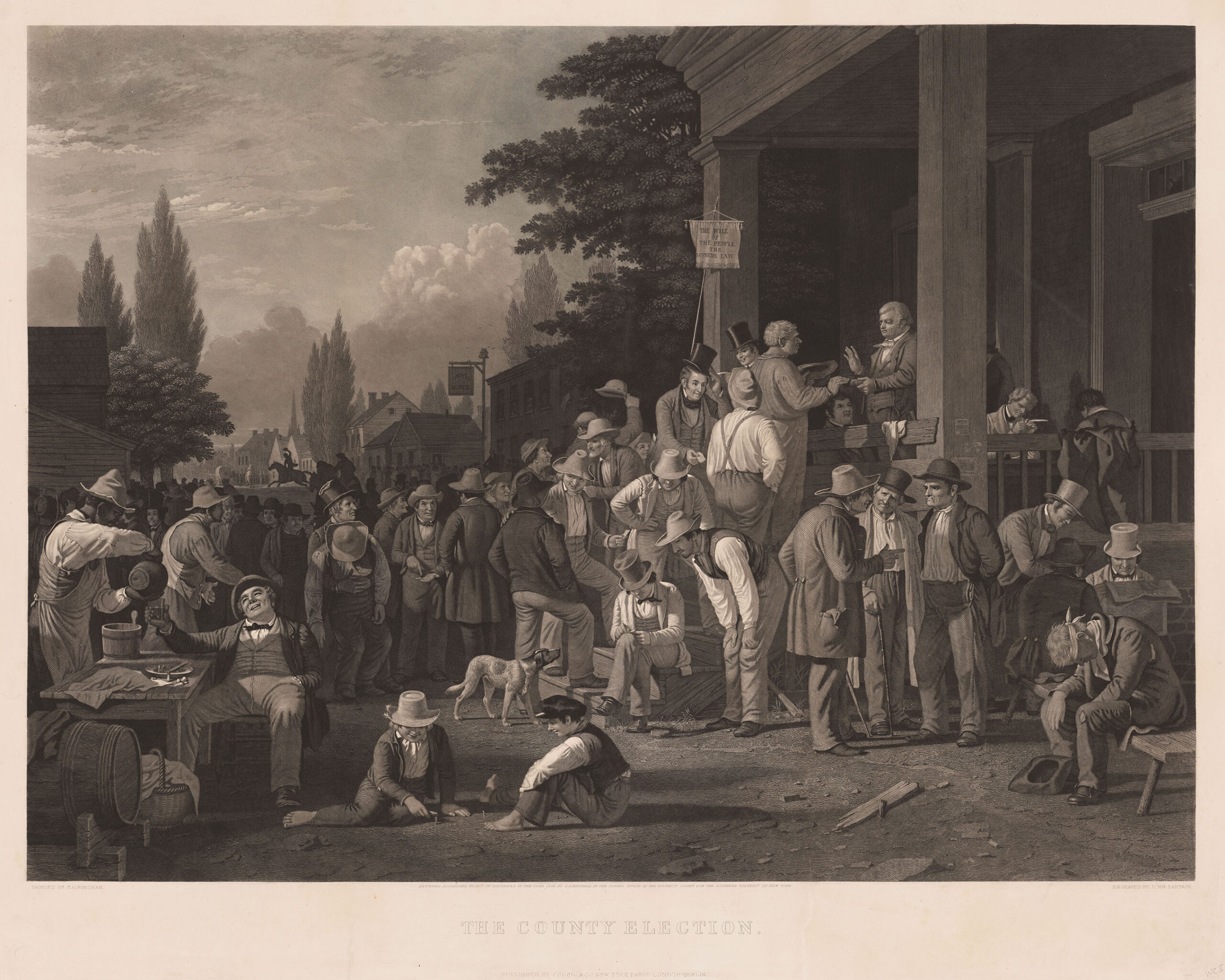
Bingham, George Caleb. “The County Election.” Facsimile print of a painting by Bingham and engraved by John Sartain. New York: Goupil & Co., [1854].
Urban elections in the nineteenth century were often spectacular affairs, with parades snaking through city streets hoping to encourage voters to head to the polls. Political parties erected elaborate temporary structures for rallies to whip up excitement, creating a carnival atmosphere.
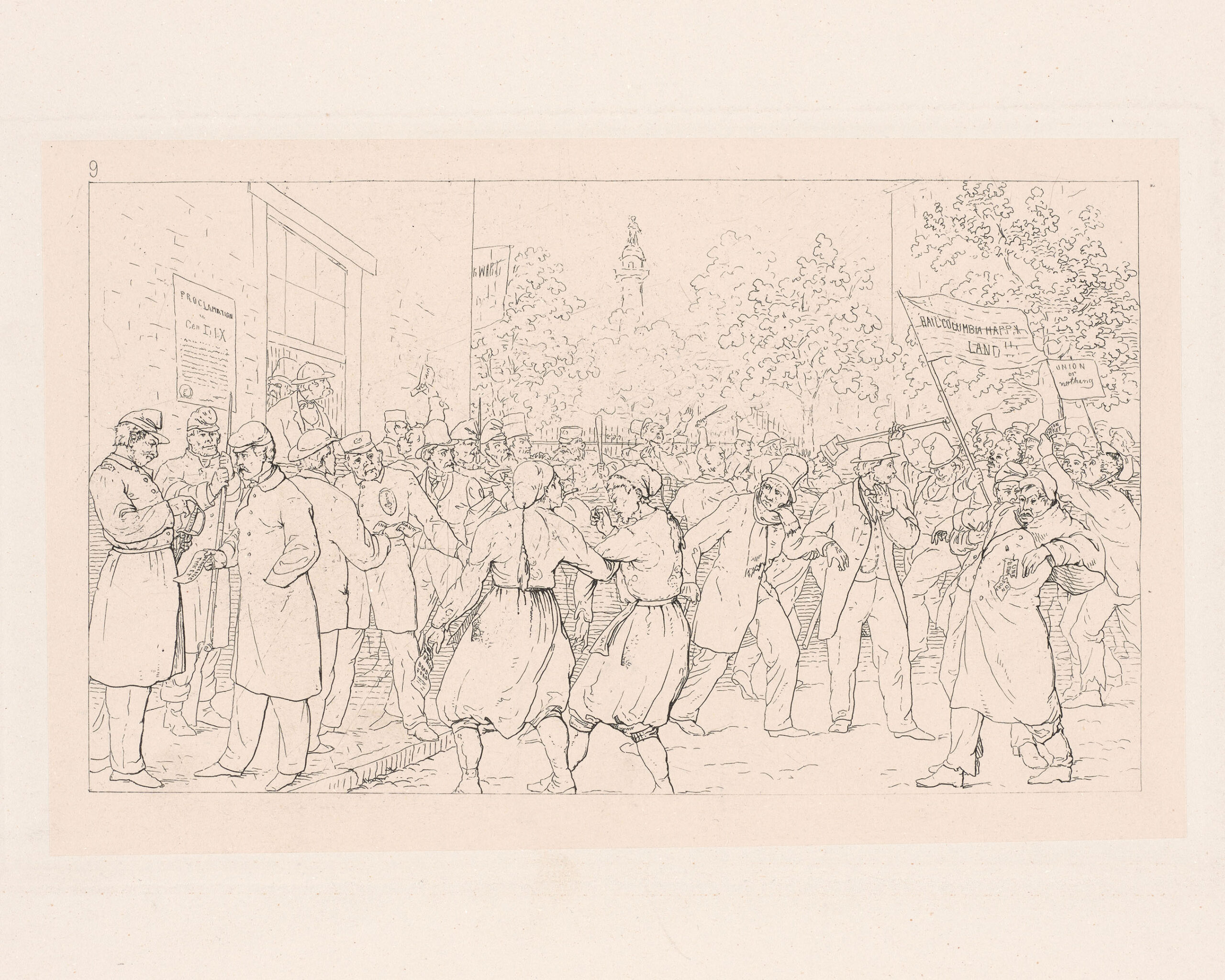
Volck, Adalbert John. “Election in Baltimore, 1862.” Facsimile print from Volck’s “Confederate War Etchings,” reprinted in the 1880s from original plates created by Volck in the 1860s. Philadelphia: Porter & Coates, [1882].
But Election Day wasn’t a purely celebratory affair. Elections were often occasions for violence. Riots sometimes accompanied voting, and partisan thugs were occasionally deployed to use threats to get voters to the polls when excitement did not suffice. Black voters in the South faced the greatest resistance to their efforts to exercise their right to vote, as is shown by several items in the case. From administrative foot-dragging to racist mob violence, resistance to Black voting took multiple forms. These items raise questions about how individual citizens, political parties, and government structures today both encourage and discourage voters from exercising one of their most fundamental rights.
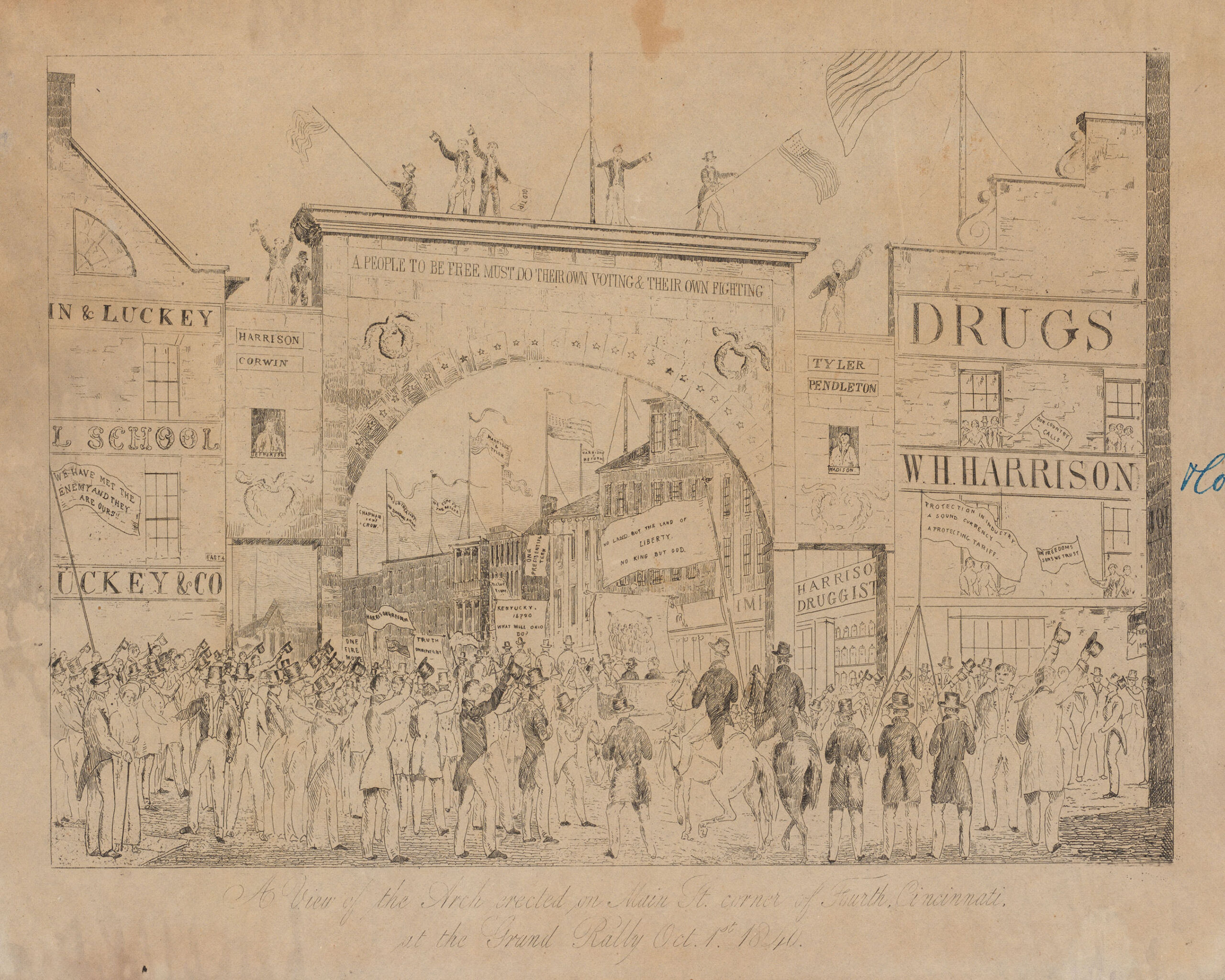
[Foster, Charles]. “A view of the arch erected on Main St…at the Grand Rally Oct 1st., 1840.” Facsimile print of an illustration of the William Henry Harrison rally in Cincinnati on October 1, 1840, possibly drawn by Charles Foster.
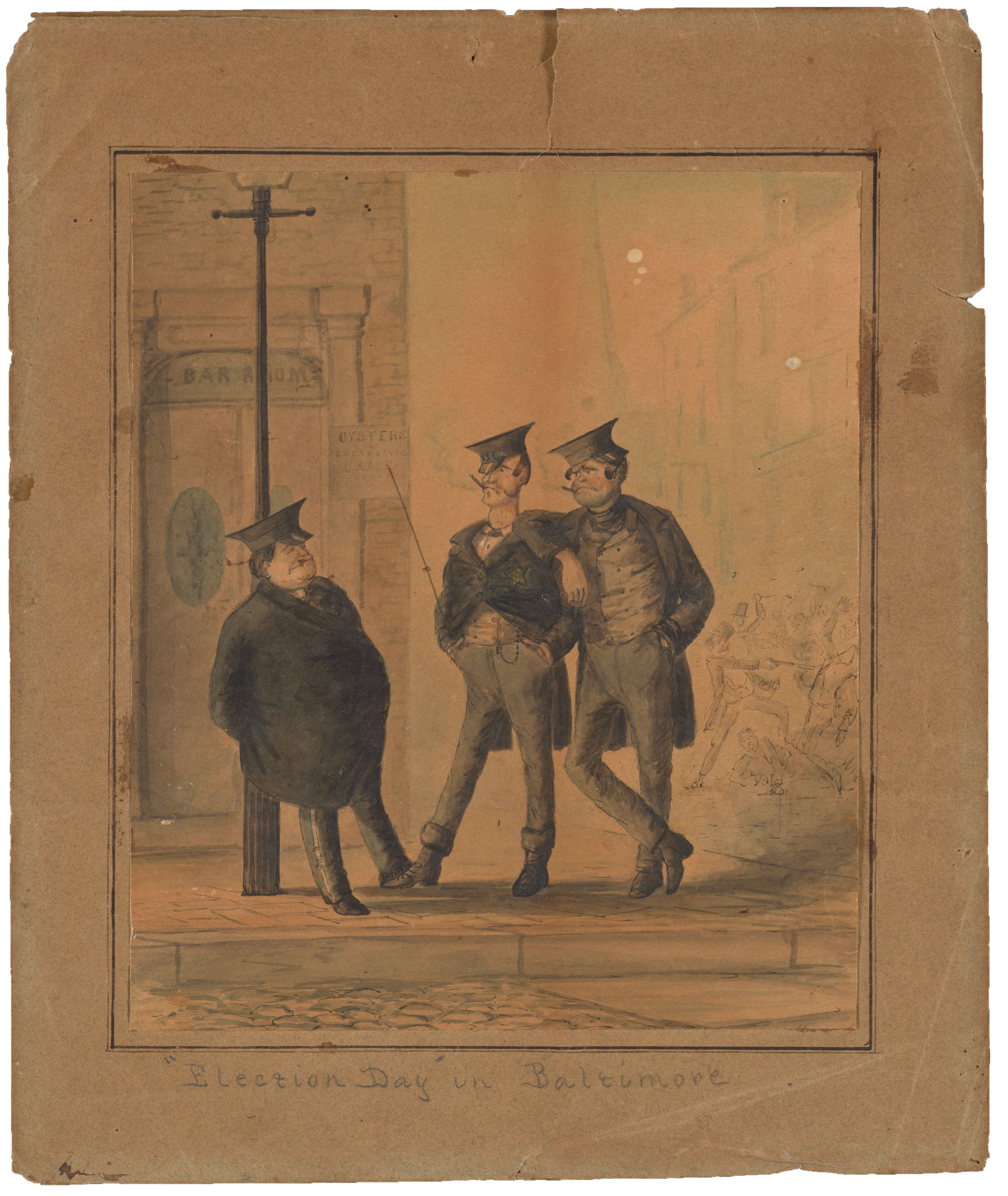
“‘Election Day’ in Baltimore.” 1844.
![Page of a manuscript letter discussing names being "check[ed]" on a registration list while people voted and the clerk writing a poll list.](https://clements.umich.edu/wp-content/uploads/2026/09/23-mss-wclmss002172-josephine-dyer-varnum-and-john-p-varnum-correspondence-pp.12-scaled.png)
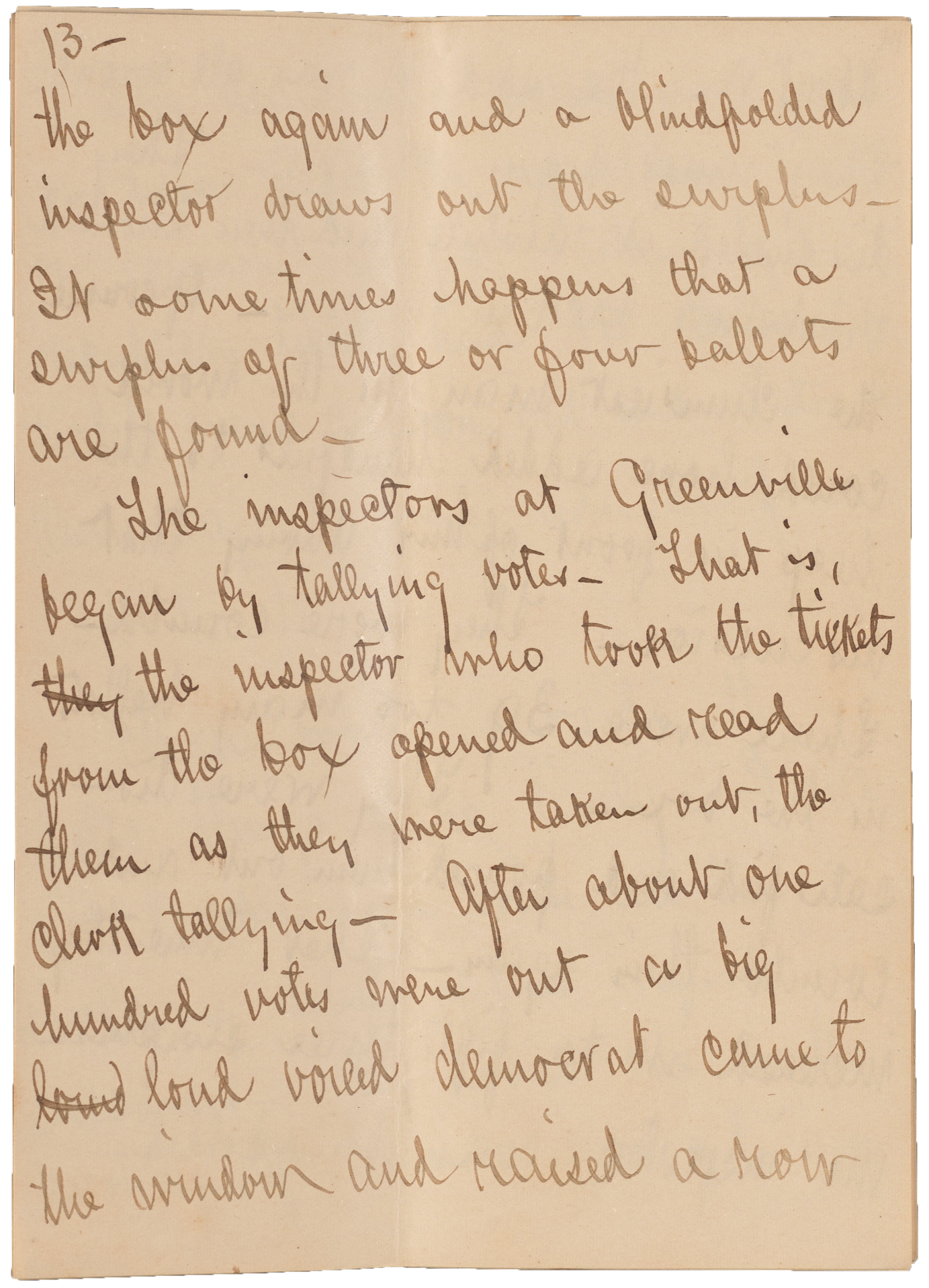
Letter from John P. Varnum to Josephine Varnum. Jacksonville, Florida: November 6, 1880. From the Josephine Dyer Varnum and John P. Varnum correspondence, 1872-1888.
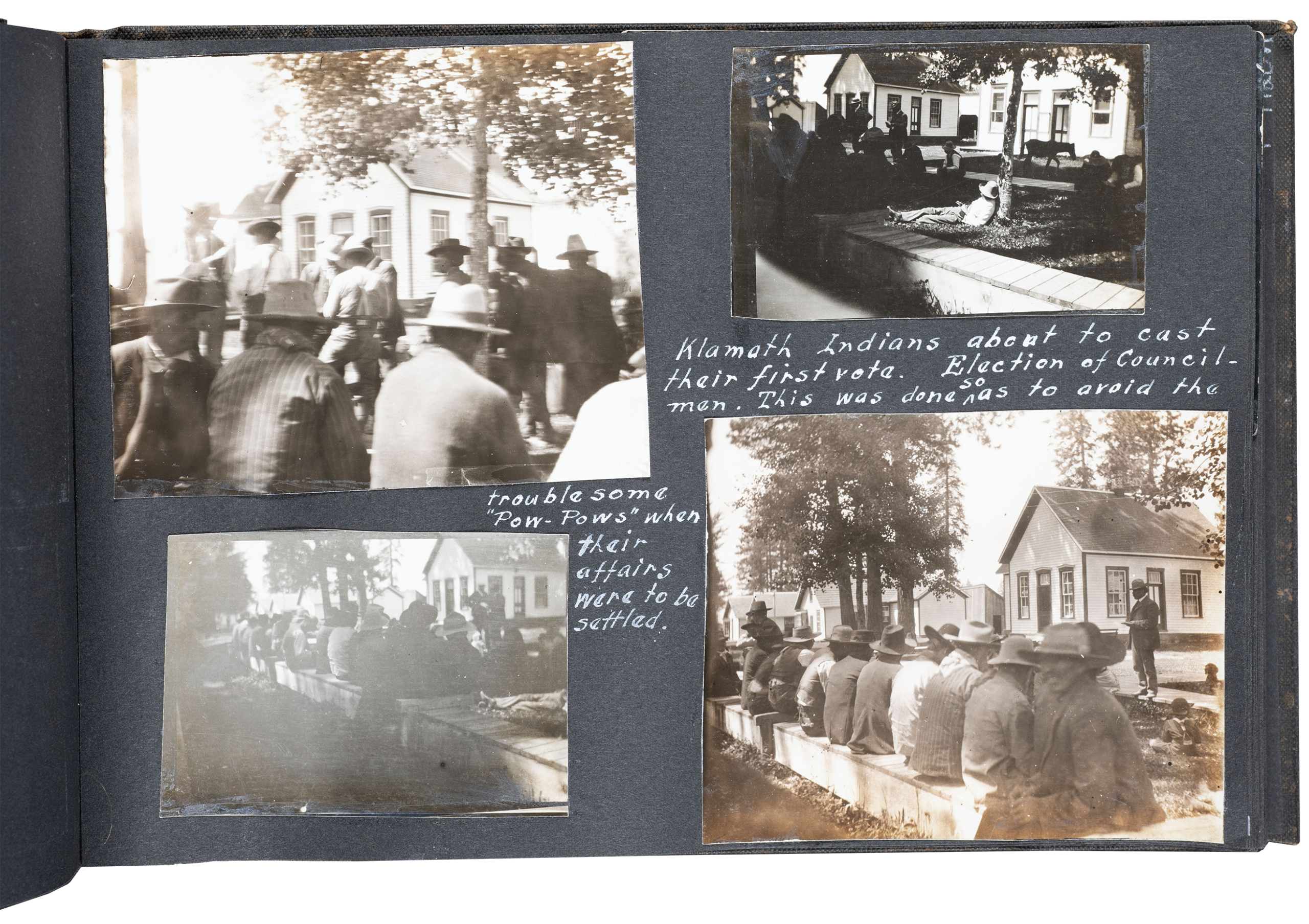
Marias, Charles Henri. Photograph album, 1907-1908.