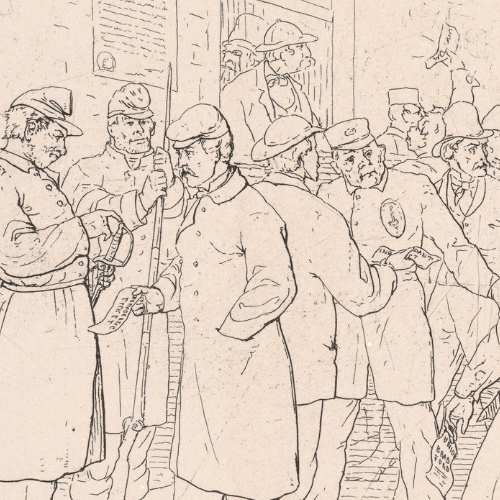
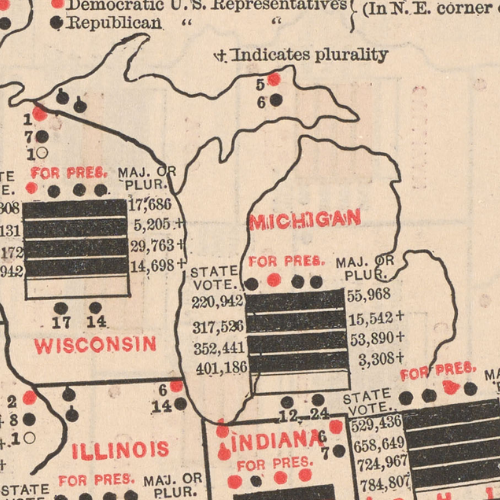
Getting Out the Vote
Getting Out the Vote
The rise of the Second Party System in the United States in the late 1820s ushered in a new political culture. In comparison to the more patrician (yet often sharp-elbowed) atmosphere of earlier electoral contests between Federalists and Democratic Republicans, the realignment of the party system between Democrats and Whigs saw voting rights expanded to virtually all white men. Andrew Jackson’s victory in the 1828 presidential election ushered in a new era of populist politics and party organizing that would shape the course of elections for the rest of the nineteenth century.
The expansion of the franchise to all white men required new methods of appealing to potential voters and mobilizing the electorate, especially since popular political participation was still relatively new. The materials in this case are from later in the nineteenth century, but they were shaped by the transformations of American politics in the 1830s. Political campaigns became media events, complete with spectacular torch-lit parades and extensive selections of campaign paraphernalia. Advances in printing technology and then photography over the course of the nineteenth century meant that voters could know what candidates actually looked like.
Some of the items in this case will seem quite strange to us today–we don’t carry torches on poles at political rallies any longer. But other things, like the pins and ribbons, look more familiar. How do we use print, material culture, and electronic media to get out the vote today? From yard signs to social media blitzes, how do political campaigns attempt to convince voters to head to the polls?
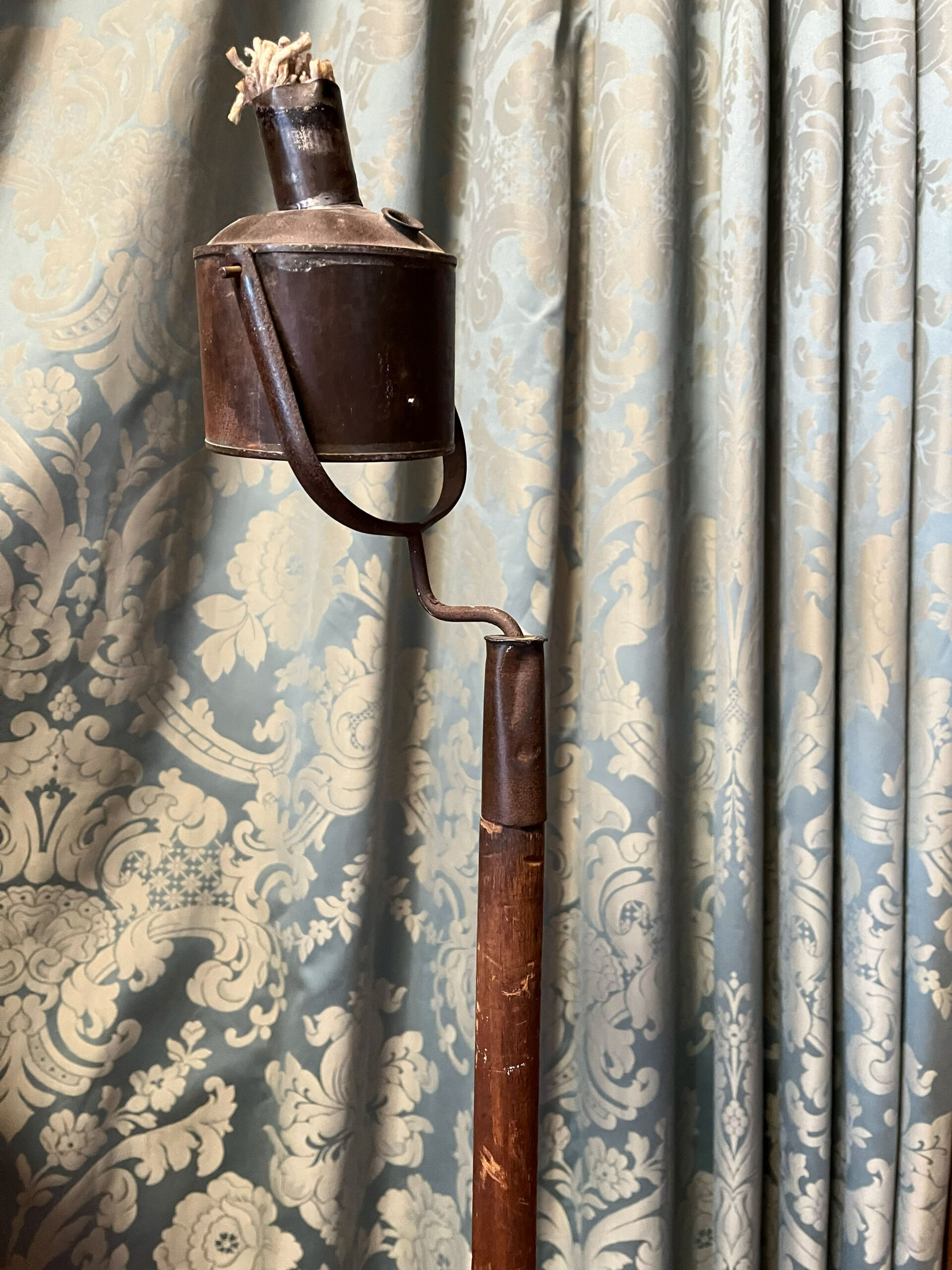
Torch on Wooden Pole. From the Douglas Kelley Democratic Party Collection.
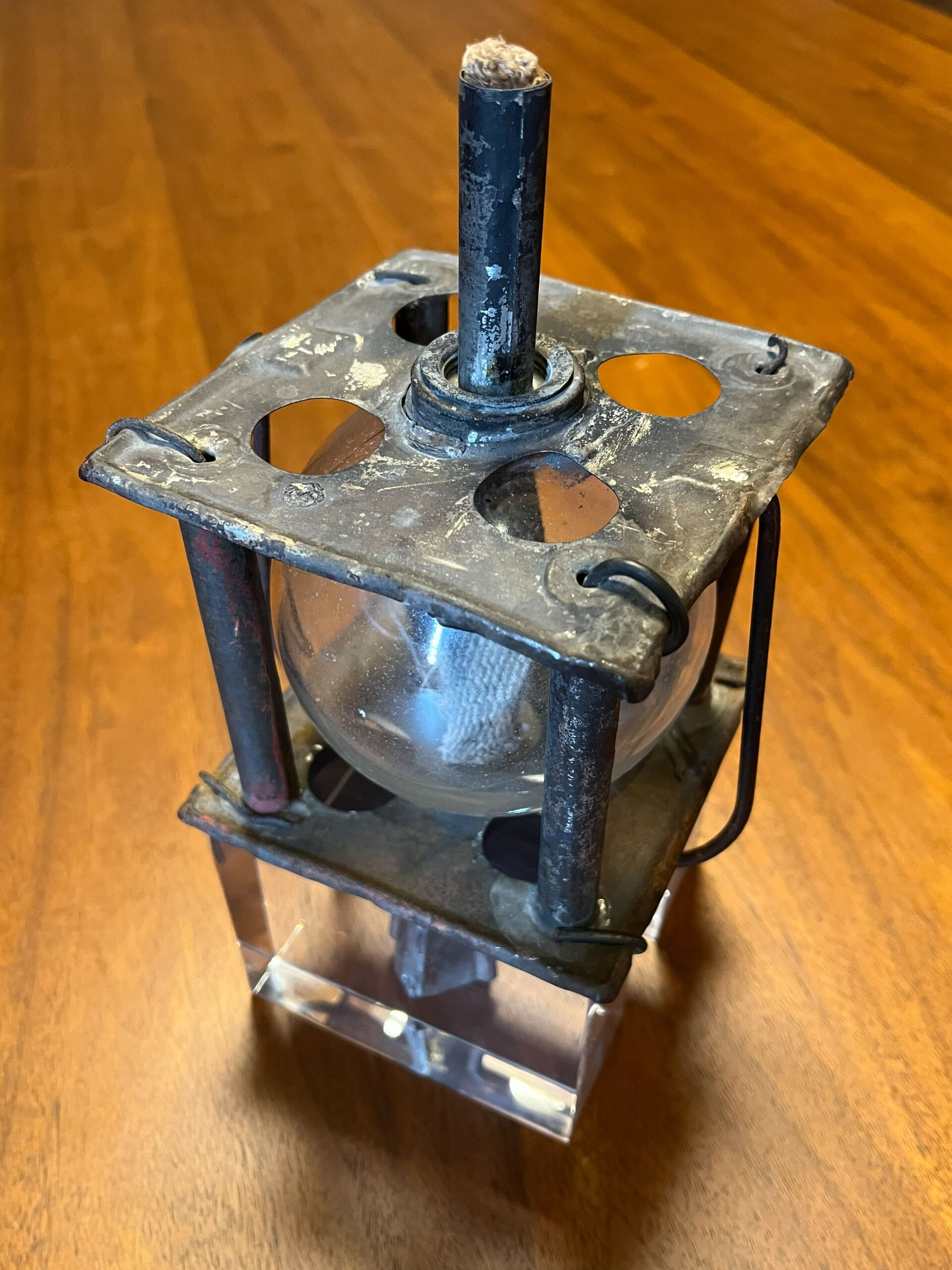
Glass Globe Torch, c. 1880. From The Landon Myers Collection of Early American Election Administration.
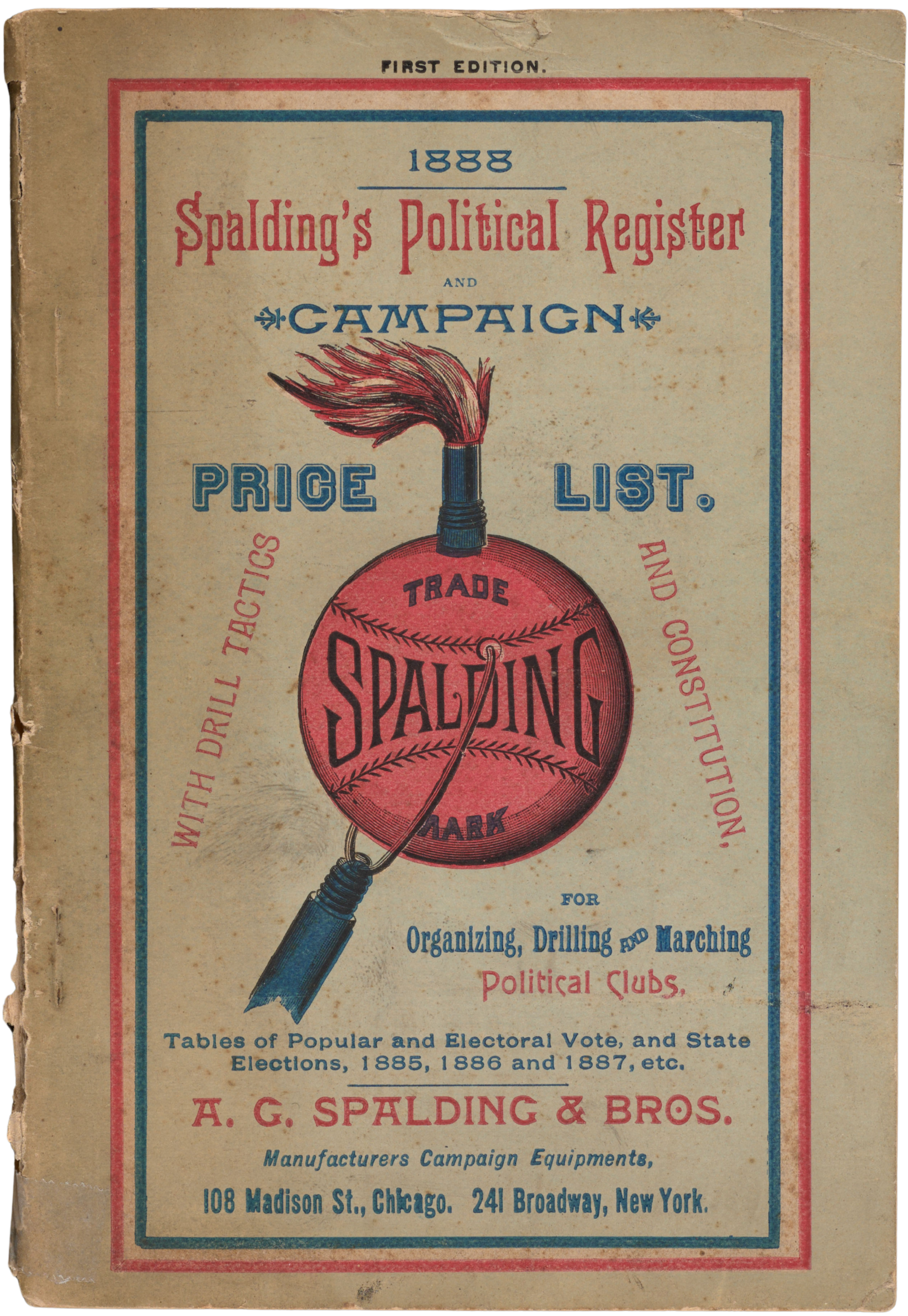
Spalding’s political register and campaign price list. Chicago: A.G. Spalding & Bros., [1888].
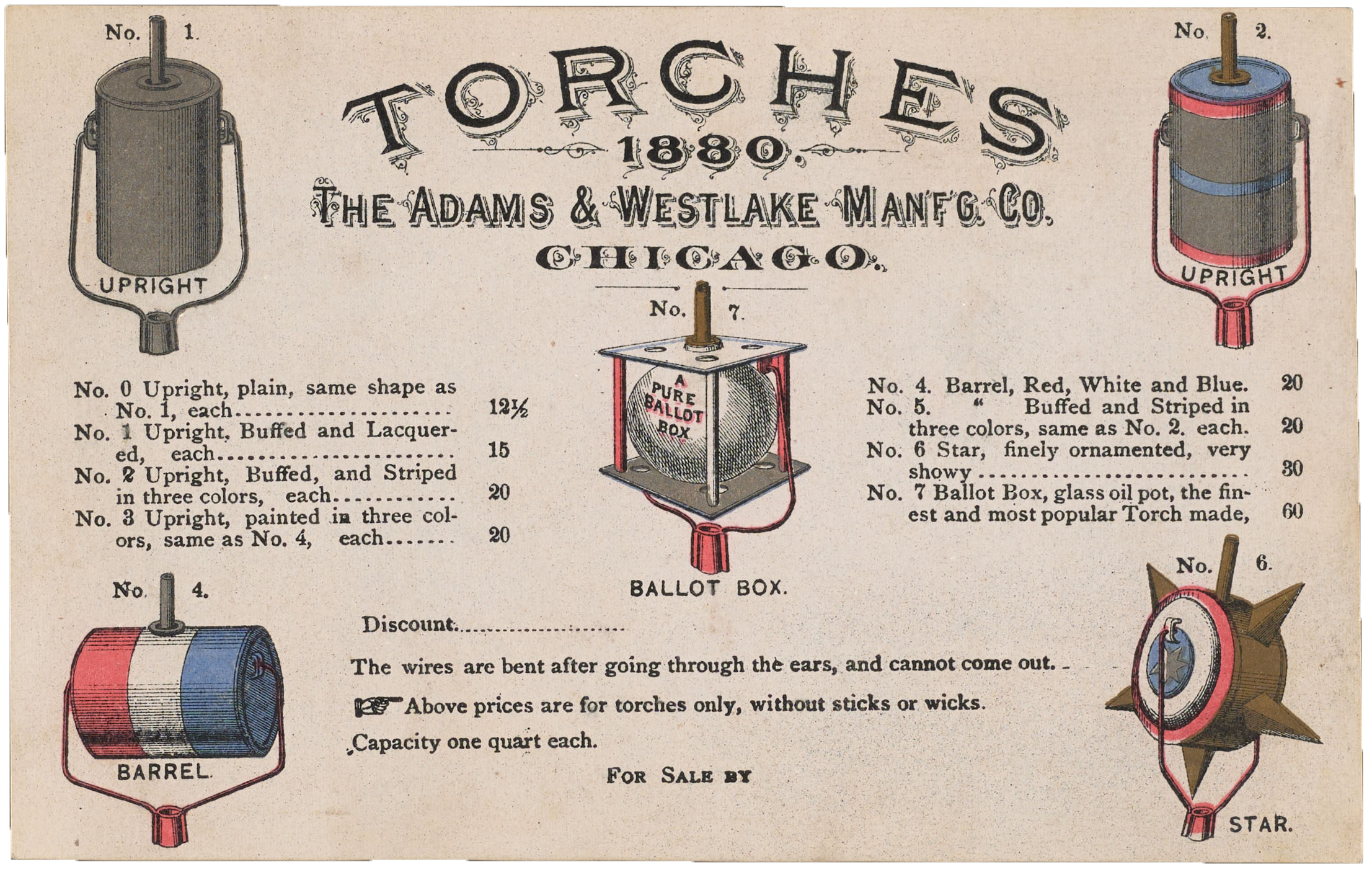
“Torches” trade card. Chicago: The Adams & Westlake Manfg Co, 1880. The Landon Myers Collection of Early American Election Administration.
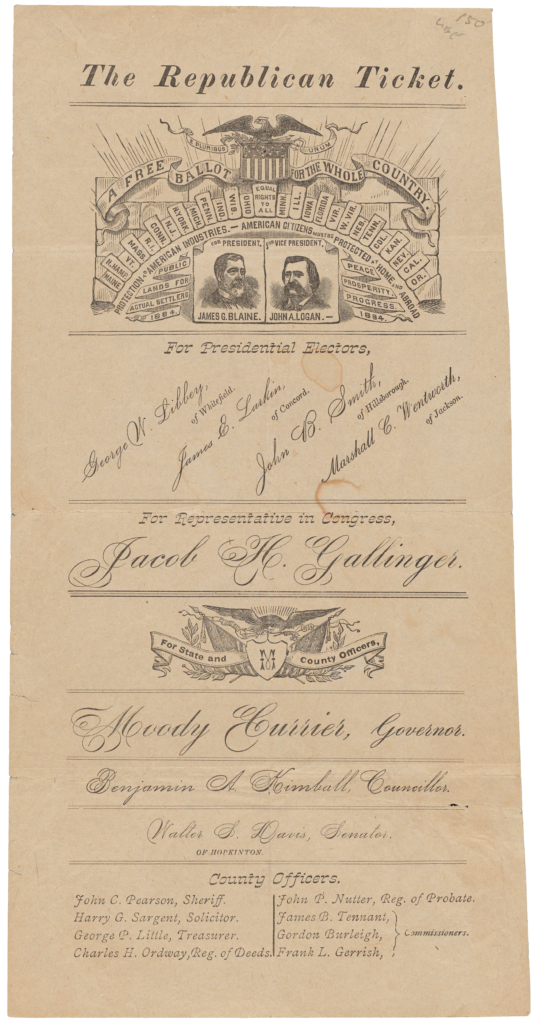
“The Republican Ticket.” Broadside with portraits from the 1884 Blaine and Logan campaign.
Four pieces of ephemera from the General Ephemera Collection:
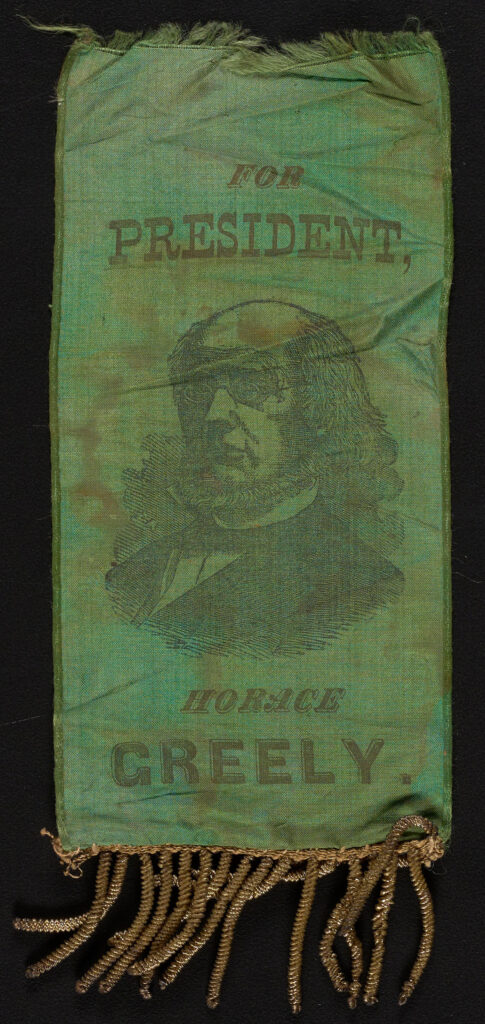
“For President, Horace Greely.” Green silk ribbon with fringe.
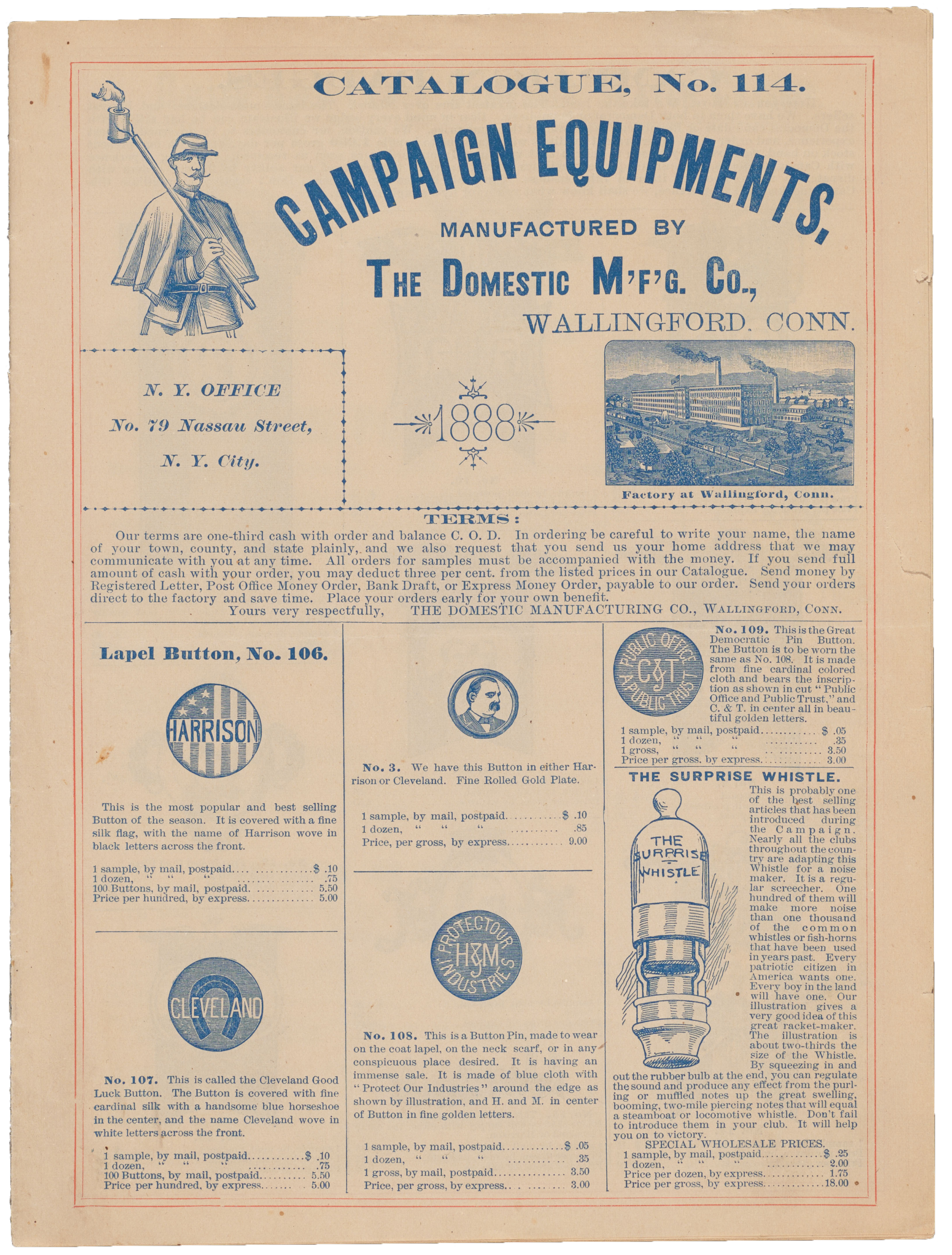
Catalogue, No. 114. Campaign Equipments, Manufactured by The Domestic M’F’G Co. Wallingford, Connecticut: 1888.
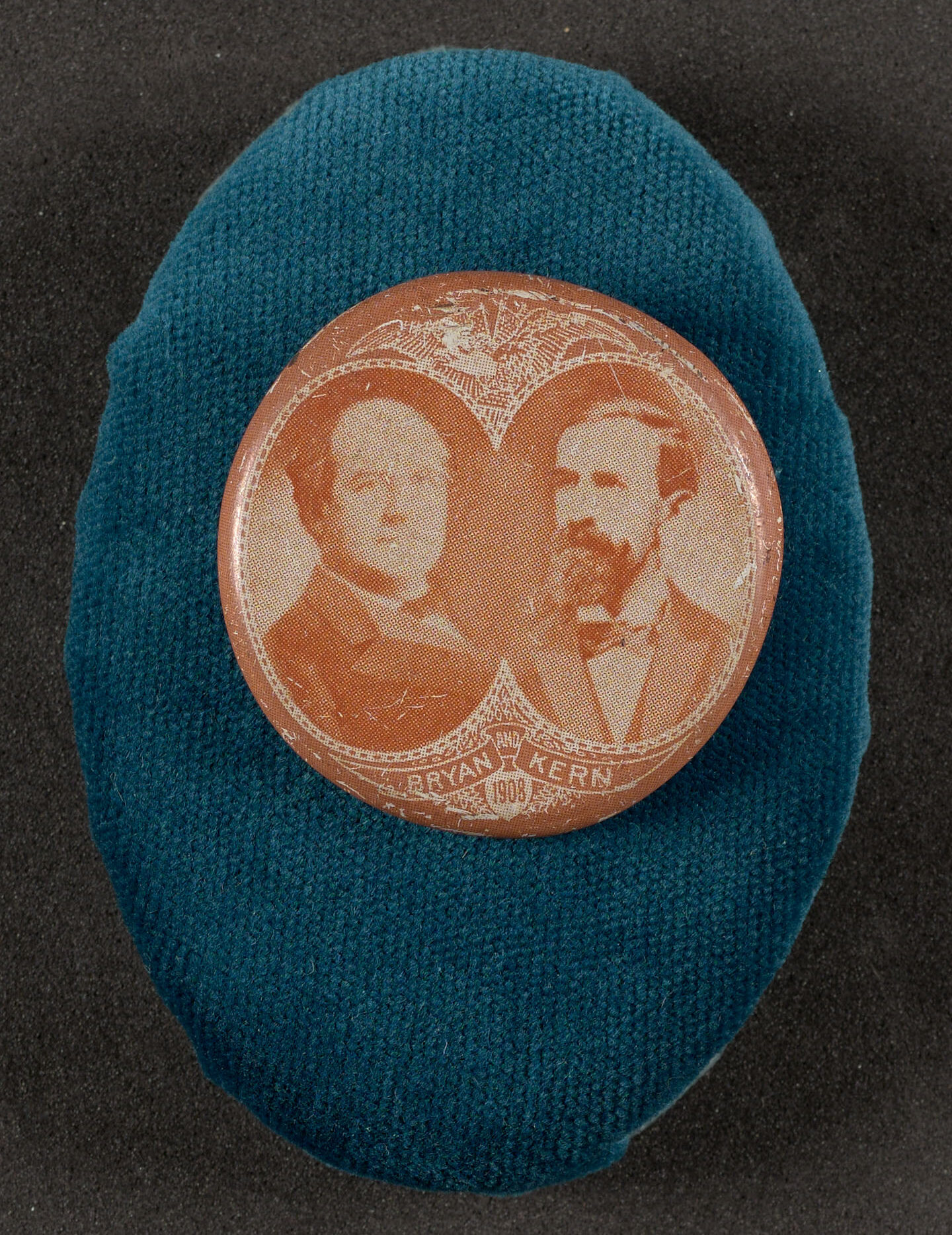
Bryan-Kern Campaign Button, 1908. Donated by Judith Morante.
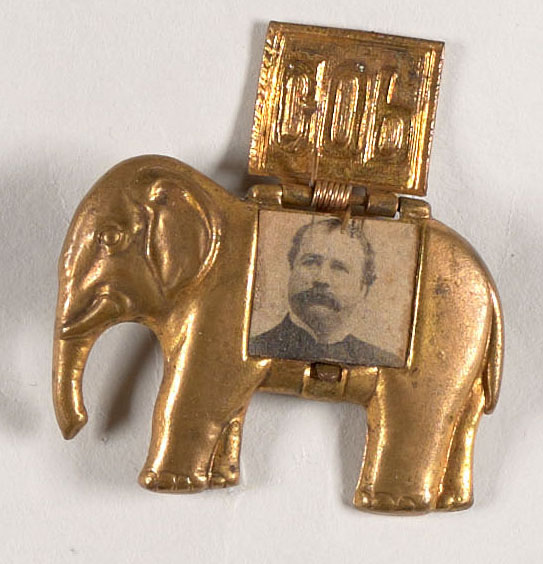
Gold-toned elephant pin. In: “Pins and Medals”, Allen-Thayer Family Photos Collection.