Imagining the Electorate
Imagining the Electorate
Definitions of who was allowed to vote–or who counted–have changed a great deal since the founding of the United States since the individual states were long permitted to create their own rules for who was allowed to vote. These guidelines sometimes required voters to own property, or to show that they were literate, or that they had paid a poll tax. Many of these rules were implemented in order to limit who could vote. But other state laws were specifically intended to expand the electorate. From 1790 until 1807, women were allowed to vote in New Jersey. Pennsylvania, New York, and New Jersey allowed free Black men to vote in the early nineteenth century, but Black male suffrage would only be expanded nationwide by the passage of the Fifteenth Amendment.
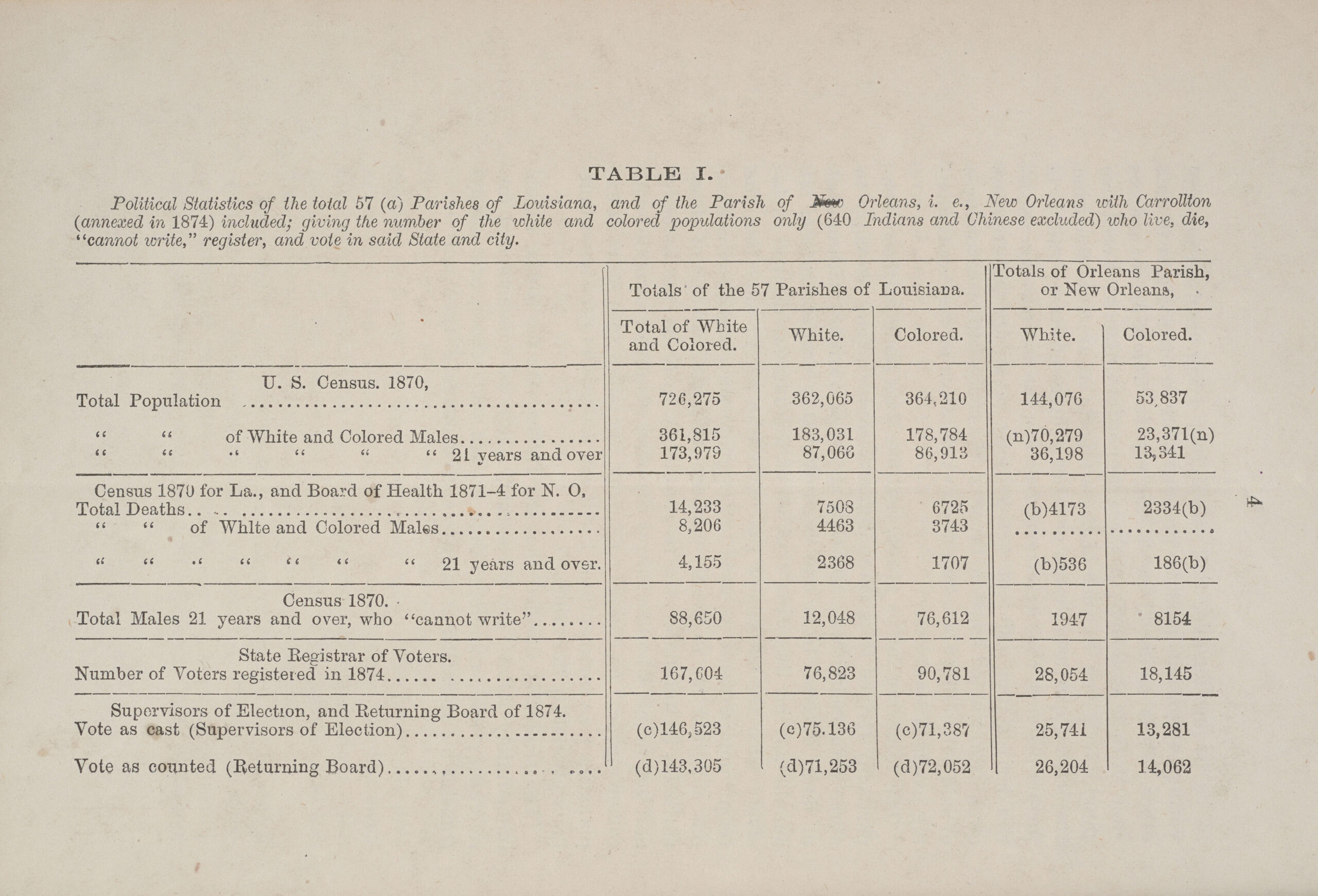
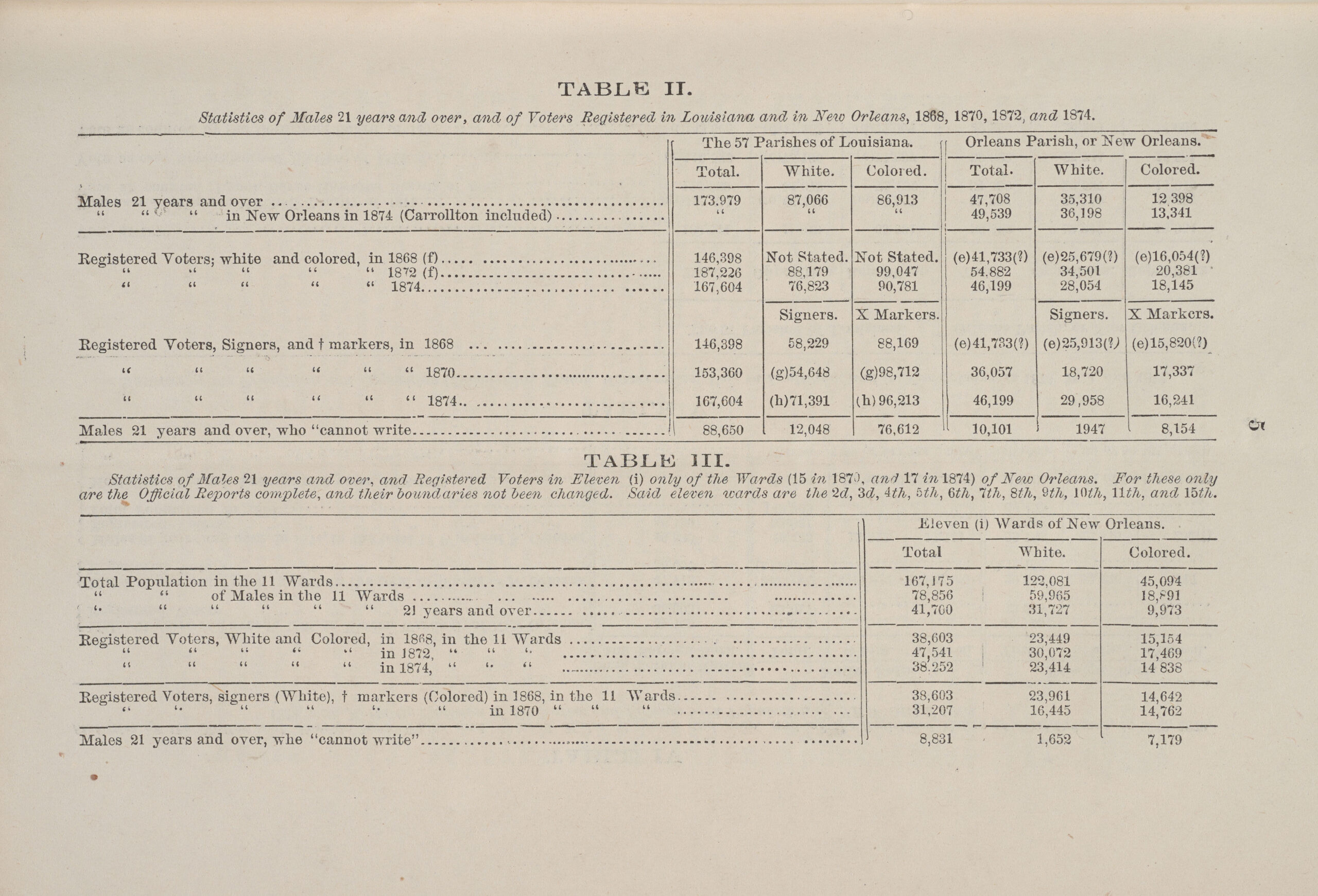
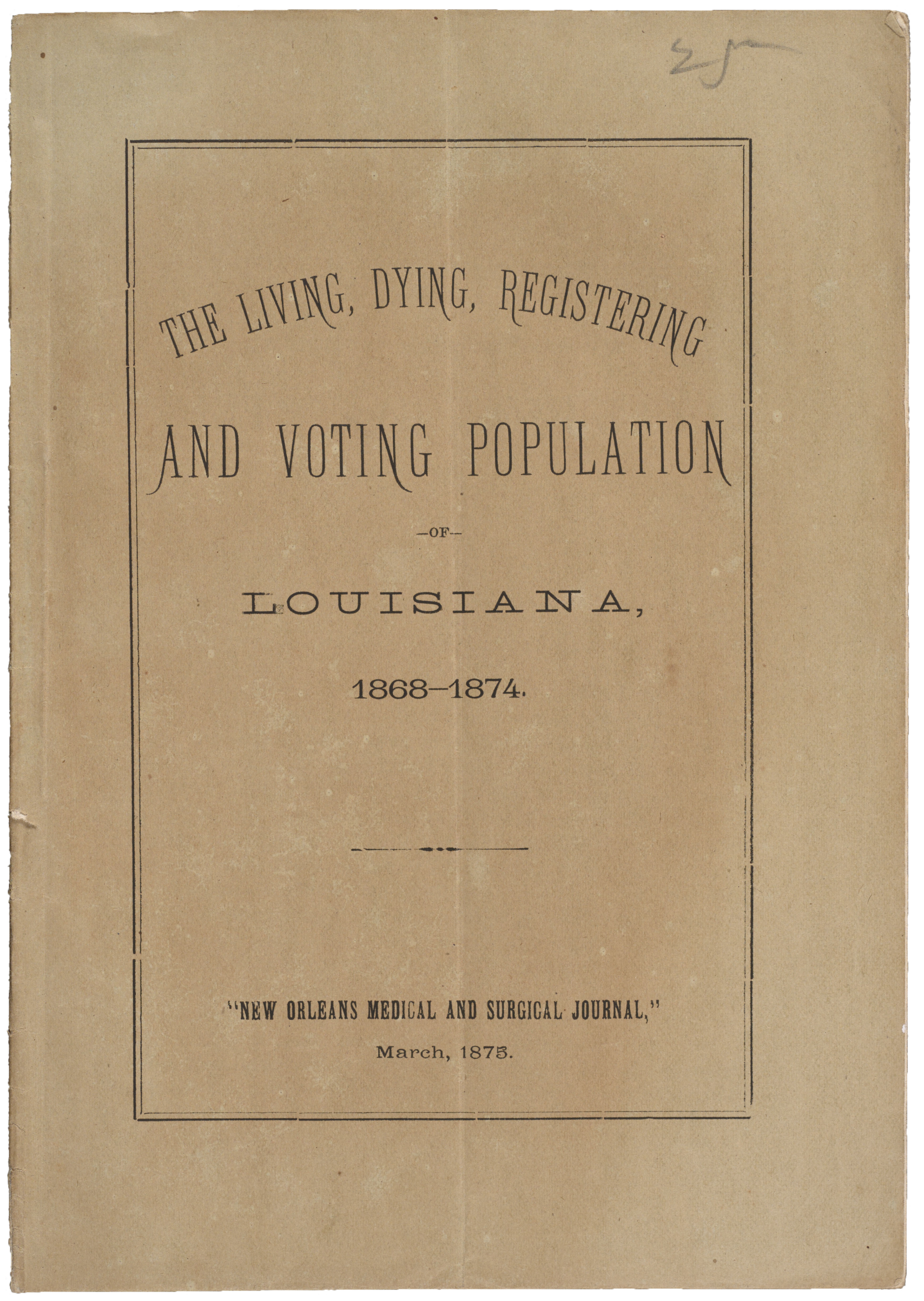
Chaillé, Stanford Emerson. The Living, Dying, Registering, and Voting Population of Louisiana, 1868-1874. [New Orleans]: New Orleans Medical and Surgical Journal, 1875.
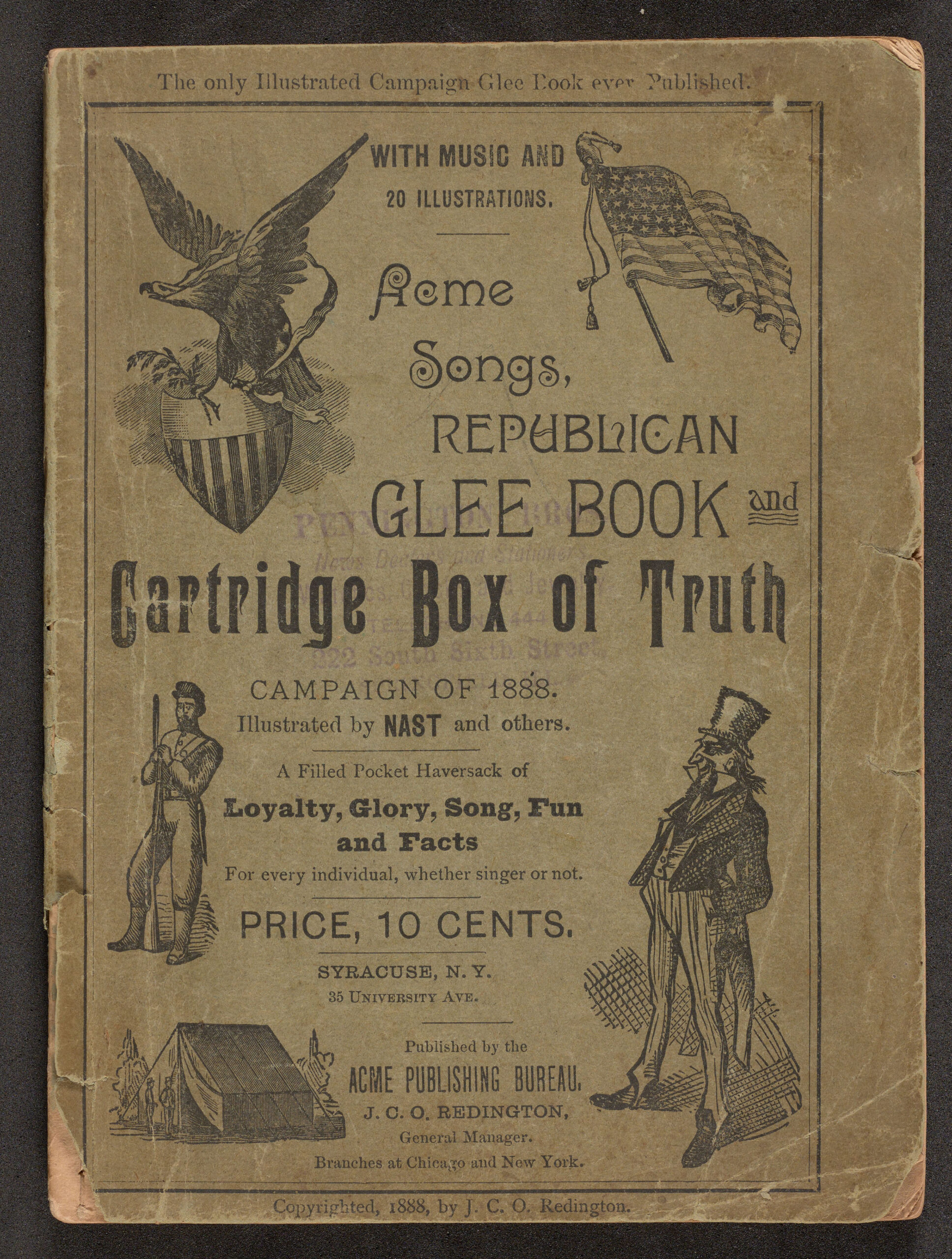
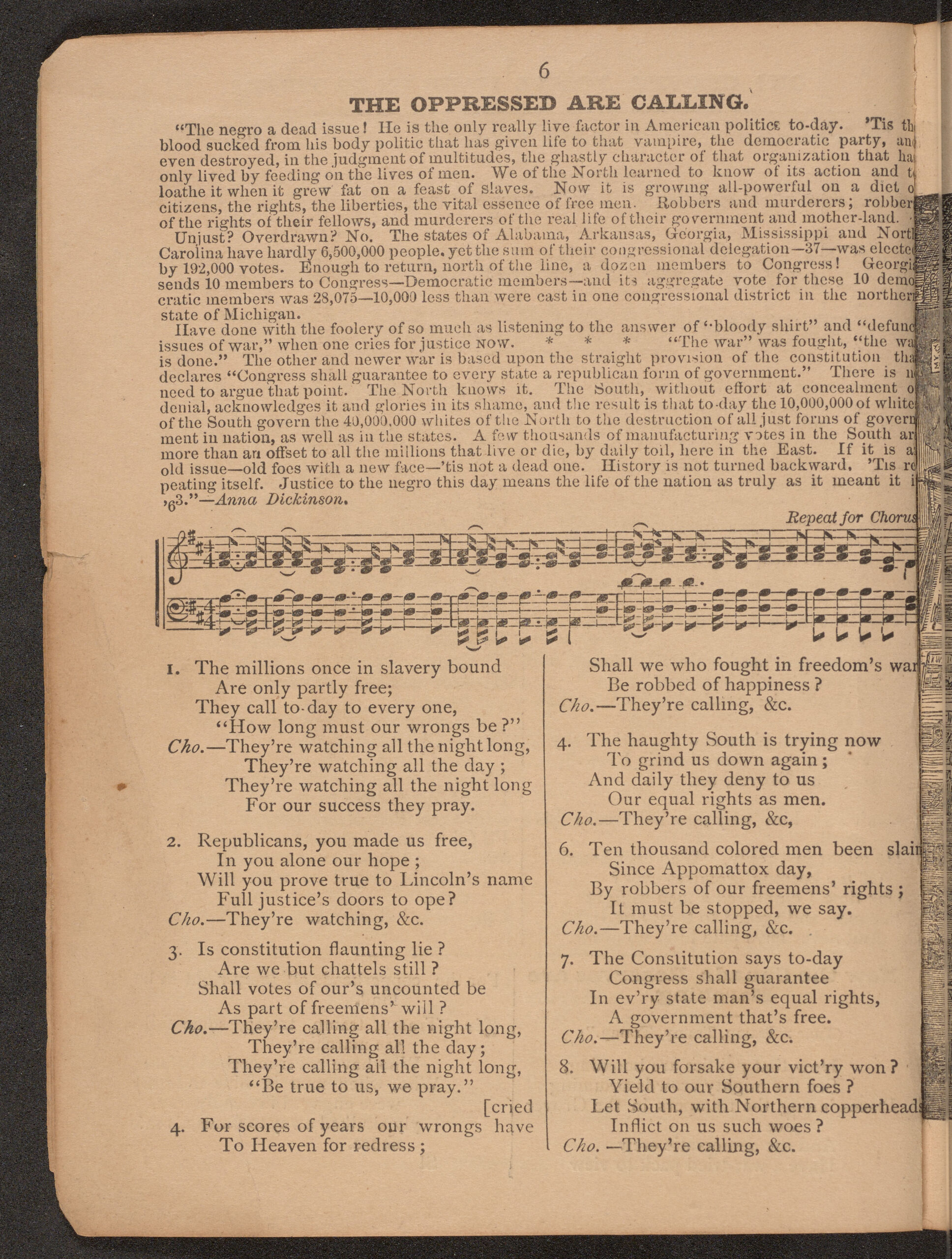
The materials in this case reflect these shifts, as political parties, election administrators, and reformers all worked to shape new understandings of who counted in American elections. Campaign songsters helped build party identification among newly enfranchised voters. Advances in demography and data visualization shaped ideas about who made up the electorate in different places, and printed items produced to commemorate the Civil War emphasized the expansion of the franchise to Black men as one of the war’s most important outcomes.
Women’s suffrage was one of the nineteenth century’s most significant reform movements, combining the energies of people who had learned the ropes of reform working for the abolition of slavery and alcohol. Wyoming’s territorial government allowed women to vote in 1869, which served as an inspiration to the women’s suffrage movement until the passage of the Nineteenth Amendment in 1919.
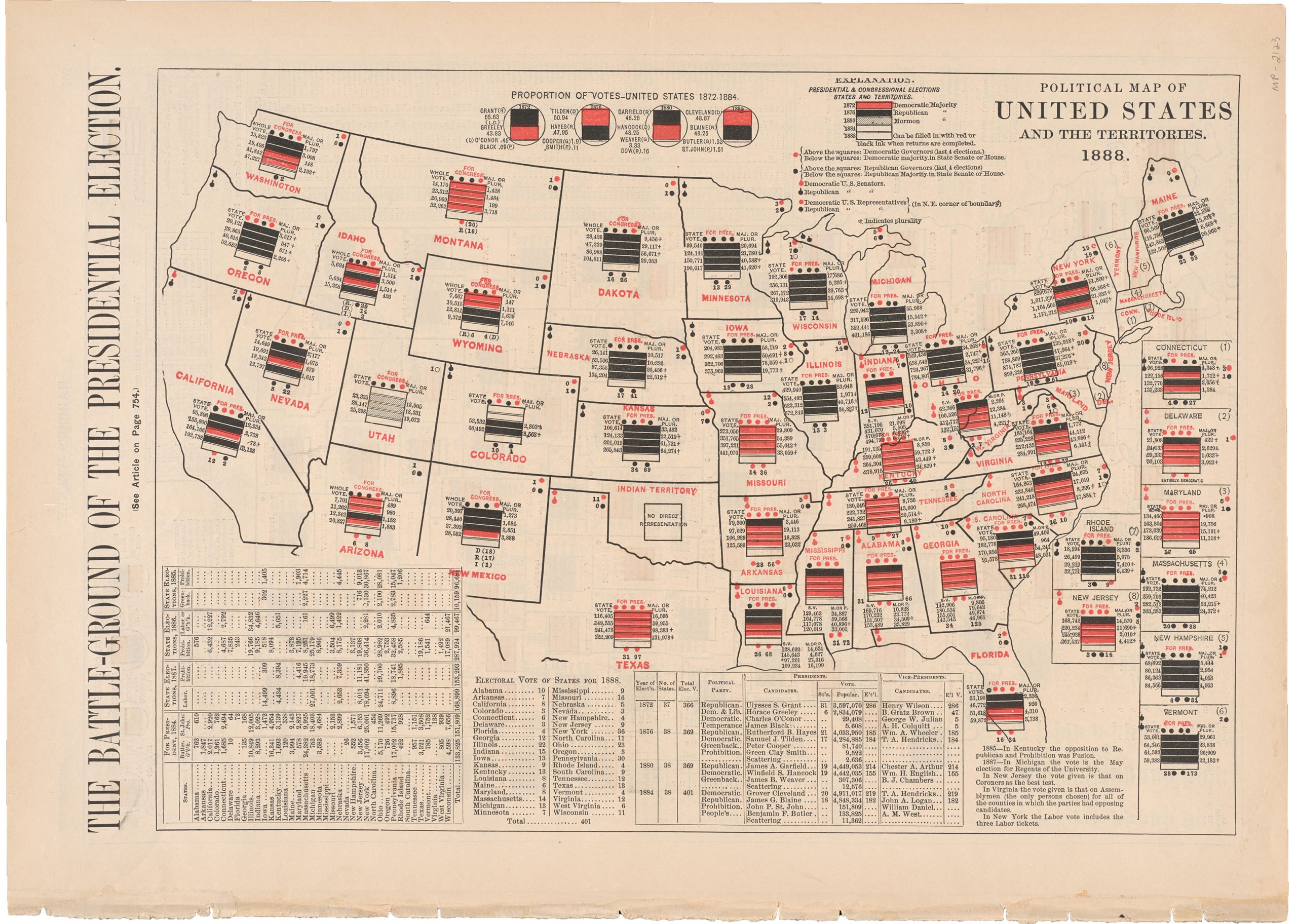
“The Battle-Ground of the Presidential Election.” Supplement to Harper’s Weekly, October 8, 1888, to accompany article by Thomas Campbell Copeland. [New York] : [Harper & Brothers], October 6, 1888.
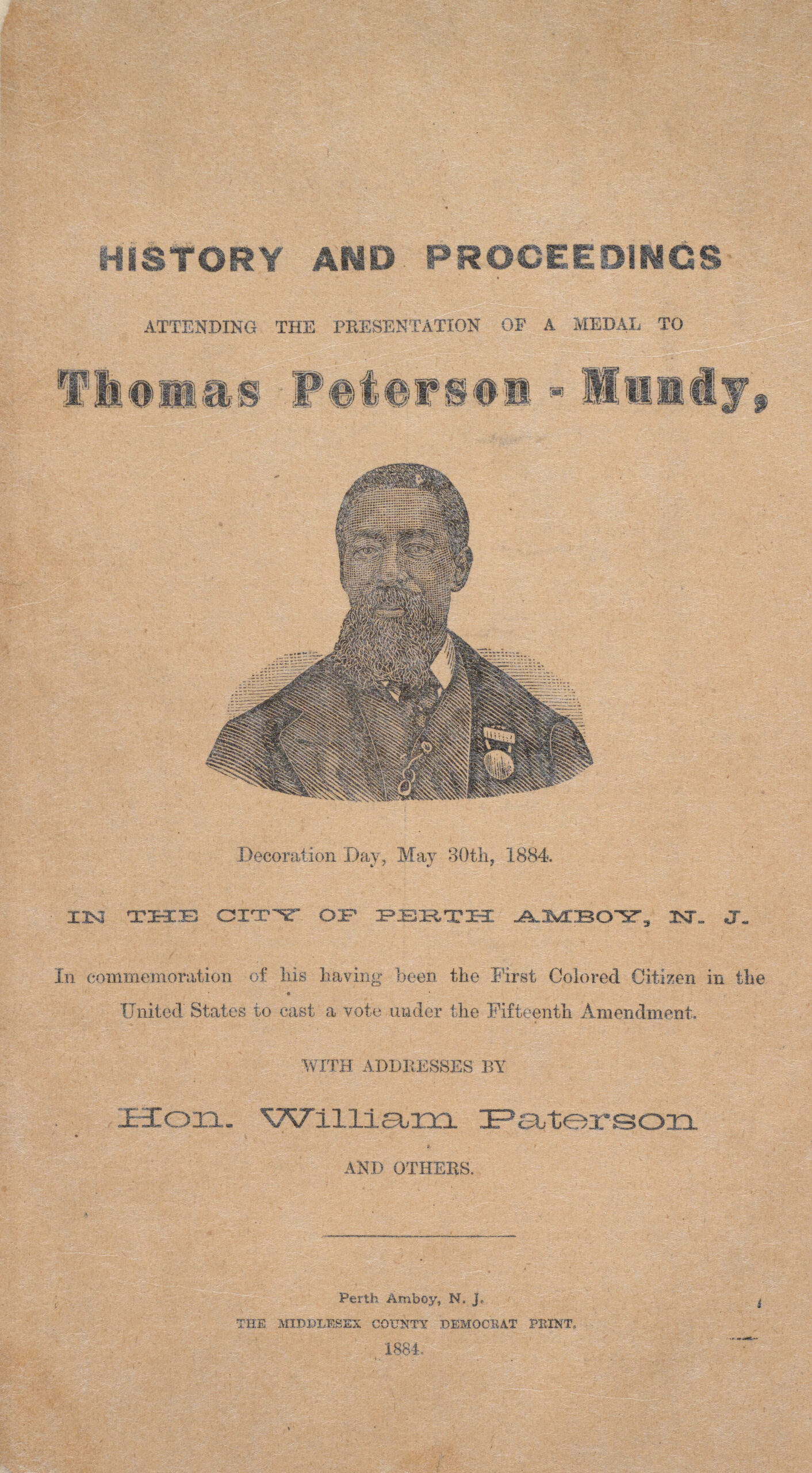
Paterson, Hon. William. History and Proceedings Attending the Presentation of a Medal to Thomas Peterson-Mundy. Perth Amboy, N.J.: The Middlesex County Democrat Print, 1884.
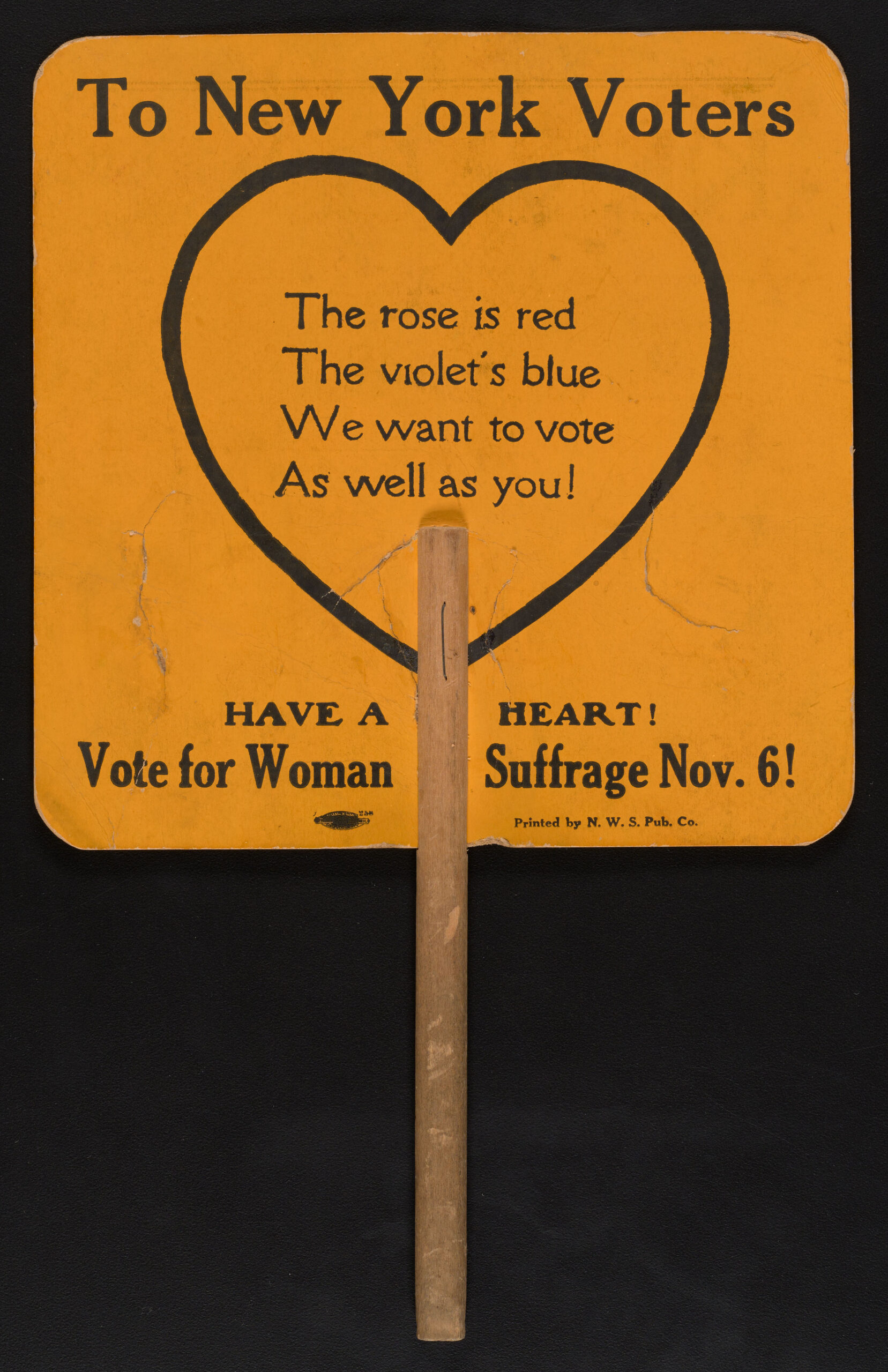
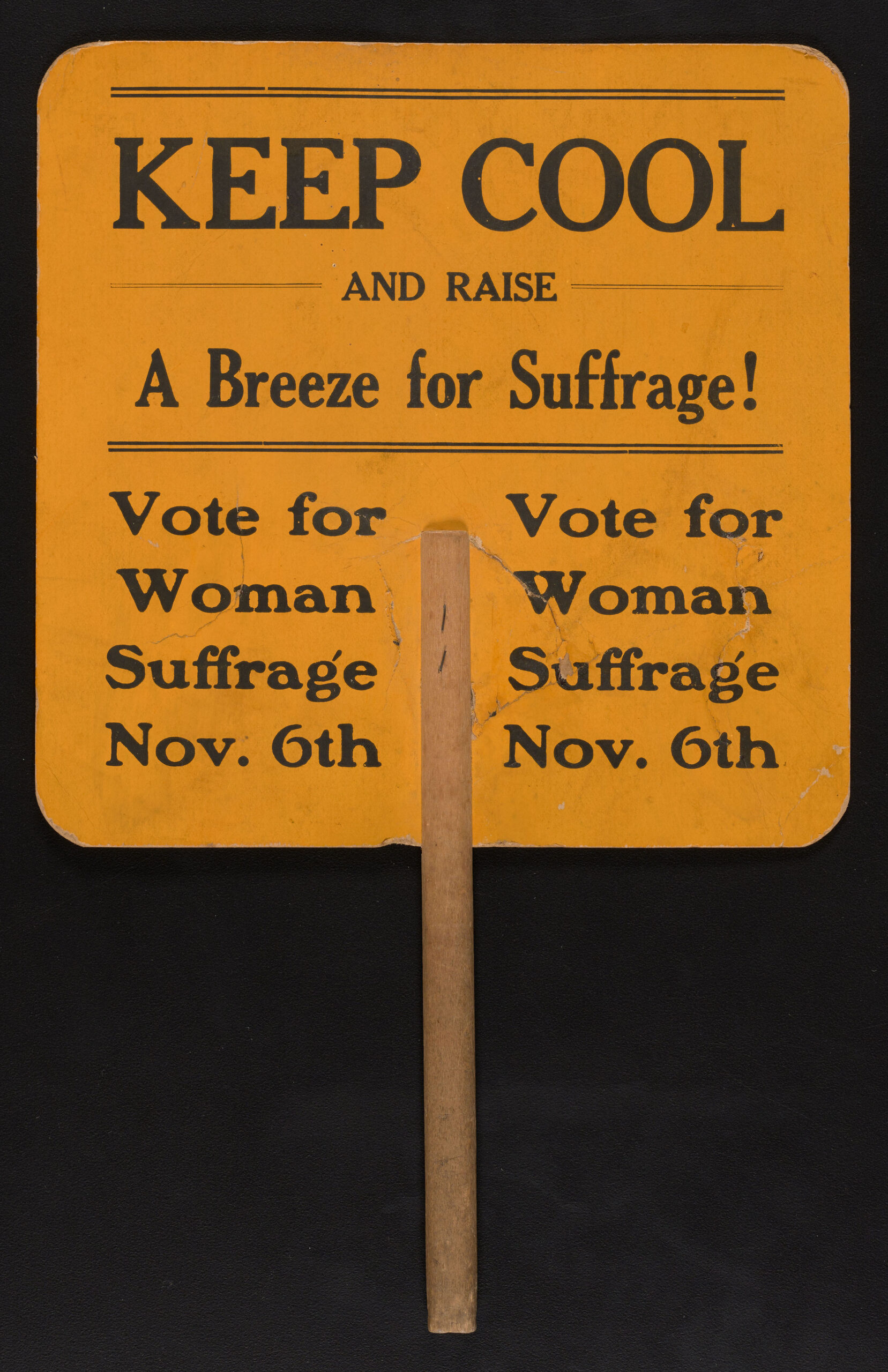
Handheld fan, [1917]. From the Emily Howland Papers.
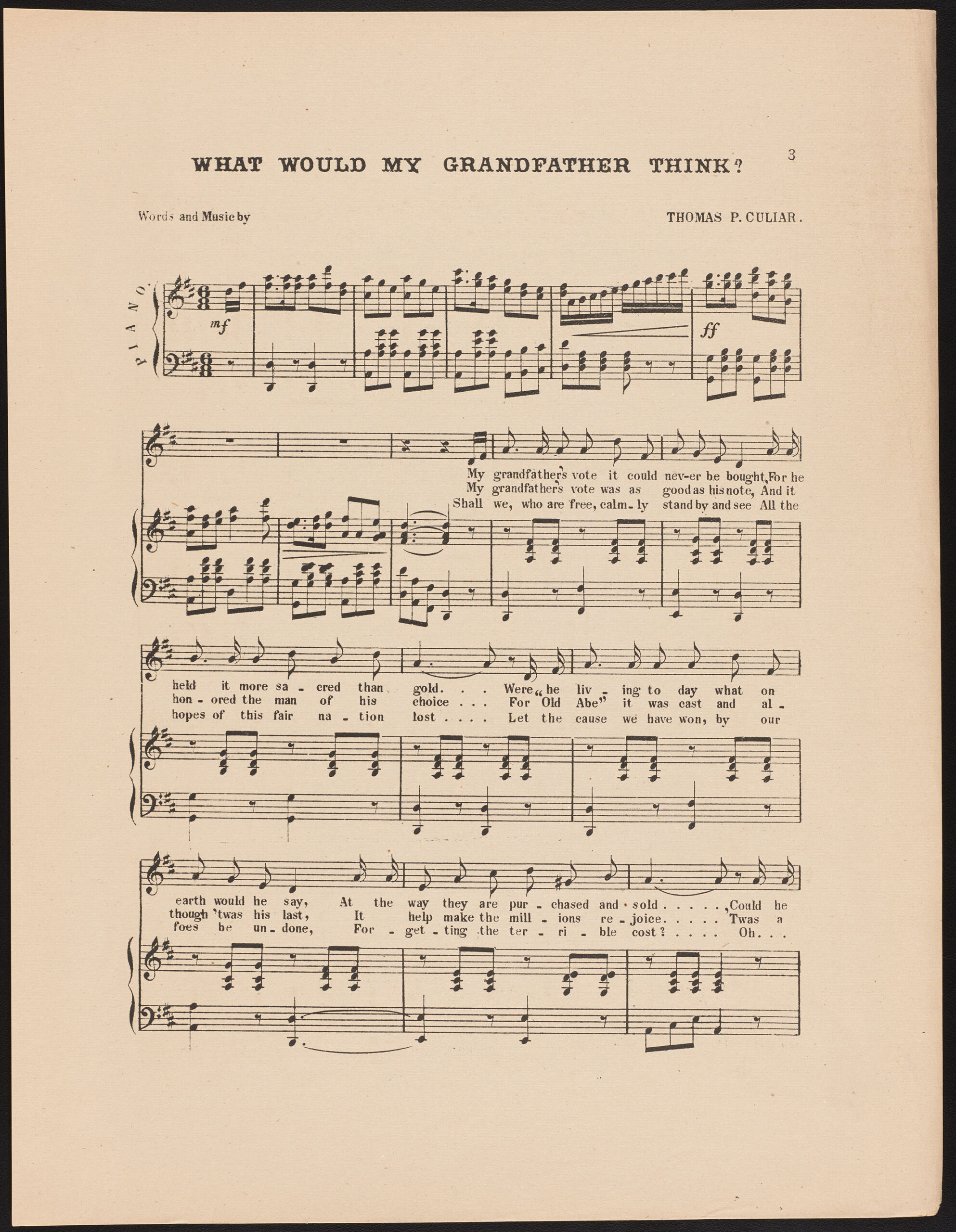
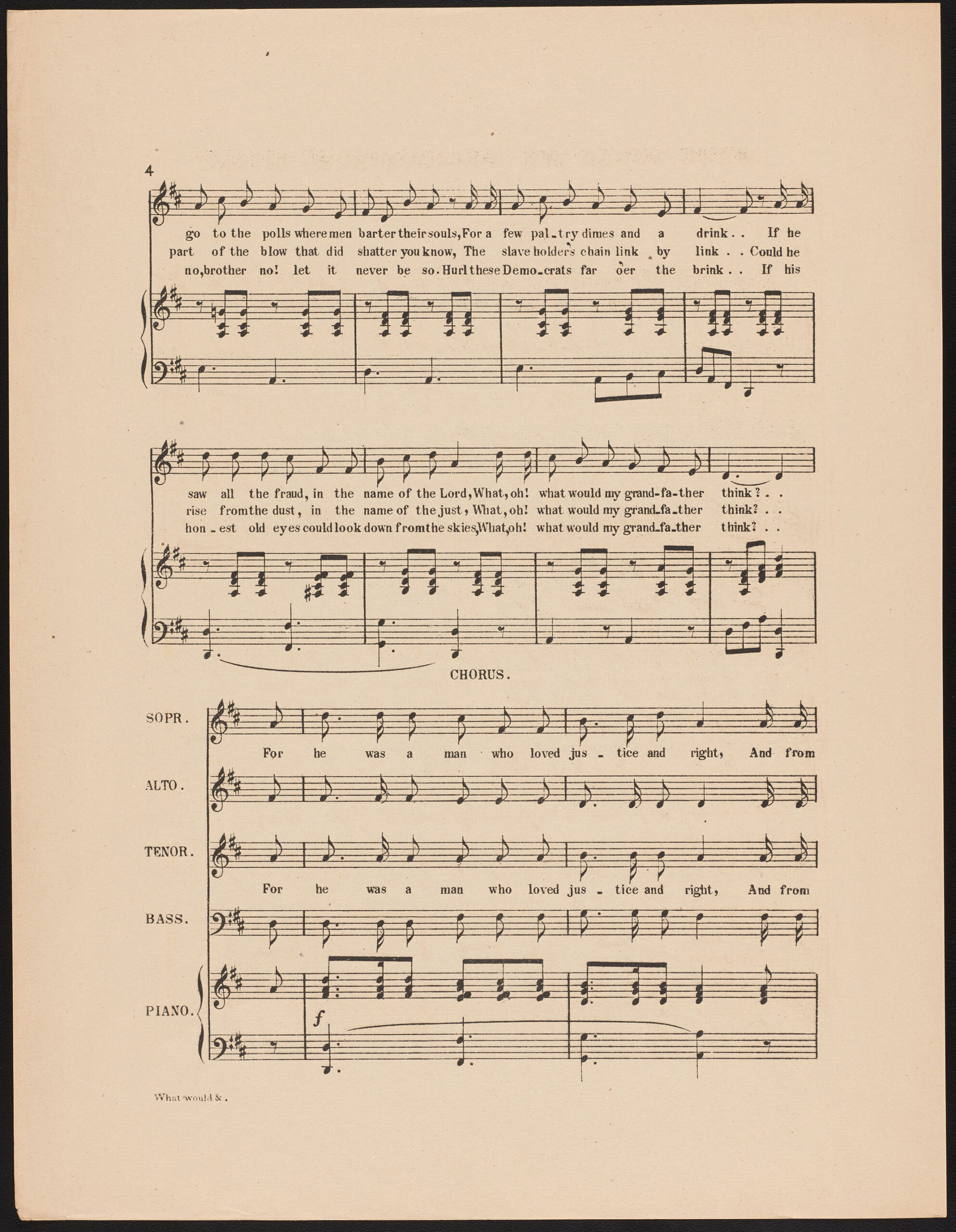
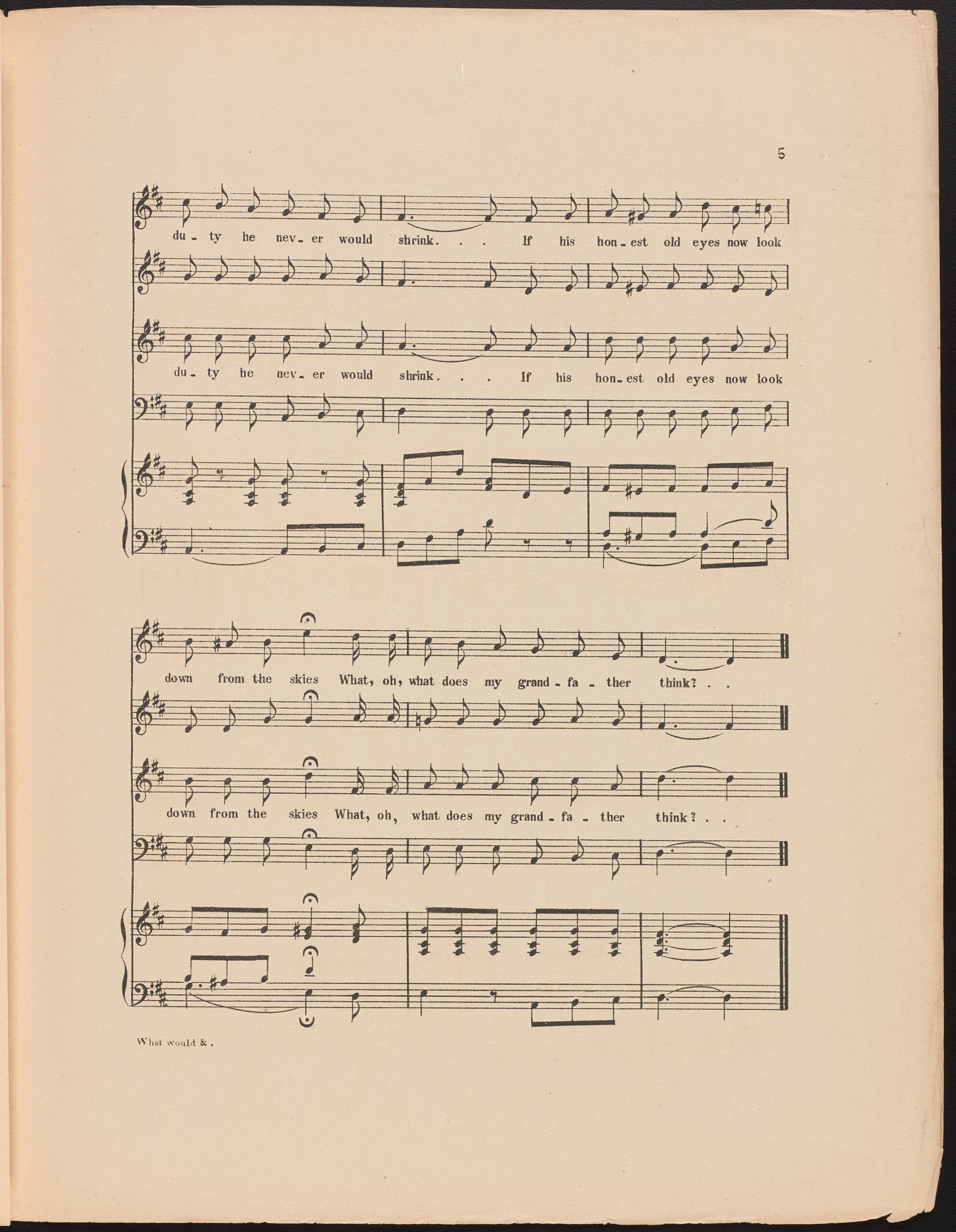
Culier, Thos. P. “What Would My Grandfather Think?” Song & Chorus, 1884.
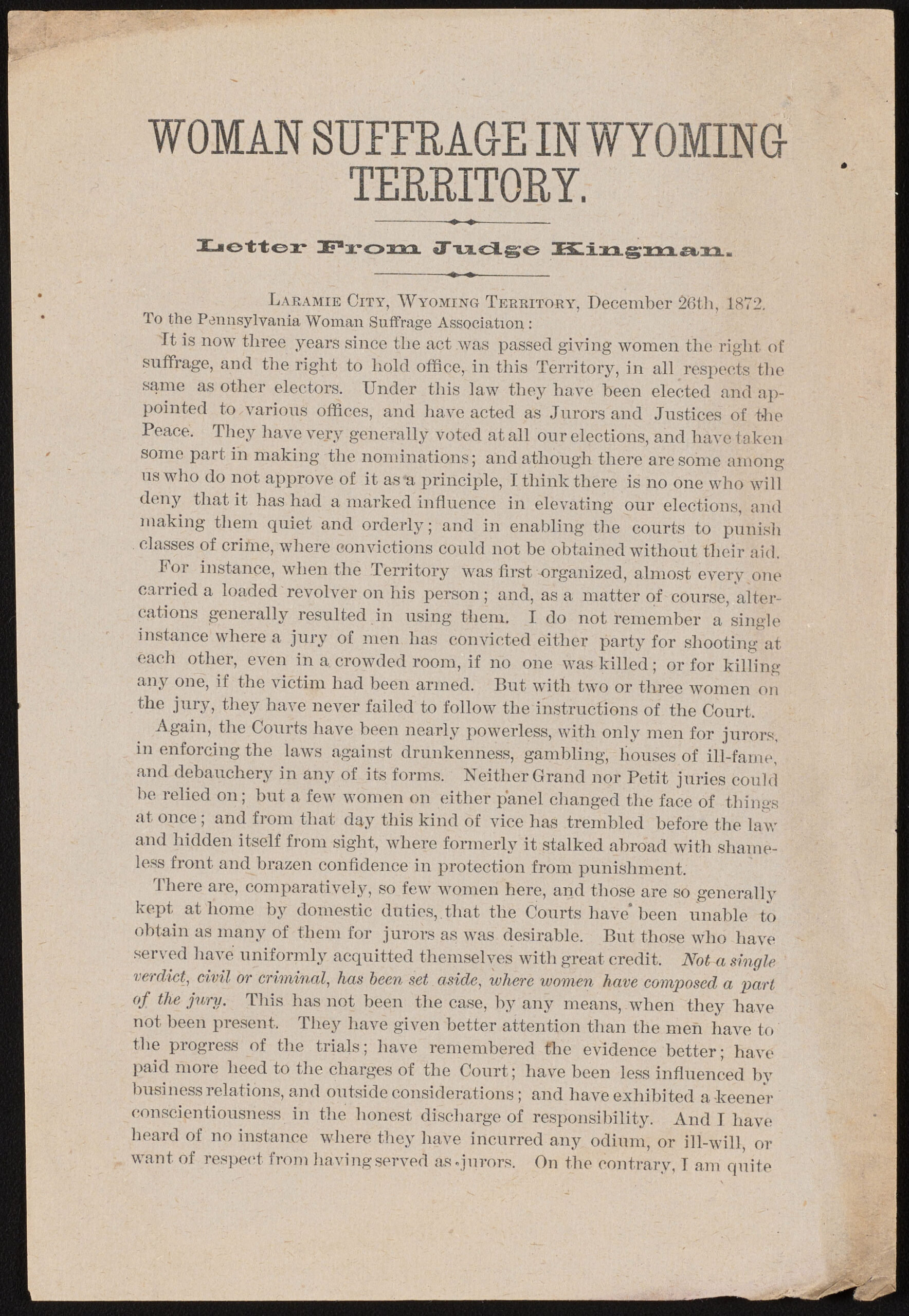
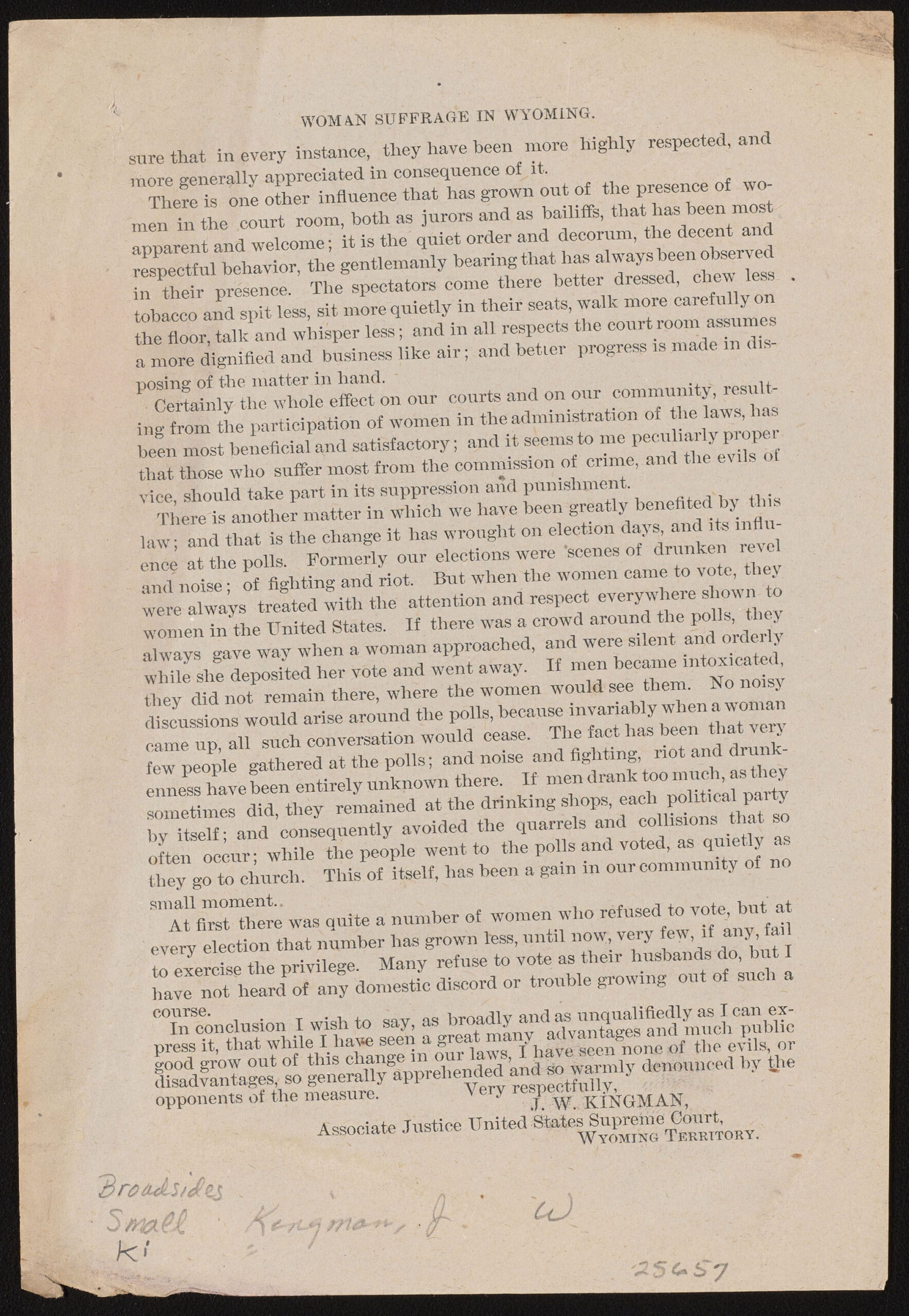
Kingman, J.W. “Woman Suffrage in Wyoming Territory.” [Laramie?], [1873?].
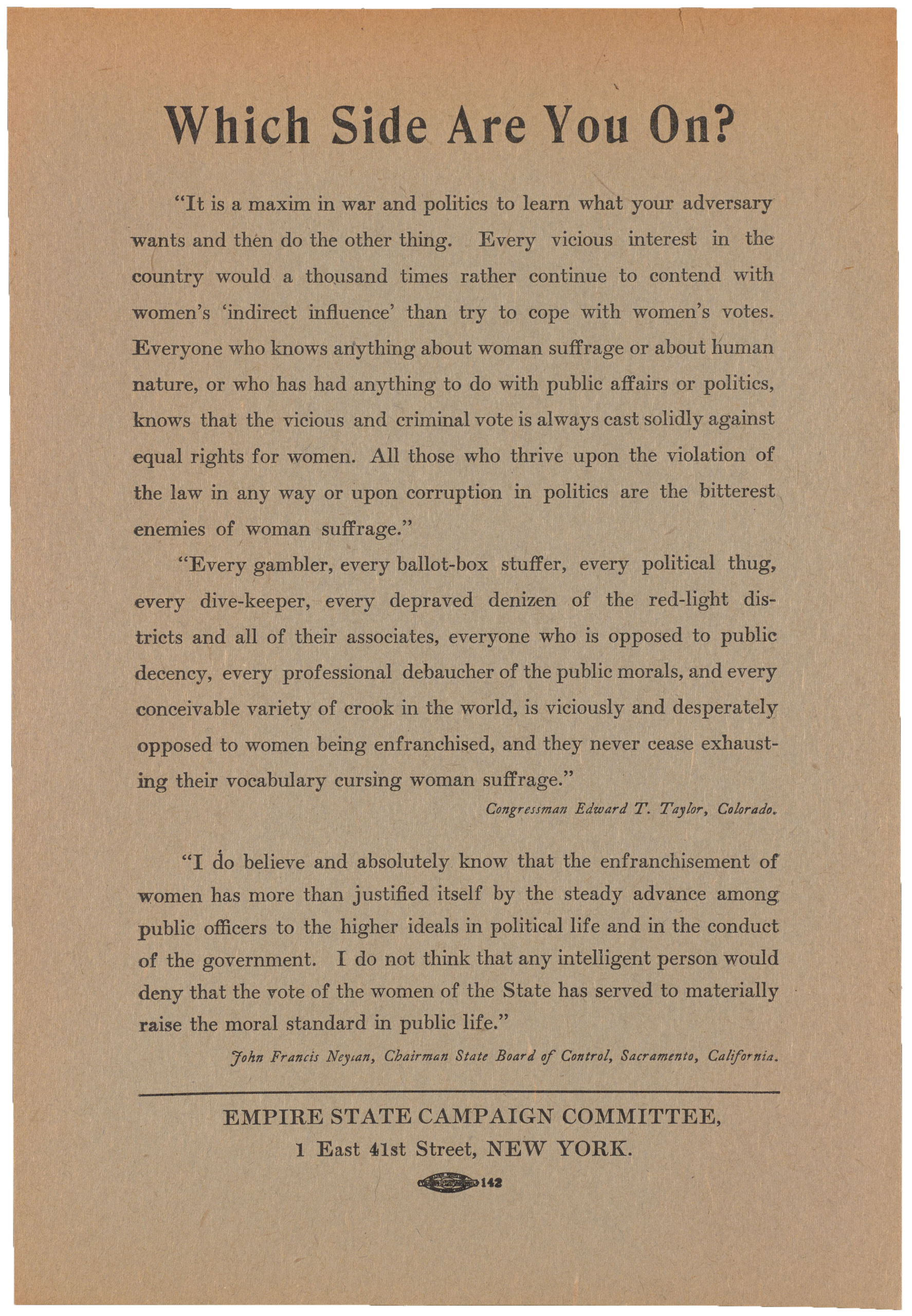
“Which Side Are You On?” New York: Empire State Campaign Committee, [1912?].
Acme songs, Republican glee book and cartridge box of truth : campaign of 1888, illustrated by Nast and others. Syracuse, N.Y.: Acme Publishing Bureau, J.C.O Redington, general manager. Branches at Chicago and New York, [1888].
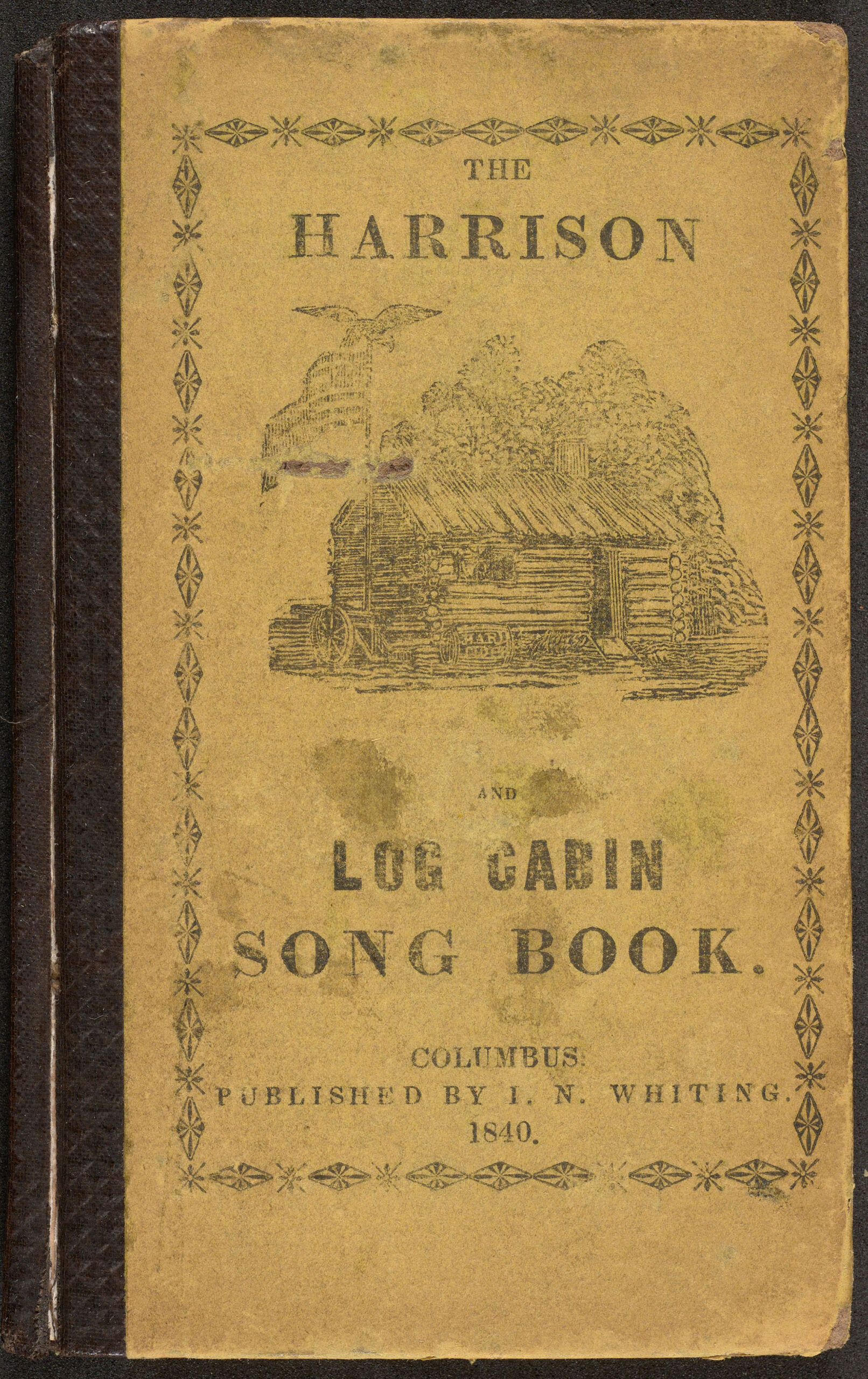
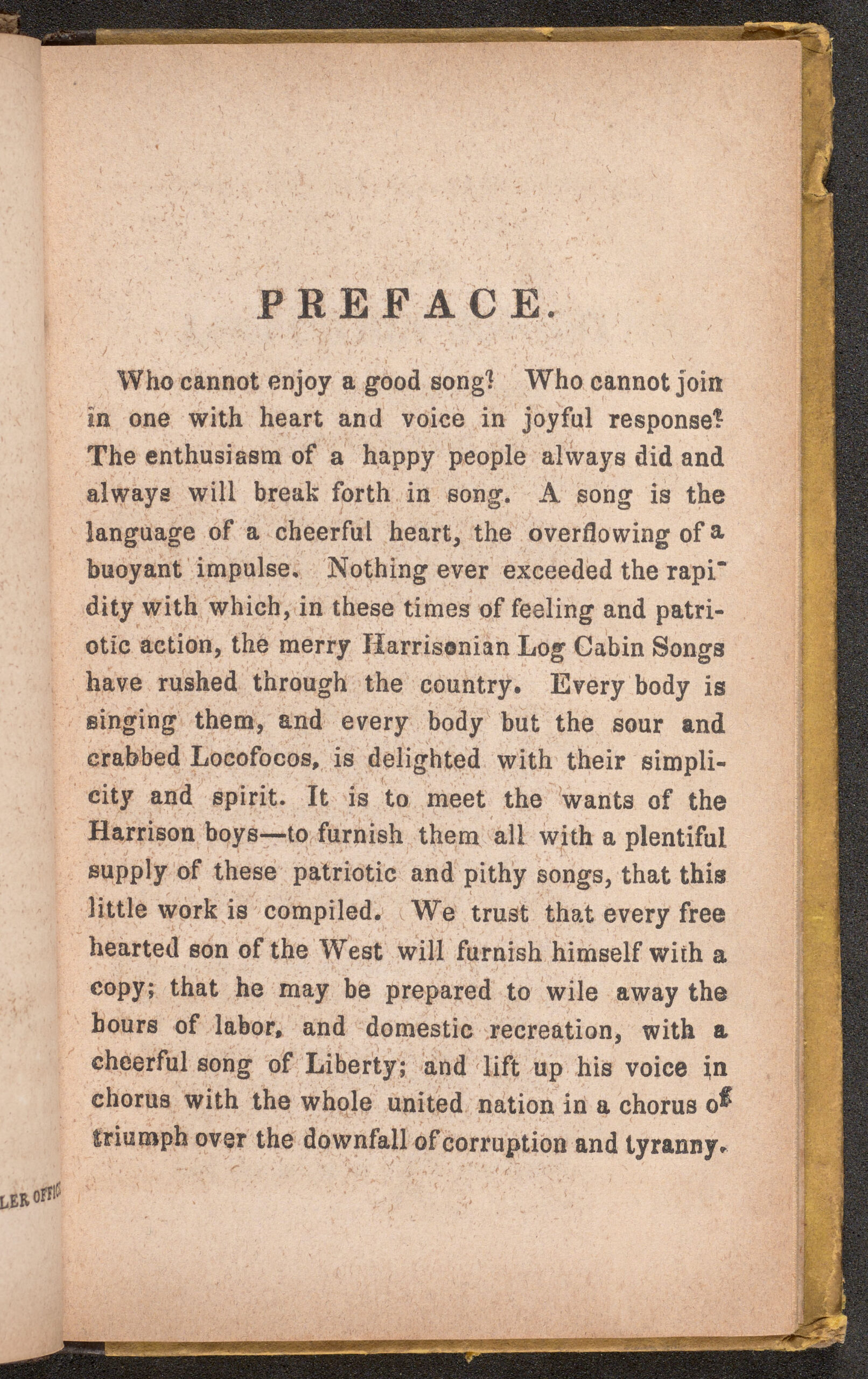
Harrison Club. Harrison Melodies. Boston: Weeks, Jordan, and Company, 1840.