Up, Up, and Away: A History of Ballooning in America
Exhibit Introduction
Since the era of Greek mythology, humans have been fascinated by the possibility of flight. Daedalus fashioned two sets of wings—one for himself, one for his son Icarus—to escape imprisonment on the island of Crete. As we all know, Icarus was dazzled by the experience of flying, and flew too close to the sun, which melted his waxen wings.
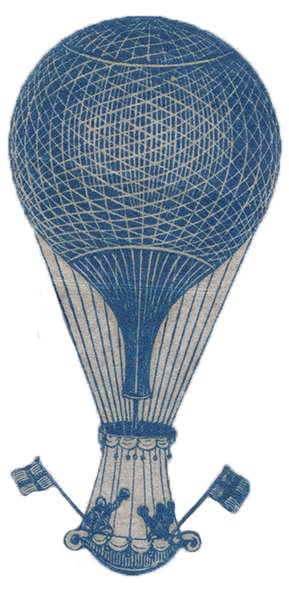
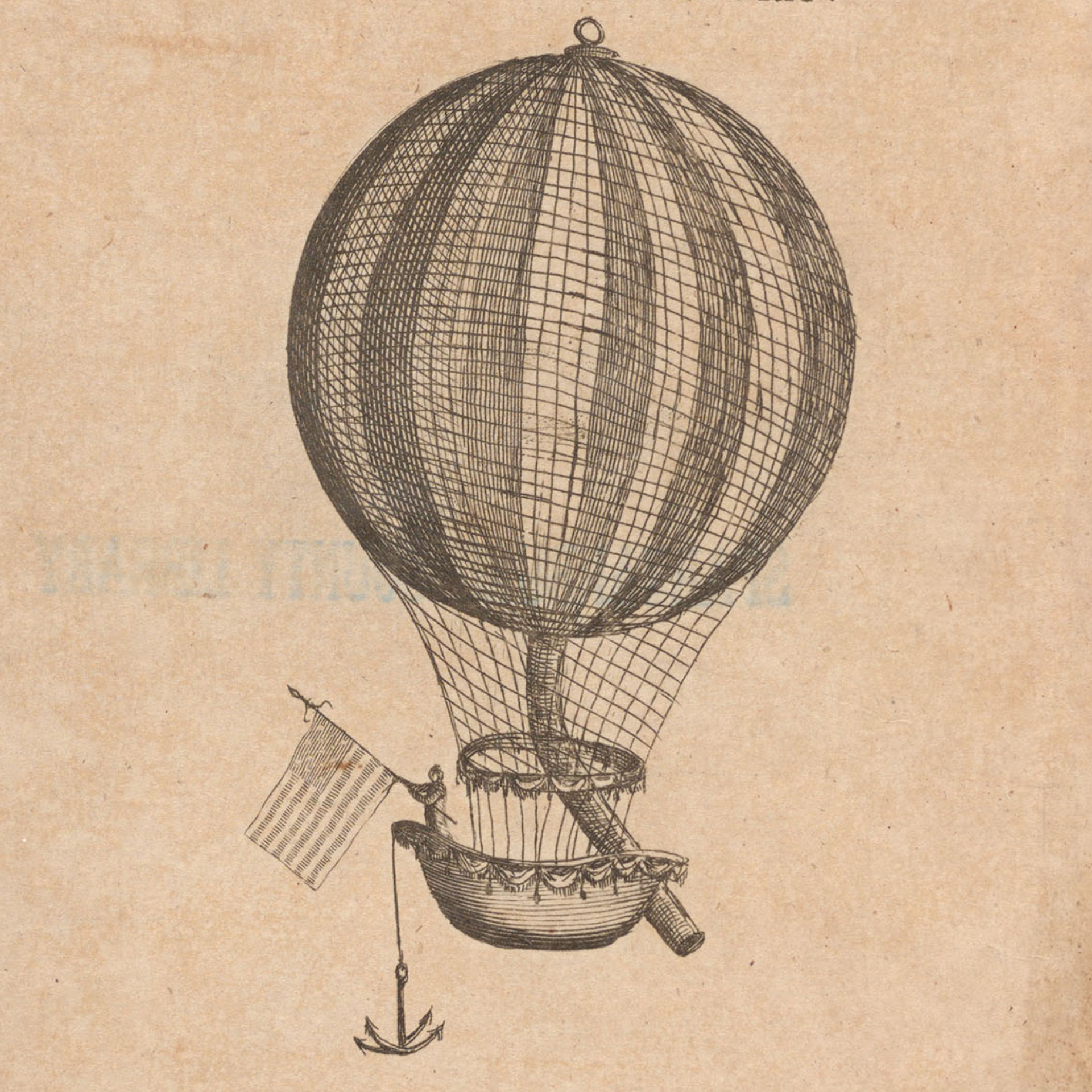
Humans could only dream of flight for the next two millennia, until in 1783 Joseph and Etienne Montgolfier accomplished the first manned balloon flight in Paris. Ten years later, the French aeronaut Jean-Pierre Blanchard became the first person to fly a balloon in North America, ascending from Philadelphia in 1793 as George Washington watched from the ground. From that point on, the allure of seeing the world from above would drive entrepreneurs, thrill-seekers, scientists, and others to take to the skies.
This exhibit examines the history of balloon flight in the United States from Blanchard’s first ascension to the early twentieth century. In the age of bird’s-eye views, which imagined a perspective on American cities and towns from high in the air, balloonists were the only people who actually had the opportunity to see what the growing nation looked like from above. As the nineteenth century progressed, ballooning became a lucrative (if dangerous) business, as crowds gathered to watch balloons launch, and to see aeronauts risk their lives high in the air. Over time, the image of the hot air balloon proliferated in American print culture, being used to sell goods ranging from thread to canned beef. We hope that this exhibit conveys some of the thrill that would have come from seeing people fly for the first time.