Balloons Are Everywhere
Balloons Are Everywhere
As the nineteenth century progressed, more and more Americans had actually seen a balloon in person. Whether from witnessing a balloon ascension at a county fair or Fourth of July celebration or having seen balloons deployed during the Civil War, everyday people were increasingly familiar with what hot air balloons were and how they worked. The experience of going up in a balloon was still very much a novelty, but the idea of a balloon was becoming familiar.
As more people became acquainted with the notion of ballooning, the image of the hot air balloon proliferated in American print culture. The balloon could mean lots of different things, depending on the context. It could symbolize adventure, a voyage into the unknown, or an example of technological progress. The first book in the French novelist Jules Verne’s “Extraordinary Voyages” series was the 1863 novel Five Weeks in a Balloon, which inspired American copycats like 10,000 Miles in a Balloon.
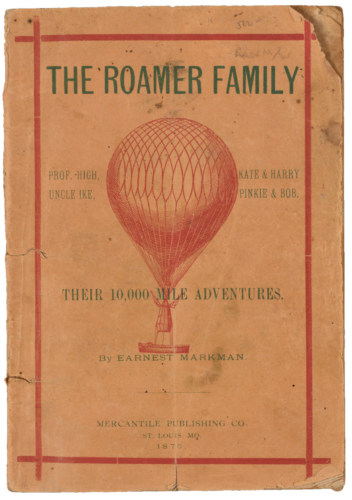
Markman, Earnest. 10,000 Miles in a balloon! Saint Louis: Mercantile Publishing Company, 1873.
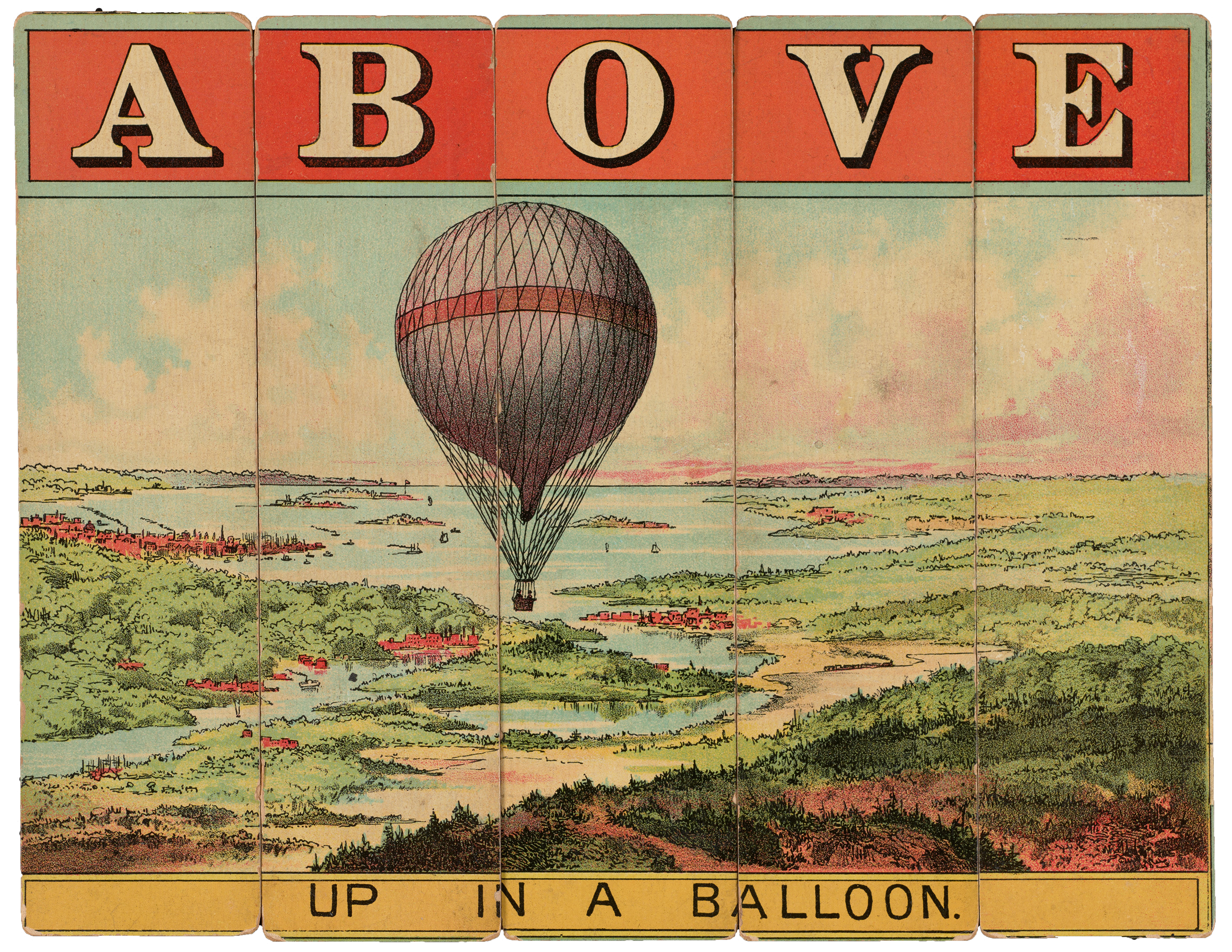
“Up in a Balloon.” Word puzzle, circa 1900.
Trade cards–pieces of ephemeral illustrated advertising–used images of balloons to sell all kinds of goods, from boots to jewelry to something called “meat extract.” Balloons were clearly good for business, since balloon imagery showed up absolutely everywhere. Perhaps the least practical use of balloons in advertising was the practice of throwing cheap printed promotional sheets out of balloons while they were in the air, literally scattering one’s words to the wind. It’s impossible to know whether this practice was ever effective, but businesses on both sides of the Atlantic gave it a try. Seeing a piece of paper miraculously flutter down from the sky only to find that it was an ad for a clothing store must have been a disorienting experience for nineteenth-century American consumers.
Martin, Albert H. King of the Air: Grand Ascension March. Cleveland: S. Brainard’s Sons, 1875. Illustrated sheet music.
![Cover of sheet music for "King of the Air Grand Ascension March" published by S. Brainard's Sons, Cleveland. Depicts a hot air balloon labeled "[B]UFFALO" in the clouds.](https://clements.umich.edu/wp-content/uploads/2026/05/bk-ill-1875-ma-king-of-the-air-grand-ascension-march-cover.png "bk-ill 1875 ma-king of the air, grand ascension march-cover")
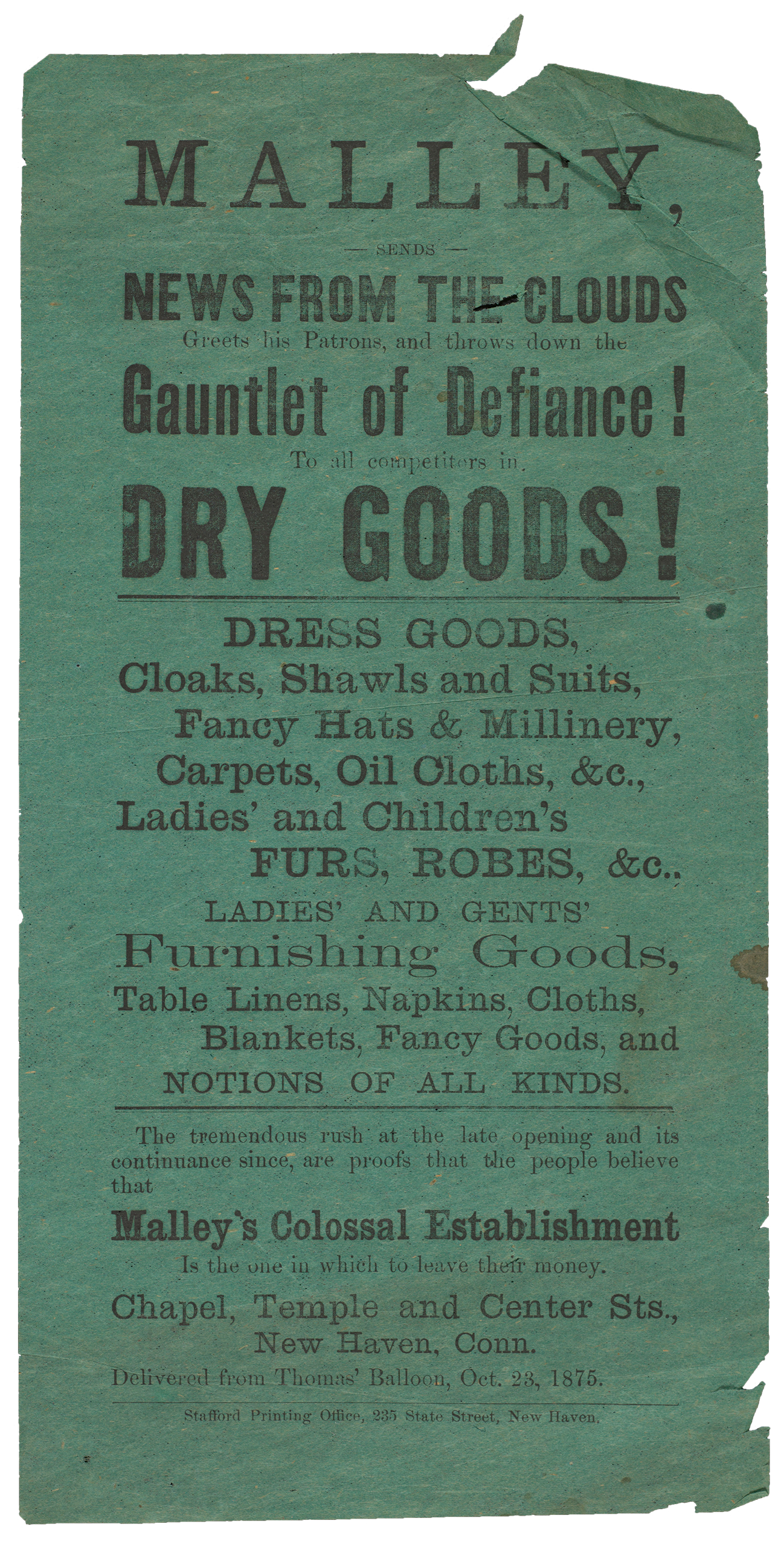
“Malley Sends News from the Clouds.” Advertising broadside delivered by balloon.
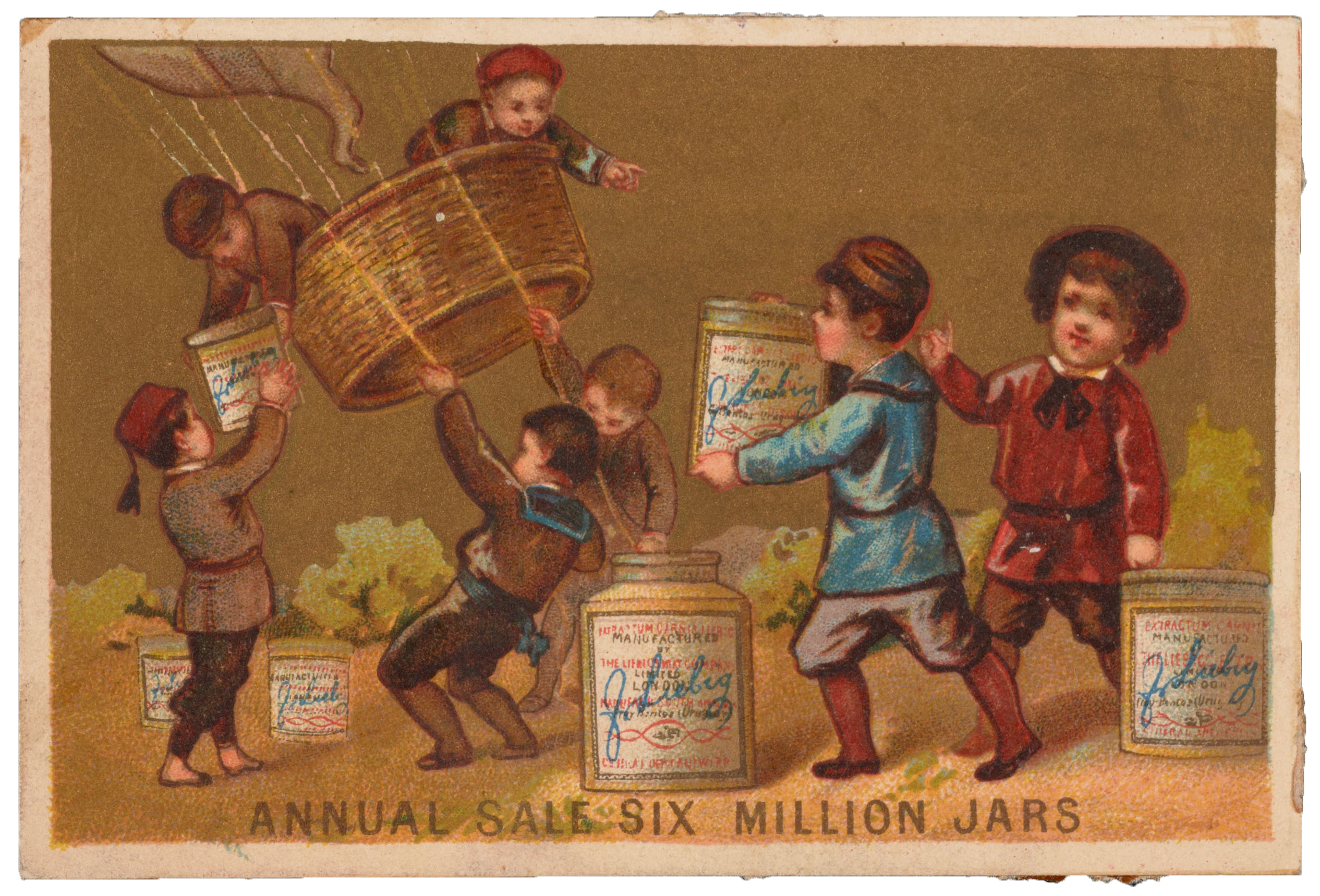
Tradecard. General Ephemera Collection.
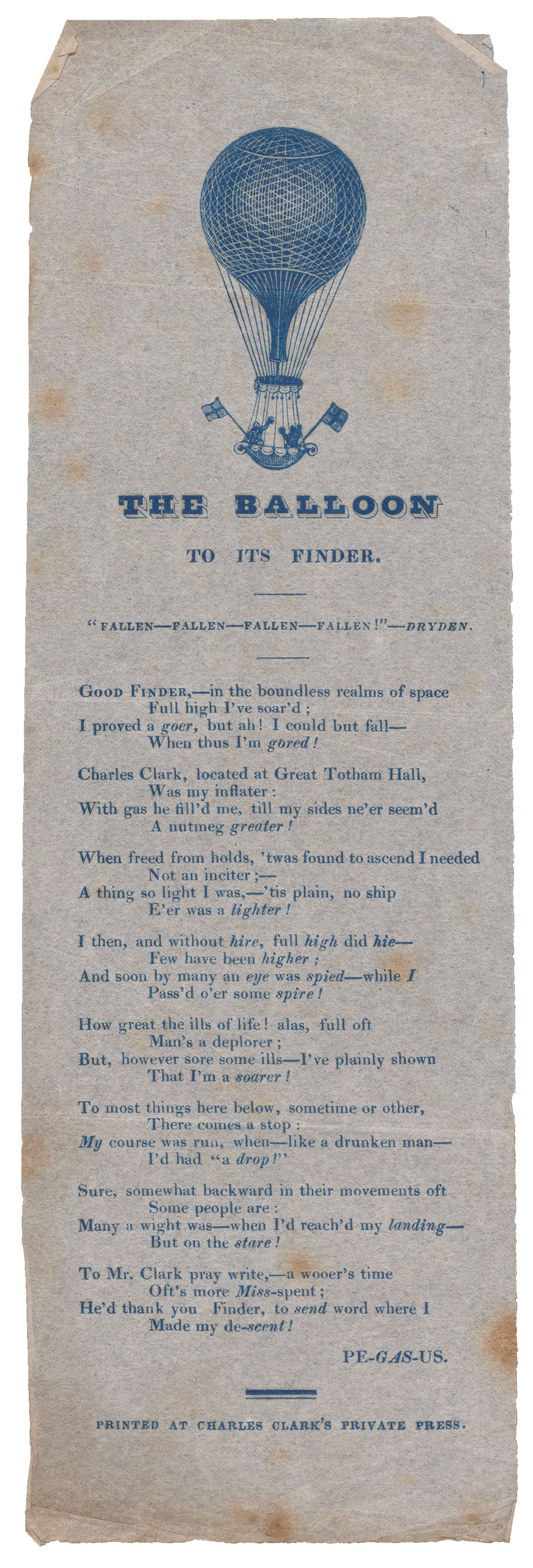
“The Balloon to Its Finder.” Poem delivered by balloon.
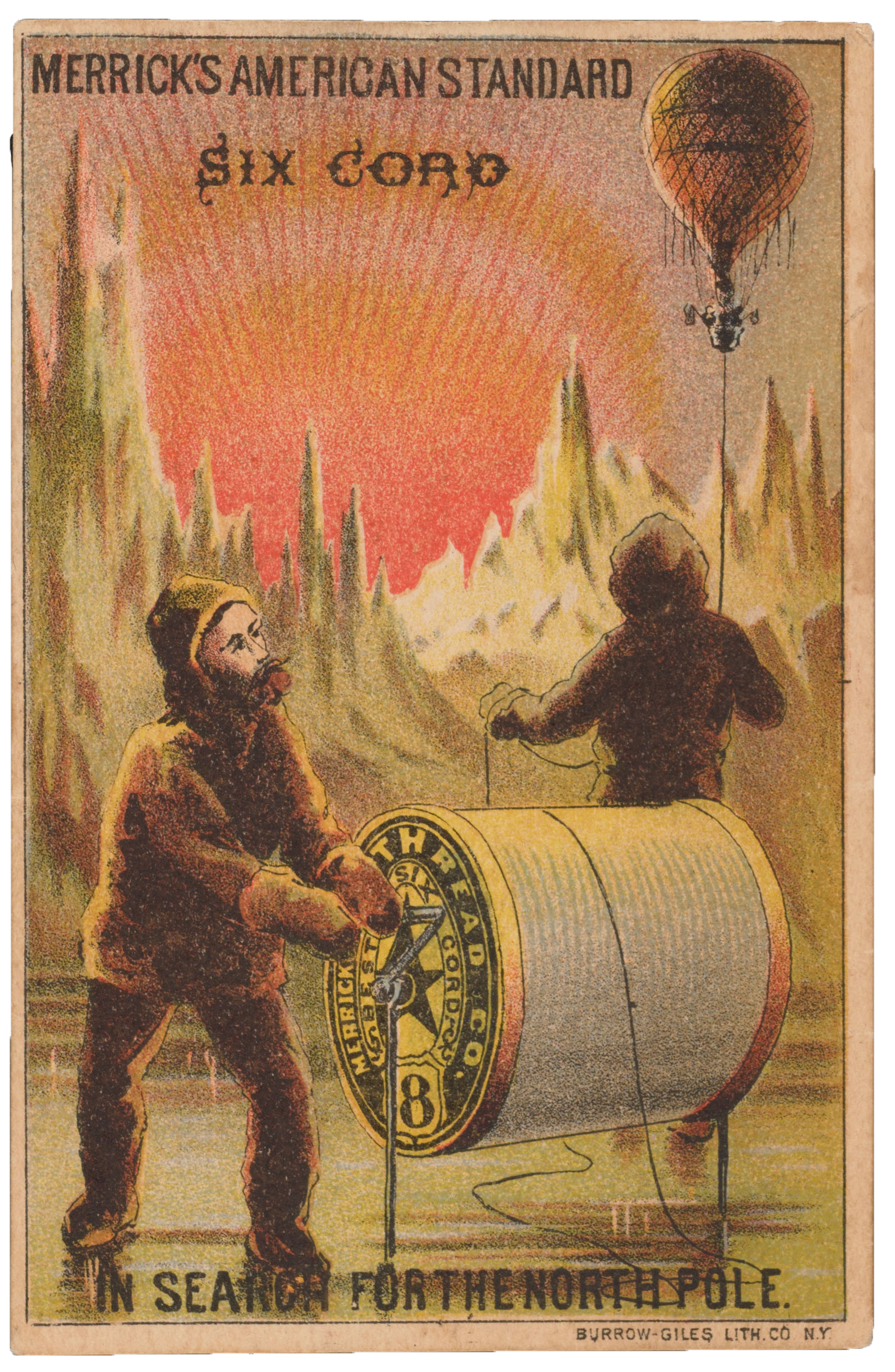
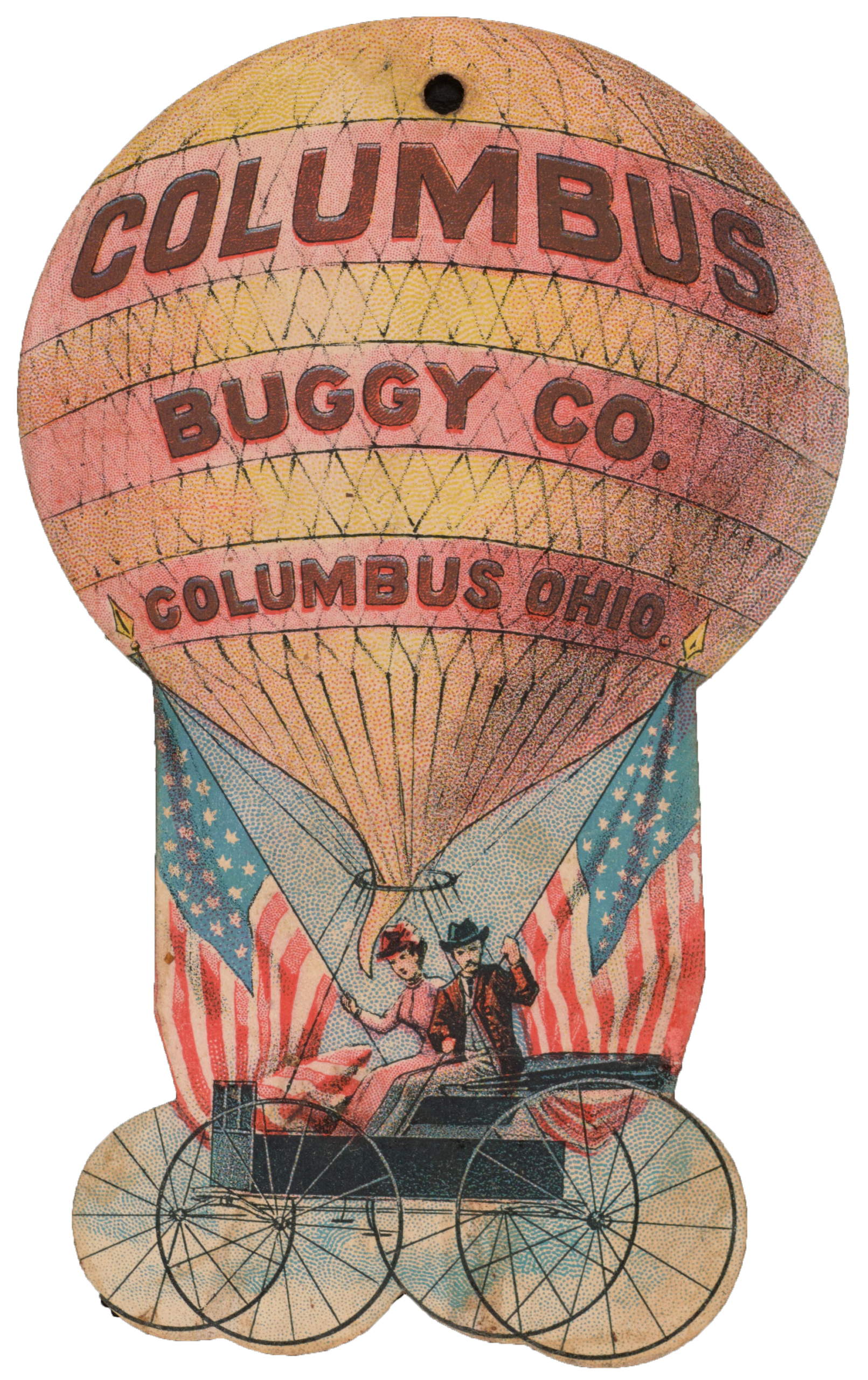
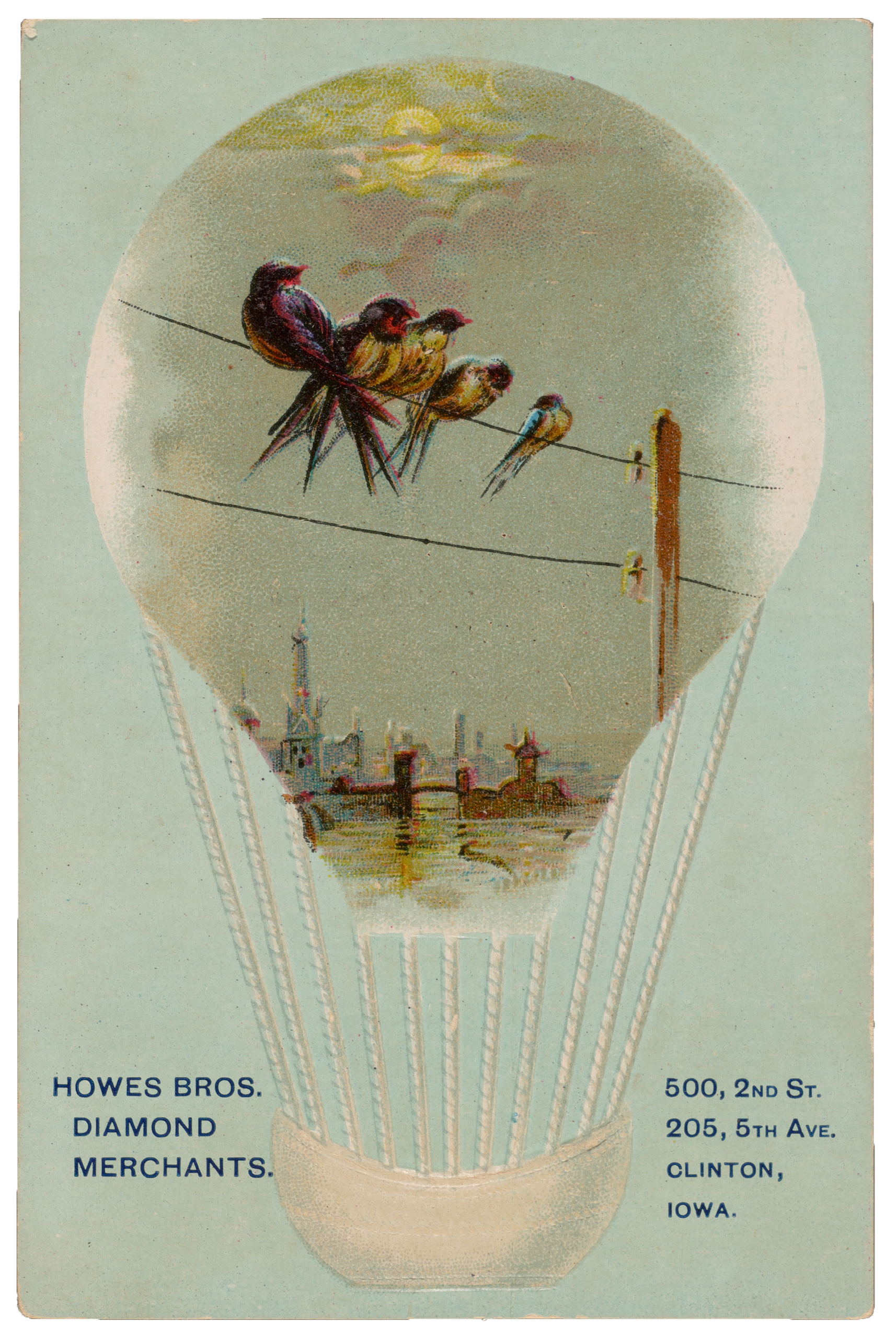
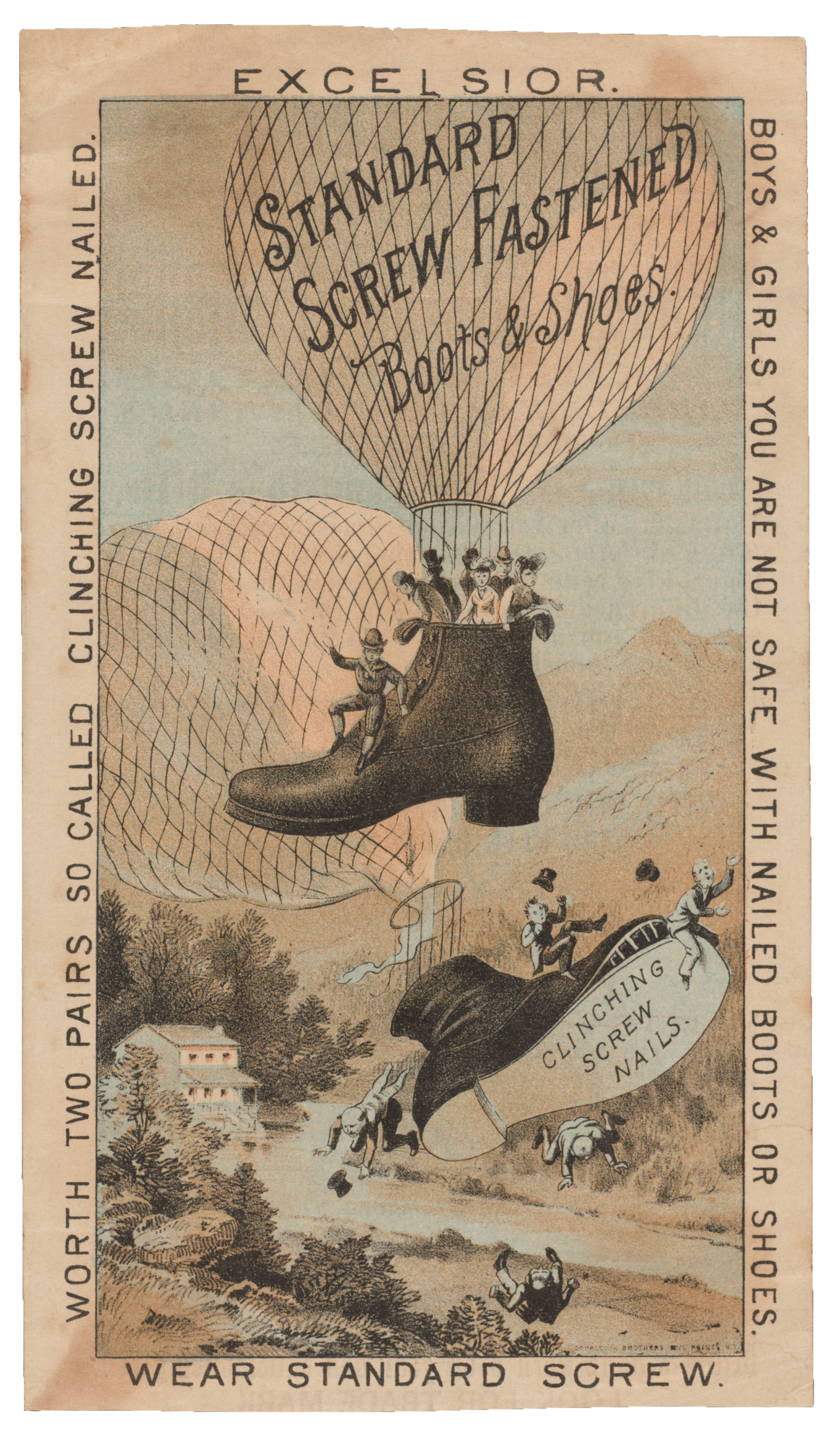
Tradecards. General Ephemera Collection.