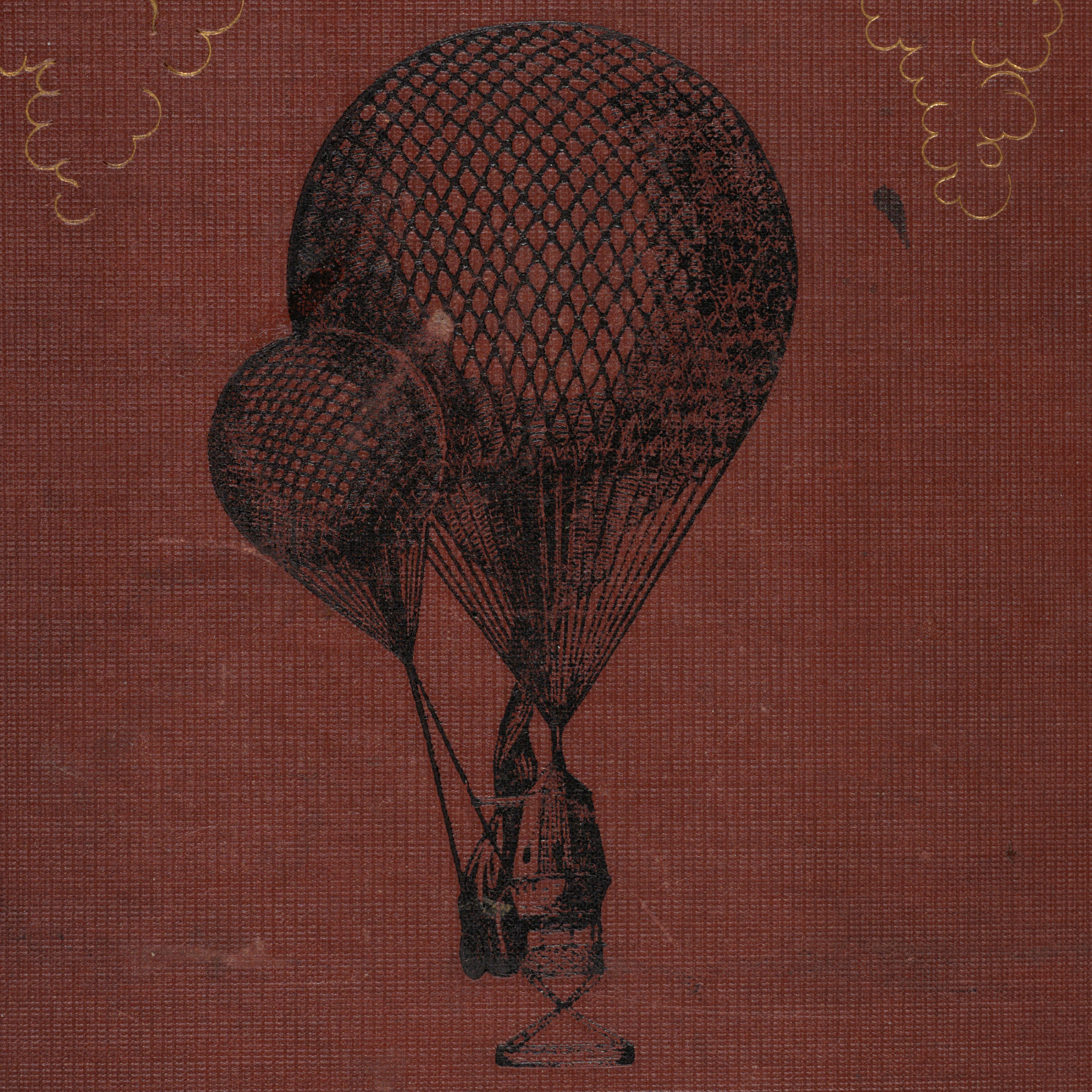
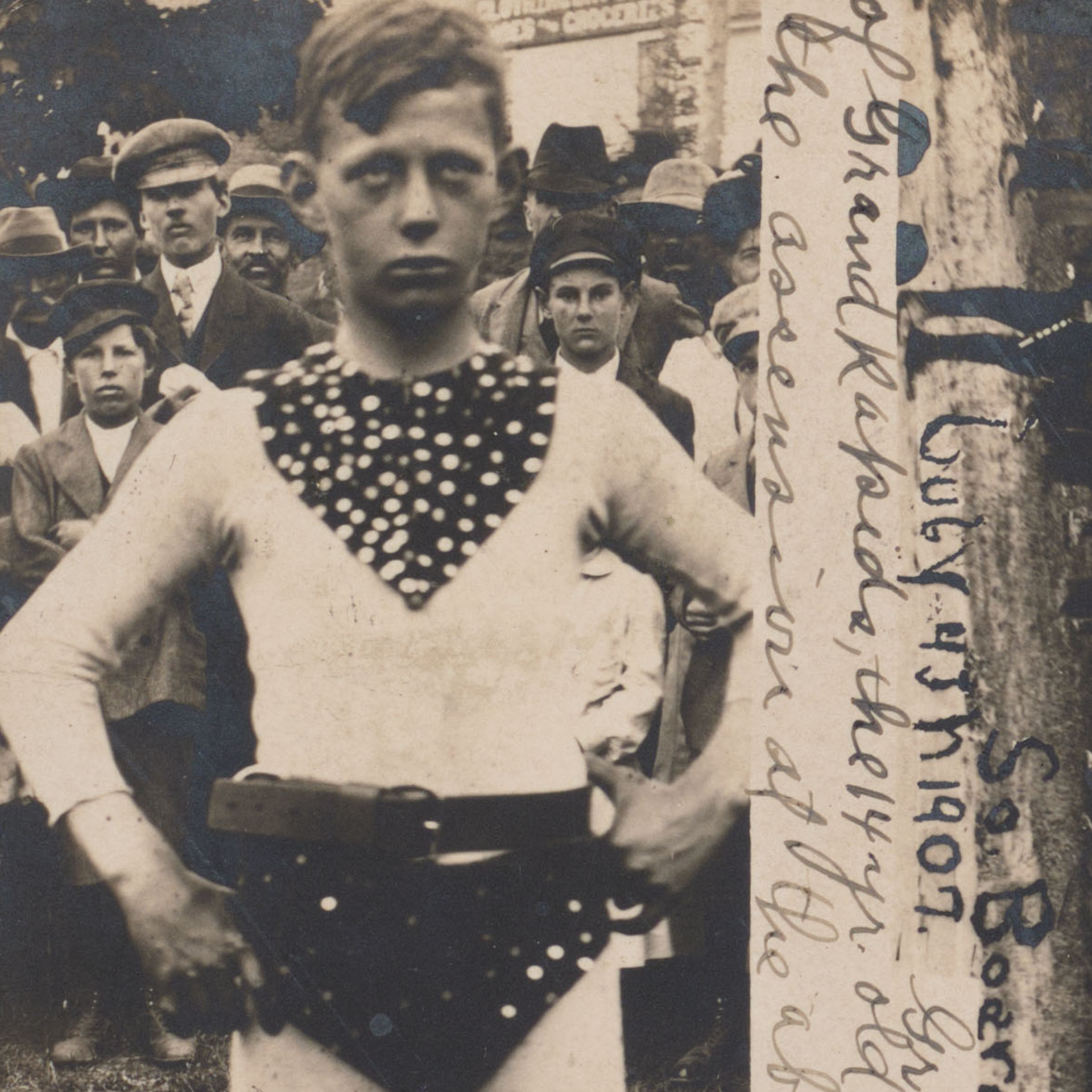
Pioneering Aeronauts
Pioneering Aeronauts
The third edition of Encyclopedia Britannica, published in 1797, was the first to include an article on “Aerostation,” the science of operating lighter-than-air aircraft. It was likely written by James Tytler, who made his own balloon ascension in 1784 in Edinburgh. The accompanying illustrations include the scene of the Montgolfiers’ experimental ascension at Versailles, in which a sheep, a chicken, and a duck (all unharmed) were the first animals to experience balloon flight.
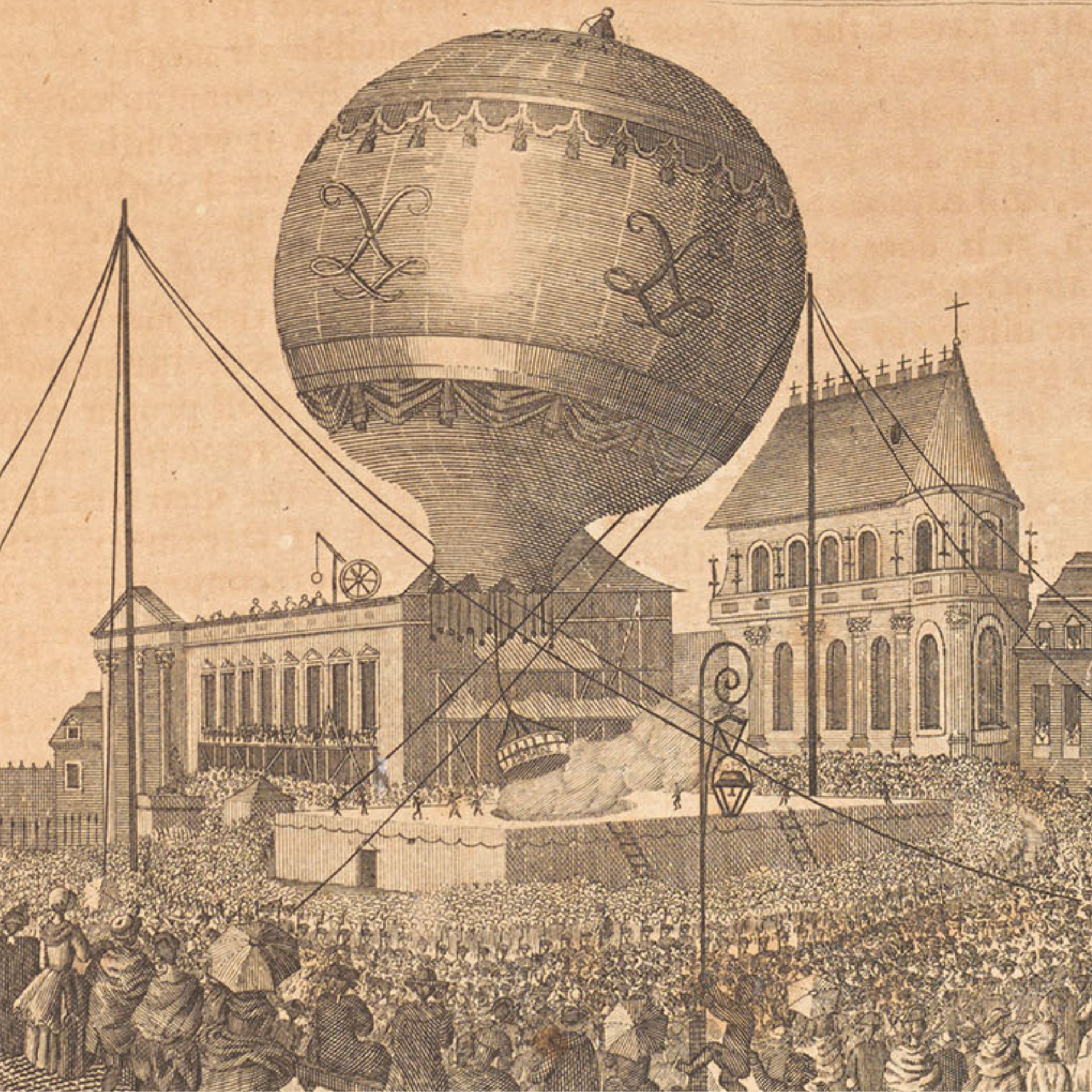
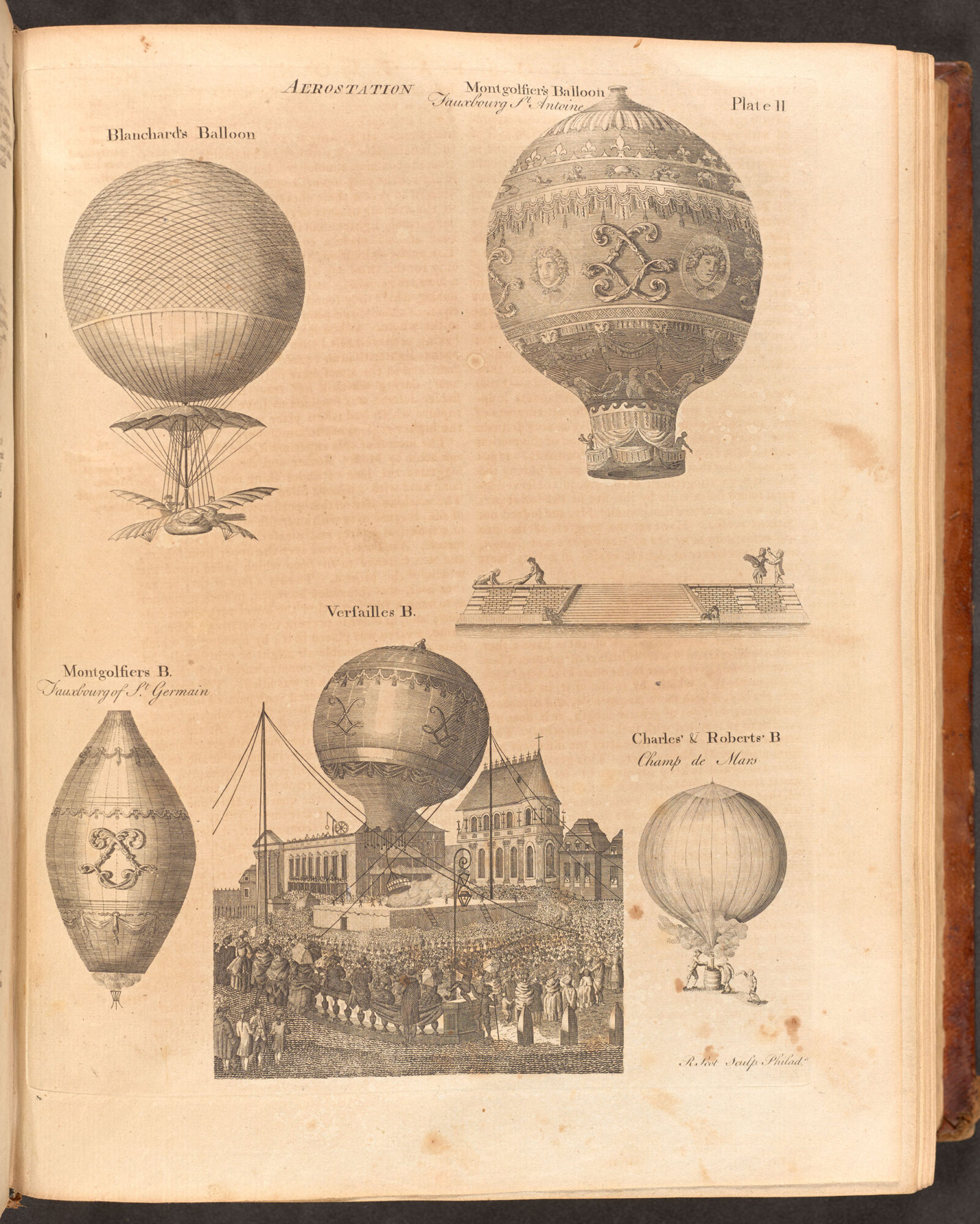
“Aerostation.” In Encyclopedia Britannica, or, A Dictionary of Arts, Sciences and Miscellaneous Literature. 3rd ed. Edinburgh: A. Bell and C. MacFarquhar, 1797.
American newspaper readers avidly followed the successes of the Montgolfiers and other early pioneers of flight. While a number of Americans conducted unmanned balloon flights between 1785 and 1793, it remained for a French aeronaut to complete the first successful manned flight in America. Jean-Pierre Blanchard, the leading aeronaut in Europe, quickly generated a sensation upon his arrival in Philadelphia. His first balloon flight in America was chronicled in his book, Journal of My Forty-Fifth Ascension, published the same year.
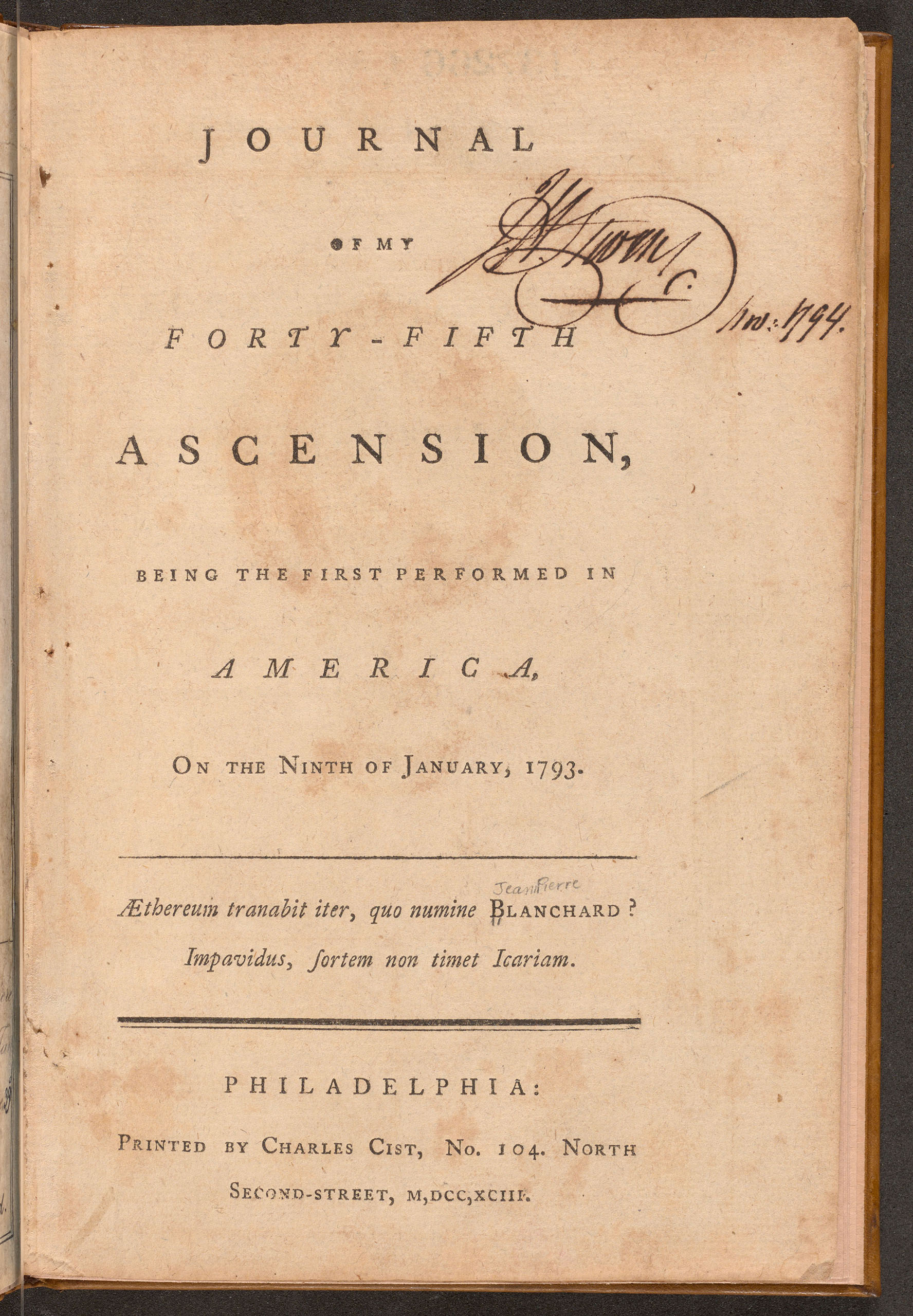
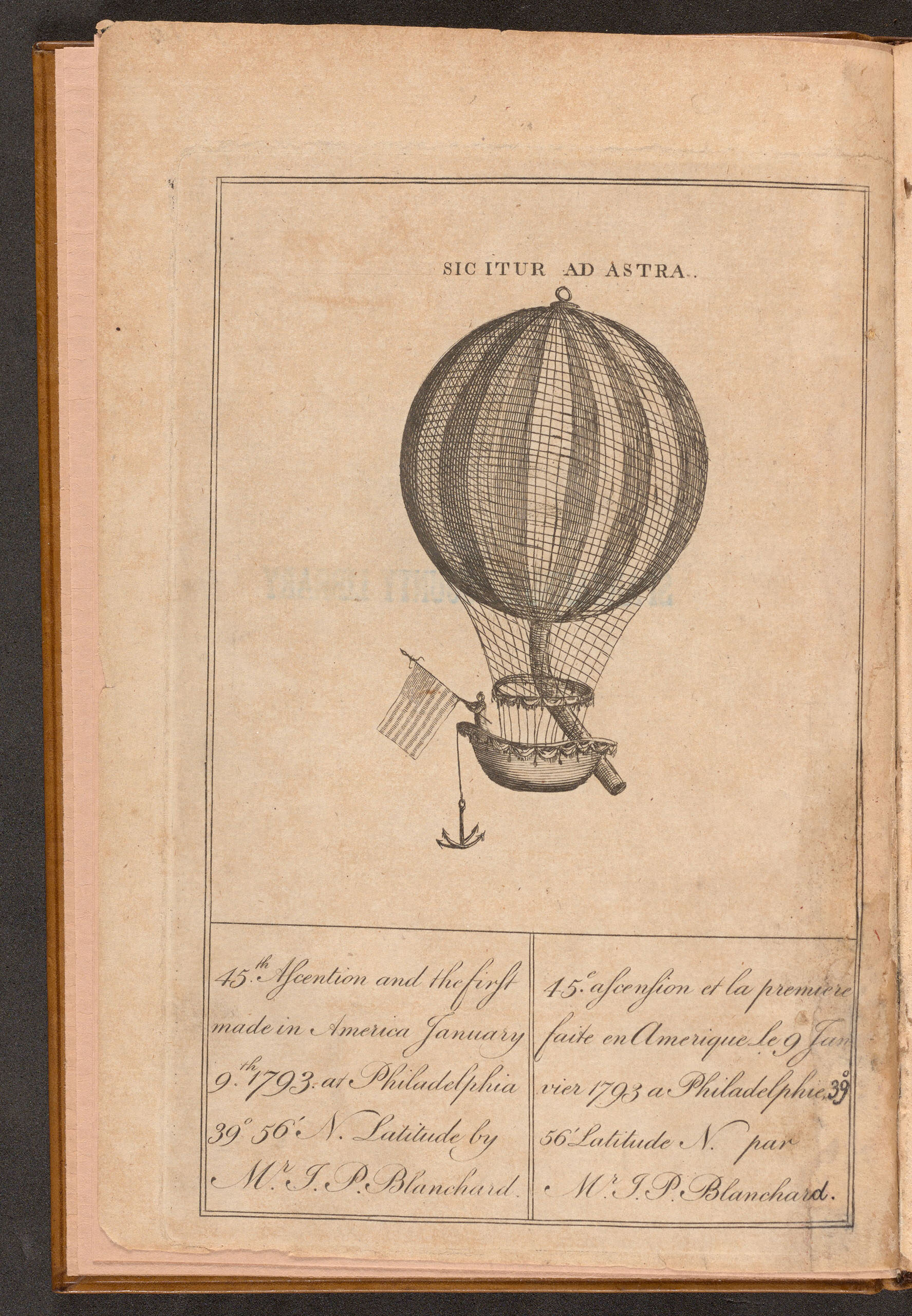
Blanchard, Jean-Pierre. Journal of My Forty-Fifth Ascension: Being First Performed in America, on the Ninth of January, 1793. Philadelphia: Charles Cist, 1793.
By the 1830s, American ballooning had reached its heyday. American aeronauts made technological improvements that allowed them to achieve higher and farther flights. John Wise, who made over 400 balloon flights in his lifetime, published A System of Aeronautics in 1850, containing a history of flying machines, a brief biography of Wise’s own flights, and instructions for making hot air balloons. It was later revised and expanded as Through the Air: A Narrative of Forty Years’ Experience as an Aëronaut. Six years later, at the age of 71, Wise died during a balloon flight over Lake Michigan.
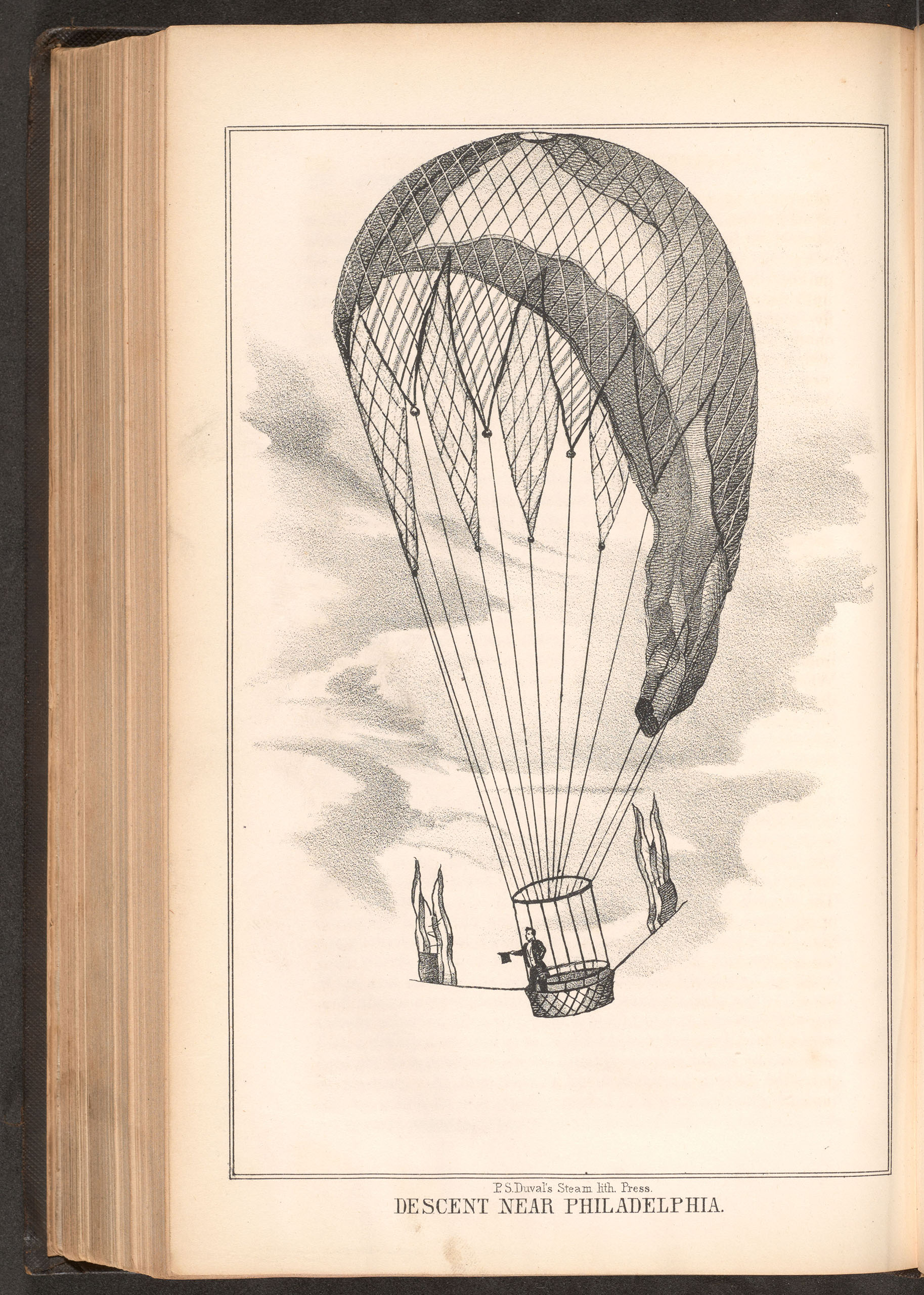
Wise, John. A System of Aeronautics: Comprehending Its Earliest Investigations, and Modern Practice and Art. Philadelphia: Joseph A. Speel, 1850.
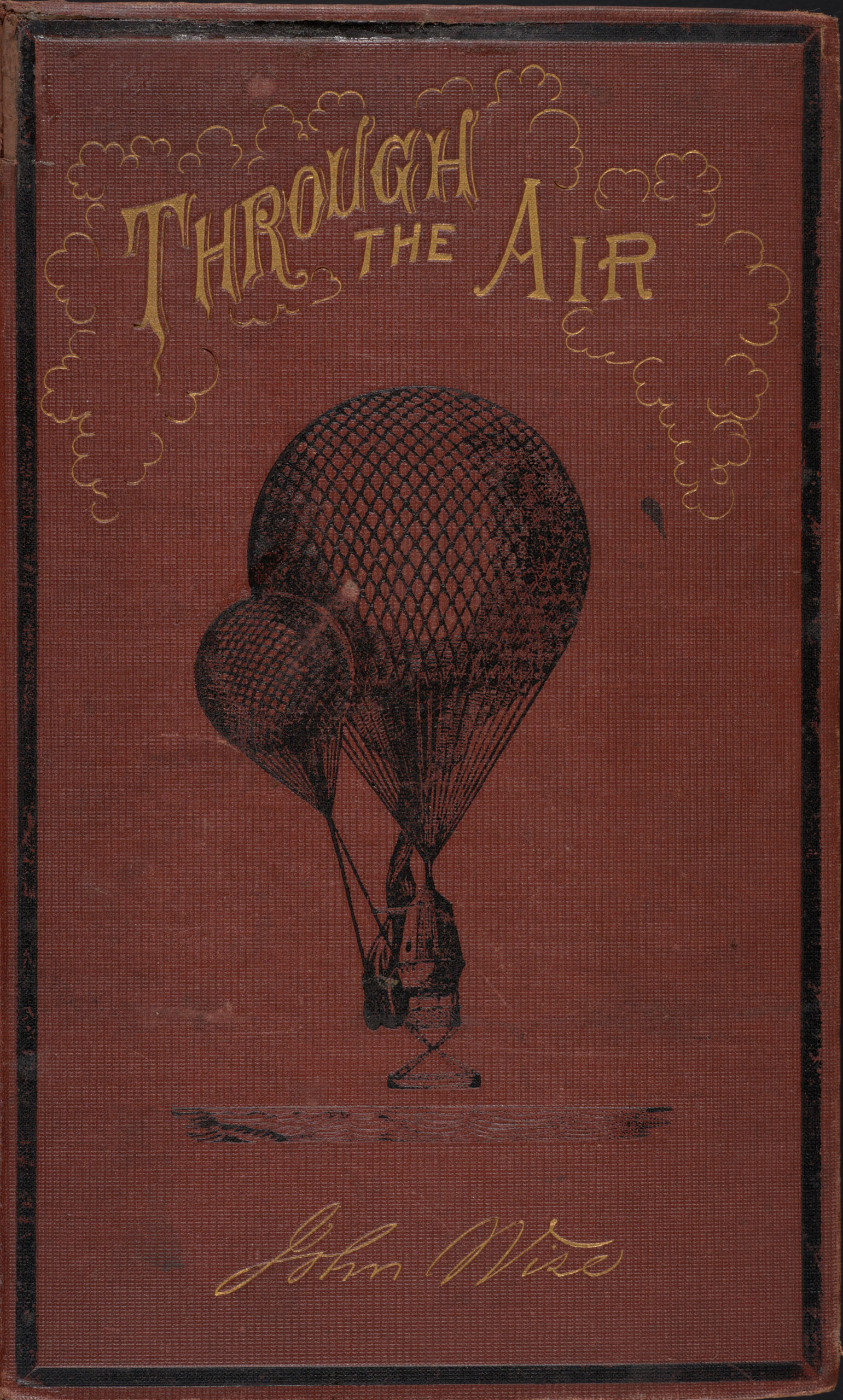
Wise, John. Through the Air: A Narrative of Forty Years’ Experience as an Aëronaut. Philadelphia: To-day Printing and Publishing Co., 1873.