

DECLARATIONS
No. 63 (Spring 2026)
Table of Contents
And I Am Telling You
Paul J. Erickson
Randolph G. Adams Director
William L. Clements Library
Americans are a declaring people. We declare things ranging from love to bankruptcy. Much less often, we declare martial law, or war (or at least Congress does, on our behalf). These declarations do two very specific things. First, they tell someone something and typically also offer an explanation. Second, they identify who is doing the telling. Sometimes it’s the speaker, sometimes it’s the government, or the nation. And sometimes it’s a group of people who have gotten together to make a statement, and have signed their names to the document so that everybody will know who is declaring.
The collections of the Clements Library are filled with different types of documents from America’s past that did similar sorts of things, but their different names tell us a lot about their creation and reception. Petitions of redress were a form of making a complaint and asking for repair, often made to the government. Many of our official documents from eighteenth-century Britain are proclamations, often from the king. They are announcements, and they contain all the authorization they need in their first few lines—the royal imprimatur is right there.
Of course, when readers in the United States see the word “declaration,” they usually think of the Declaration of Independence, which you may have heard is soon to mark an important anniversary. The Declaration of Independence changed the world. It wasn’t the first time that a colony had tried to split off from its imperial progenitor, but it was the first time that the colonial subjects had gotten together to formally declare independence, and then made it stick on the battlefield.
Danielle Allen’s remarkable 2014 book Our Declaration observes that “democracies are built out of language,” and that the Declaration is a very particular form of written language—a memorandum, one that “announces and, thereby, brings about a change, while also explaining it” (43, 85). Allen’s intensely close reading of the Declaration also stresses the importance of the collective doing the declaring, something that is stressed three times in the first four lines of the Declaration: “In Congress, July 4, 1776, a declaration by the representatives of the United States of America, in general congress assembled.”
Although the Declaration was a work of collective authorship, most Americans would not have encountered it that way. In the summer of 1776, the first way most people would have experienced the Declaration was by hearing it, not by reading it for themselves. Copies of the Declaration were printed for distribution up and down the Eastern Seaboard, and those copies were read to gathered crowds in town squares, taverns, and other public gathering places. While the content of this public recitation was new, its form was not. The public declaration of a fact (one’s salvation), supported by evidence (a set of stages of religious experience), was a common occurrence in many of the American colonies, dating back to the conversion narrative that was required for church membership in Puritan New England—a status that in the Massachusetts Bay Colony was a requirement for “freemanship,” which carried the right to vote.
This form of expressive and persuasive public speaking was an important cultural legacy of the Declaration of Independence, just as its closely argued polemical style would influence American political writing for decades. Throughout the nineteenth century Americans would practice “declamation” in schools and churches, but also on their own time, with the help of countless instructional books. To take only one example, Beadle’s Dime Stump Speaker from 1884 offered readers a selection of humorous, patriotic, and moralistic prose pieces to practice reading aloud. These cheap pamphlets that instructed Americans in the art of declaring appeared for decades, instructing generations of aspiring speakers in how to make an argument and support it with evidence.
What likely was not part of the public readings of the Declaration of Independence in the summer of 1776, however, was what I would argue is one of the most important parts of the document: the list of the signatories. Those names weren’t part of the public readings because the document had not yet been signed. The text that was first printed by John Dunlap on July 4, 1776, only contained two names: John Hancock, President of the Congress, and Charles Thomson, the Secretary. Congress didn’t get around to asking Timothy Matlack, Thomson’s assistant, to create a handwritten version of the Declaration of Independence on parchment until July 19. That document, now held in the National Archives, is the one that we are used to seeing printed in facsimile, with all its idiosyncratic capitalization and the long list of fifty-six signatures, dominated by John Hancock’s swooping script. The Continental Congress did not circulate an official copy of the Declaration of Independence to all of the states until it had all of these signatures. Mary Katharine Goddard, a printer in Baltimore, created the first printed version containing all of the names in January 1777.
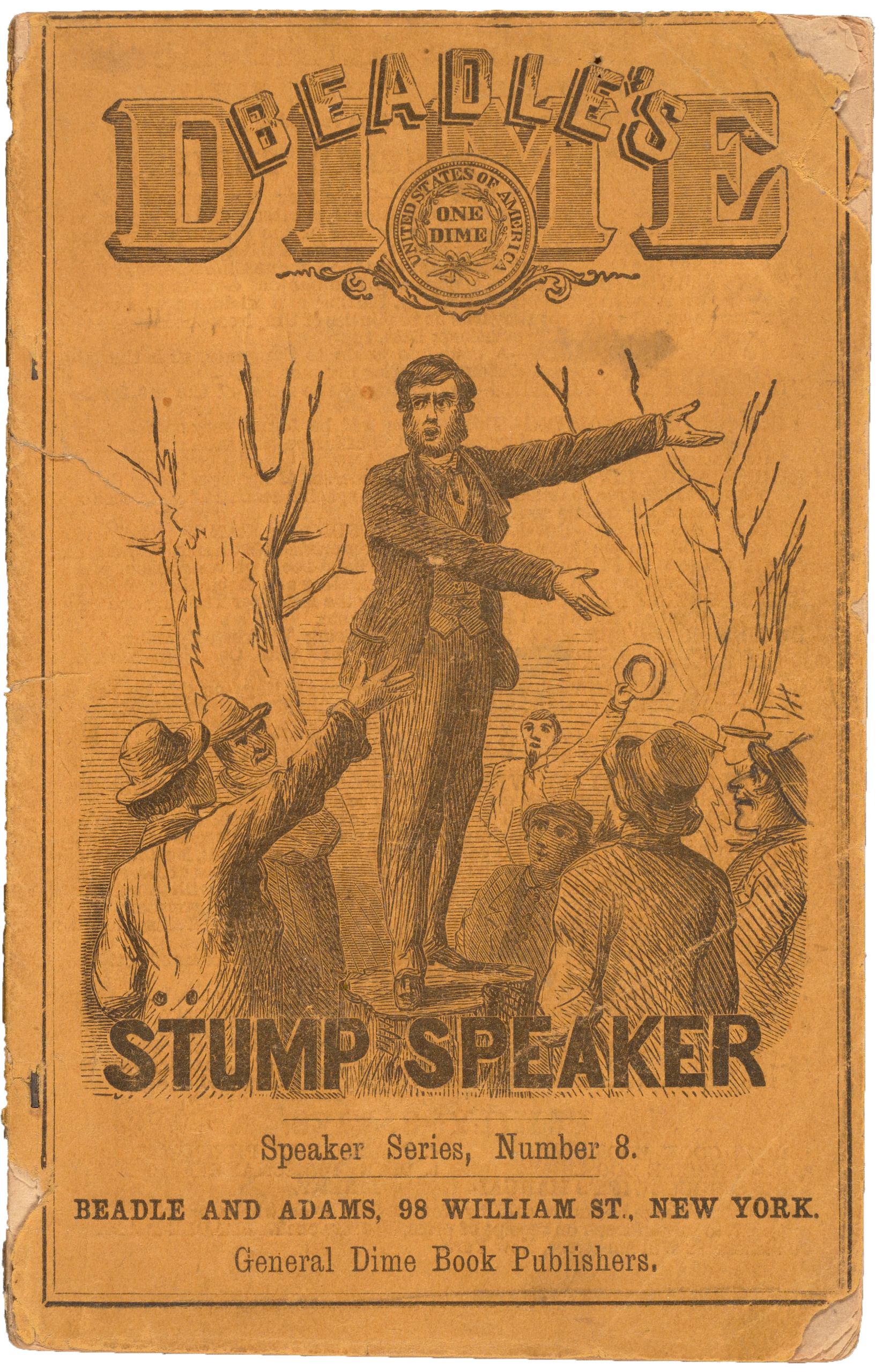
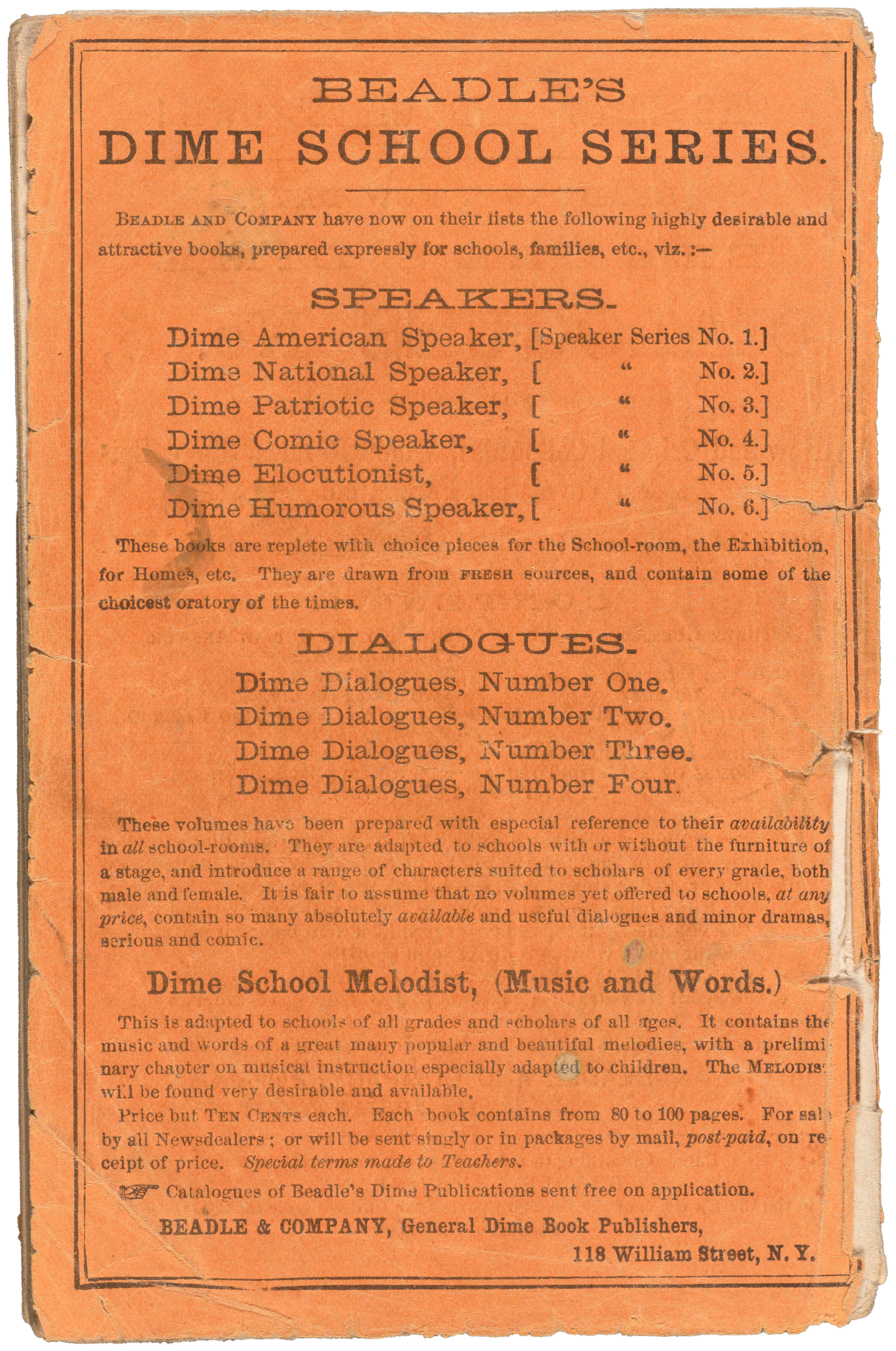
In the nineteenth century, popular publishers like Beadle & Adams put out countless pamphlets like this one, which provided Americans texts to practice the art of public speaking. By effectively reenacting the public reading of the Declaration of Independence, people declared their Americanness through the act of public speaking.
The Declaration of Independence changed the world. It wasn’t the first time that a colony had tried to split off from its imperial progenitor, but it was the first time that the colonial subjects had gotten together to formally declare independence, and then made it stick on the battlefield.
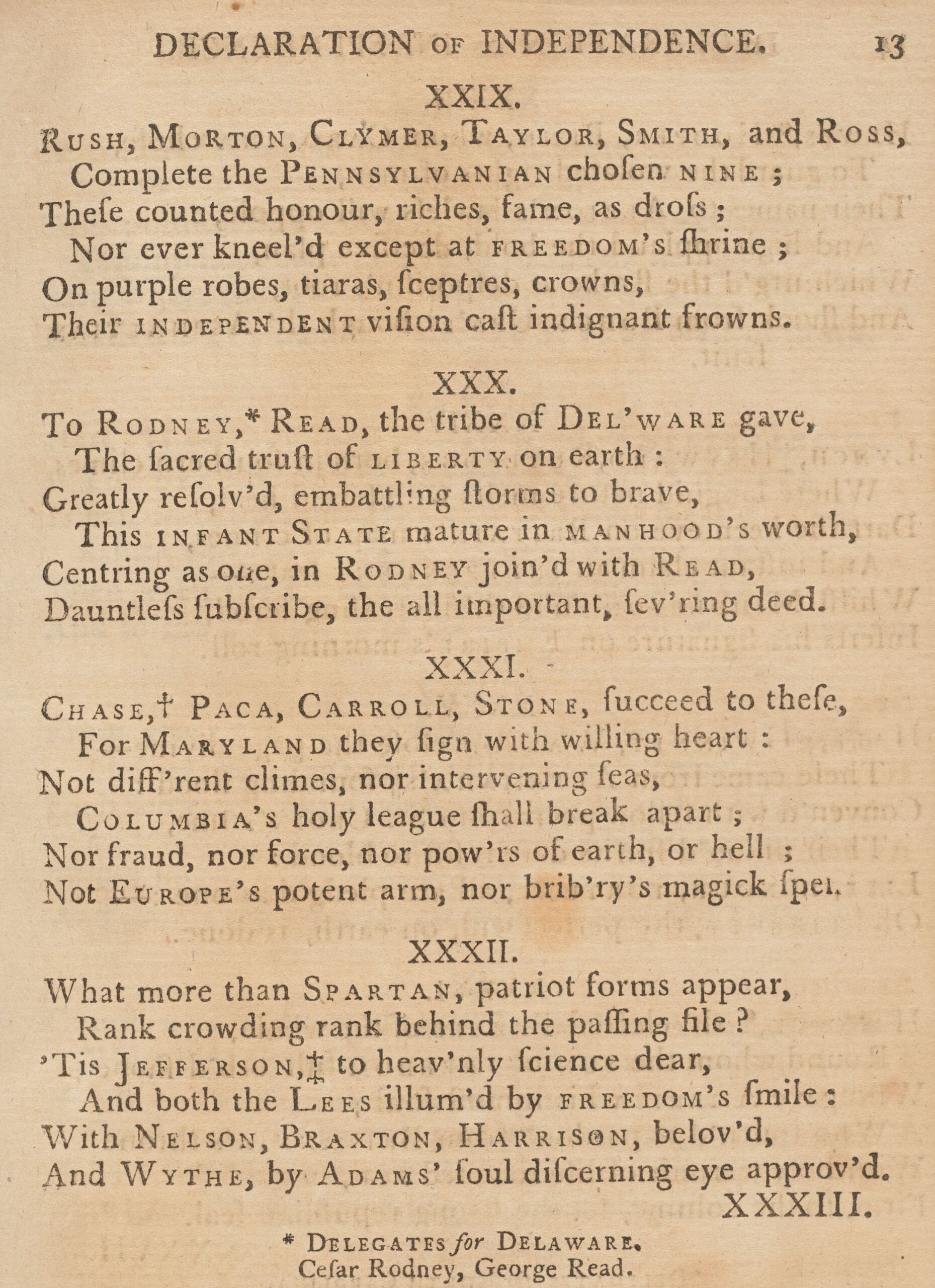
George Richards’ 1793 poem “The Declaration of Independence” highlighted the names of the signers of the Declaration (grouped by state), calling attention to the portion of the document that is most often ignored.
The signatures matter because they are what made the Declaration a declaration supported by specific, identifiable people, rather than a proclamation issuing from a governmental body (the Crown, Congress, etc.). Those fifty-six men all made a distinct pledge in the final line of the Declaration of Independence: “And for the support of this Declaration … we mutually pledge to each other our Lives, our Fortunes and our sacred Honor.” The list of names was so important that George Richards, a now largely forgotten poet, wrote “The Declaration of Independence, a Poem” in 1793 and structured its belabored stanzas around listing the names of all of the Declaration’s signatories. By signing the Declaration, these people were saying: I am telling you that I believe this.
Declarations took multiple forms in the American past, and were put to different purposes, as the contributions to this number of The Quarto will show. However, they all share some common declarative qualities. They seek to state a self-evident truth clearly, and they strive to make readers aware of who is doing the stating. All of these declarations are, among other things, political speech. In these times of artificial intelligence and deep fakes and astroturf campaigns, it is critical to be reminded of what political speech can be, of what can happen when we declare things clearly. Alice Hubbard summarized this aspiration perfectly in her 1908 manifesto “Woman’s Work,” recently acquired by the Clements: “I shall compliment you by using plain, direct and simple speech.… You may not agree with what I say, but you will understand what I mean.”