
By Samantha Hamilton, Graduate Instruction Assistant
The Clements Library is adding new leaves but not in the form of books. Planted during summer 2026, a native plant garden now sits on the eastern side of the century-old building. Beds of local wildflowers and grasses comprise the biodiverse plot, with some being directly cultivated from seeds gathered around U-M. These plants will contribute new sights and smells to the grounds once established, enhancing the library’s already impressive landscape.
Plants in the Garden
An assorted collection of pollinator-friendly species makes up the library’s new garden. It exclusively hosts plants that are native to the U.S. and capable of supporting wildlife, providing valuable nectar and seeds to local insects and birds. Most are also low maintenance, requiring less water and fertilizer than non-native alternatives. These plants confer not just ecological but also aesthetic benefits. Their overlapping bloom times will ensure that the library’s exterior will be decorated with deep colors throughout the year.
The garden, planted in the library’s east plot, rests directly above a subterranean storage structure built in 2016 to stow collections. A variety of plants, from daffodils and lilies to stubborn weeds, have called the plot home before the current garden was established. Today, a total of eight, carefully selected species can be found there, each making a one-of-a-kind contribution to the redesigned area. These new residents are planting deep roots and here to stay.
Most of these native plants are slow-growing and will require years to reach maturity. At this early stage, they may be indistinguishable from one another and simply look like short green tufts or bundles of bare twigs. Over time, they will evolve into lush shrubs complete with eye-catching flowers and fruits. The garden will come to resemble what the local environment looked like before intense human development, offering a unique, nature-based window into Michigan history. Thanks to these plants, visitors will no longer have to step inside the Clements and dig through its materials to be transported to the past!
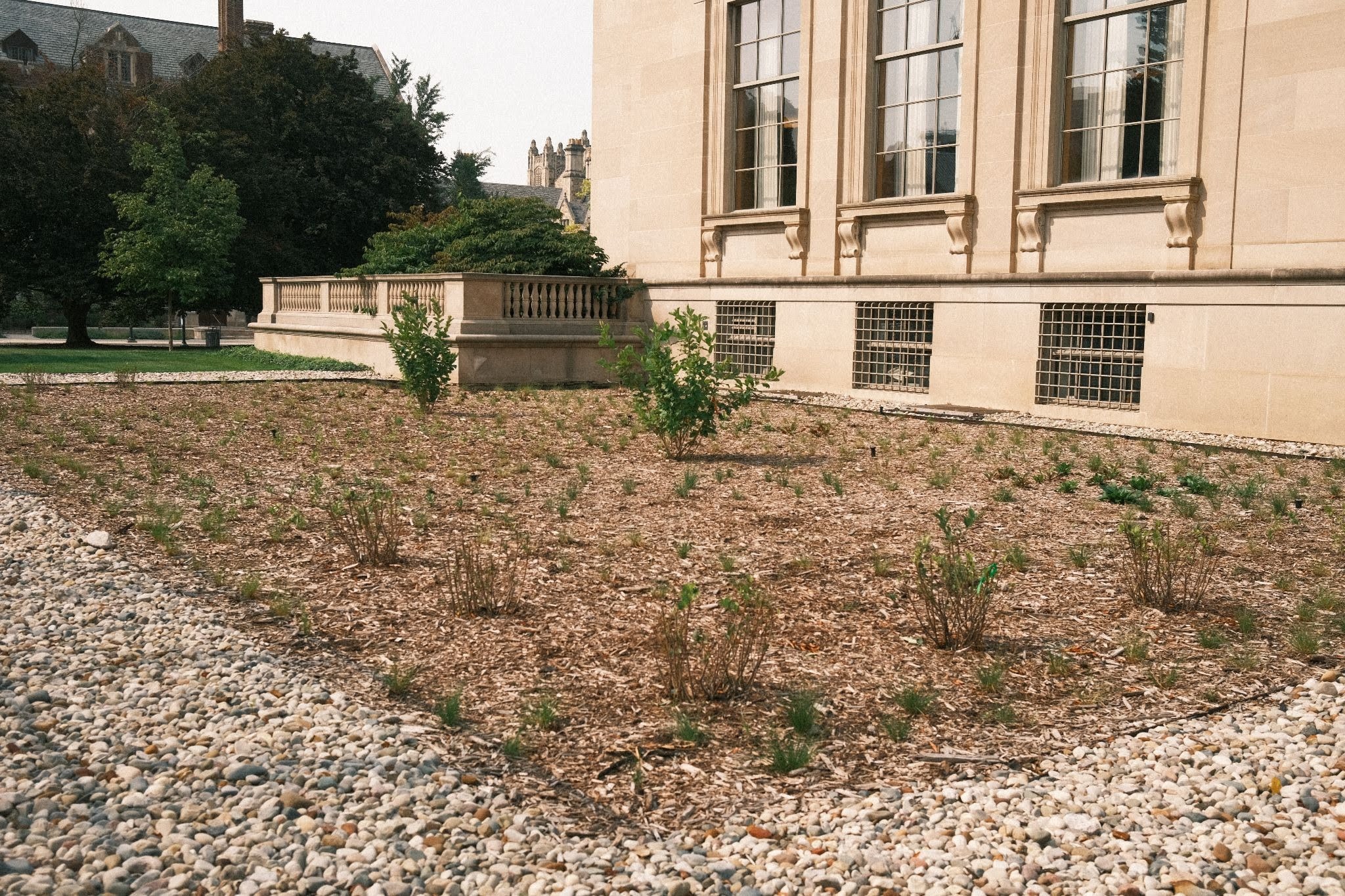
The newly planted native garden in August 2026.
Plants in the Stacks
The garden may be a new addition to the library, but its plants have long lived in its stacks in the form of botanical descriptions and illustrations. In fact, much can be learned about each native plant species from the books and manuscripts found in the storage space directly below the garden. Eighteenth- and nineteenth-century naturalists studied many of these plants and wrote down their pioneering observations in rare materials, including letters, held by the Clements. Though imperfect, their works formed the foundation of American plant science and were authored by notable botanists such as John Bartram (1699-1777) and Asa Gray (1810-1888). Letters exchanged between botany giants that are found in the Science and Medicine Collection also made mention of certain species.
Botany books aside, these native plants were also mentioned in old land surveys, gardening manuals, and even medical texts. These sources reveal the myriad historical uses of each species, proving that they had more than an ornamental purpose. Some were edible toppings on traditional dishes; others were processed into textile dyes. Many were used as cure-alls for common ailments. After exploring these materials, it became clear that each species has a rich yet little-known story that deserves to be told.
Interactive Map
I stitched together excerpts from these wide-ranging works, which span the eighteenth and nineteenth centuries, to describe each plant as early Americans had seen and understood them. Presented as an interactive map, these descriptions will walk you through the species’ physical characteristics, native habitats, and more while including visual materials drawn from our in-house sources.
In addition to this digital tour, be sure to visit the new and improved garden during your next stop at the Clements Library. The growing plants might look inconspicuous, but there’s more taking root than meets the eye!
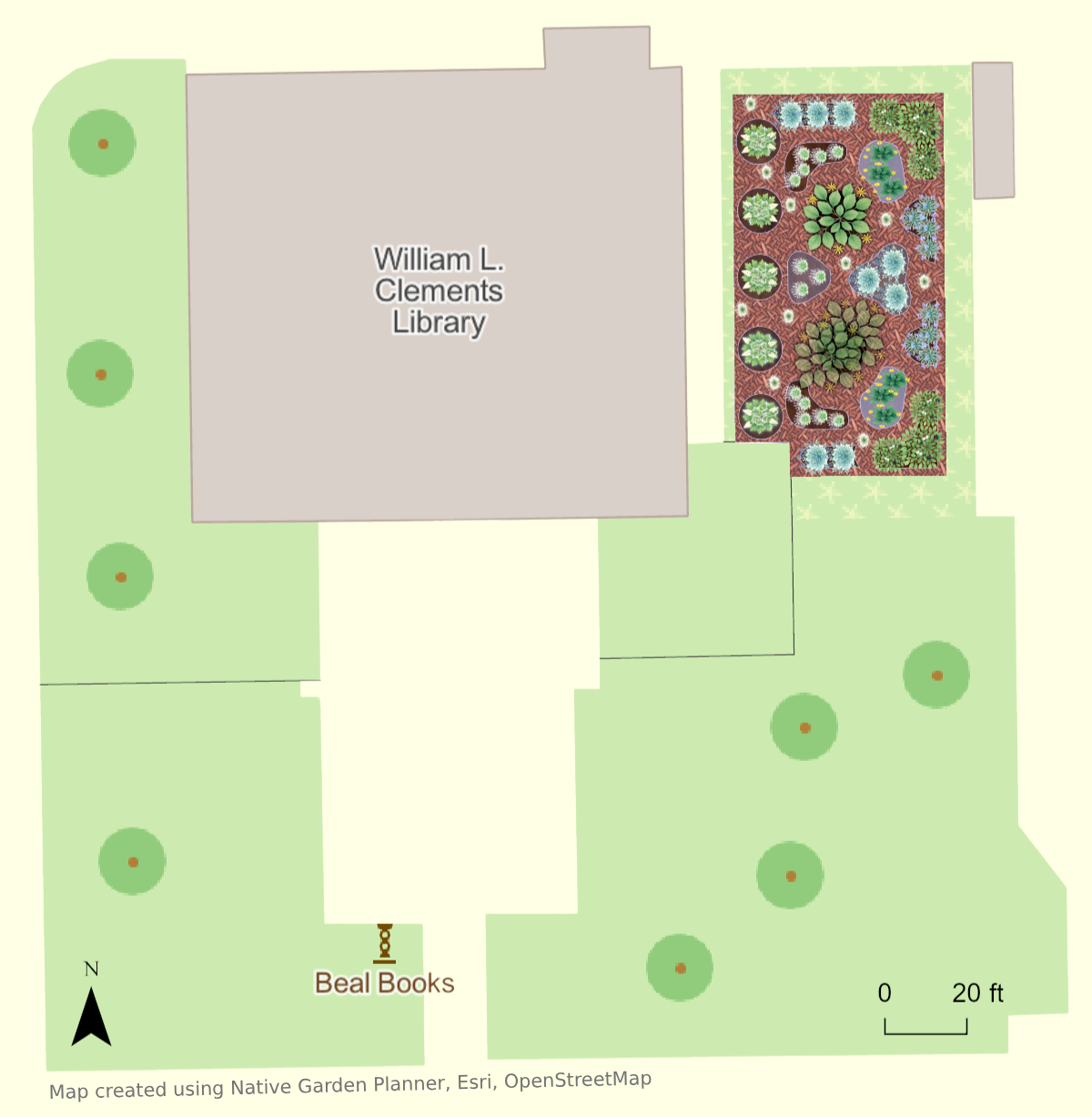
The newly planted native garden in August 2026.