by Sam Huck | Oct 16, 2026 | Publications
Any gift to the Clements is, in a real sense, a declaration of support—for preserving the fragile, irreplaceable evidence of the past and making it available for study. It says you believe primary sources still matter: the letters, maps, books, and documents that let us test ideas against the known narrative and tell fuller, truer stories. Whether it funds conservation, acquisitions, teaching, fellowships, or public programs, your generosity becomes a public commitment to stewardship and access—helping the Clements Library carry its mission forward for the next generation.
by Sam Huck | Oct 16, 2026 | Publications
What greater declaration can there be than naming a new nation? The “United States of America” made its first public appearance in Thomas Jefferson’s first draft of the Declaration of Independence and remained there until the final version: “In Congress, July 4, 1776 The unanimous Declaration of the thirteen united States of America.” Maps similarly declare names and so enter the competition for the name that endures.
by Sam Huck | Oct 16, 2026 | Publications
Do declarations have to be written or spoken? I refer to the ways individuals communicate meaning, identity, and emotion through embodied, visual, or performative acts—not solely through written or spoken words. In this sense, expression itself becomes a form of declaration, capable of conveying intent and shaping interpretation. I recently viewed the papers of Elizabeth Whipps, a famed facial contortionist (a professional maker of funny faces) from the late nineteenth and early twentieth centuries. Her expressive face was pictured in newspapers, showing her talents through photos of the many and varied expressions that Elizabeth, or Bessie, as she was known, could perform. Her repertoire of facial expressions as a performance act enthralled me, and I argue that they are indeed a type of declaration.
by Sam Huck | Oct 16, 2026 | Publications
When the United States commemorated the centennial anniversary of its independence in 1876, at least one group of citizens did not find cause for unalloyed celebration. They believed that one half of the American people needed a new declaration of liberty, and this they promulgated in dramatic fashion. Their request to formally present a statement at the official ceremonies on July 4th had been refused, with the explanation that there was simply no room in a Centennial designed to celebrate the country’s achievements since its founding, rather than examine its failures. But the image of dignitaries on the platform in Philadelphia’s Independence Square extolling the nation’s success as a democratic republic only galvanized the writers of this new declaration. They decided to seize the stage for themselves.
by Sam Huck | Oct 16, 2026 | Publications
Seth Perry was on board his sloop, lying in Buzzard’s Bay west of Sandwich, Massachusetts, on a cold day in February 1778. The calm was broken by a beckoning shout from land, which reached Perry on deck. The voice belonged to Mr. Pope, who informed Perry that he must stand before a magistrate and declare his allegiance and fidelity to the State of Massachusetts and to the United States. Though expected, the voice was unwelcome. Seth Perry was among many Americans who were hesitant to make a formal declaration in favor of Revolution.
by Sam Huck | Oct 16, 2026 | Publications
For many of us, religion is something we are born into. We often believe because our parents believe, making religion a deeply familial practice that can look different for every household. For some, it means going to church with parents every Sunday. For others, it might involve a bar or bat mitzvah, marking a coming of age within a tradition shared across generations of a Jewish family. In some cases, maybe the extent of religious practice was being baptized as an infant. Those raised in a religious family may not need to formally declare belief, dedication, faith, or commitment to religion. Instead, participating in shared traditions and inherited practices can itself be enough of a statement of faith.
by Sam Huck | Oct 16, 2026 | Publications
We live some 250 years removed from the first Fourth of July, and the Declaration of Independence is more of an idea than anything else. It’s what it tells us about freedom and self-governance that resonates and calls us to action, celebration, or protest. Which is perhaps why each Fourth of July, before I sit in the sunshine and eat a hot dog, instead of reading the Declaration of Independence I think about Frederick Douglass.
by Sam Huck | Oct 16, 2026 | Publications
Americans are a declaring people. We declare things ranging from love to bankruptcy. Much less often, we declare martial law, or war (or at least Congress does, on our behalf ). These declarations do two very specific things. First, they tell someone something and typically also offer an explanation. Second, they identify who is doing the telling. Sometimes it’s the speaker, sometimes it’s the government, or the nation. And sometimes it’s a group of people who have gotten together to make a statement, and have signed their names to the document so that everybody will know who is declaring.
by Isaac Burgdorf | Oct 16, 2026 | Publications
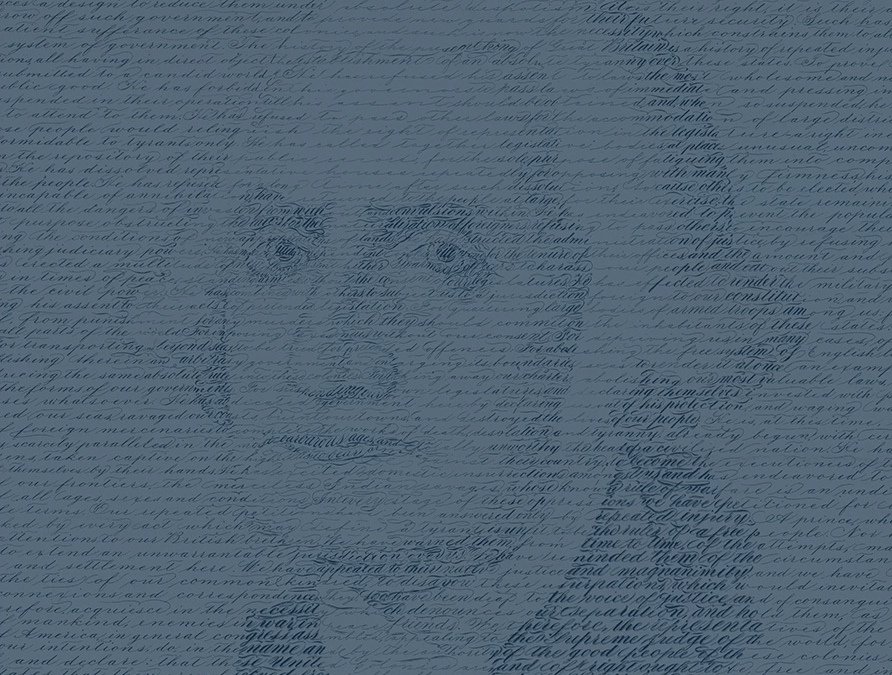
To commemorate the 250th anniversary of the Declaration of Independence, we searched for other examples of “declarations” from the Clements collections.
