
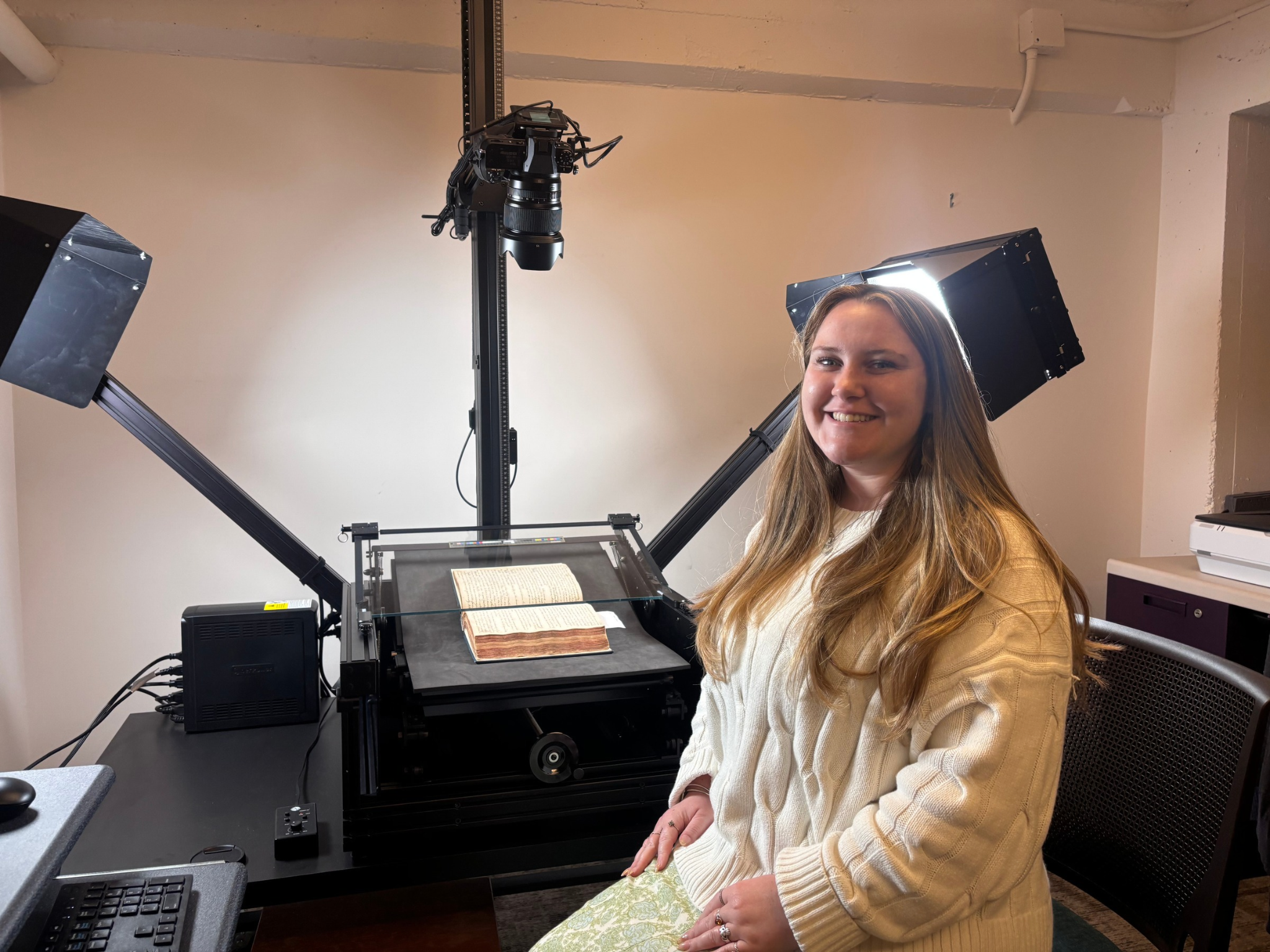
Join the newest member of the Clements Team, Carly Jensen, as she spends the day in her role as our Digitization Specialist!
What drew you to working with American history?
Growing up, I spent most of my summers visiting my extended family in Boston and New York. I fell in love with learning about the American Revolution and the early beginnings of our country. However, attending Gettysburg College for undergrad prompted me to switch to studying more 19th-century history instead. I found myself drawn to women’s history during the Civil War, specifically looking at women in the South and border states.
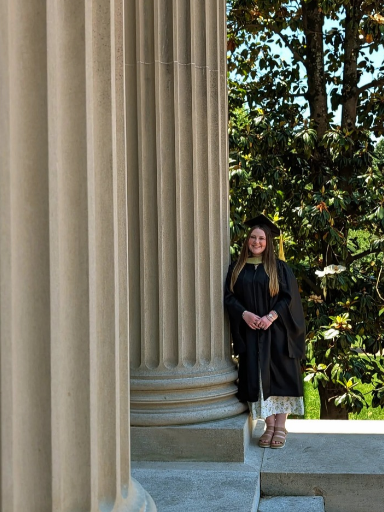
I attended Gettysburg College in Pennsylvania for undergrad and graduated in May 2024! I studied History with a minor in Civil War-era Studies and Public History, which introduced me to archival work. I was very fortunate to have incredible internship opportunities while at Gettysburg, including working at the Seminary Ridge Museum and Education Center, Gettysburg’s Special Collections and College Archives, and the American Battlefield Trust. I also had the chance to do grant-funded research about the connection between spirituals sung by enslaved peoples and the Delta Blues of the 20th century. I felt a passion for archival work and the prospect of making the past accessible through primary sources. This passion led me to pursue my Master’s in Library Science at the University of North Carolina at Chapel Hill!
I just joined the Clements Library a little over a month ago! Although it has been a bit of an adjustment to not being a student anymore, I absolutely love the work I am doing here. I am excited to continue getting to know the collections at Clements and explore the Ann Arbor area.
What work did you do before joining the Clements?
During my two years at UNC, I worked as a graduate assistant at the North Carolina Digital Heritage Center (NCDHC). The NCDHC is a grant-funded project that digitizes materials from cultural heritage sites across the state of North Carolina for free and then houses the images on its website so folks from around the world can view them. This work was an incredible way for me to connect with my new home and learn more about North Carolina’s rich history. Although I didn’t go into graduate school intending on working with digitization, I quickly fell in love with the concept of making the past accessible online in this way.
I was also very involved in the campus community while at UNC! I served as the vice president of the Student Chapter of the Society of American Archivists (SCOSAA). One of my favorite memories in this role was hosting renowned author and archivist Dorothy Berry for a series of panel discussions for UNC students and staff. I also sat on the Information and Library Science Student Association (ILSSA) board as the community development chair. In this role, I helped plan and execute events for the School of Library and Information Science students, faculty, and staff.
What exactly is your job?
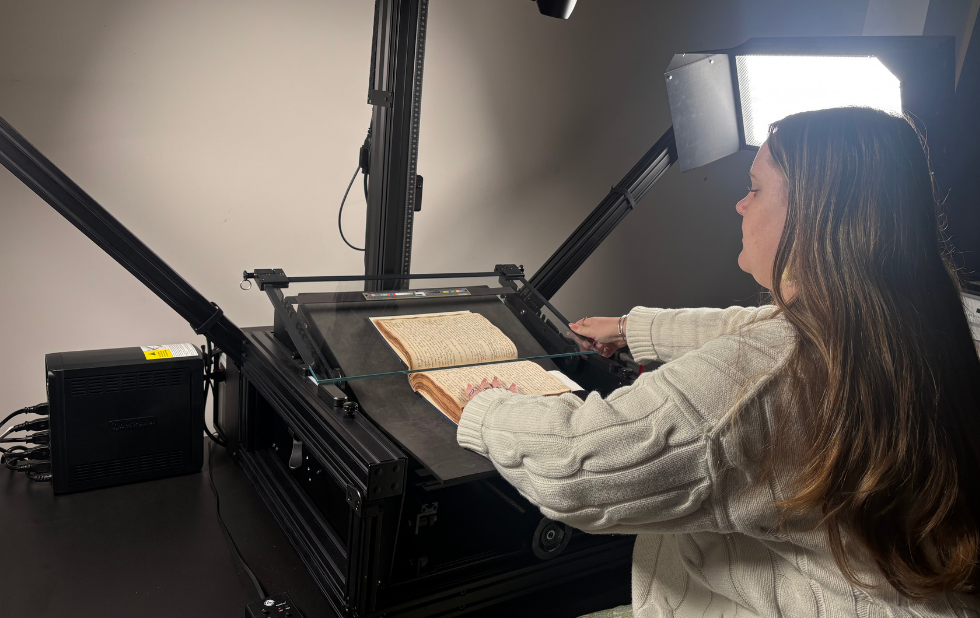
I am a digitization specialist, which means I help make the collections here at Clements accessible online through high-quality scans. We take photos of materials, crop them, and then create basic metadata to ensure that the records are discoverable on our website. Our team primarily uses a Digital Transitions Atom scanner and Capture One photo editing technology to do this work.
What kind of things do you digitize?
I digitize all sorts of things! As of right now, I am mostly focusing on bound volume materials like letterbooks, diaries, and ledgers, but I also work with photographs and ephemera. Basically, if it is in our collection and can fit on the scanner bed, I will digitize it!
What does a typical day look like for you?
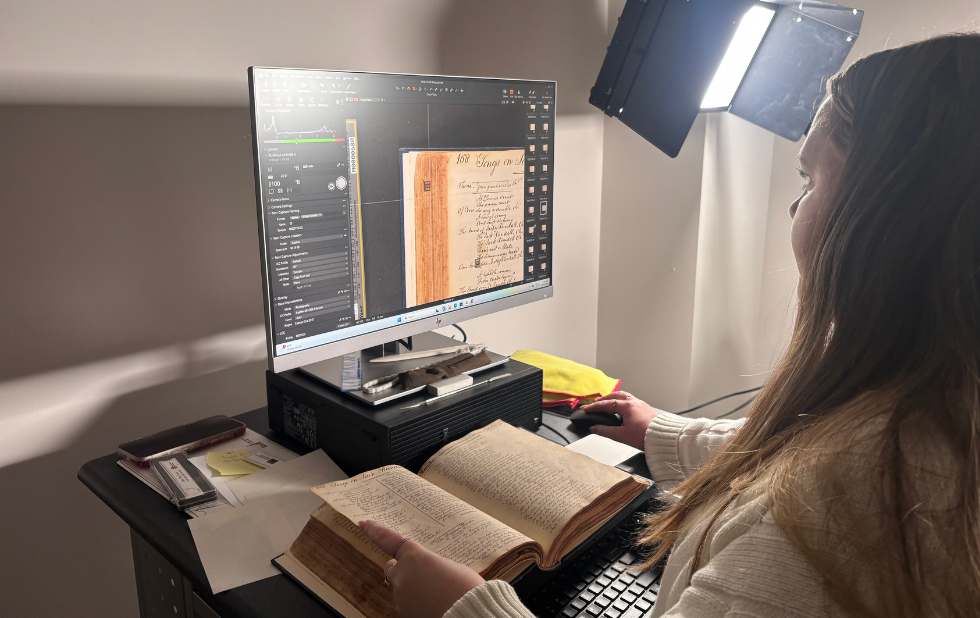
I begin my day by checking out our digitization queue and looking at what is next on the docket for me to scan. Cheney, our manuscripts curator, keeps this well stocked with bound volumes for us to choose from. Once I figure out what I want to scan, I go page the materials from the vault. This is always a fun process because I get to explore what we have in the collection; as I am still fairly new to the Clements, I like to spend my time in the vault poking around a bit to familiarize myself with the collections. After I have my materials, I head into the digitization lab and get set up. I go through all the preflight steps before I begin scanning. Not all the materials I work with have cut-and-dried ways to scan them, so I have to get creative with how I photograph them; sometimes there are little notes stuck inside, and I have to take multiple pictures of the same page to get all the angles. Once I finish a batch, I export the files to the server so I can work on editing the photos in my office. I try to do all my editing in my office so I can free up the digitization lab for other folks who want to scan. Once I finish editing a batch, I move it to the all-staff folder so it can be ready to be uploaded to our website. Finally, I work on the metadata to ensure that the materials are discoverable when they are available online.
If I don’t have time to scan another batch, I’ll go ahead and work on transcriptions. Part of the library’s goals is to have transcriptions available for our collections, and we actually use artificial intelligence to help with the initial transcription process. I get to go back through the rough transcriptions and proofread them to ensure that they are as accurate as possible. Right now, I am working on the Loftus Cliffe papers. Cliffe was an Irish-born soldier who fought for the British Army during the American Revolution. I have really enjoyed reading his letters and hearing about the Revolution through the eyes of a British soldier.
What has been your favorite piece of history that you have digitized?
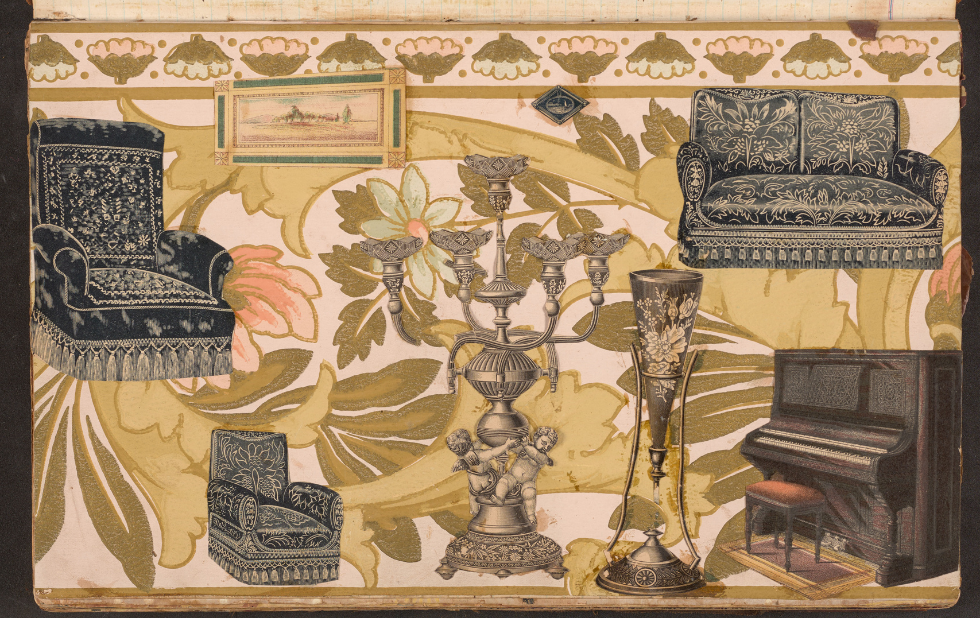
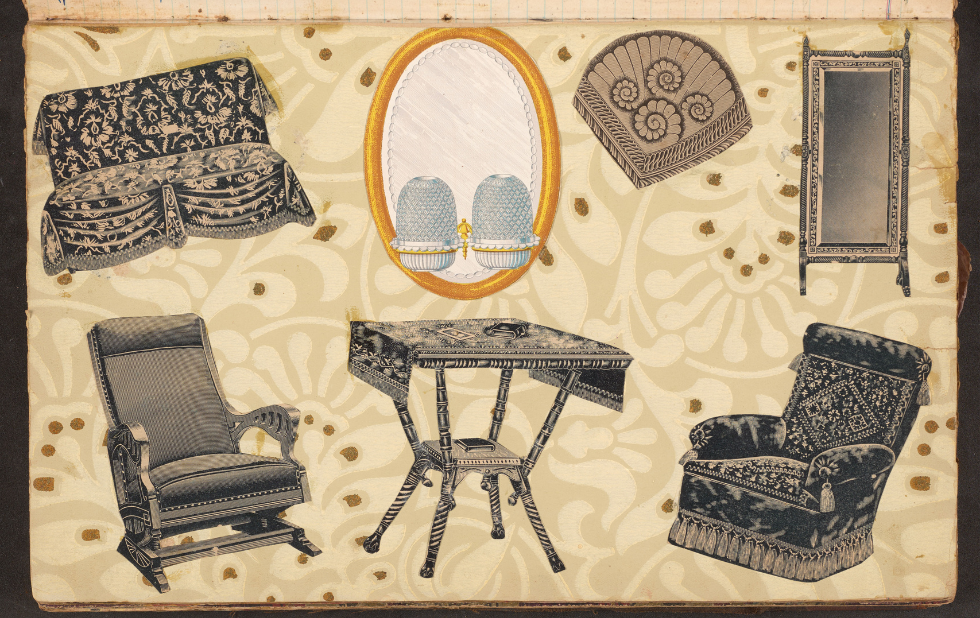
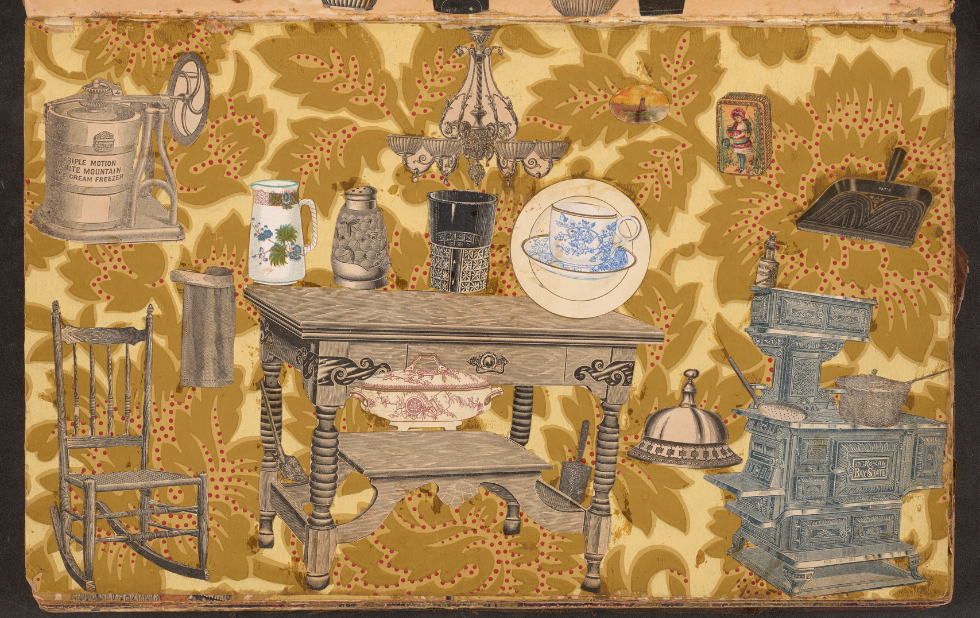
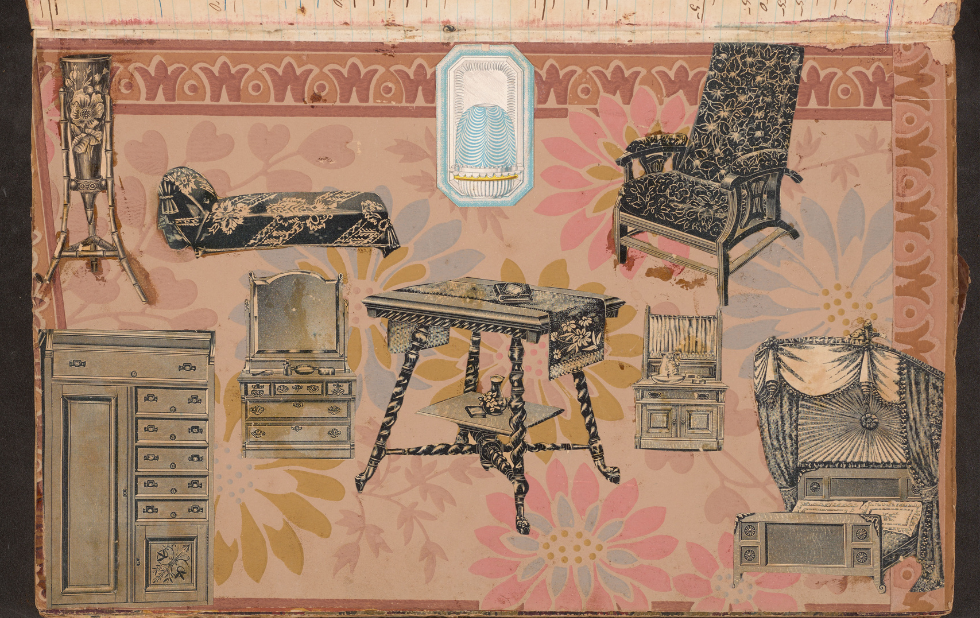
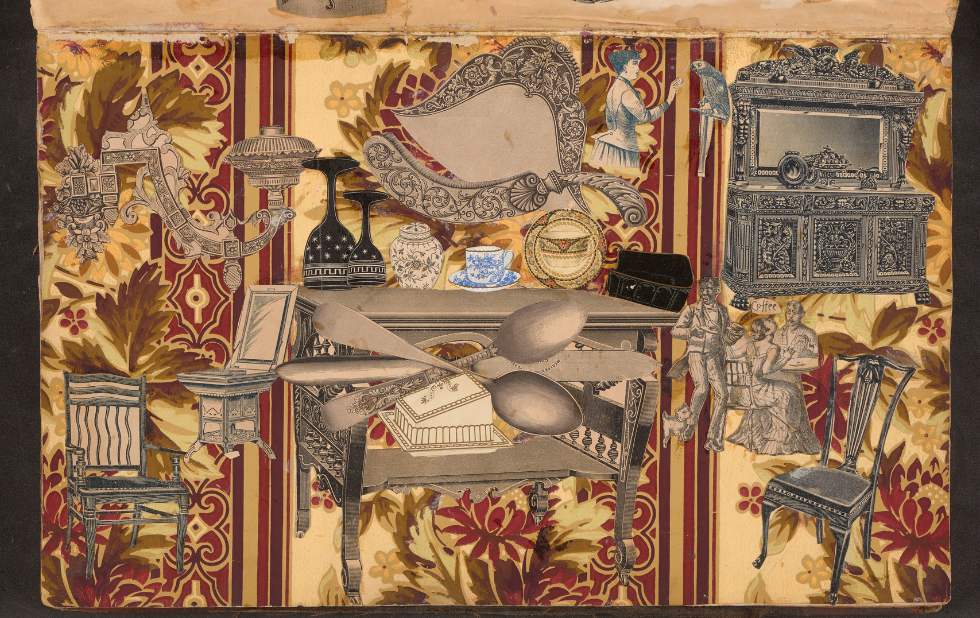
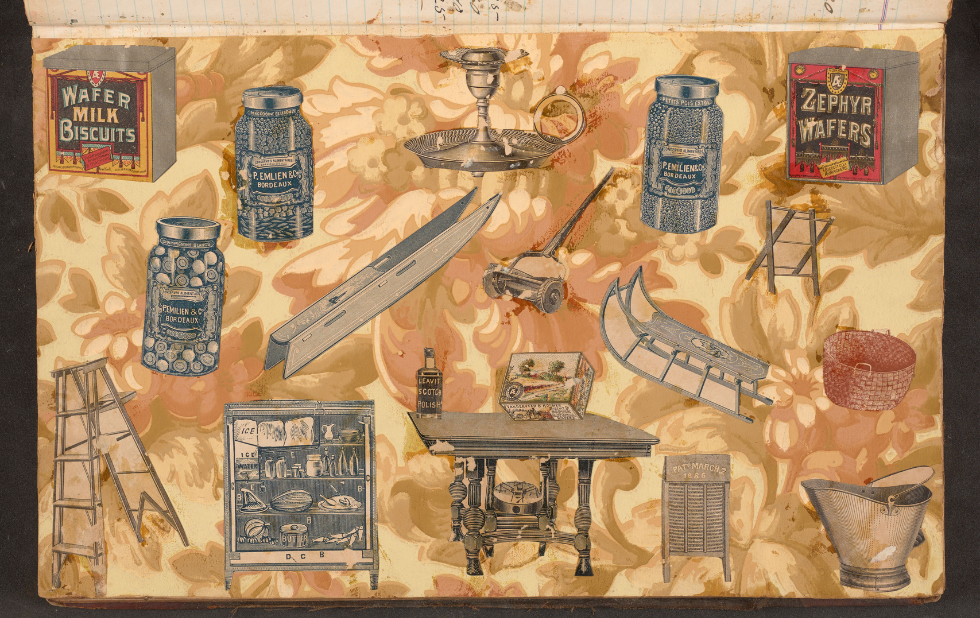
I’ve had the chance to work with some truly incredible materials here at the Clements. So far, I would say my favorite piece that I’ve digitized is the Dollhouse Collage and Cashbook, 1879-1882. What started as a typical ledger written to keep track of cash flow and transactions became a makeshift dollhouse created by an unidentified youth. The child repurposed several of the pages within the cashbook by pasting over them with wallpaper and cut-out images of furniture. I love this piece because it is such a unique example of childhood creativity and crafting. My favorite room is the “liberry” or library, decorated with blue and yellow patterned wallpaper and gorgeous bookshelves and armchairs. Who wouldn’t want to read there?
What is your favorite thing about working with archival materials?
One of my favorite aspects about working at Clements is that I get to go back to my roots and work with materials from earlier American history, and especially materials from the Civil War era! I get to work with folks in the books, graphics, and manuscripts divisions whenever I am digitizing something from their department. I also really enjoy the variety of materials I get to work with, whether it be a diary from the Revolutionary War or a postcard from the Nineteenth century.
Working with archival materials can be an extremely emotional and rewarding experience. There is something so intimate about handling items like diaries that contain someone’s personal writings. They probably had no idea that someone a hundred years in the future would be reading their innermost thoughts, and I feel really honored to be trusted with these materials. Another aspect I think is really fun is that I get to work with materials from places I have been to before. For instance, the other day I digitized a cookbook from the early Nineteenth century from Lancaster, Pennsylvania. A lot of my friends from Gettysburg live in Lancaster, and I have been there numerous times, so it was really exciting to handle historic materials from that area. Archival materials are also just a really interesting way to hear about the past from someone who was actually there to experience it!
What are some surprises that pop up during the week?
Sometimes we get special requests from patrons for photographs of archival materials. This is when I get to collaborate with the reference which is always exciting. I really enjoy learning more about how folks use our collections, and it is incredibly rewarding knowing that my work has a direct impact on someone.
What skills are required in your daily work?
One very important skill is attention to detail. The scans are potentially one of the only ways users will ever see these materials if they cannot come to Clements in person, so I want to ensure that the materials I scan are high quality and provide patrons with the best viewing experience. Another skill is an understanding of how to handle archival materials. Our collection is old, and I am often working with fragile materials that were created hundreds of years ago. It is essential that they are handled carefully while scanning, always using proper supports, and turning the pages slowly. It also helps to have a basic knowledge of photography and photo editing, as well as some understanding of file management.
If you could give one piece of career advice, what would it be?
I would say that it is really important to try new things and take advantage of all the opportunities you have available. Going into my master’s degree, I thought I wanted to work more on the technical services side of special collections. However, I was passed over for all the graduate assistantships in that area, and I ended up working in digitization instead, which was the best possible area for me. Rejection truly is redirection, and if I hadn’t been open to exploring other facets of archival work, I would’ve missed out on that incredible opportunity.
What about aspiring digitization specialists, or people who want to work in an archival library or museum?
I would say getting involved and gaining hands-on experience is the most important aspect of getting into the digitization field! A lot of this job is being familiar with the scanners and editing technology currently available, so if there are any opportunities to volunteer or intern in this area, I would definitely take them! Practical experience will go a long way in furthering your career in this area.