Who are you, Florence Smith Romaine? I could barely find you.

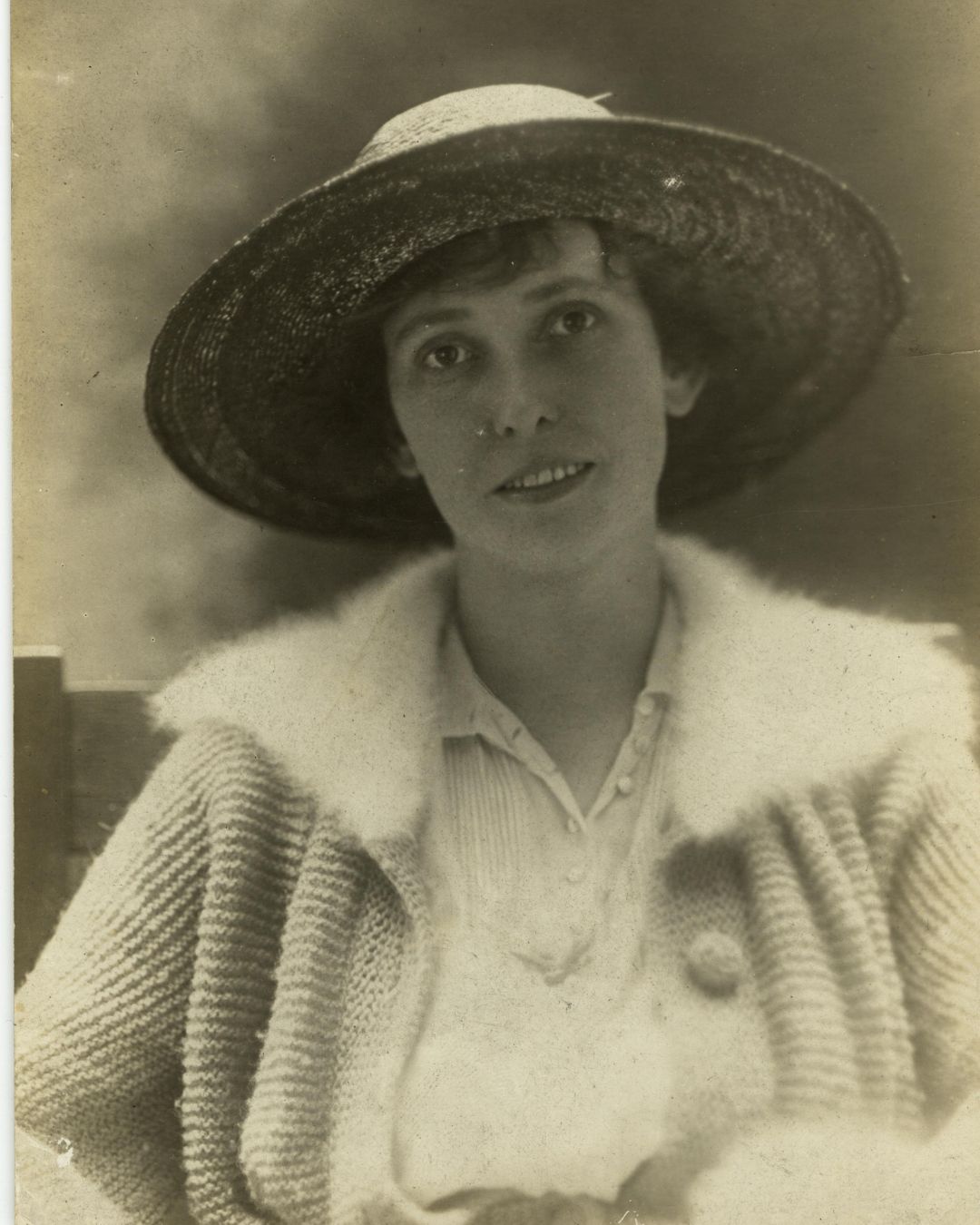
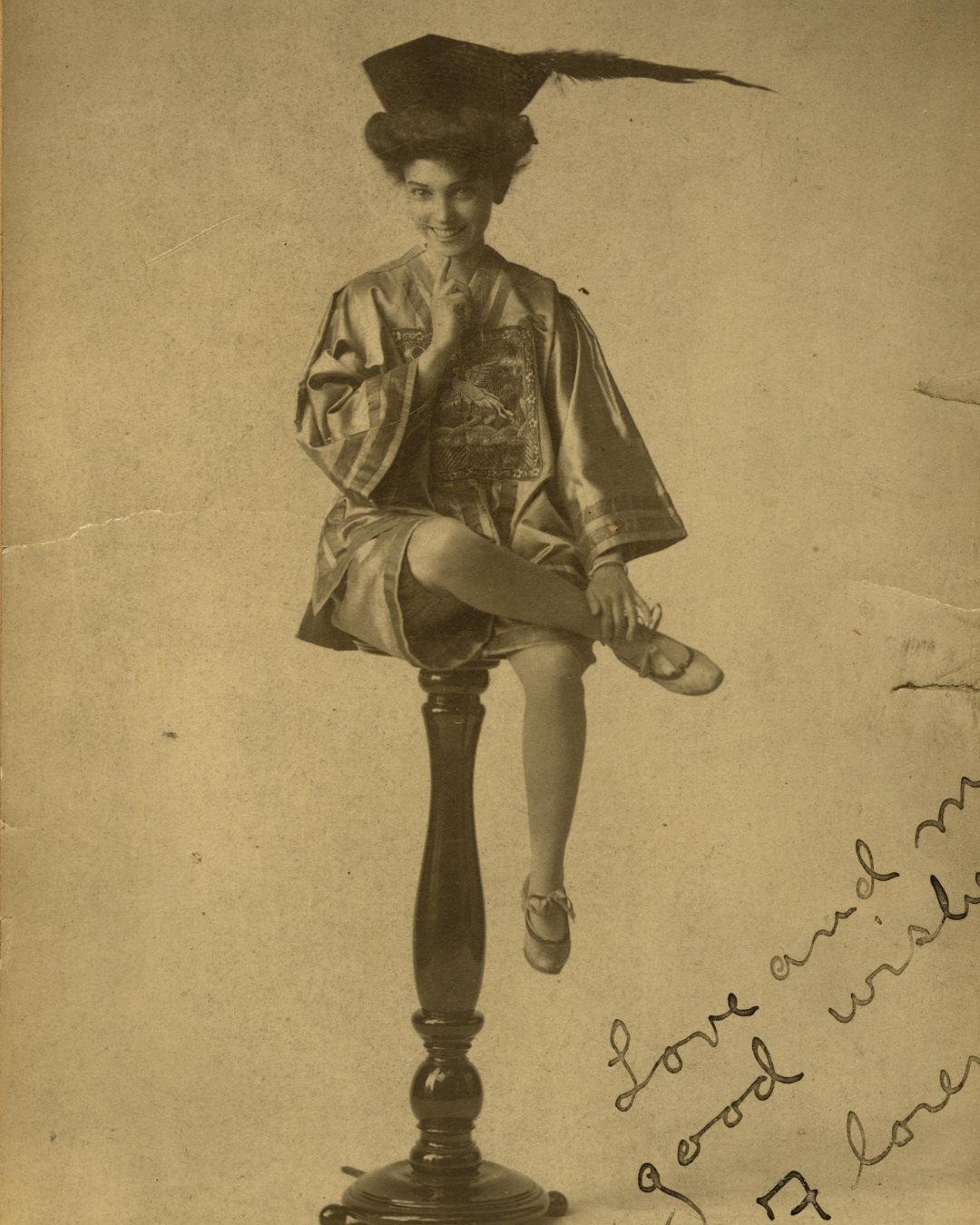
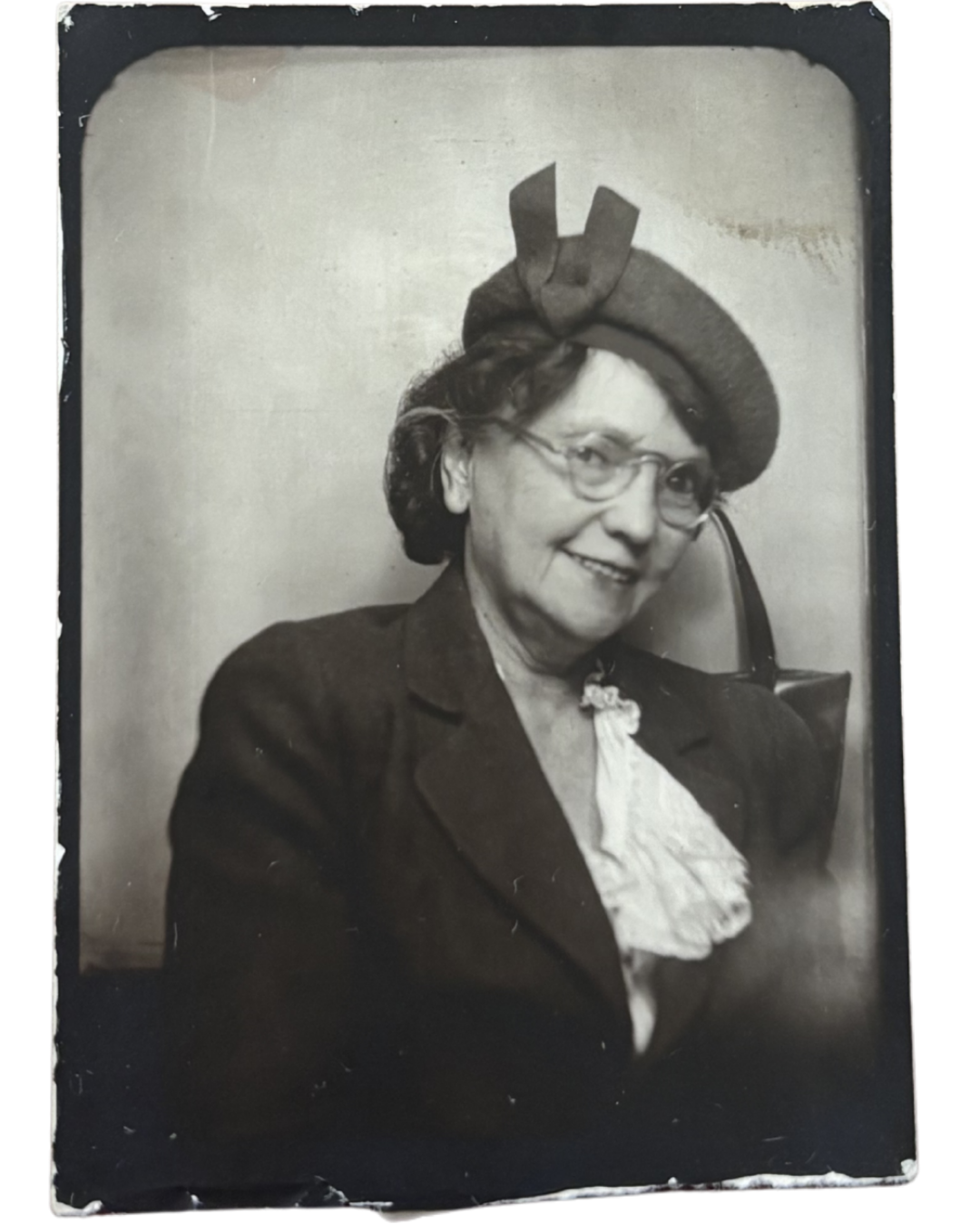
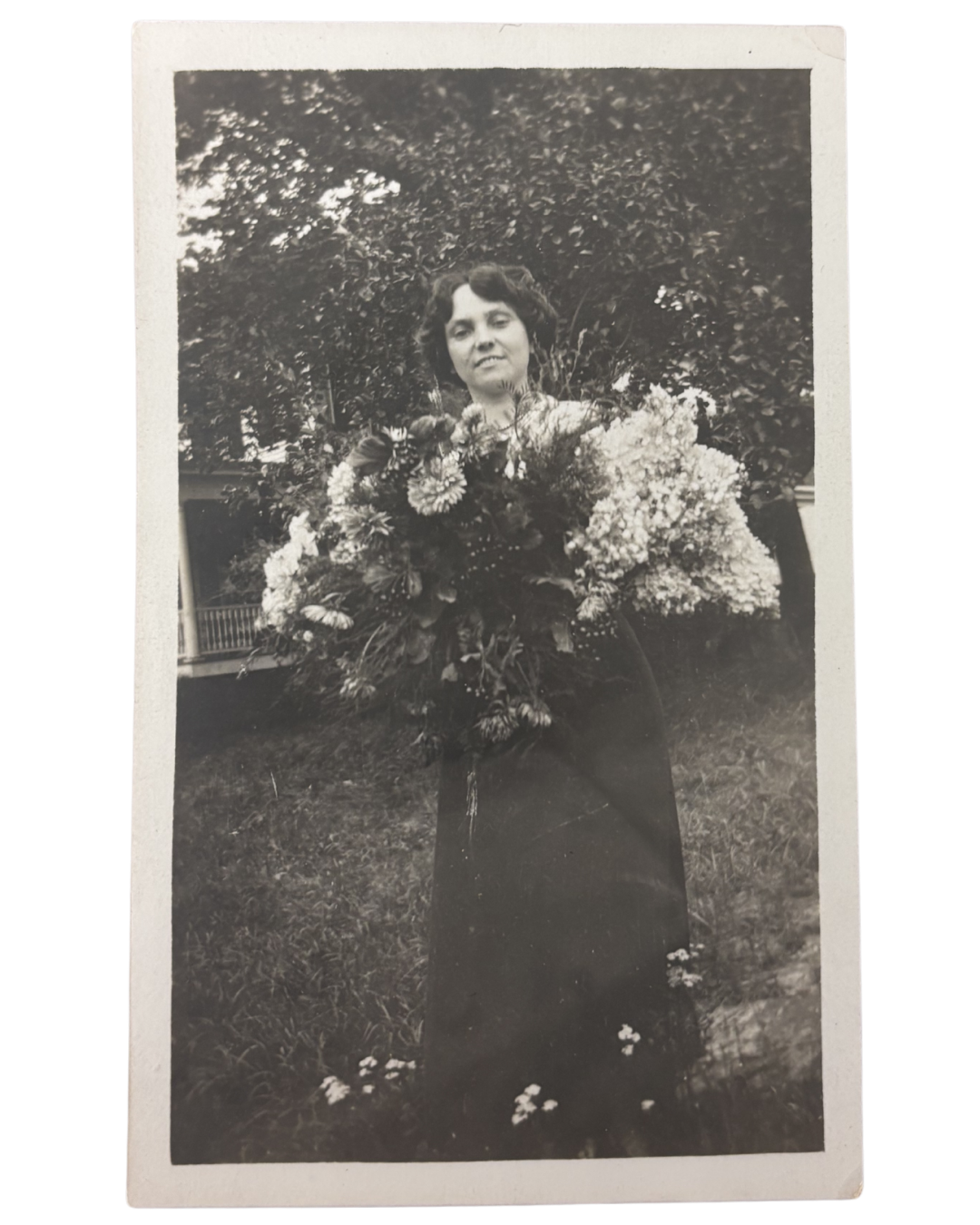
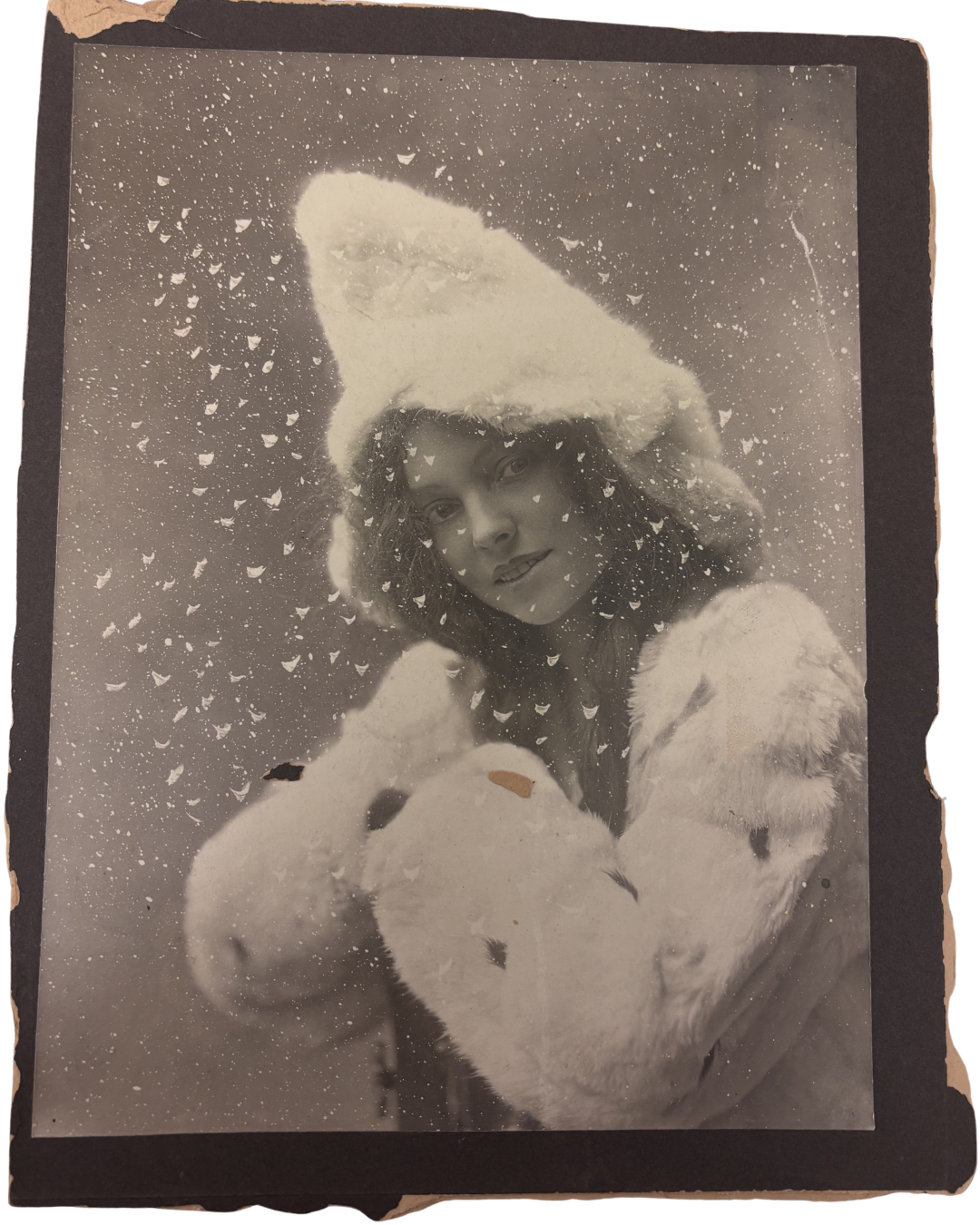
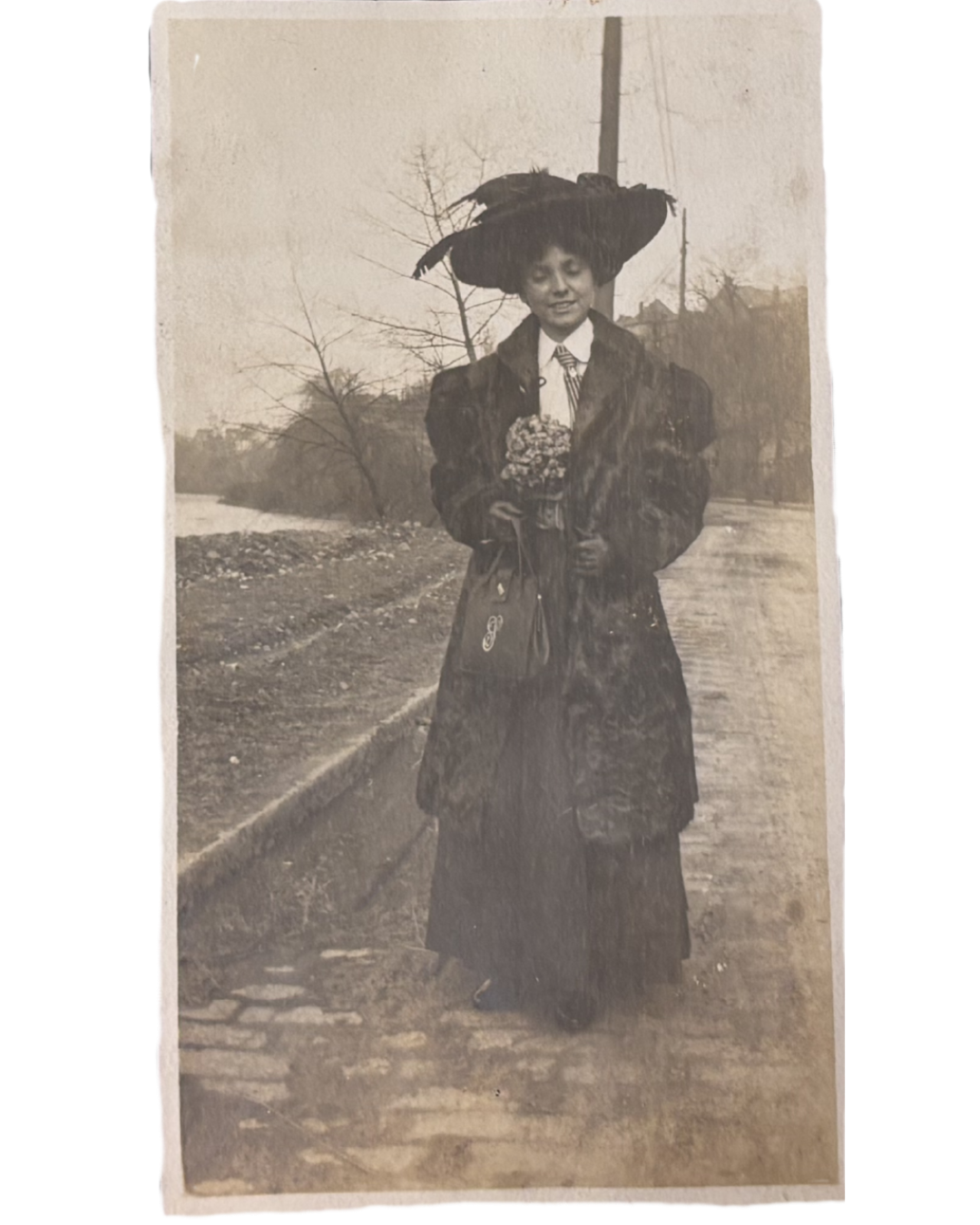
Photographed wearing a fur coat and posing alongside three dogs, I first came across Florence in the Clements Library Image Bank. Alongside her fur coat ensemble, two more digitized photographs served as an introduction to Mrs. Romaine. These images captured her time on the stage and later in her mid to late forties, leaving us to wonder who was she in between all of those years? And who was she?
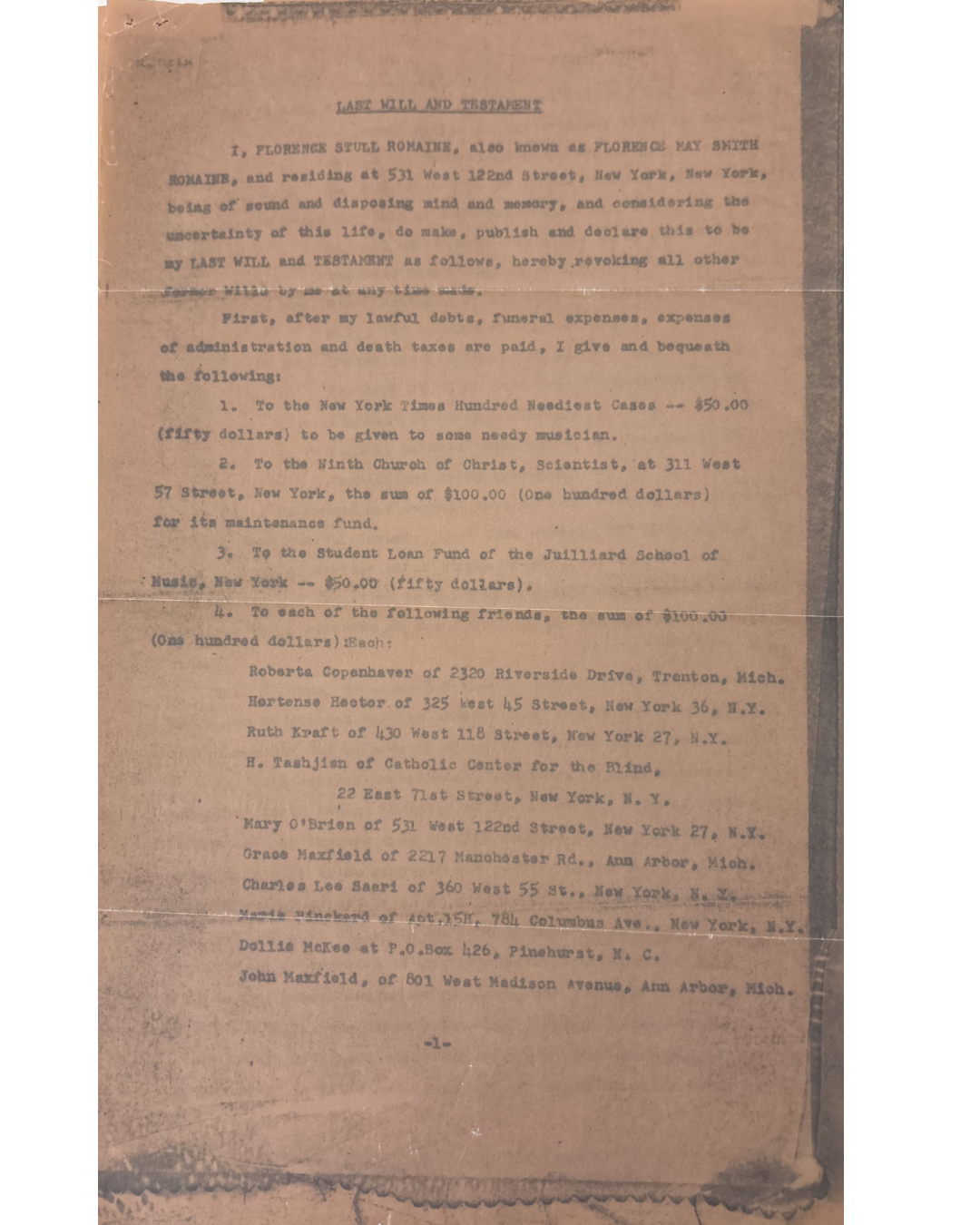
The Clements has two boxes of papers documenting her life dating back to 1882 containing letters written in English and French, passports for her grandparents, Claude François Ferdinand de Brossard and Elisabeth Rosalie Pestel, as they immigrated to the United States, and the scrapbooks pertaining to Florence’s acting and writing career, but I was unable to find any writings about her elsewhere. Her name barely registered a result online. Even her grave was something I could not track down, until I read her will and discovered her wishes to be cremated and spread in the Hudson River. A published obituary was not something I was able to locate. With no children to inherit her belongings, Florence left sums of money to The New York Times, Juilliard, The Ninth Church of Christ, and several friends, who also received her jewelry and apartment furnishings. Two of those friends, Grace Maxfield and Roberta Copenhaur, were the ones who brought her collection to the Clements Library just over 40 years ago
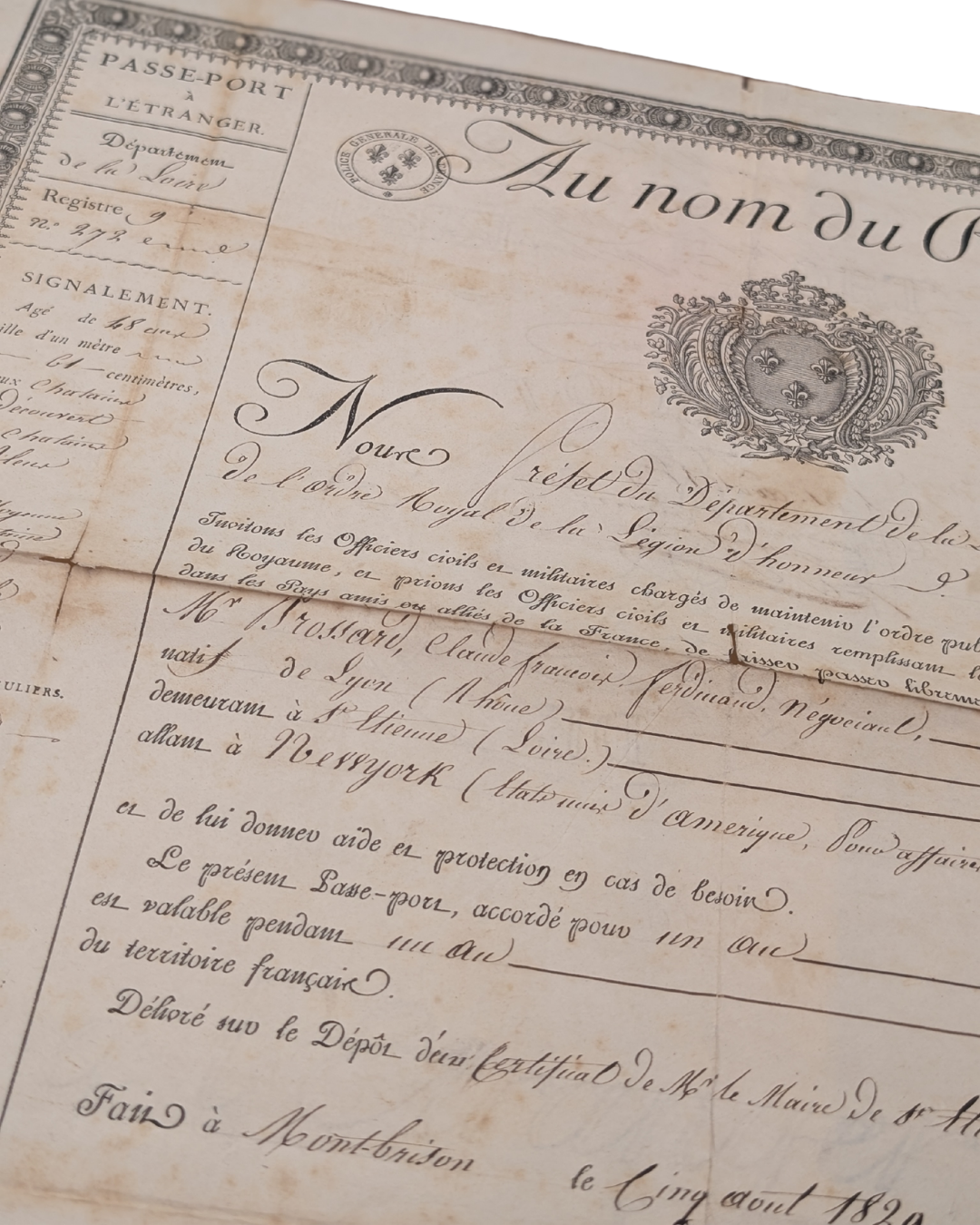
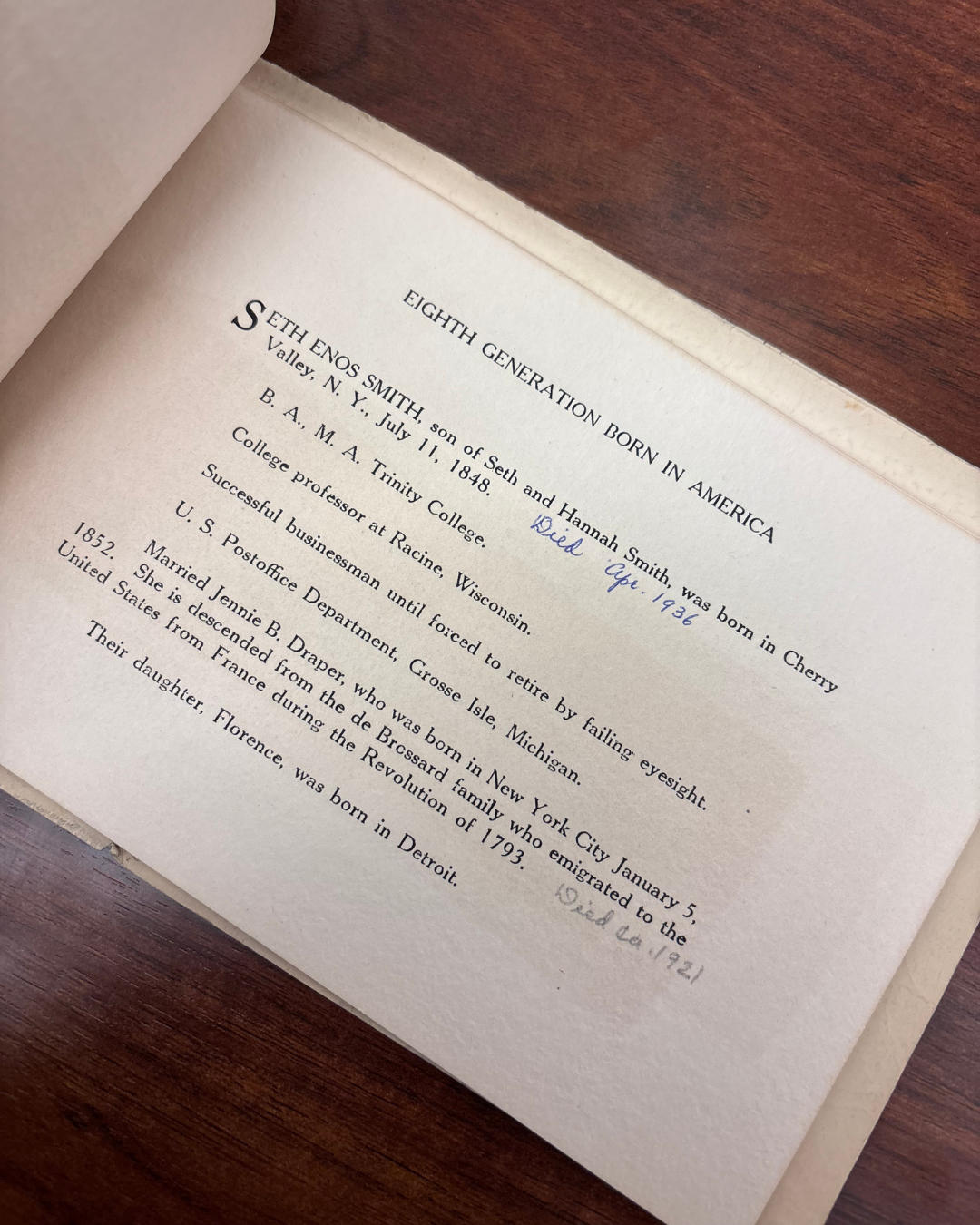
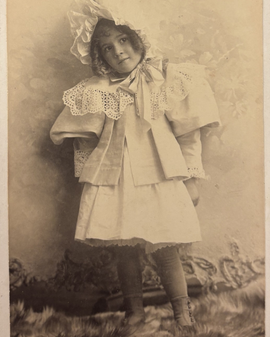
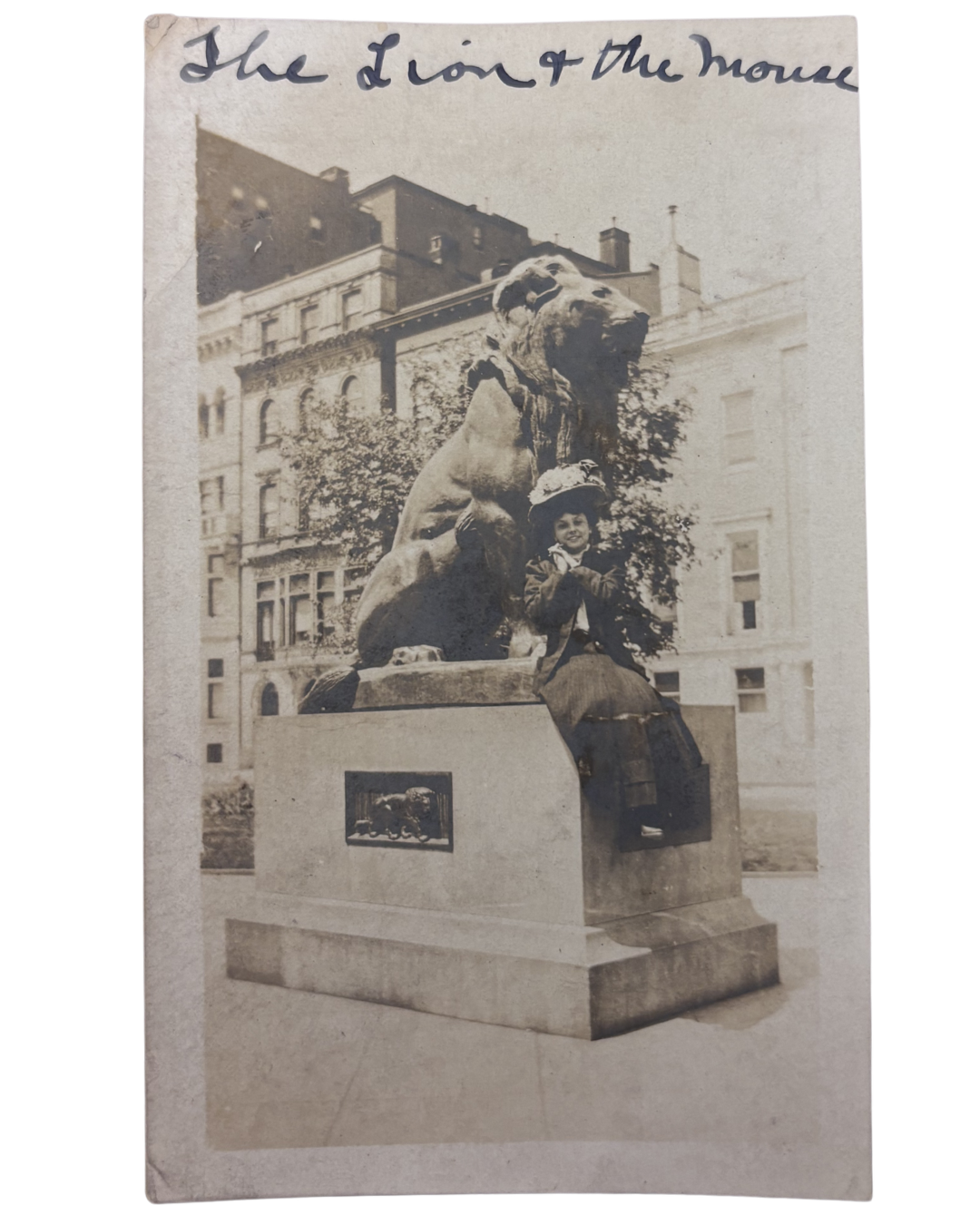
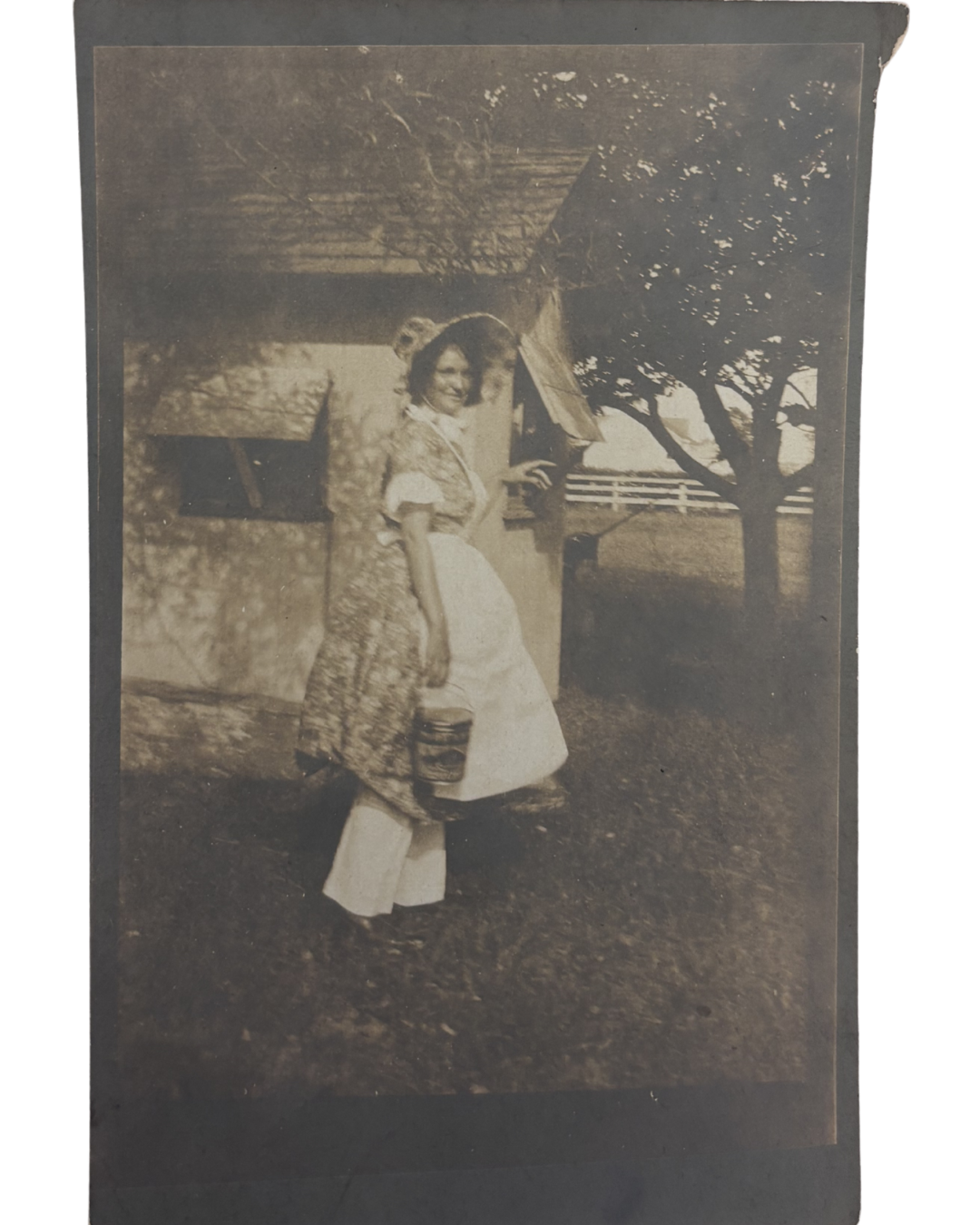
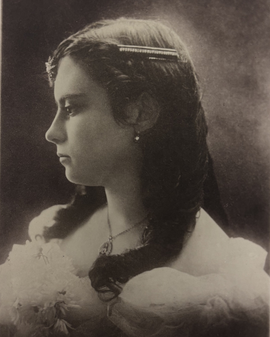
Florence was born Florence Frisbie Smith on November 9, 1882, to parents Seth “Enos” Smith and Jeanne “Jenny” de Brossard Draper in Detroit, Michigan. Her early life was captured in a small series of photographs that were left undated; two from her childhood and one from her adolescence. These photographs are the only documents we have of her early life, a young Florence dressed in a bonnet and a fashionable ensemble that matched the star she would one day become.
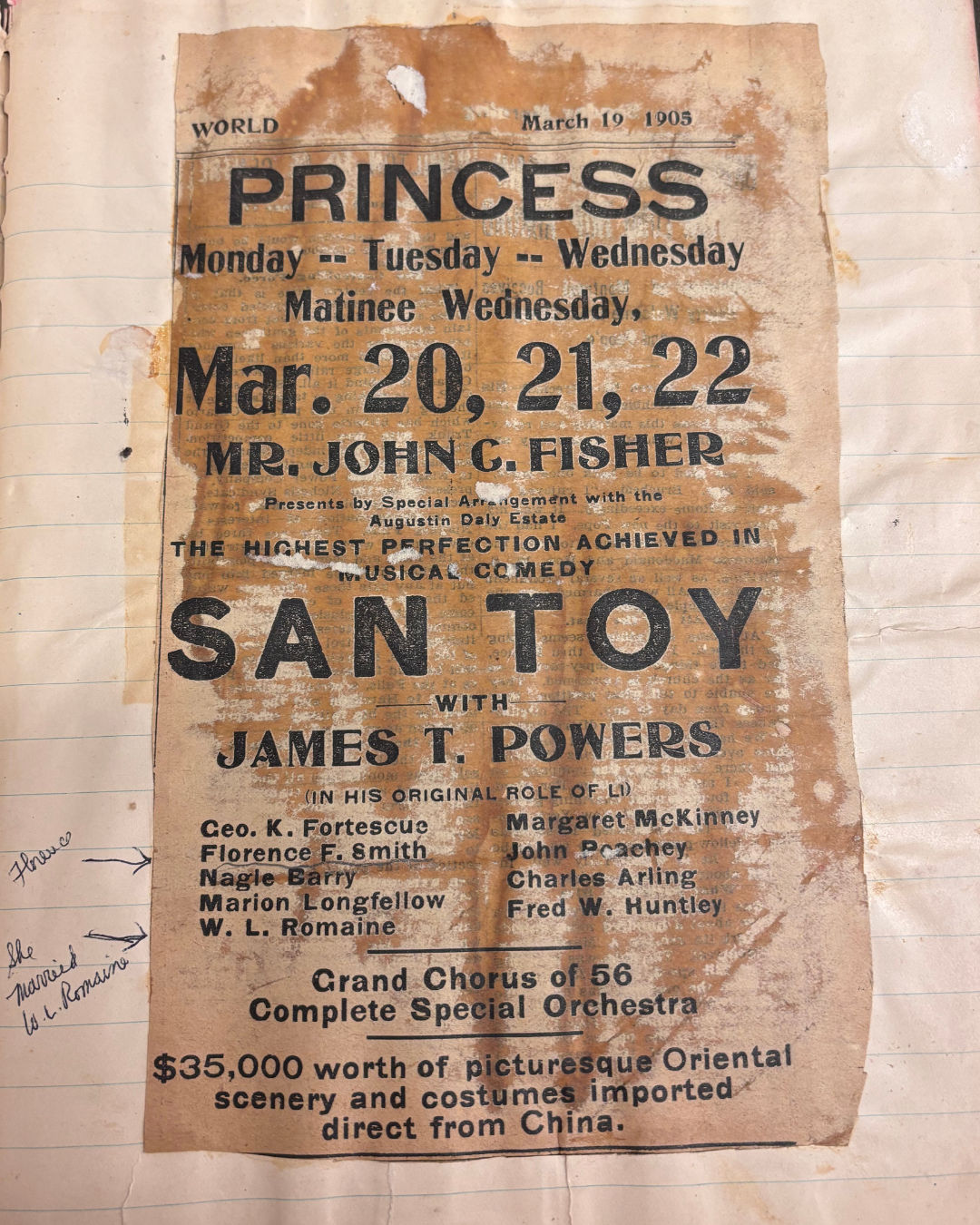
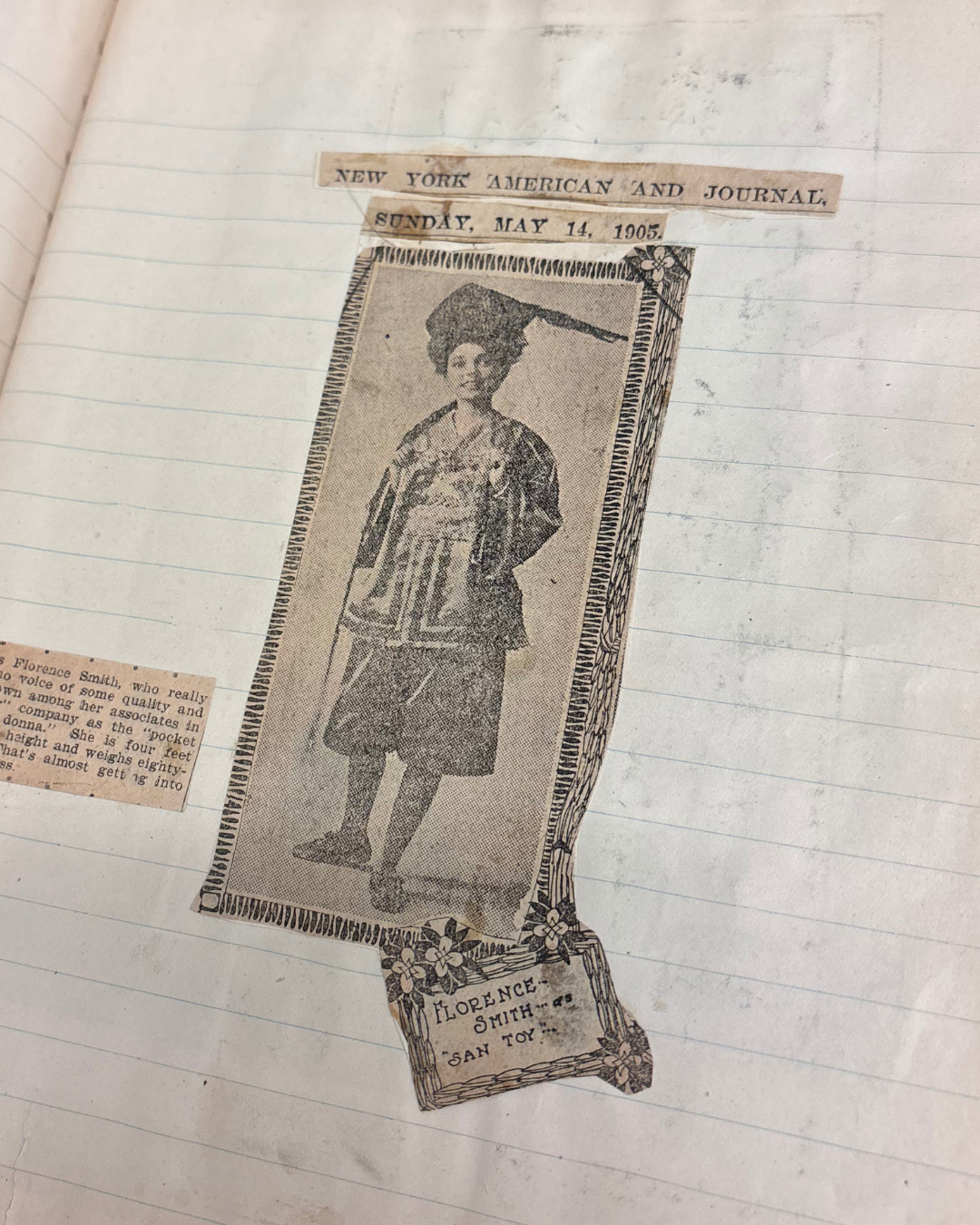
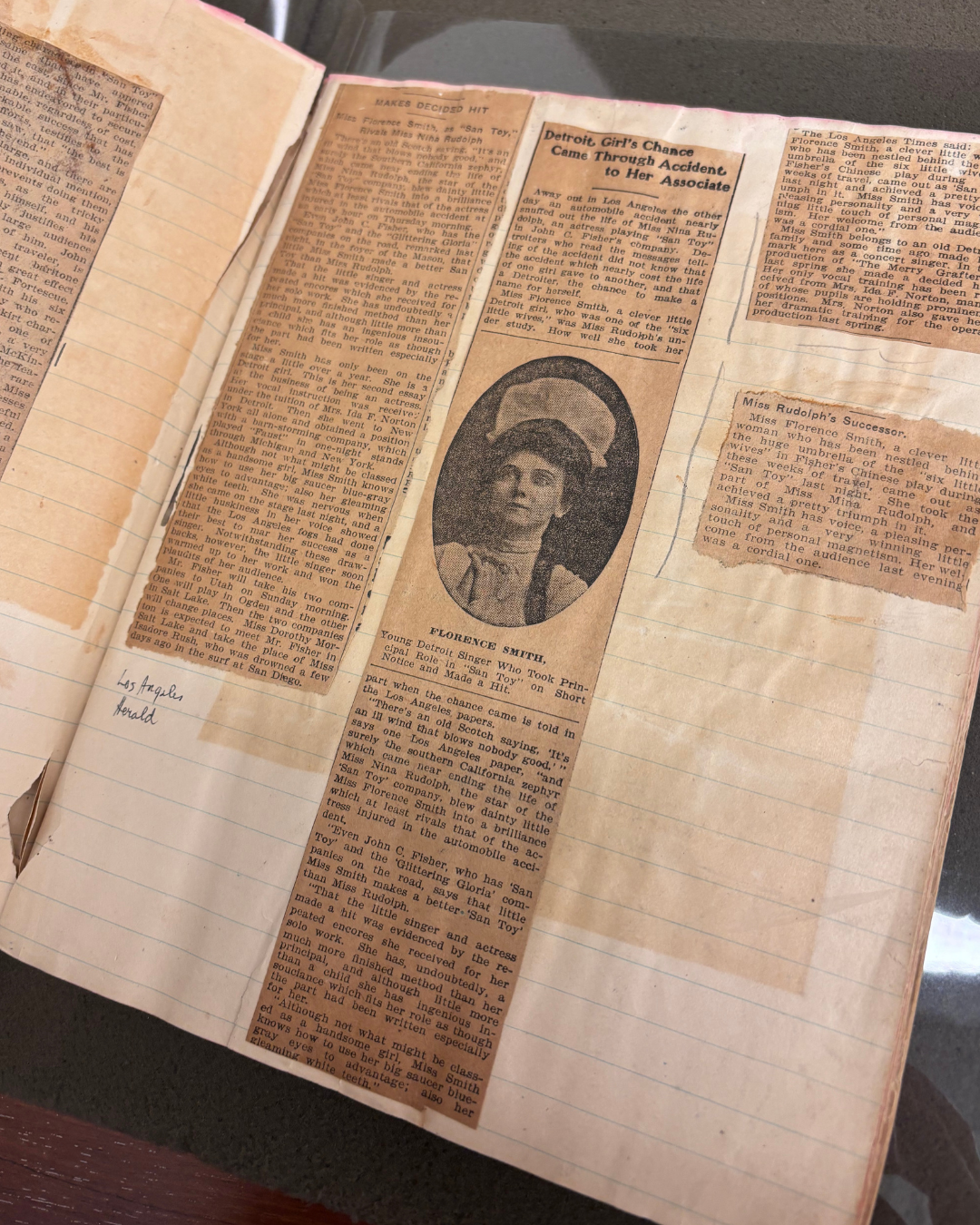
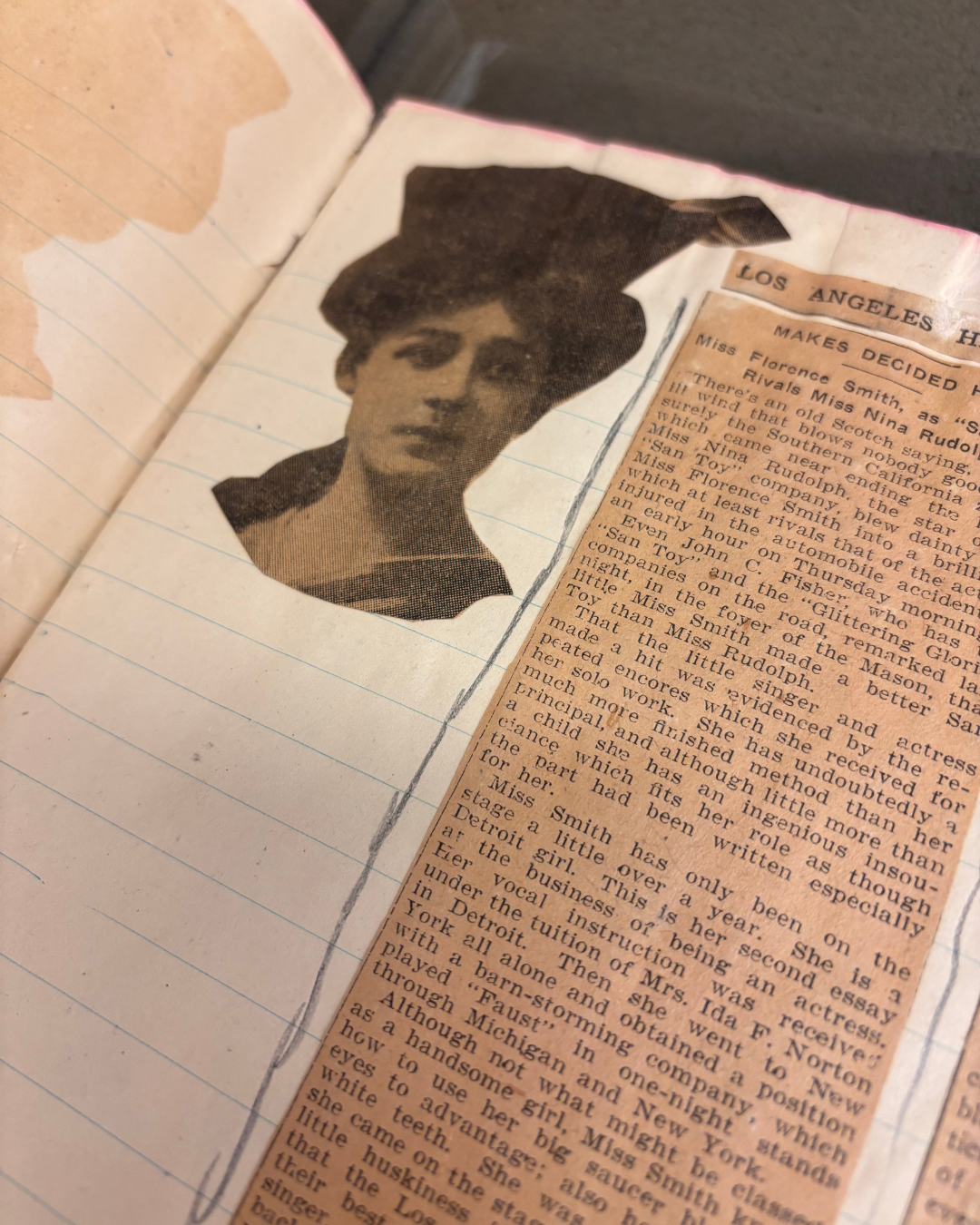
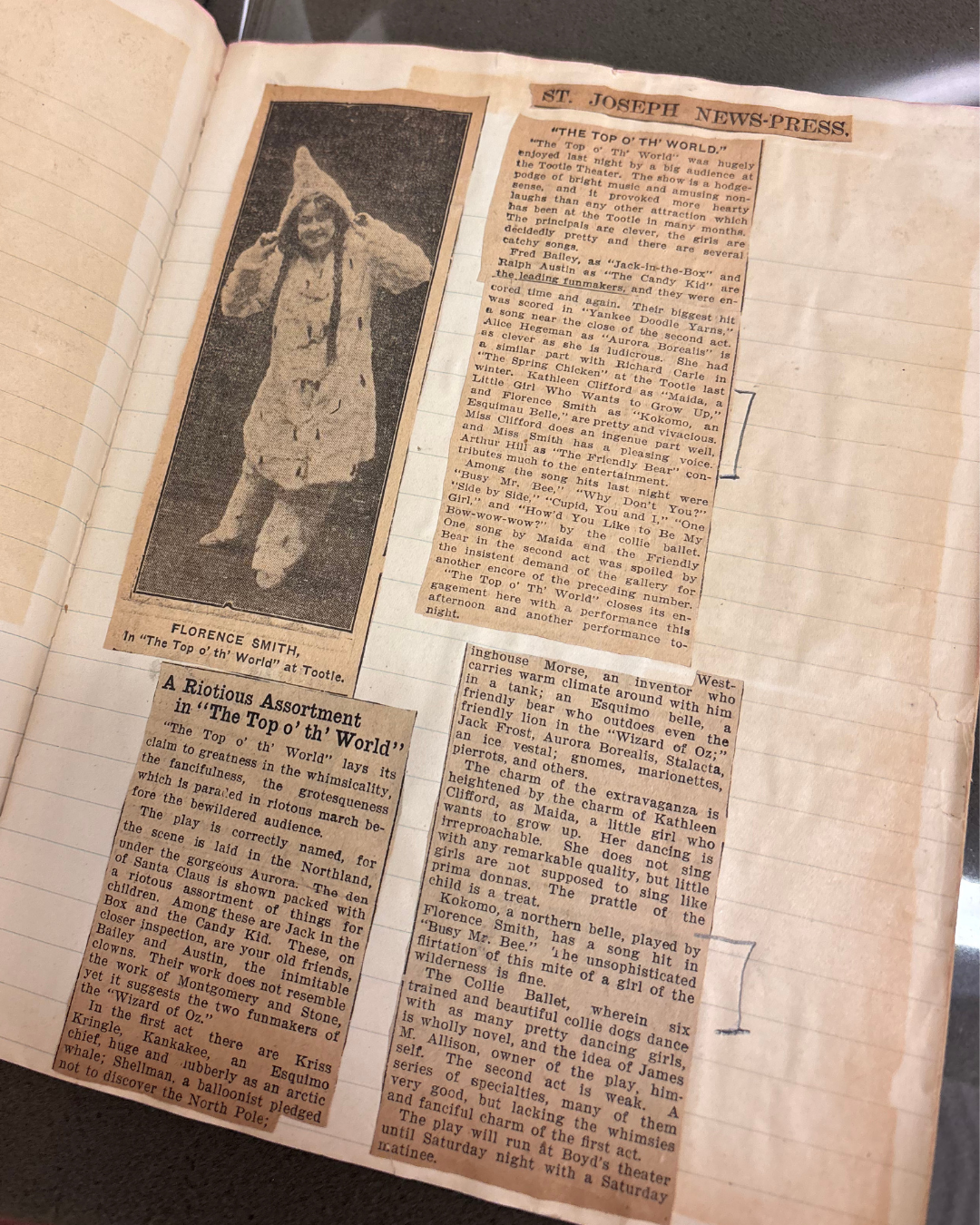
Reaching into early adulthood, Florence’s life seemed to flourish into print. Delicately cut and glued into a scrapbook, Florence kept an account of printed references to her acting career. Across the country through Denver, Chicago, New York, Los Angeles, Missouri, and many other states, her work as an actress was heavily applauded and received reviews that boasted her as a “pocket edition prima donna” due to her petite size and her “sweet, pure, and true voice.” Her training as a vocalist came at the hands of an Ida F. Norton Detroit. Shortly after, Florence ventured to New York all alone where she joined a barn storming company that allowed her to perform one-night stands throughout Michigan and New York. In 1904, we know she joined Mr. John C. Fisher’s company, from 1904 to 1908 in the coveted role of San Toy, the lead in the play of the same name which she took on in late 1904. Shortly before she propelled to the lead role, Florence was hidden in the background of the play, acting as one of the “six little wives,” and was brought to center stage after a bout of misfortune for her predecessor around the age of 22.
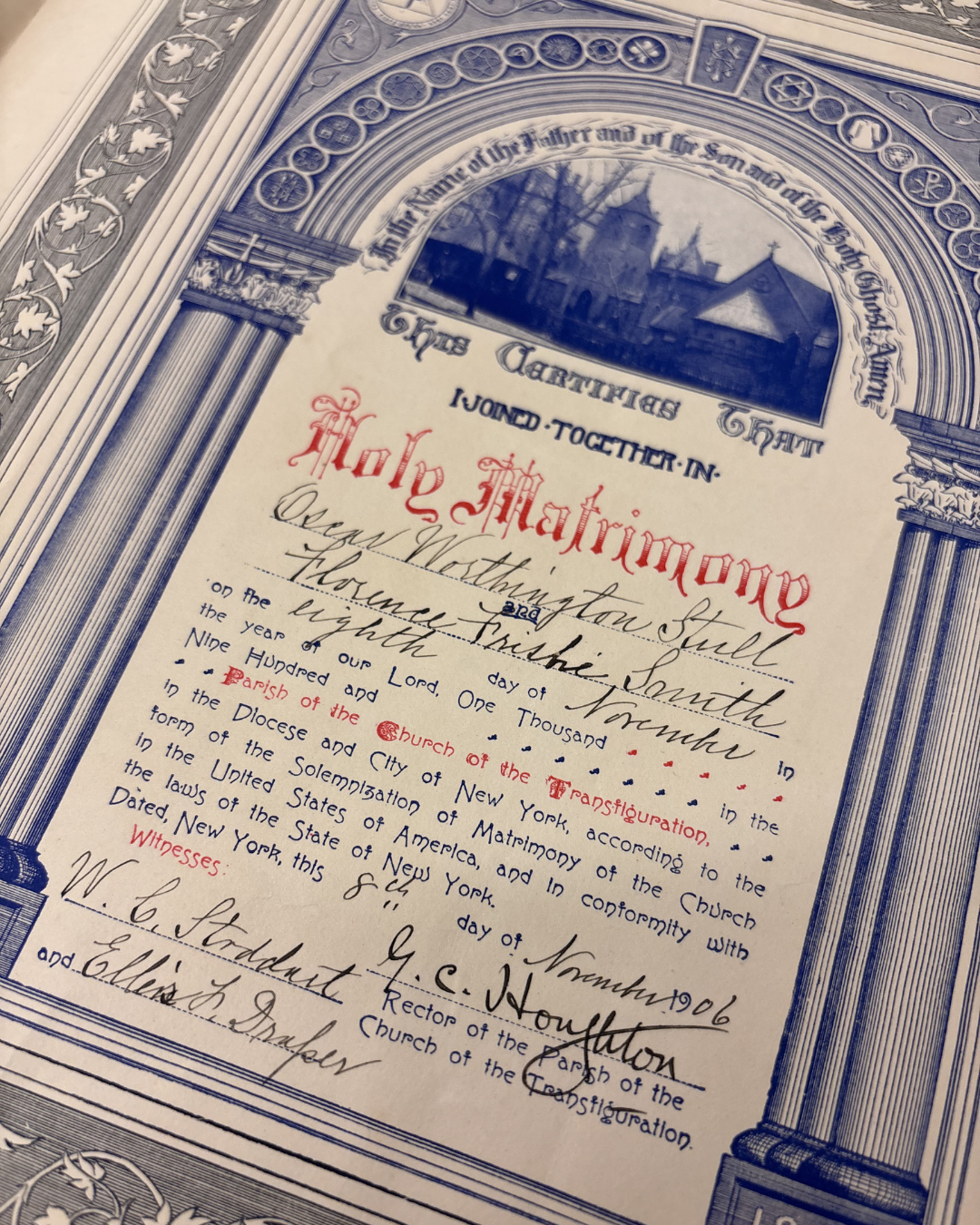
One day shy of her 24th birthday in 1906, Florence married actor Oscar Worthington Stull who went by Worthington Romaine, a man 17 years her senior. Following in his footsteps, she took a new name for the stage: Florence Smith Romaine. Both actors, it is possible the pair met during their time in the production of San Toy. They were married until his death, apparently in February 1938, and she never remarried.
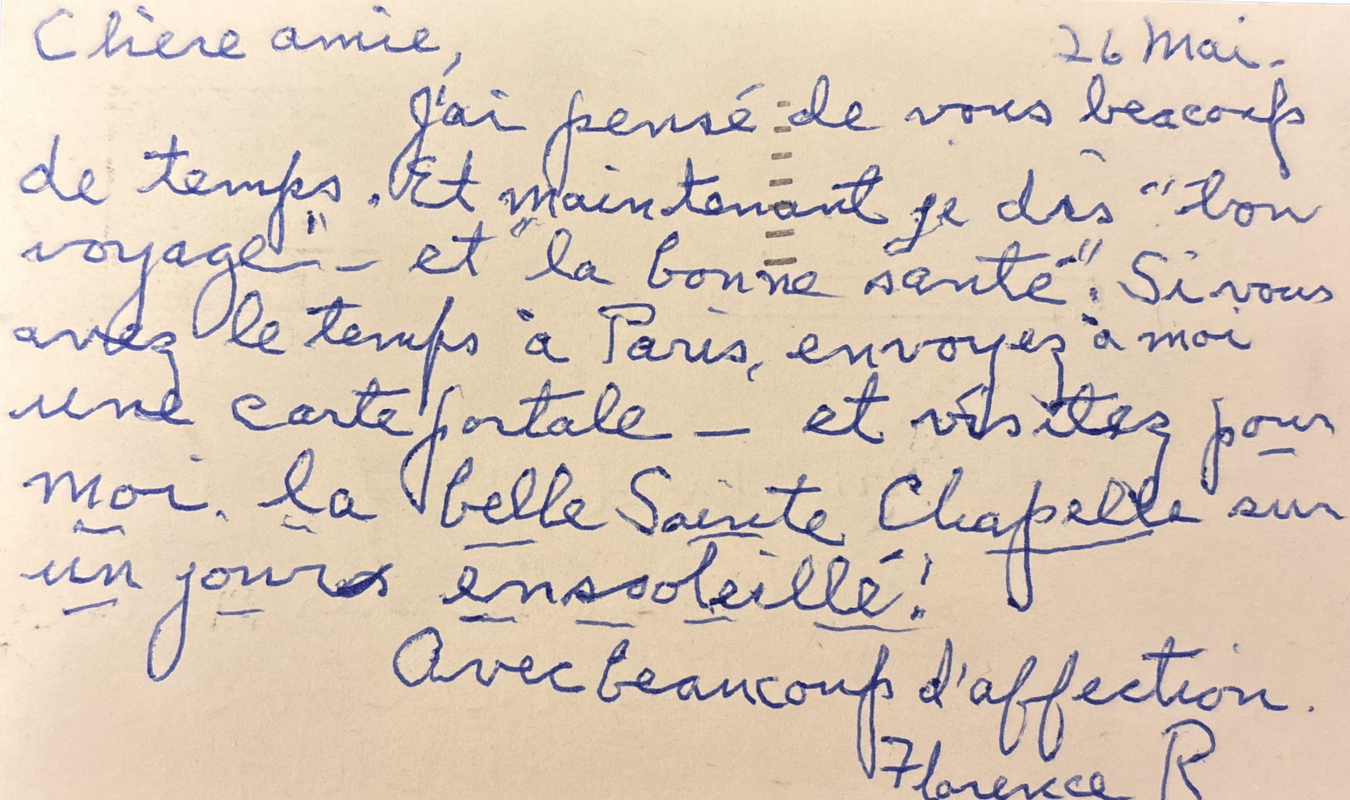
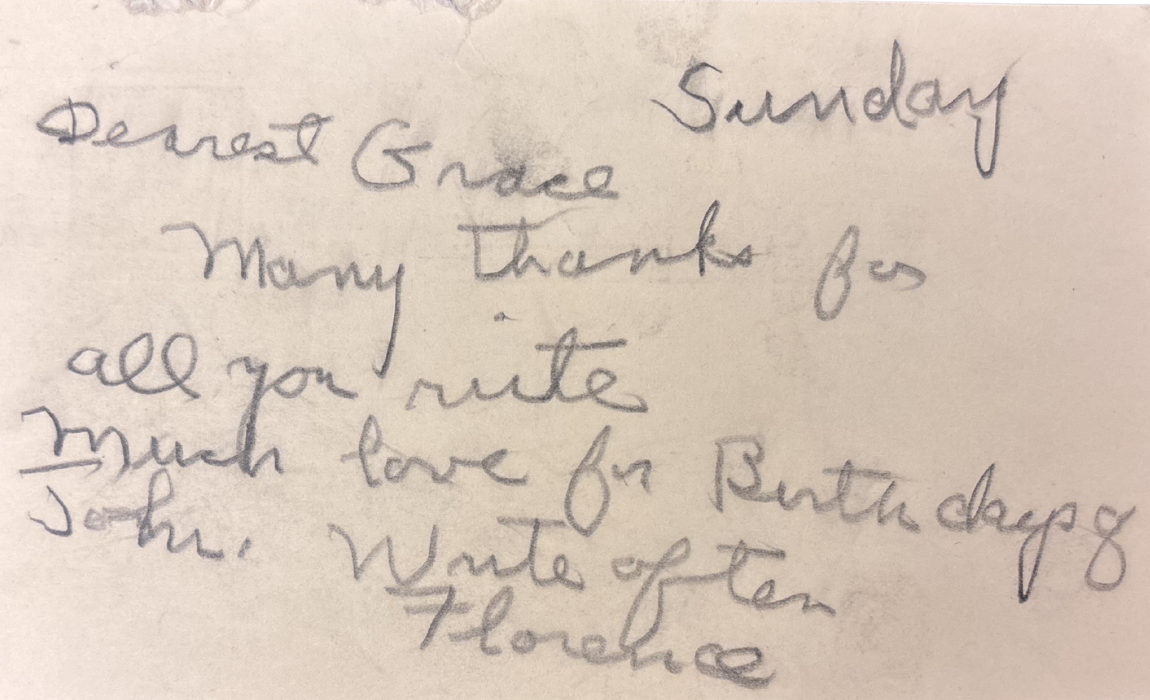
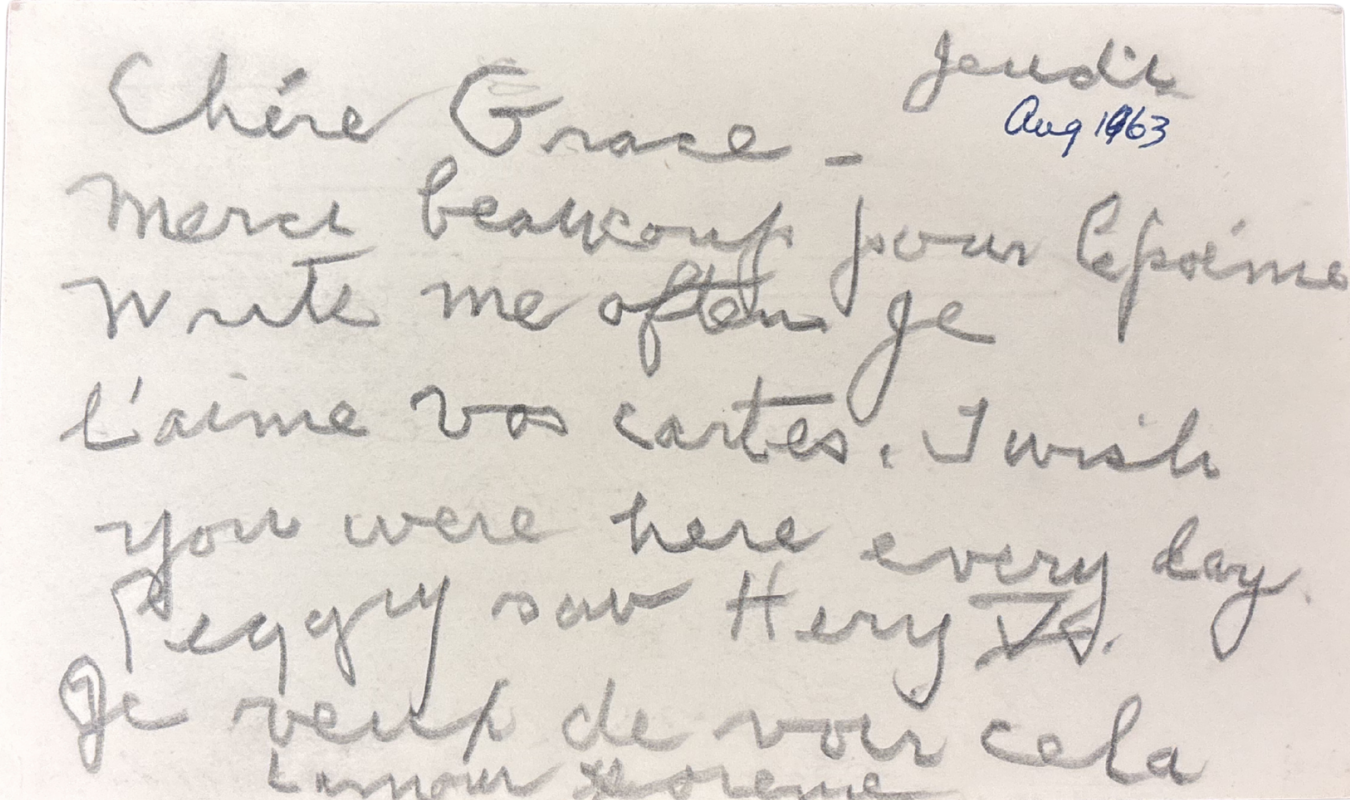
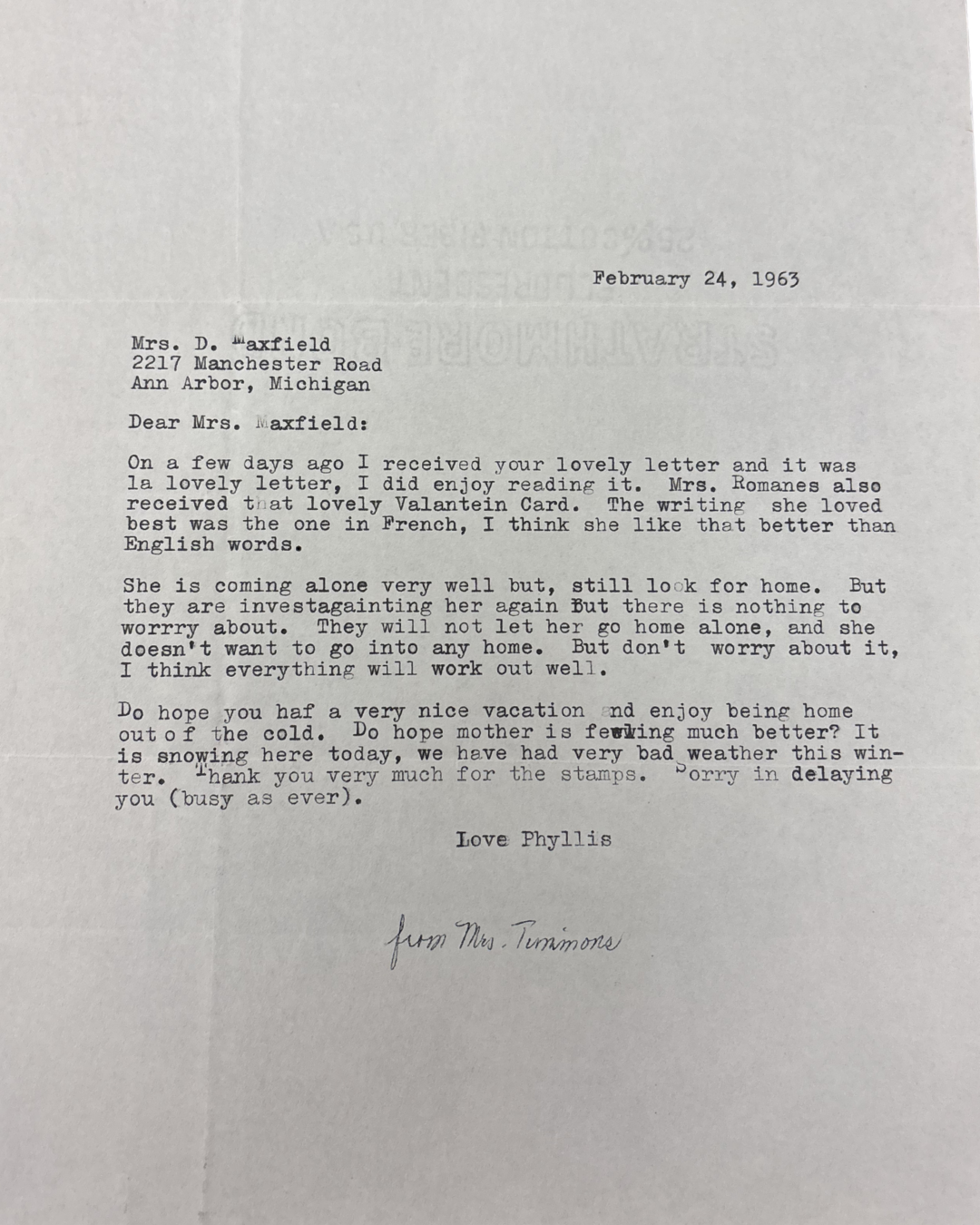
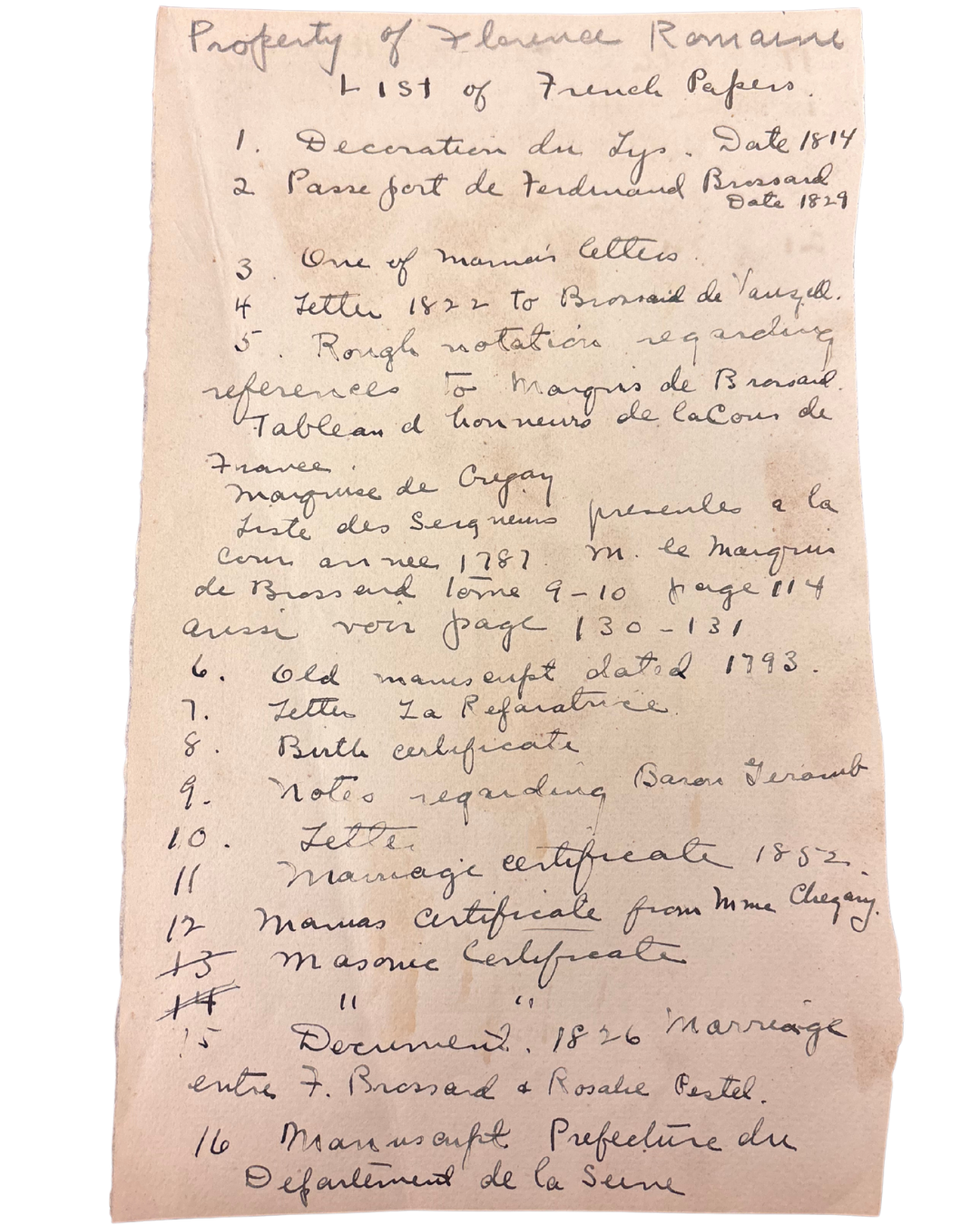
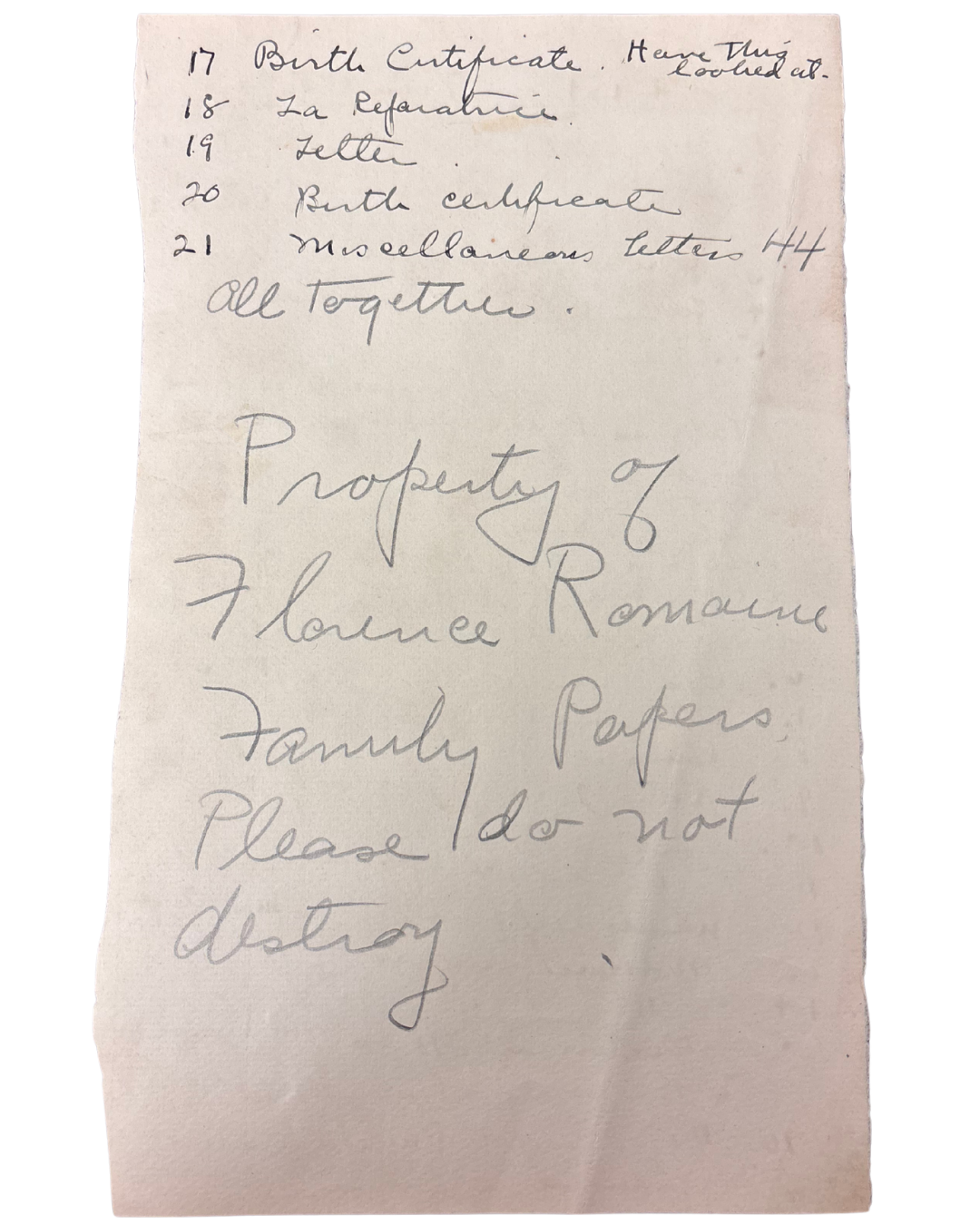
Florence’s love for her French heritage was evident as I flipped through the pages of her family letters and documents. She kept two lists: one being a list of each letter written in French, and the other a list of documents with an ending note reading “Property of Florence Romaine Family Papers. Please do not destroy.” Her devotion to keeping her family’s legacy intact and secure was clear, as was continuing the French language. In a set of postcards, it seemed Florence found a fellow French speaking companion in her friend Grace Maxwell. Phyllis Timmons, possibly one of Florence’s friends or her caretaker, wrote a 1963 letter to Grace stating that “the writing she loved best was one in French, I think she likes that better than the English words.”
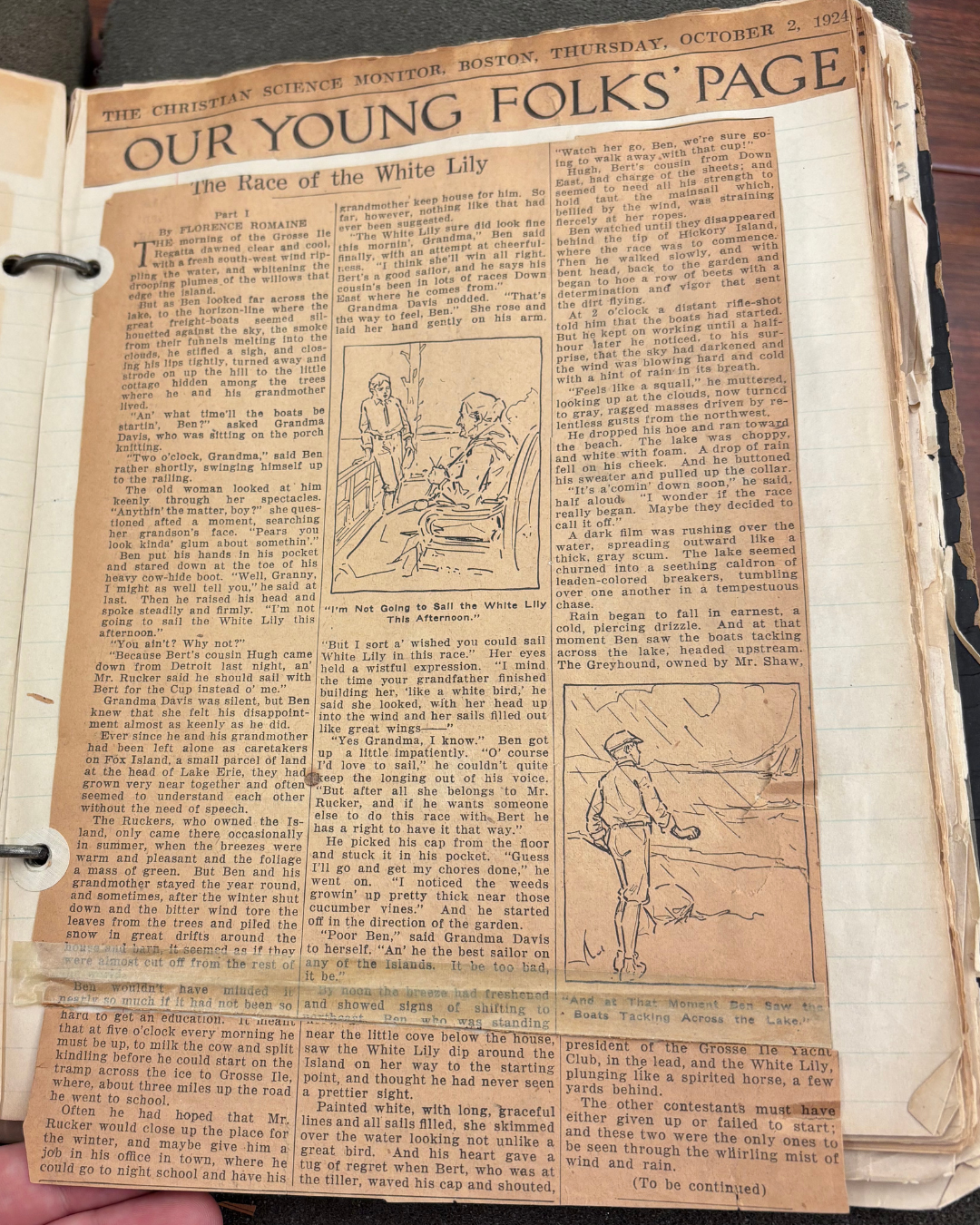
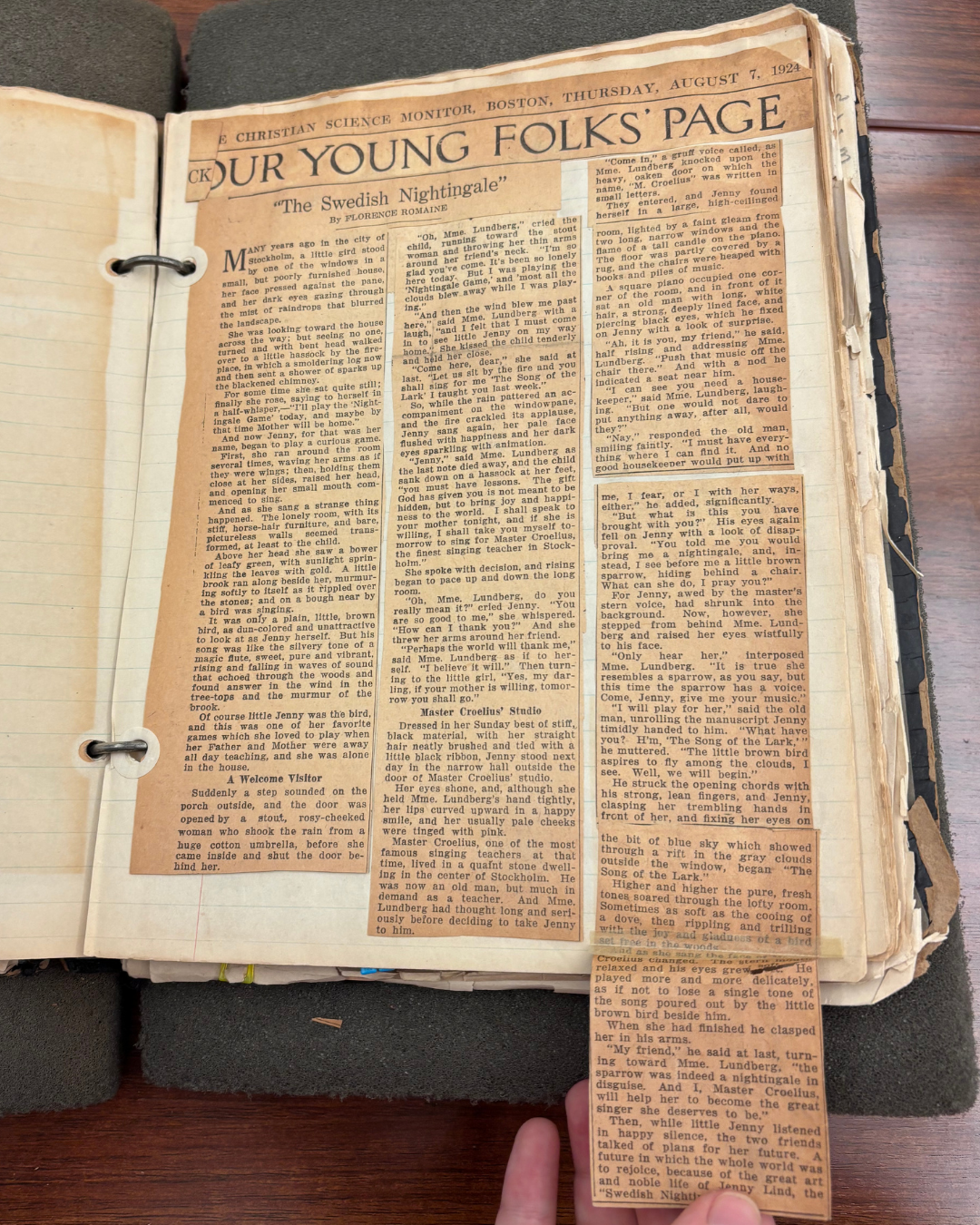
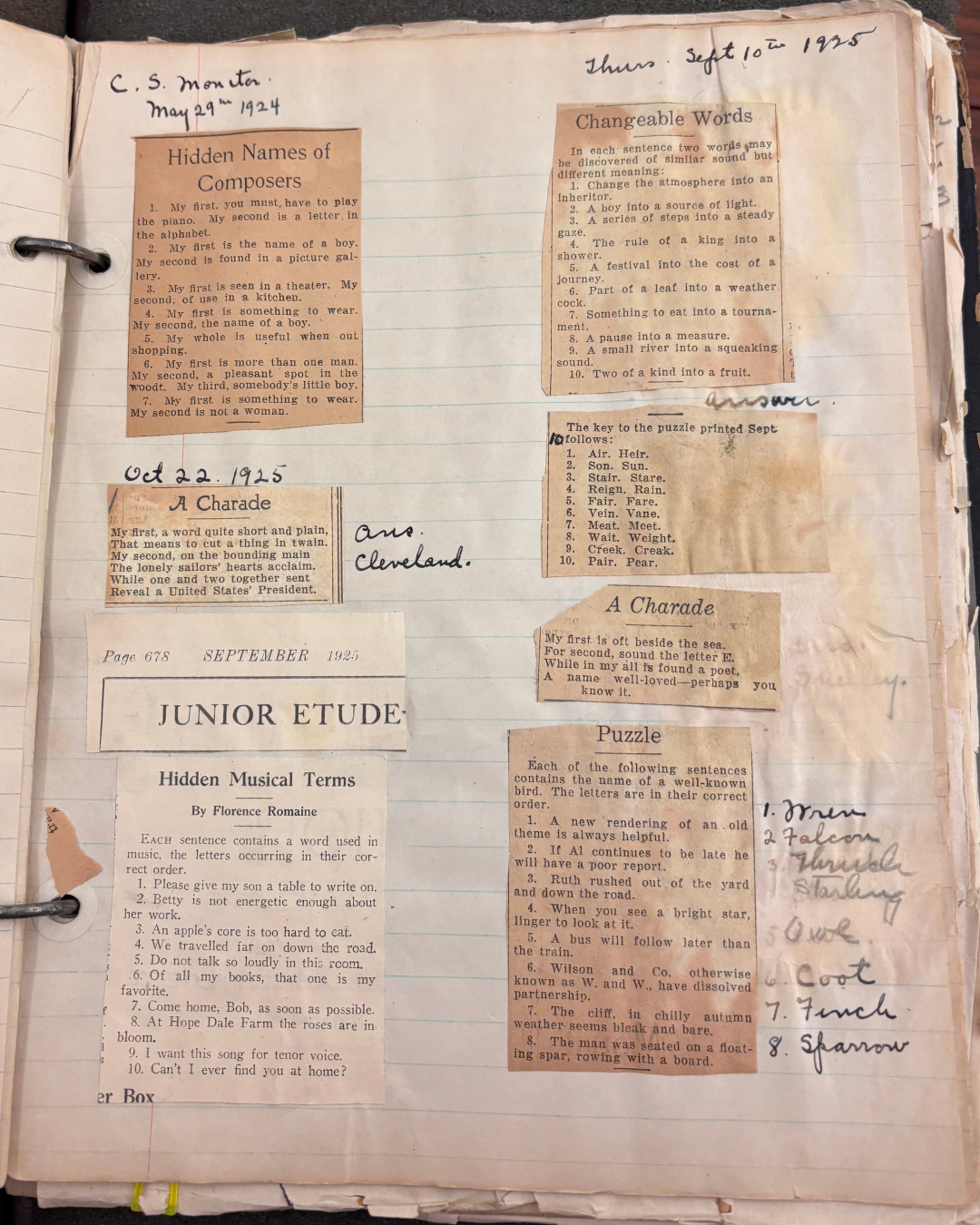
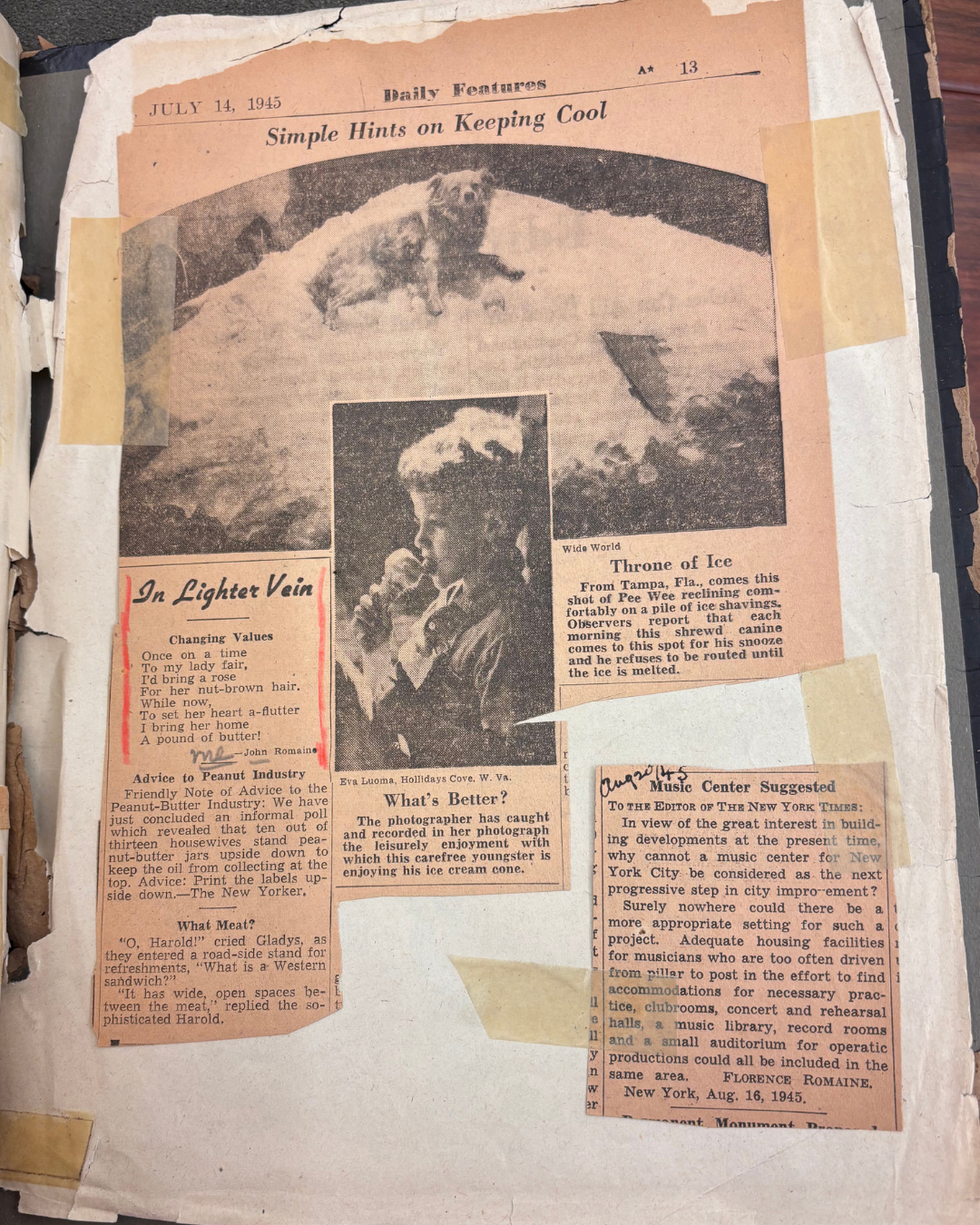
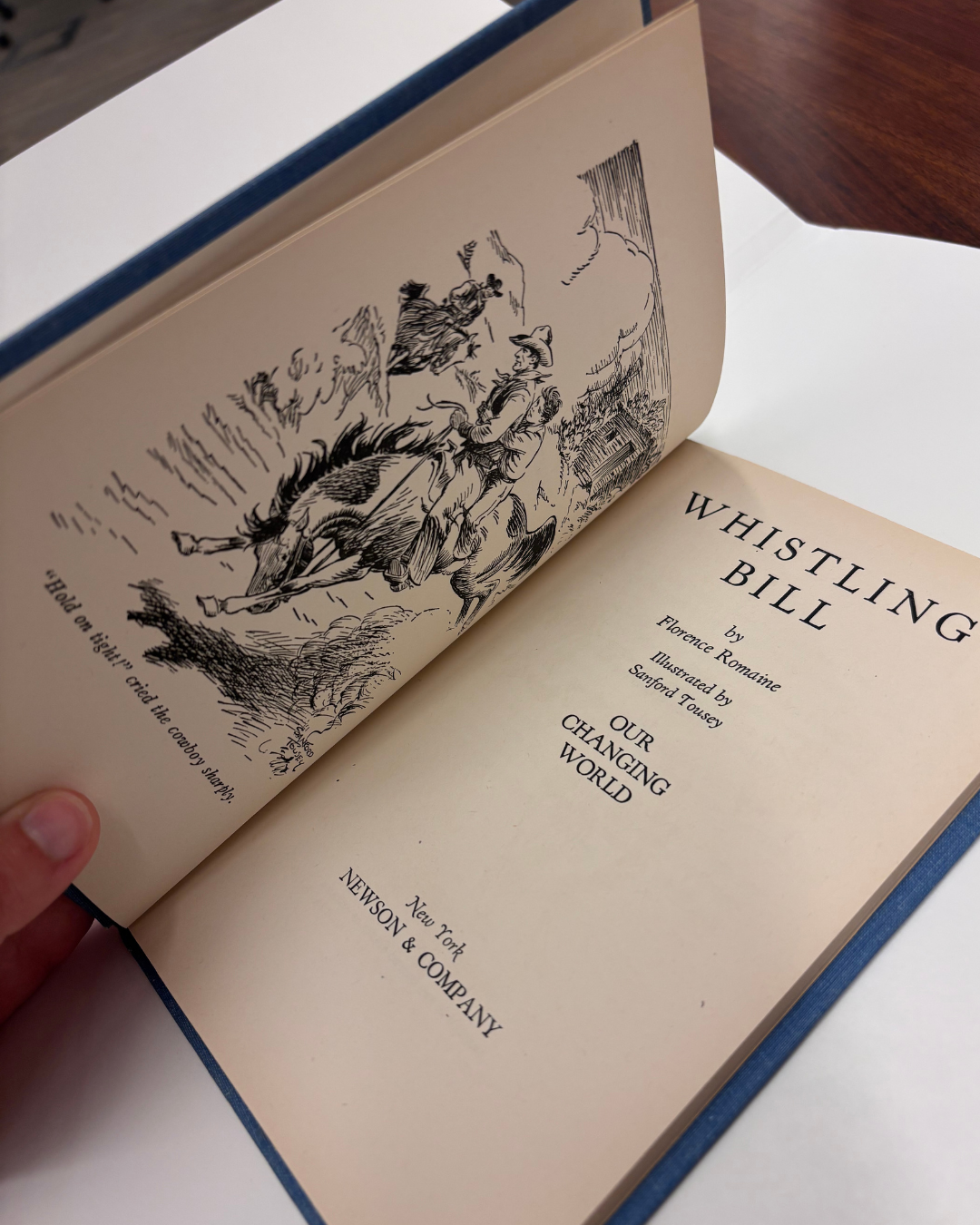
Florence’s talents were not exclusive to the stage. Although she may have been an actress in stage shows like Ko-Ko-Mo and San Toy, it seemed her true love was taking paper to pen. She had an affinity for writing, especially for children. Her career in literature held a focus on The Christian Science Monitor spanning from at least 1924 to 1945, where her stories were published at the forefront of the Our Young Folks page.
In one of her stories called The Race of the White Lily, a young boy named Ben is filled with disappointment after one of his friends chooses to sail with someone else instead of him in a race. The White Lily was fixed for sailing by his grandfather, and Ben is forced to watch longingly as it sails away without him on board. As it begins to rain, The White Lily and another boat, The Greyhound are the last two in the race. However, trouble begins to stir with rough waters, and Ben sees danger brewing for The White Lily. Knowing that he must save the sailboat and help his friends, Ben rows his way across the water and hops on board, where he is able to rescue them from going under. Unfortunately, Ben and his friends did not beat The Greyhound and win the trophy, but Ben was able to save the beloved boat and felt like a winner anyways.
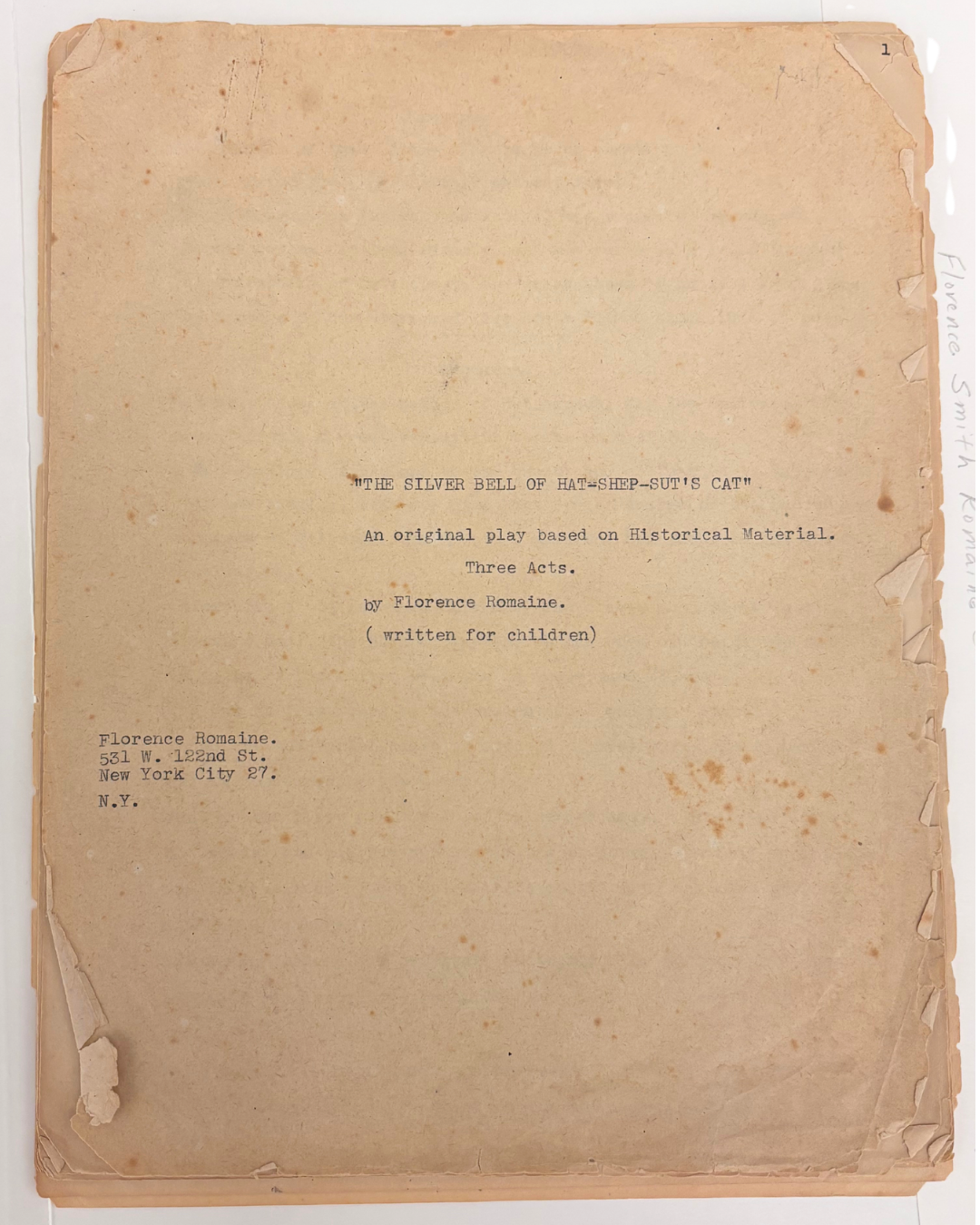
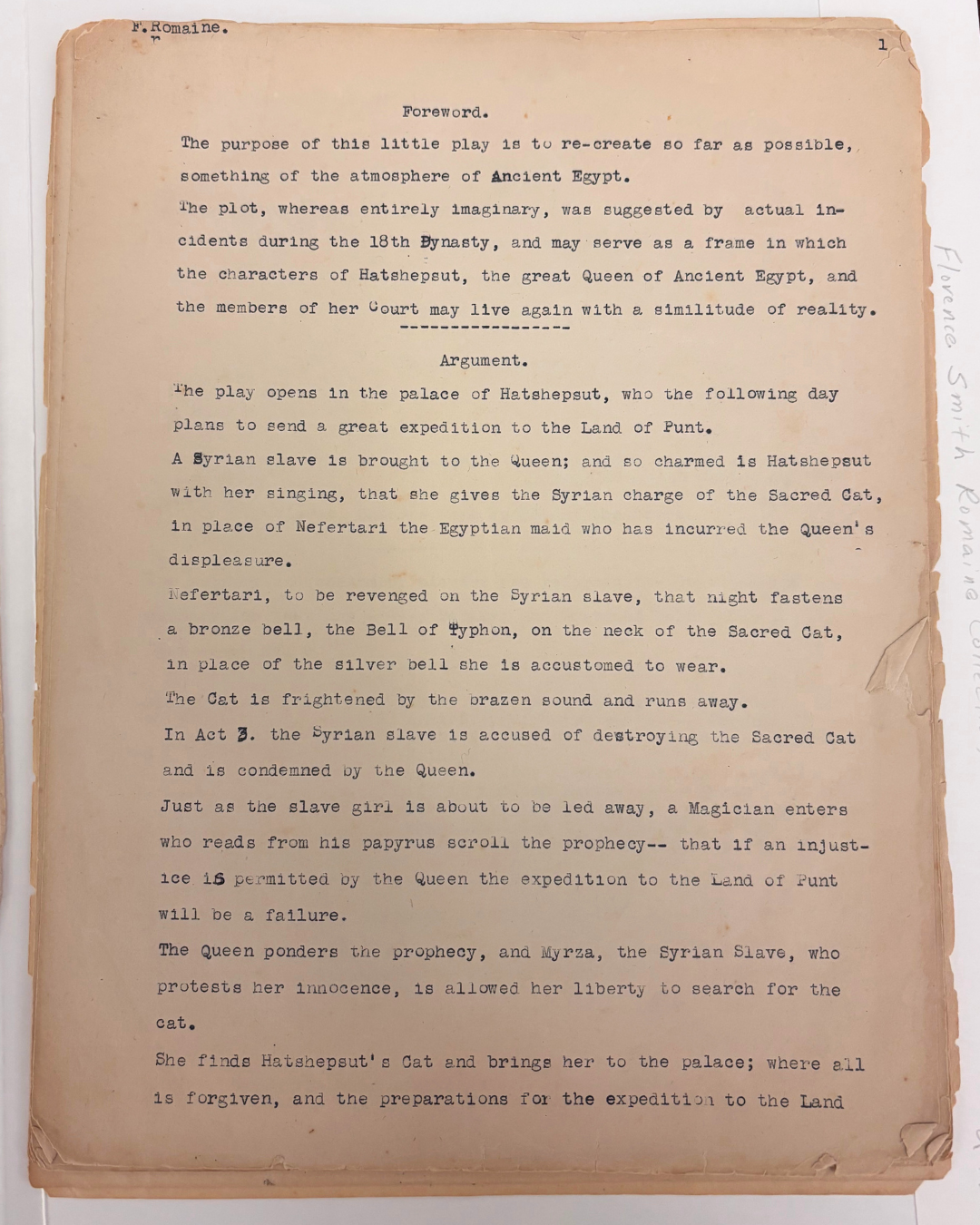
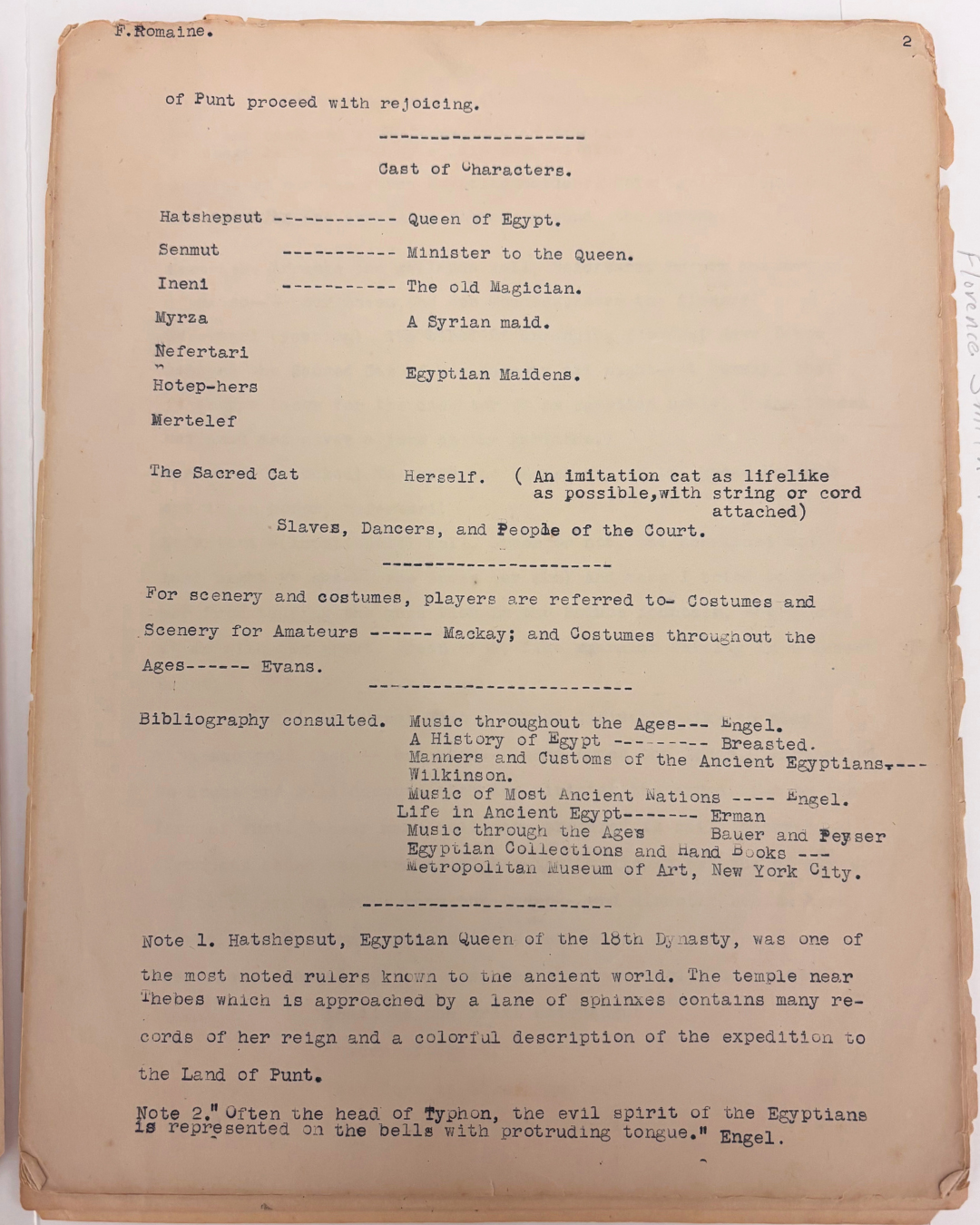
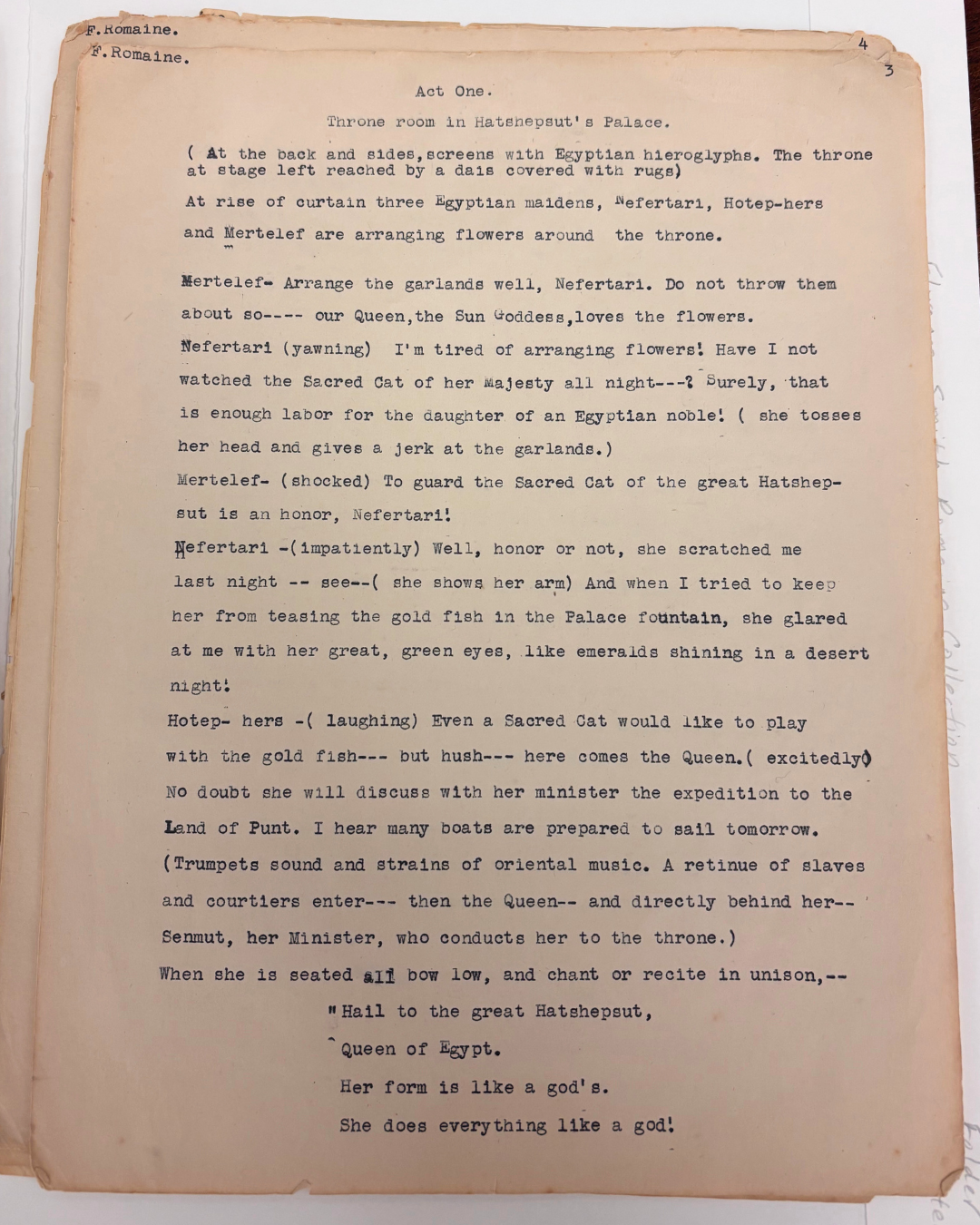
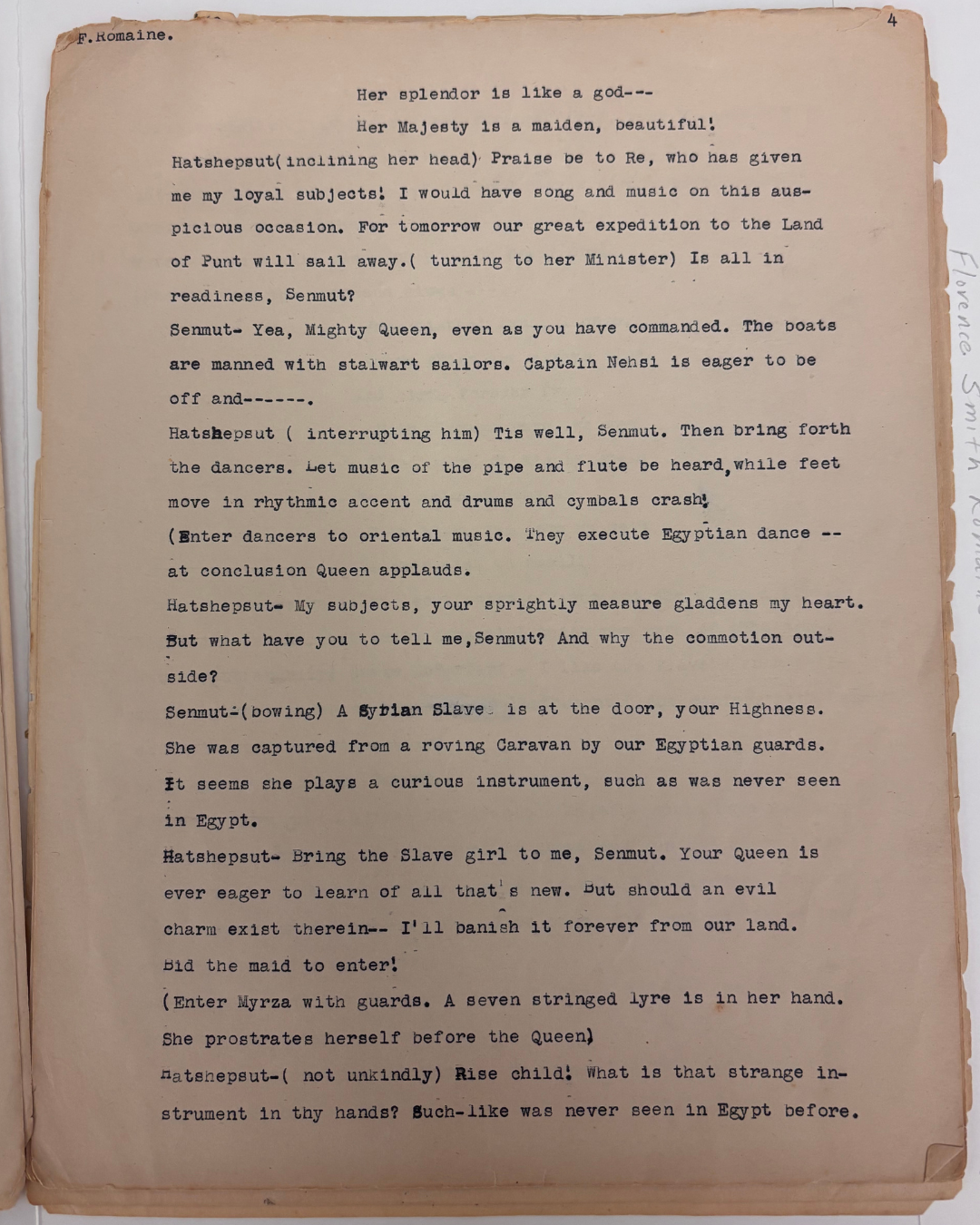
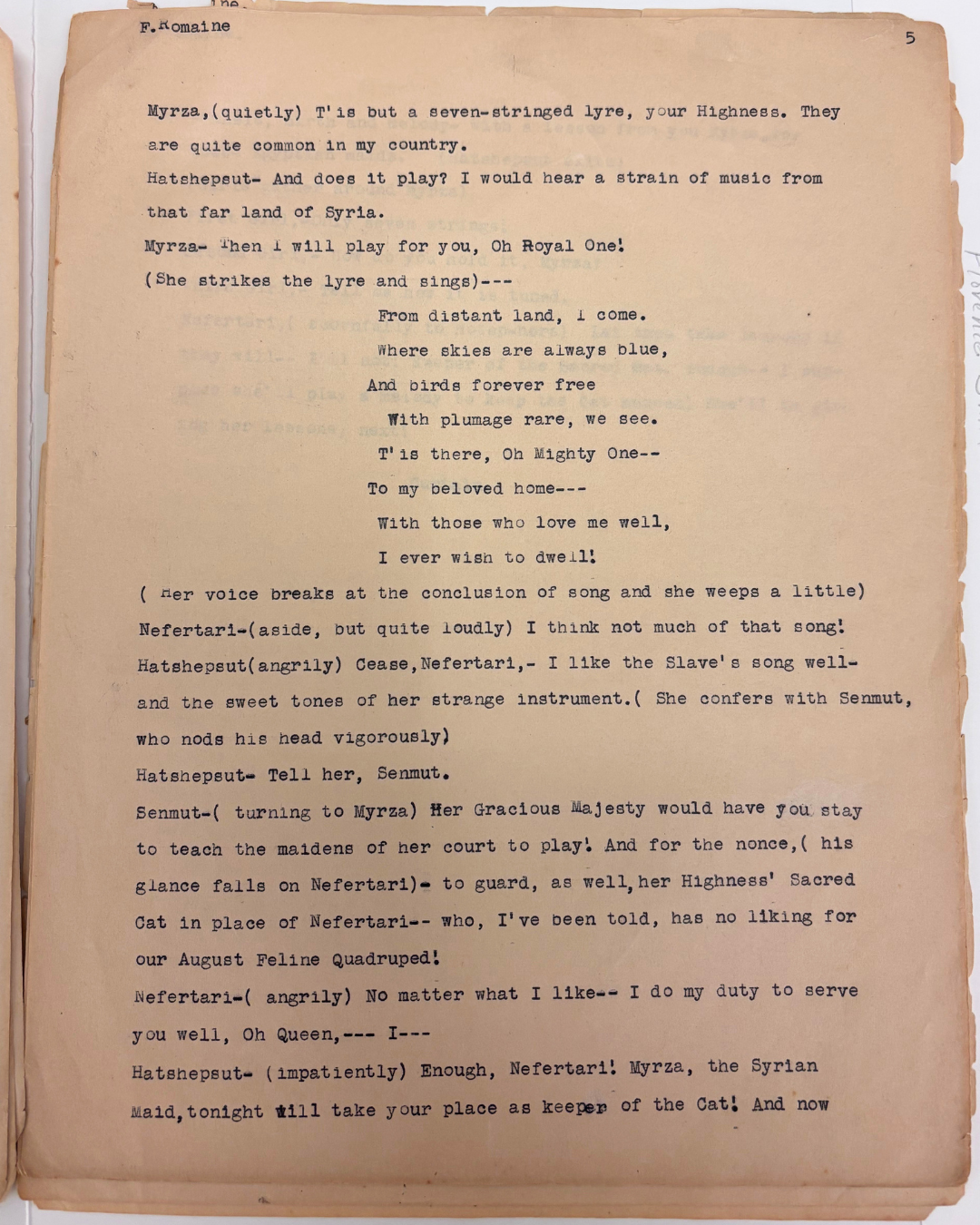
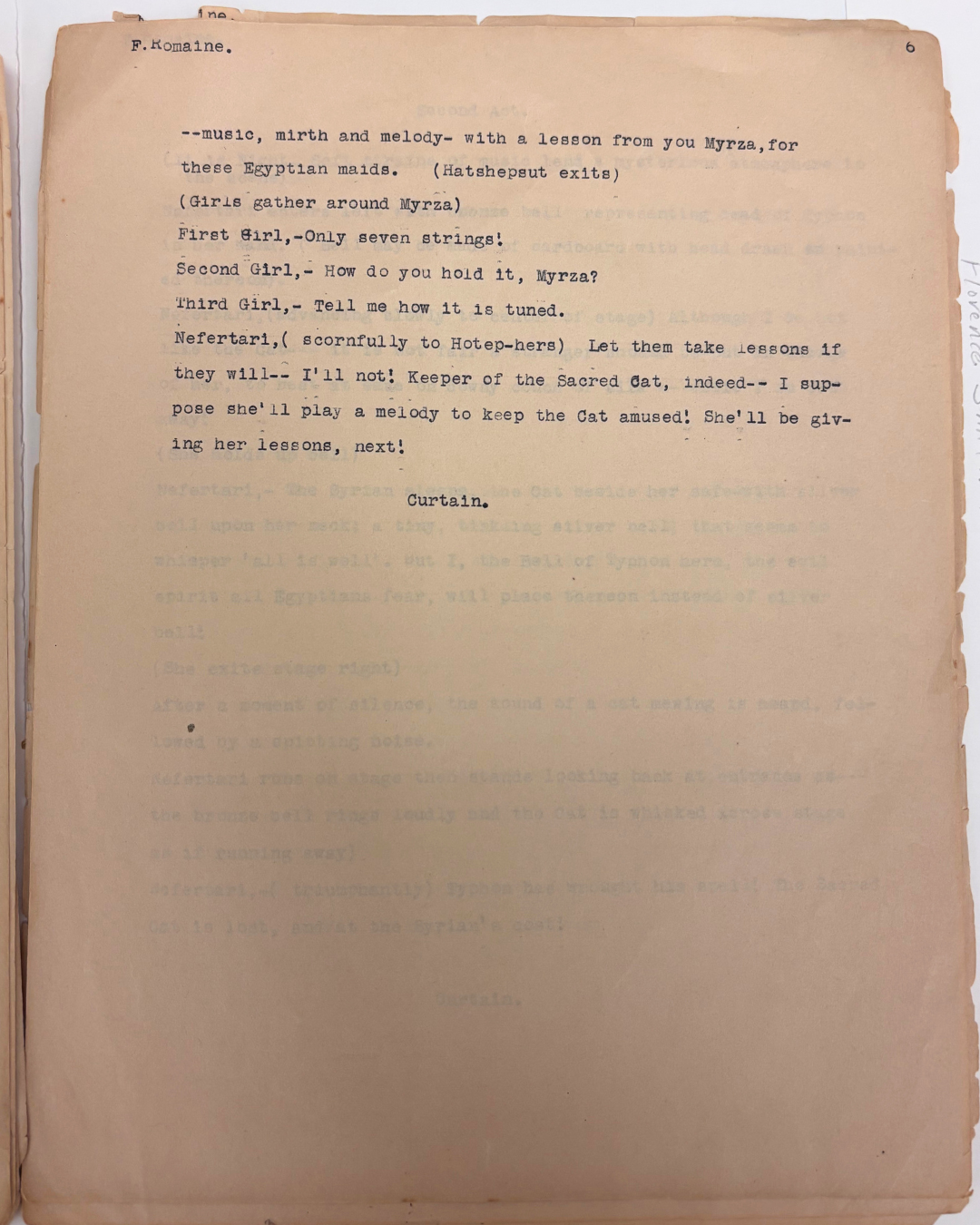
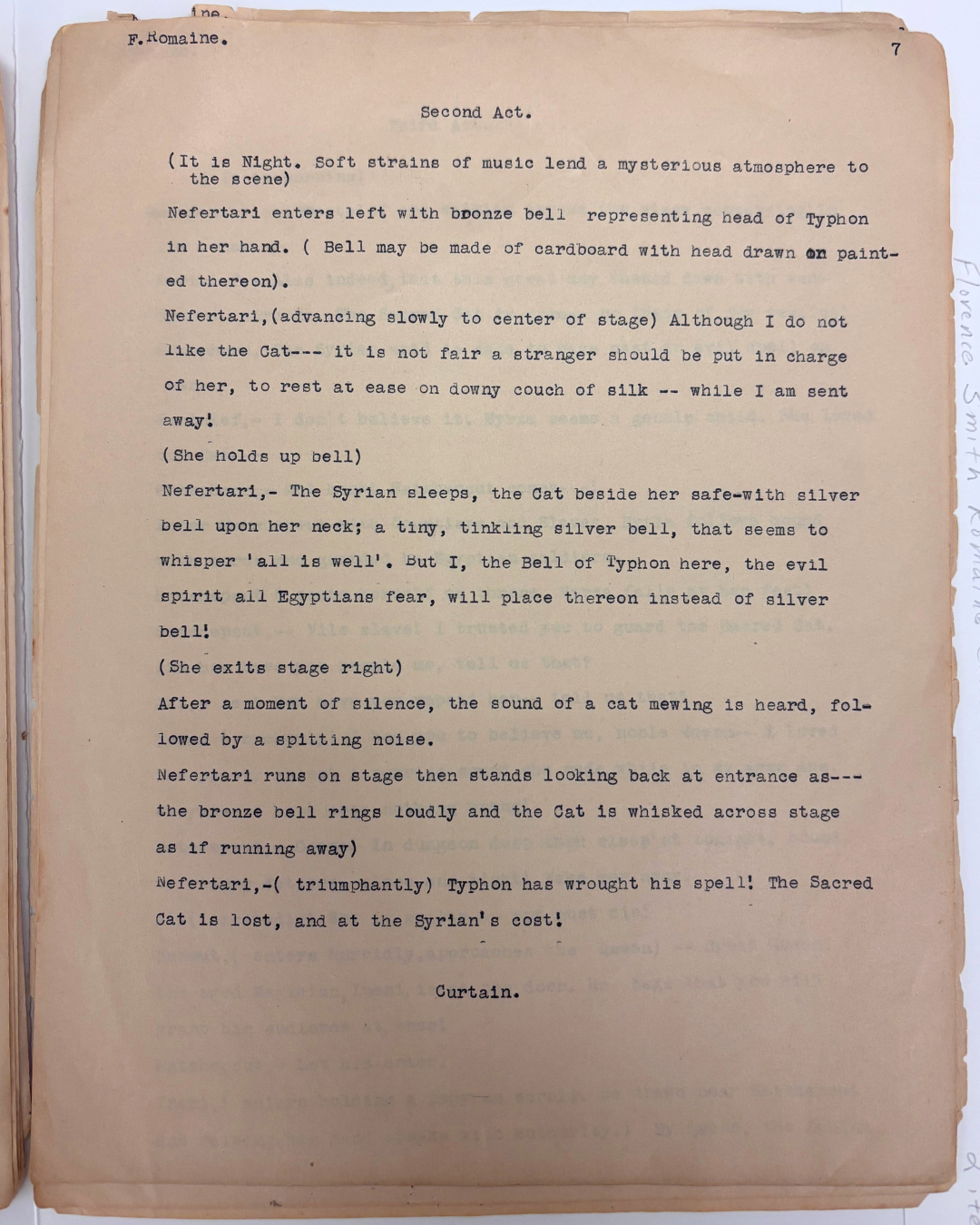
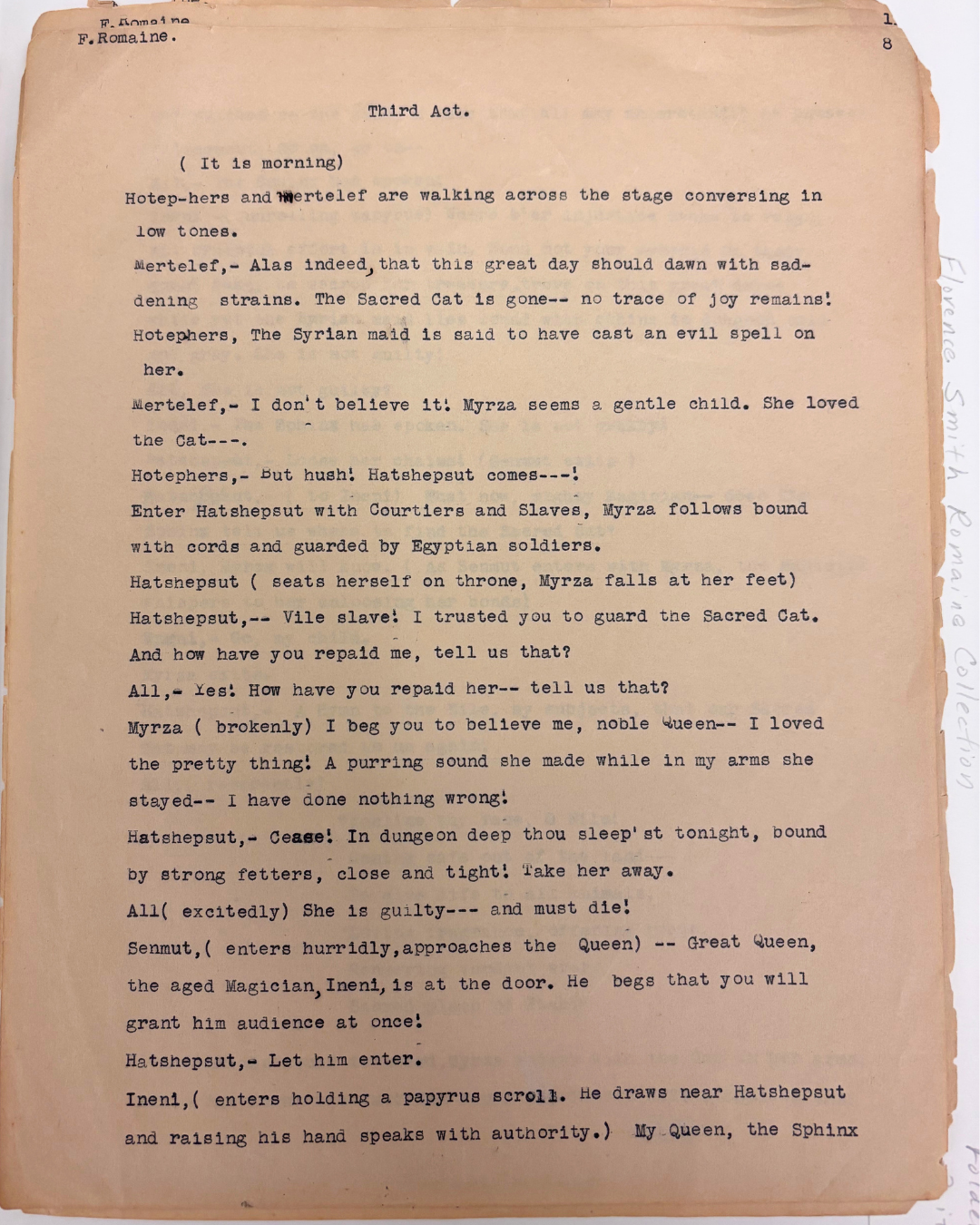
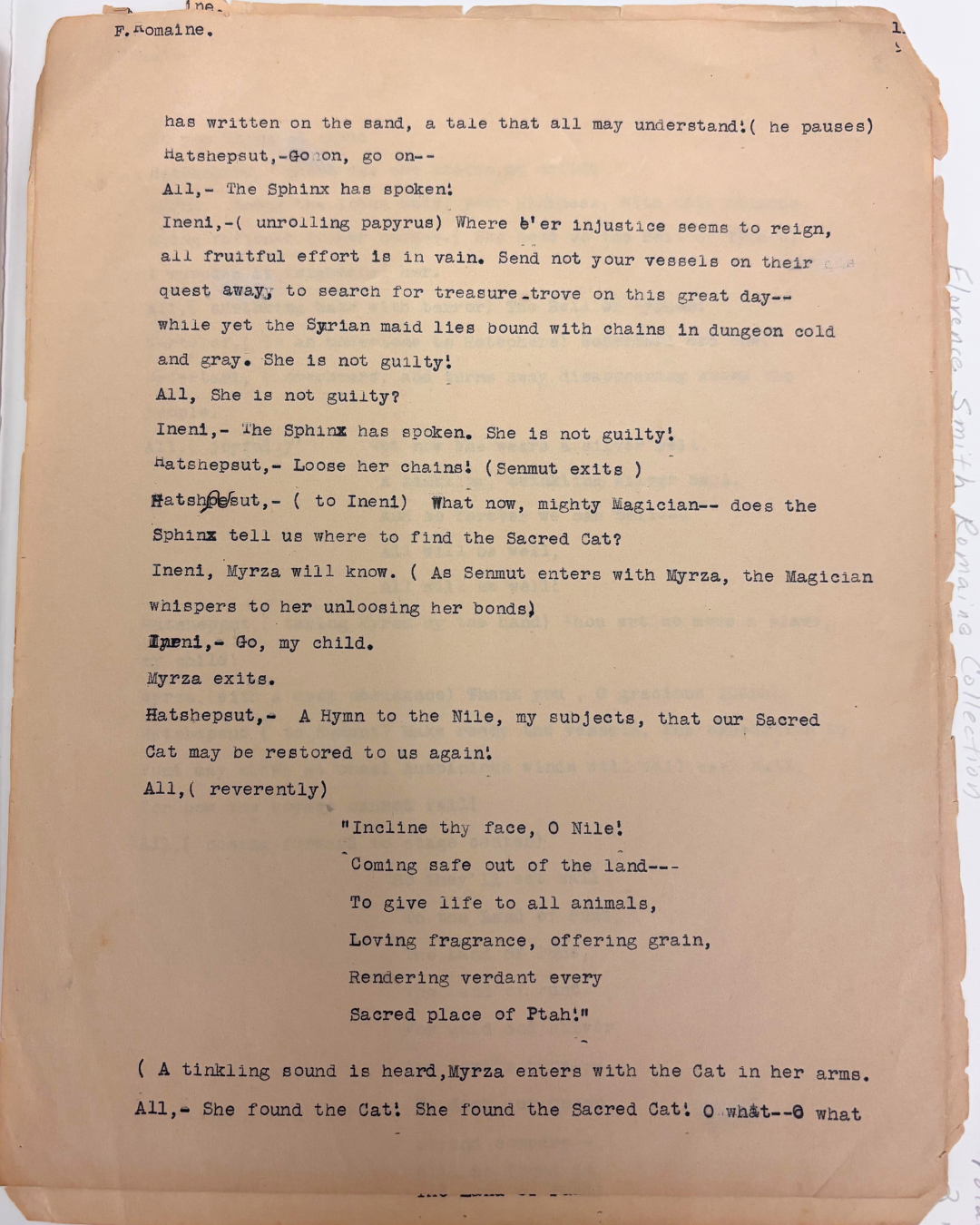
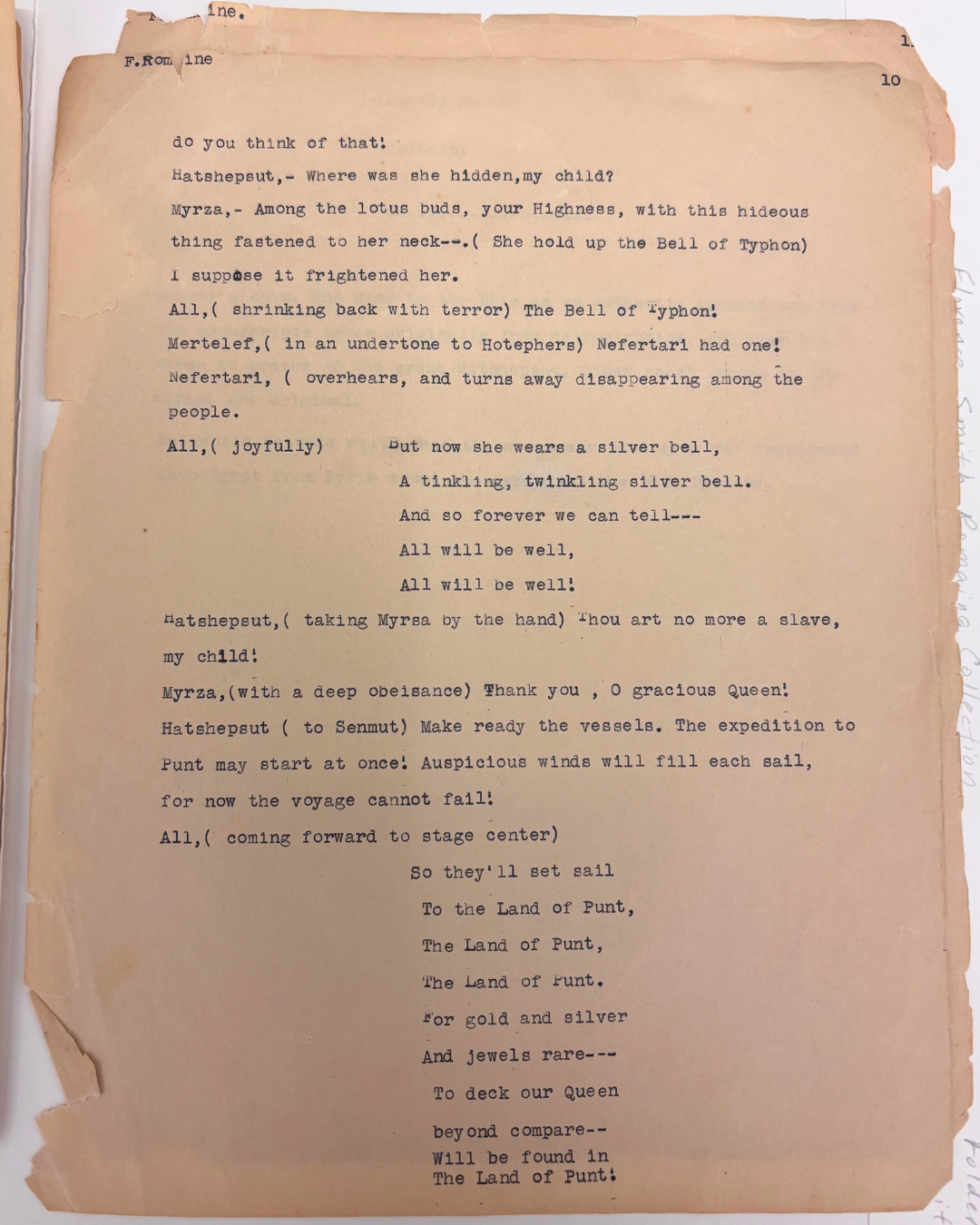
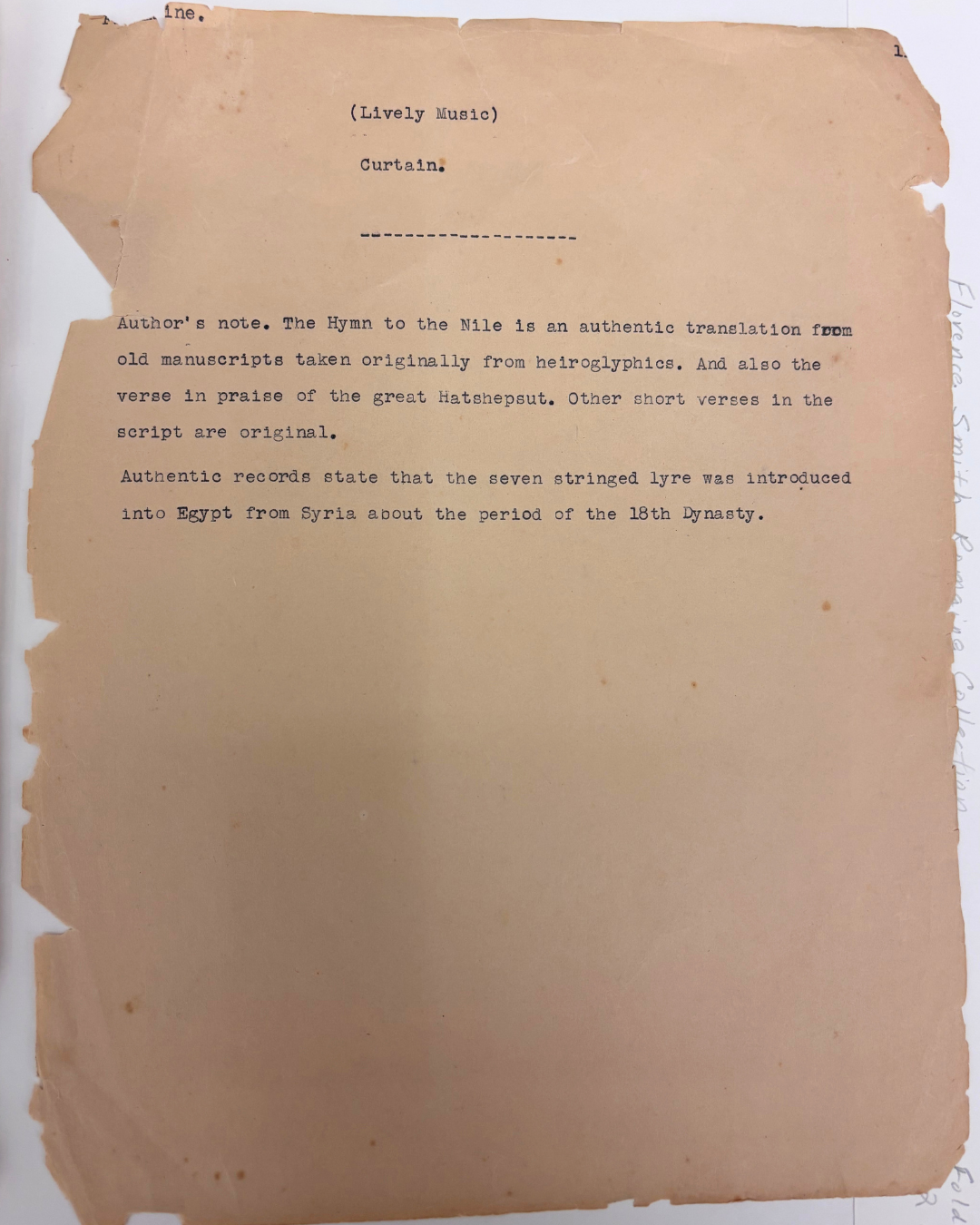
Beyond her published work, Florence devoted her time to creating a theatrical script, inspired by Queen Hatshepsut, the daughter of King Thutmose I, who crowned herself as Pharaoh in 1473 BCE and brought profound success to Egypt during her reign. In the preface of her play, The Silver Bell of Hatshepsut’s Cat, she reminds the audience that the plot is imagined while being inspired by “the great queen of Ancient Egypt.” Florence pulled from original hieroglyphics for two of the hymns sung by her characters in her play, and referenced the introduction of the Syrian lyre around the time of the 18th dynasty. I was unable to find the full text of The Silver Bell of Hatshepsut’s Cat anywhere else. Whether or not it actually made its way to the stage is unknown, but we can imagine the comfort and creative outlet Florence found in writing.
Even with hours of searching through Ancestry.com, digitized articles from The New York Times from over a century ago, and looking for her through every search engine and database that I could, Florence rendered me to a halt. Her two boxes gave me enough to get to know her a little better. Florence was an actress, a writer, a lover of the French language, cared deeply for children, her friends and family, and is someone I wish I could know more about.