
THE HEAVENS
No. 61 (Spring/Summer 2025)
Table of Contents
Capturing Clouds
Jakob Dopp
Graphics Cataloger
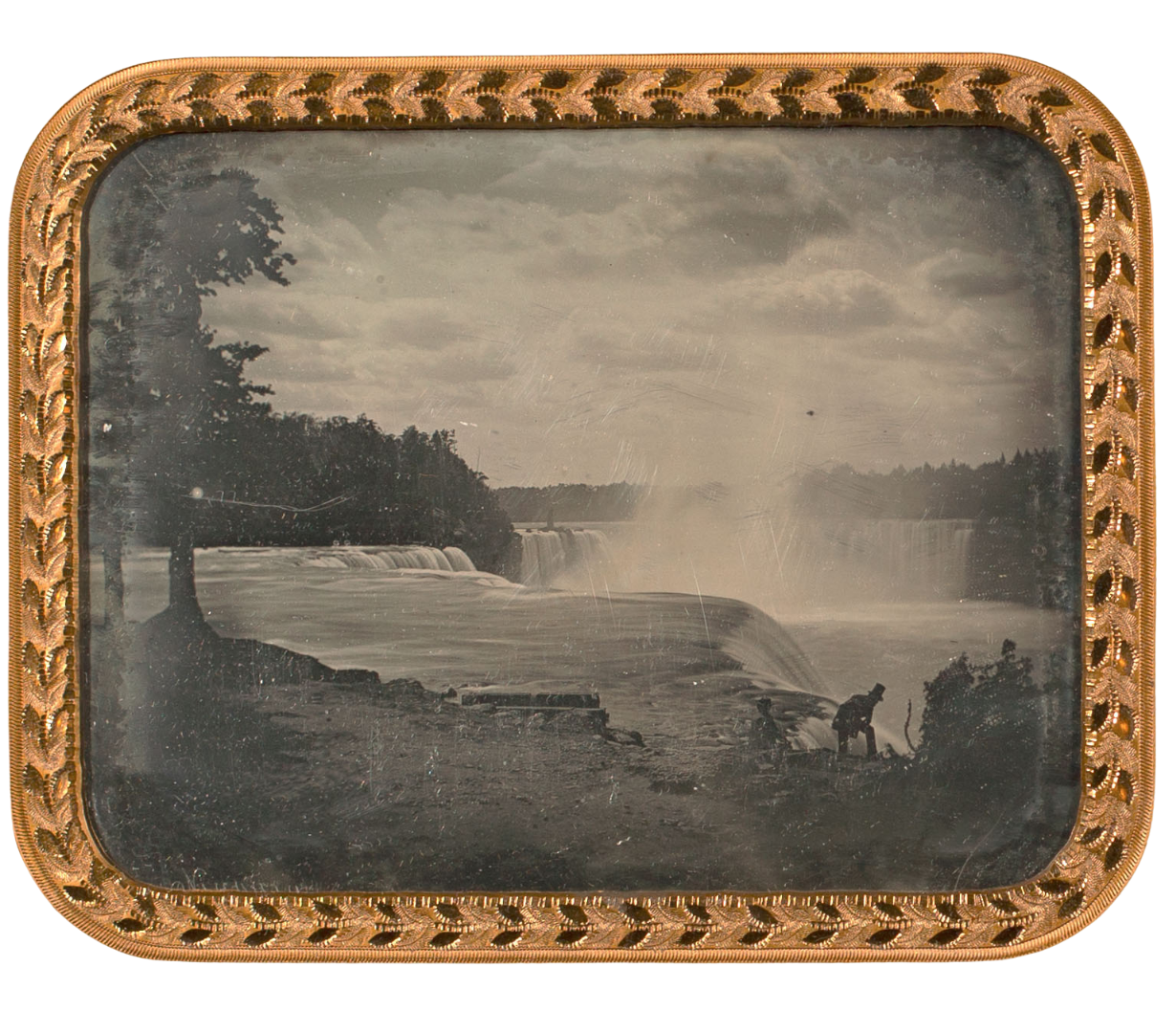
In this daguerreotype view, famed photographer Thomas Martin Easterly (1809–1882) somehow captured the clouds above Niagara Falls in 1853. It remains unclear how he managed to expose the plates for the perfect amount of time with the perfect amount of daylight to achieve this—his was a remarkable talent far outside the norm.
Photographers using the two earliest photographic processes, the daguerreotype and the salt paper print, found the cloud conundrum particularly problematic. Exposure times required for rendering features in the sky were shorter than those needed to render the landscape, as the photosensitive emulsions were more sensitive to the ultraviolet end of the light spectrum. This often resulted in daytime skies becoming overexposed in the final product. For salt prints, lengthy exposure times meant that, for the most part, skies appeared as blank spaces, with borders between cloud and sky indistinguishable. For daguerreotypes, an effect called “solarization” would often manifest, in which the sky appeared to have a blue tint as a result of the daguerreotype’s relative sensitivity to ultraviolet light. Unless the photographer possessed remarkable skill, any hint of white cloud formations would typically be subsumed by the larger sky.

The daguerreotype of the John D. Appleton house (unknown photographer, [1850-1859]), is a classic example of solarization caused by an overexposed plate. Bright conditions and a long exposure resulted in the blue tones visible in the final image.
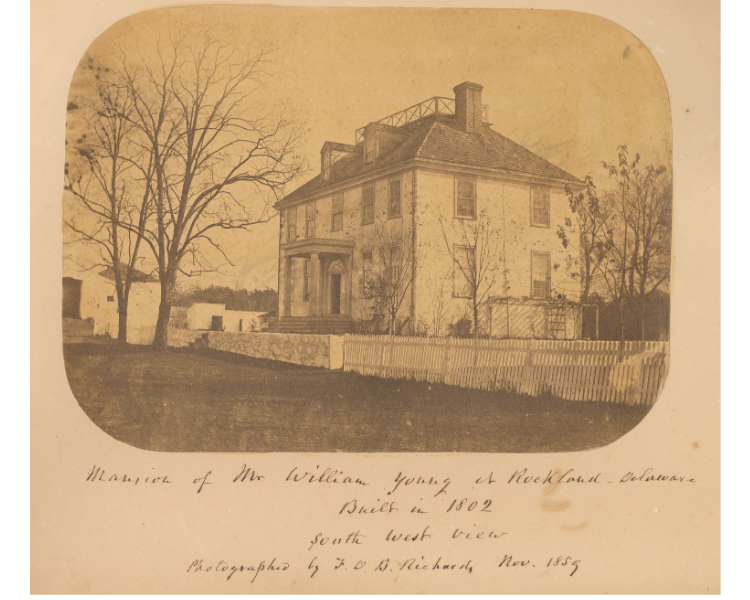
This architectural profile of the mansion of William Young (1755-1829) is a good example of a salt print lacking all cloud features.
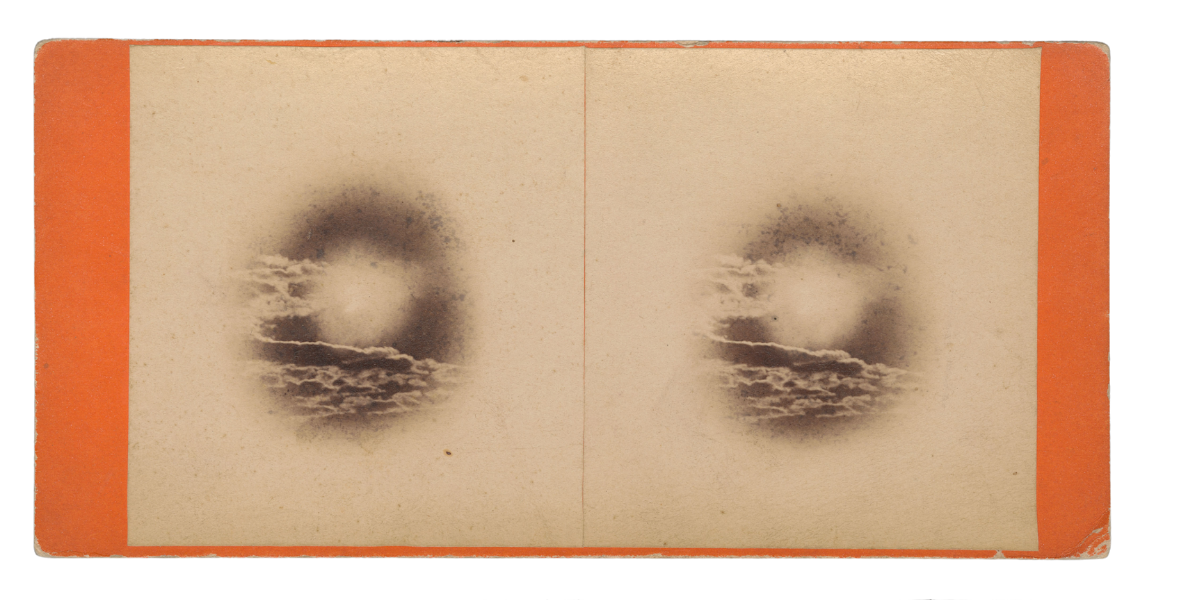
Focusing skyward could more easily yield cloud forms, eliminating the need to juggle the gap in exposure time required for near landscape and distant heavens. A.K.P. Trask (1831–1900) produced these images of the 1869 solar eclipse, which show signs of heavy retouching but also seemingly authentic cloud forms.
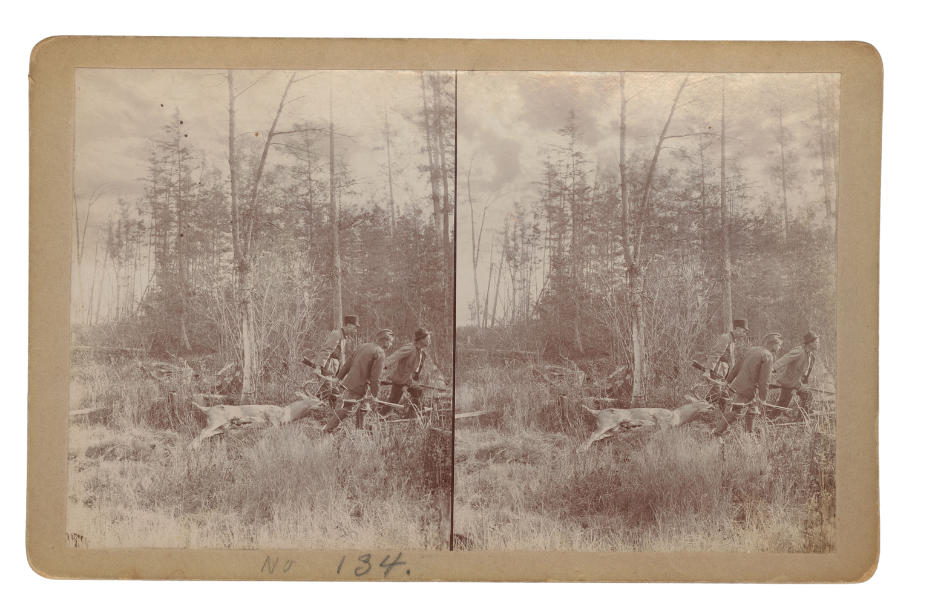
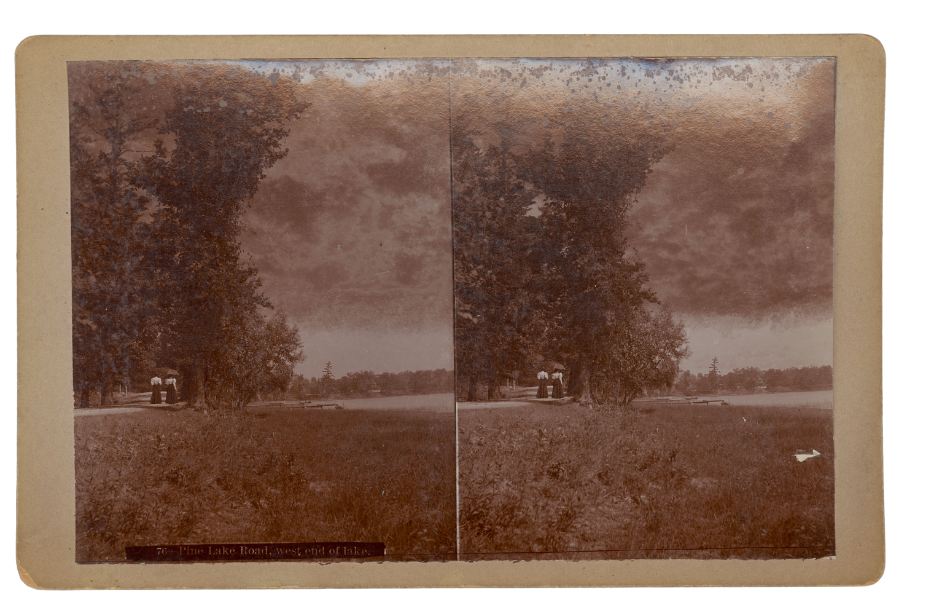
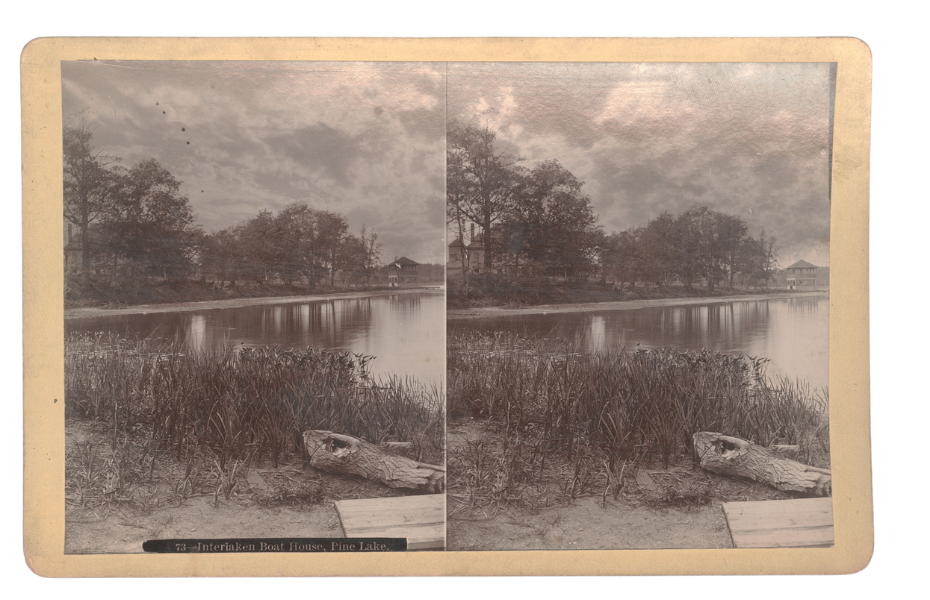
Look closely at this series of stereographs by Michigan photographer Ephraim P. Harris and you will notice vibrant clouds filling the sky. However, if you look even more closely, you will soon realize that the same cloud formations appear across every one of these images. There is no question that the photographer concocted these scenes using the popular technique of combination printing. Because the sky template appears to have been overlaid directly across both the left- and right-hand stereo frames, it produces a headache-inducing dissonance when these images are viewed through a stereoscope, as the cloud forms are different in each frame.