

THE HEAVENS
No. 61 (Spring/Summer 2025)
Table of Contents
Collection Encounters: Making Sense of the Skies
Maggie Vanderford
Librarian for Instruction and Engagement

MacNamara

Bramen

McLaughlin
Trent: I’m an associate professor of history at Texas A&M University. I received my Ph.D. in history from Columbia University in 2015. I spent a month at the Clements in summer 2022 as a Mary G. Stange Short-Term Fellow.
Trent: I’m writing a history of ordinary Americans’ ideas about the cosmos. My basic questions are: How have non-intellectuals understood the content and meaning of the heavens? How have their understandings changed since circa 1800? How have big spaces shaped big ideas? I think we often hear casual observations about our impersonal, mechanical, ultra-vast universe. We also encounter the view, very common in the story of the Scientific Revolution, that in earlier centuries people assumed a more personal, moral, human-scaled cosmos. I see that narrative as basically correct. But it’s very abstract. It’s told in a sweeping, grand-gesture type of way. I like giving it specific life in time and space. So I write about loggers’ camps in Vermont, or spectrocopes, or funeral sermons about where specifically we go when we die. I like the connection between the looming sky, a plainly visible object, and existential questions. I think the physics enriches the metaphysics and vice versa.
For most of the 19th century, the emphasis was on planetary relations or aspects, combined with timing techniques. By the late 19th century, there was the “psychological turn” and the rise of what we refer to as modern astrology. Sun Sign astrology appears in the early 20th century, led in part by American women such as Katherine Brown. This type of astrology is the most popular form, epitomized in the question: What’s your sign? The answer is based on the placement of the sun at the time of your birth, and it paved the way for horoscope columns in newspapers by the 1930s.
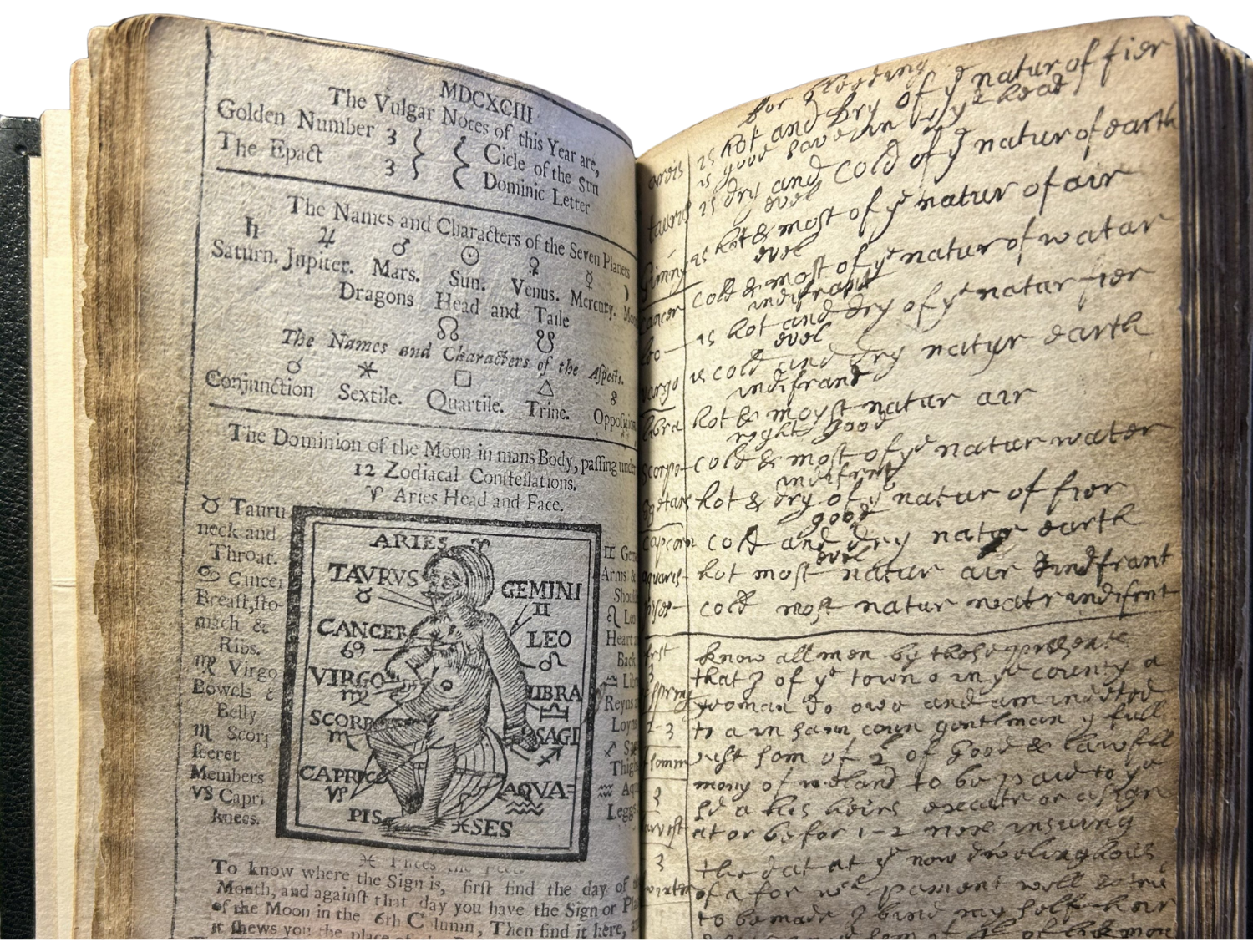
John Tulley (1638–1701), author of a popular series of almanacs, was a teacher of astronomy and navigation from Saybrook, Connecticut. He issued almanacs each year between 1687 and 1702, and was the first to include astrological predictions and weather forecasts. Tulley’s innovations also included starting the year in January instead of March, and his defending the celebration of Christmas Day, a practice long discouraged by the Puritans.
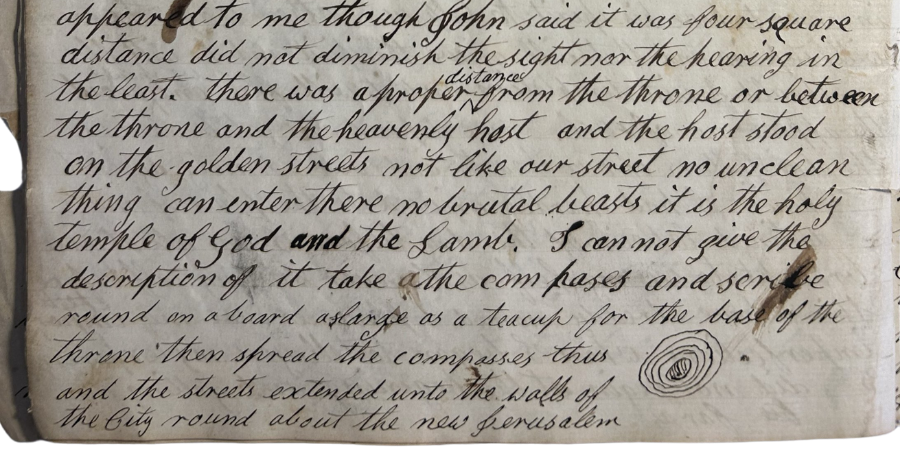
But after years of reading about the antebellum heavens, I cannot avoid concluding that it also gave people something valuable (including the will to resist earth’s petty tyrants). It lent people clear moral purpose during their fleeting lives. I think it’s harder to take encouragement from the heavens of modern astronomy. For some large share of the population, knowing what they know about modern astronomy, it’s hard to avoid the idea that we’re a cosmic accident in a dark, blank mechanism.
Today, astrology is experiencing a resurgence in popularity due, in part, to its ability to adapt to technological innovation in the form of astrology apps such as Co-Star. Since its launch in 2017, Co-Star has been downloaded over 20 million times, and one in four American women between the ages of 18 and 25 have it on their phones. It promises “hyper-personalized, real-time horoscopes” based on all your birth data. Its planetary data comes from NASA satellites and are interpreted by AI, as well as astrologers and a few poets on staff. Astronomical data and astrological interpretation have found a new symbiosis in the 21st century, illustrating how this ancient form of sky reading continues to give meaning to many people’s lives.
At present, as we continue to focus inward, becoming more secluded while simultaneously associating with “imagined communities” that span the internet and social media landscape, we cut ourselves off from understanding those universal and global embodiments that link us on a fundamental level. This has implications for how we conceptualize science in our daily lives but also how we think about and act on global environmental concerns. A connection to the sky has united humanity for millennia. Its decline today parallels a troubling apathy toward science in the 21st century.