
By Naomi Yu, Graduate Assistant Cataloger
Graduate student book cataloger Naomi Yu has been churning out catalog records all semester, and these five publications caught her eye! Read on to learn about the adventurous Captain Jack, phrenology in the Clements collections, and famous American counterfeiters.
The fate of a fairy by Ellen E. Jack [1910]
In this part fiction, part fact autobiography, we learn about a gun-slinging, gold-mining adventurer by the name of Captain Jack, aka Ellen Elliot Jack. She recounts her journey through the Colorado Rocky Mountains, searching for areas to mine gold, silver, and coal. She encounters bandits, cowboys, and wolves during her travels, fending them off with a pair of pistols. Jack’s story is no doubt a dramatization, taking advantage of the public’s interest in adventure narratives from the American Southwest.
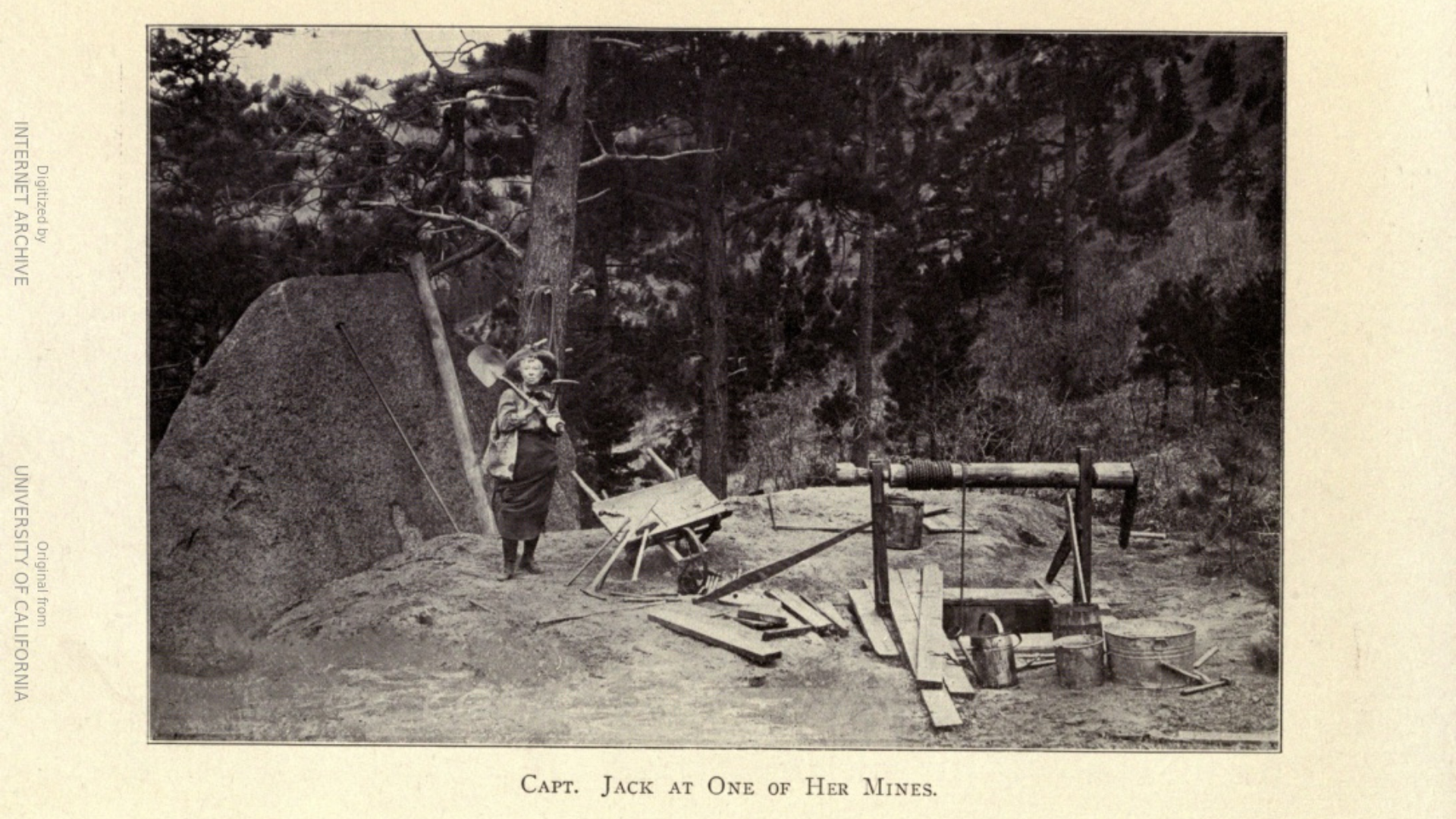
“Capt. Jack at One of Her Mines.” Digitized by the Internet Archive. Original from the University of California.
Ellen Elliot Jack was born in England in 1842, arriving in America just before the Civil War broke out. After the death of her husband and two of her three children, she went west, looking to make her fortune from mining.
The Clements Library’s copy features her signature and presentation inscription to Florence M. West, dated April 20th, 1920—a year before her death.
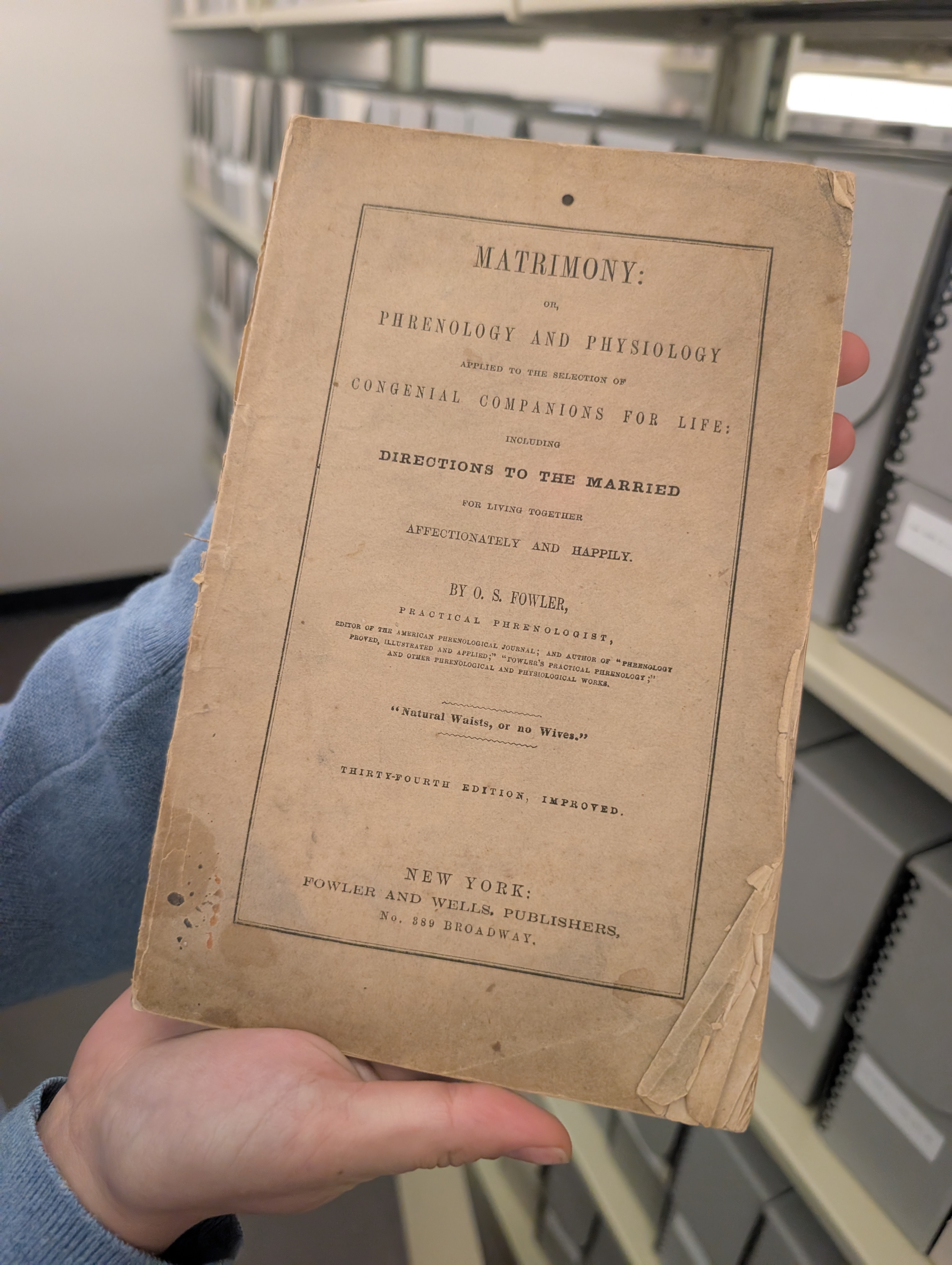
Cover of Matrimony: or, Phrenology and physiology applied to the selection of congenial companions for life : including directions to the married for living together affectionately and happily / by O.S. Fowler, practical phrenologist.
Phrenology
Phrenology is a pseudoscience that connects mental traits to skull shape. It is accredited to Franz Joseph Gall, who invented Crainiology in the late 18th century. The term phrenology did not appear until several years later, coined by his associate Johann Christoph Spurzheim. These days, we understand the discriminatory practices linked to phrenology that were used to enforce racist and ableist ideas.
Despite what we know now, it was quite popular in the 19th and 20th centuries, used in a wide array of contexts. The Clements Library has worked to acquire a variety of phrenology materials to support research on this subject. Some publications are extensive, used as manuals to diagnose character traits, mental illnesses, and train phrenologist hopefuls. Others are more light-hearted, pamphlets used to determine marriage compatibility and career paths. Many phrenological materials were integrated into everyday life, published for use in the home, the school-room, and the workplace.
The Clements Library collects these materials not to perpetuate harmful practices, but rather to offer insight into the practices and beliefs of the time. Here are some of the materials recently acquired:
- Matrimony: or, Phrenology and physiology applied to the selection of congenial companions for life : including directions to the married for living together affectionately and happily / by O.S. Fowler, practical phrenologist [1842]
– How to teach according to temperament and mental development, or, Phrenology in the school-room and the family / by Nelson Sizer (1877)
– The illustrated annual of phrenology, and health almanac… / Fowler and Wells (1839-)
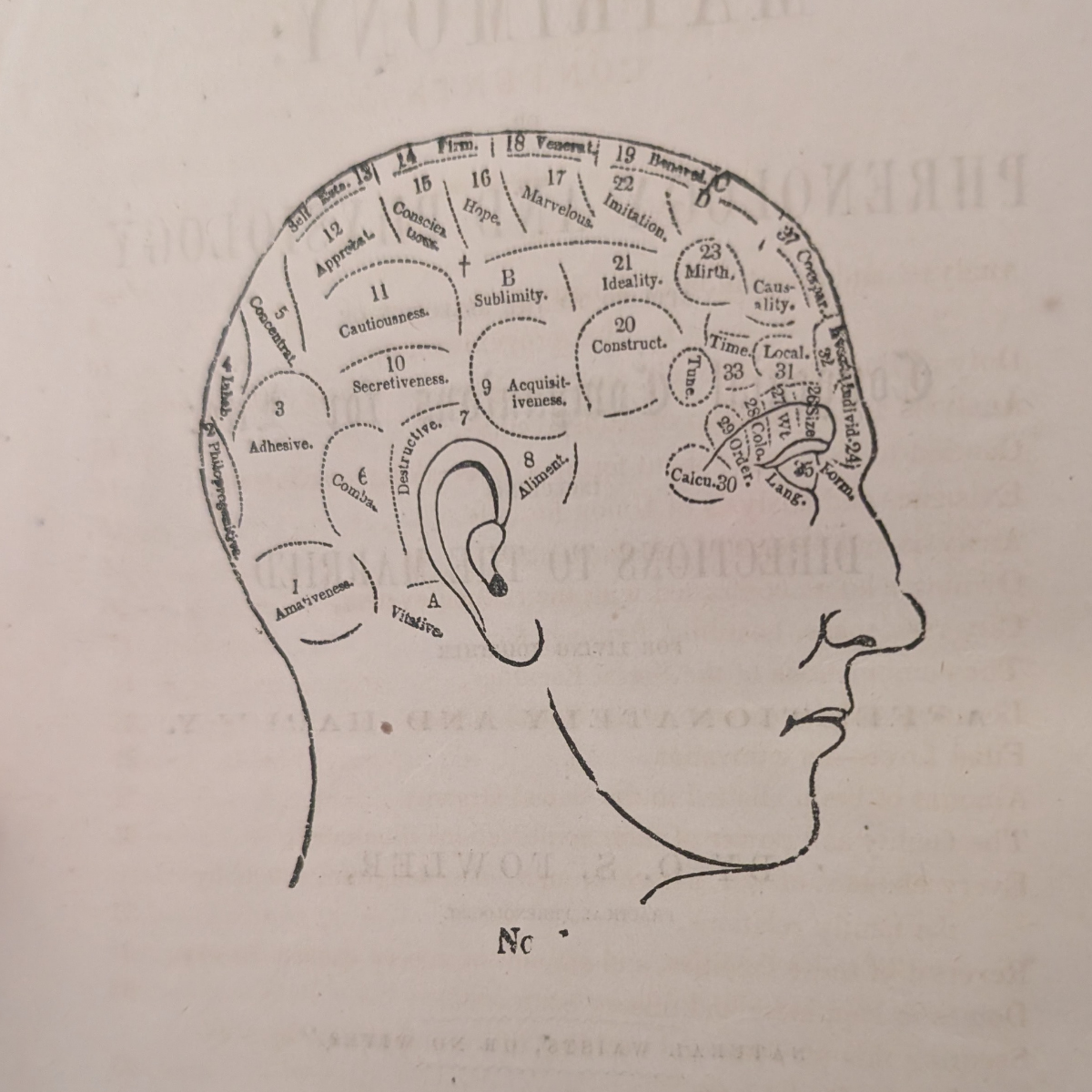
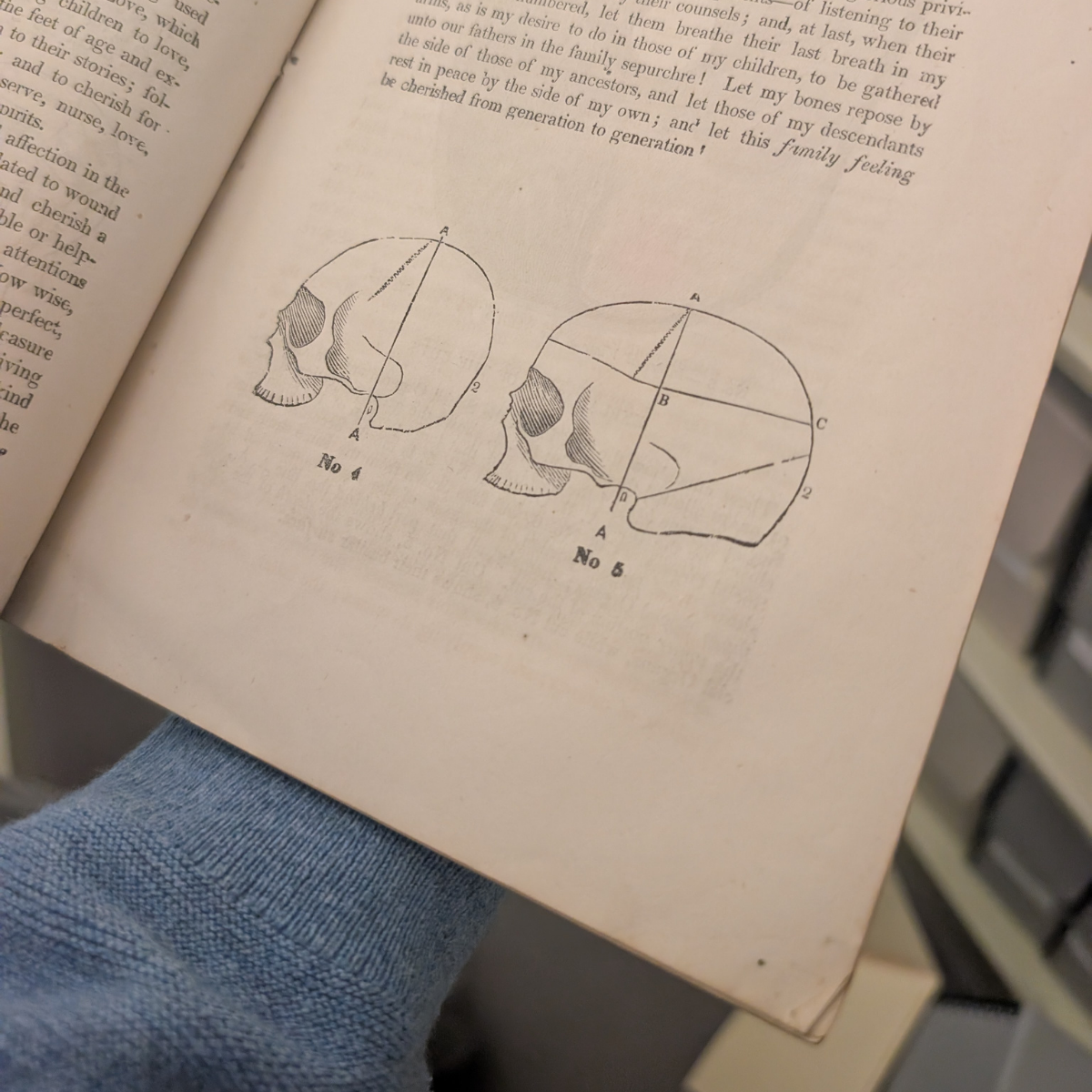
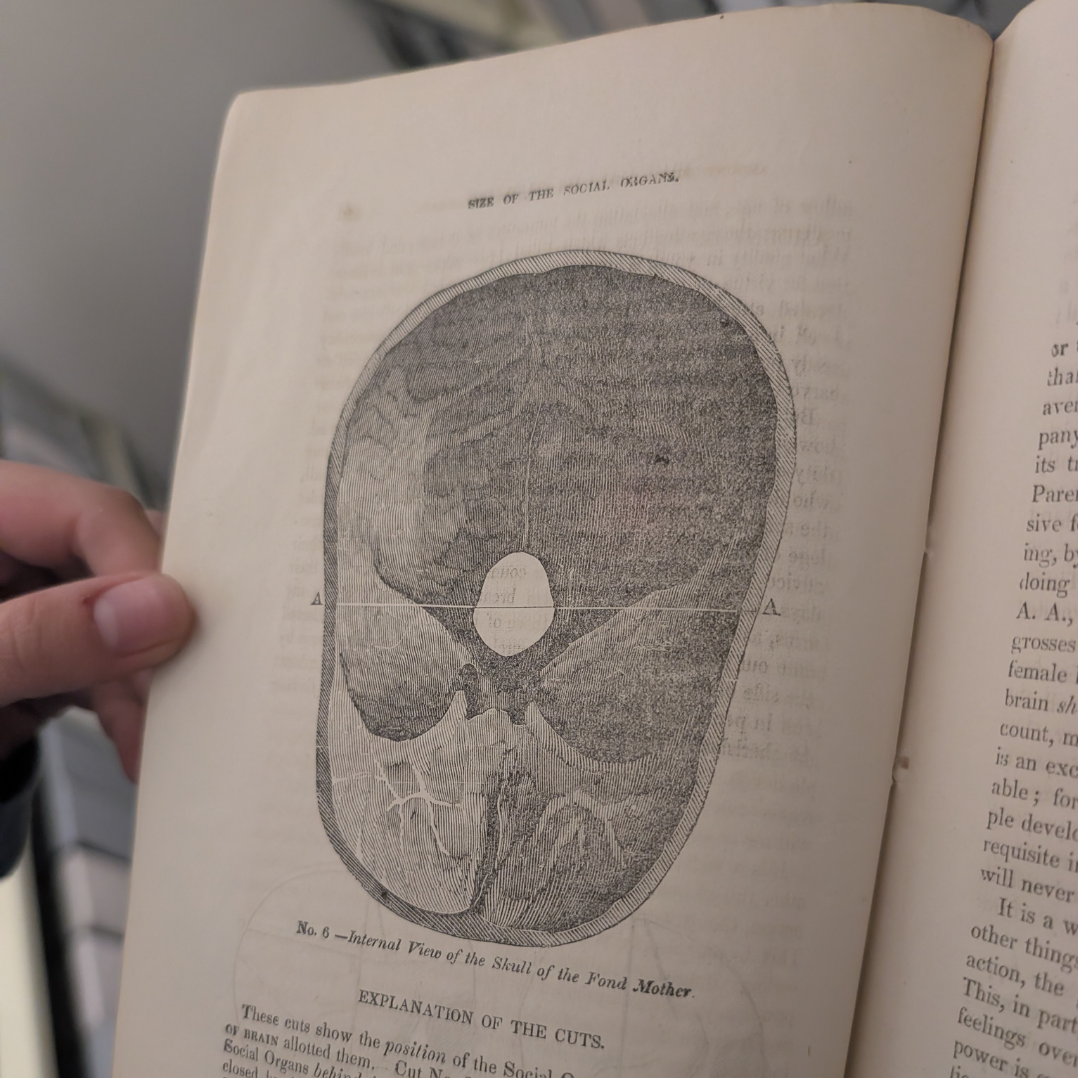
Diagrams from Matrimony: or, Phrenology and physiology applied to the selection of congenial companions for life : including directions to the married for living together affectionately and happily / by O.S. Fowler, practical phrenologist.
American Counterfeits: how detected, and how avoided. / by Capt. Geo P. Burnham (1875)
A mixture of historical fiction and practical instruction, this book on counterfeit money is both instructional and entertaining. Published in 1875, American Counterfeits sheds light on a growing anxiety around the influx of criminal activity in communities. The real heft of this book comes from the accounts of counterfeit-criminals across the United States, the cases often solved by the United States Secret Service. The author lauds their efforts while sensationalizing the careers and lives of criminals. Some of the noted counterfeiters are “Mysterious Bob” (aka Lewis M. Roberts), “Cranky Tom” (aka Thomas M. Hale), and “Mother Roberts”.
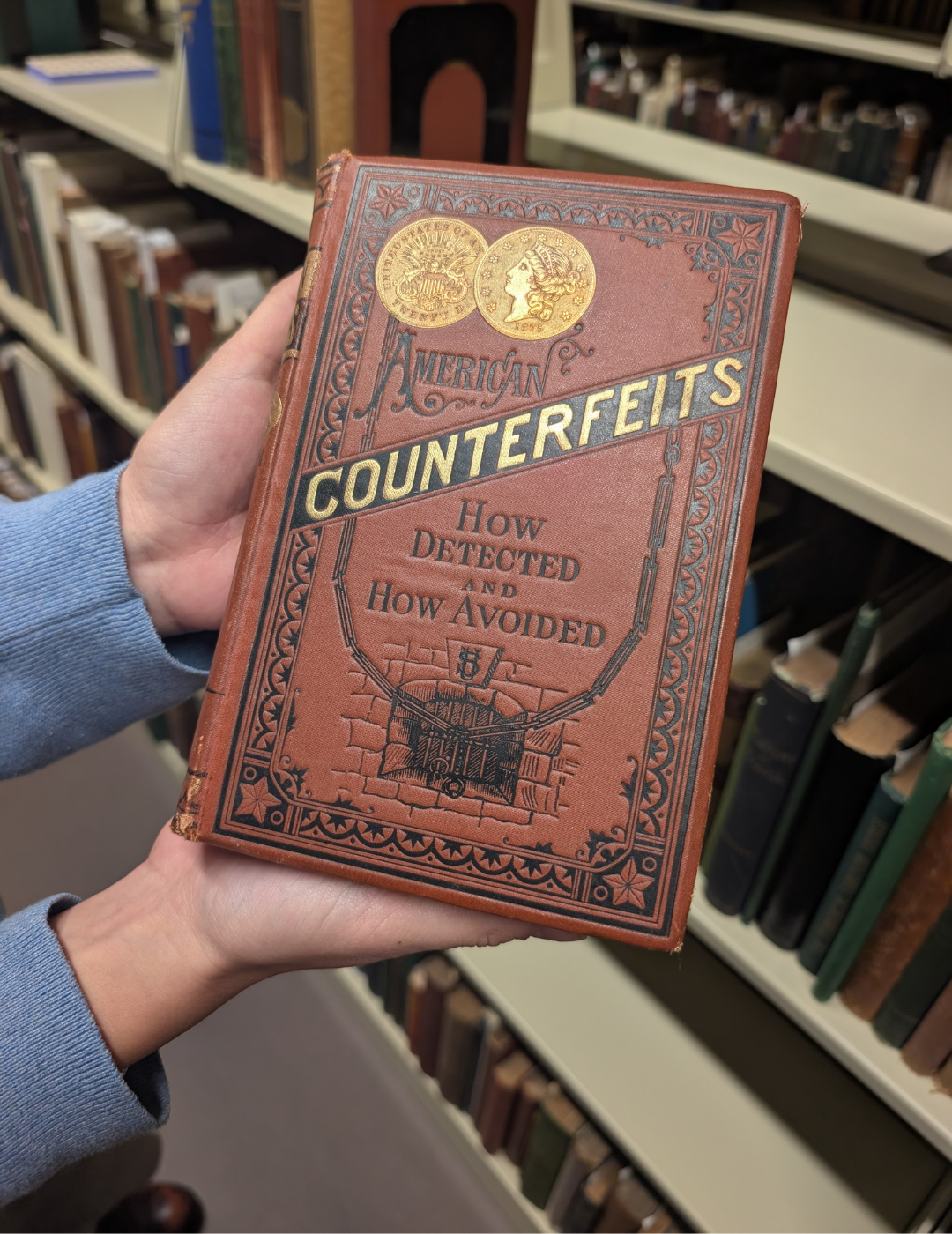
Cover of American Counterfeits: how detected, and how avoided. / by Capt. Geo P. Burnham