
Welcome to “A Day in the Life at The Clements Library!” On the fourth edition of this series, we will meet with Oksana Linda, the Rare Book Cataloger at the Clements Library!
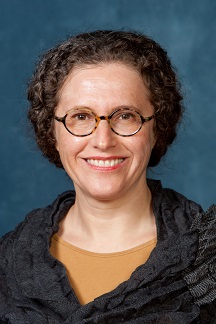
My name is Oksana Linda, I am the Rare Books Cataloger here at the Clements Library. Come spend a day with me!
I grew up in Moscow, Russia and moved to the United States in 1988. In college, I studied French and pedagogy and obtained my Master Degree in Library and Information Science with Archives Management concentration from Simmons College in Boston. I have also taken several additional courses at the Rare Book School, University of Virginia. Before joining the Clements Library in 1998, I worked at the Harvard College Library Preservation Center, Cambridge, Massachusetts where I cataloged materials in Slavic and Western European Languages.
What does a typical day look like for you from beginning to end? What are some surprises that pop up during the week?
During my typical day I sit at my desk surrounded by various printed materials (mostly old and mysterious, sometimes in fabulous covers), such as books, pamphlets, broadsides, serials, etc., and I describe these materials. I create, interpret, and edit bibliographic records in the library online catalog.
All sorts of interesting surprises may pop up, such as wonderful bibliographic problems and riddles, descriptions and notes to be created; I may find unexpected things in books that I catalog, like inscriptions and insertions, neat drawings, notes, book curses (my favorite!), odd things that former owners used as bookmarks, and more. Each new item on my desk is a new adventure!
I think that cataloging/describing rare and old books is the closest thing to time traveling. If I had to choose a favorite time to study, probably 1893. The Chicago World’s Fair really fascinates me!
What is the process of the Clements Library acquiring a rare book? How do you know it’s rare?
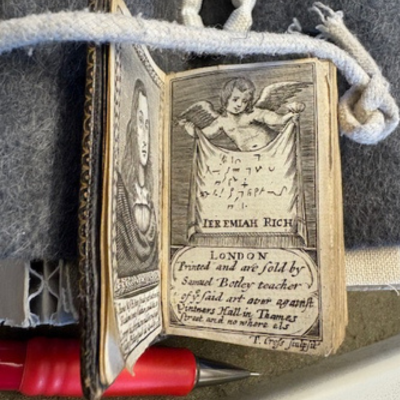
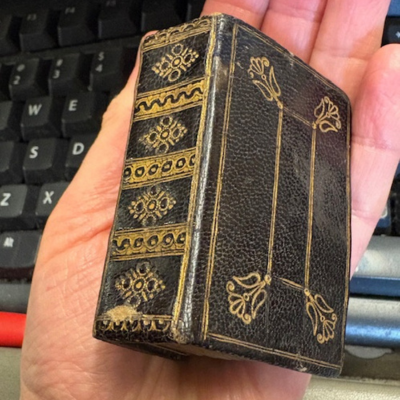
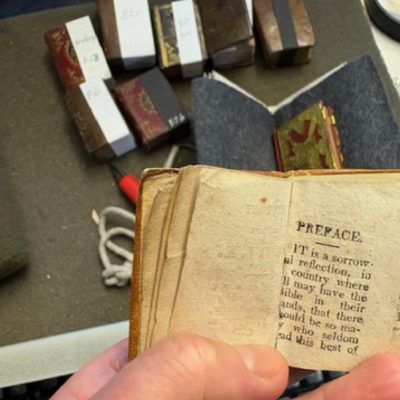
Books in the Clements Library’s collection are purchased or donated. I think of a rare book as “collectible” based on its scarcity, condition, and historical significance. When I examine a newly acquired book, I think of it as a source of information and also as an artifact. I record a book’s authors, title, publication information, etc., and also look for its unique features (such as annotations, autographs, bookplates, hand-colored illustrations), completeness (such as plates and signatures), possible printing errors, binding, and other specific details.
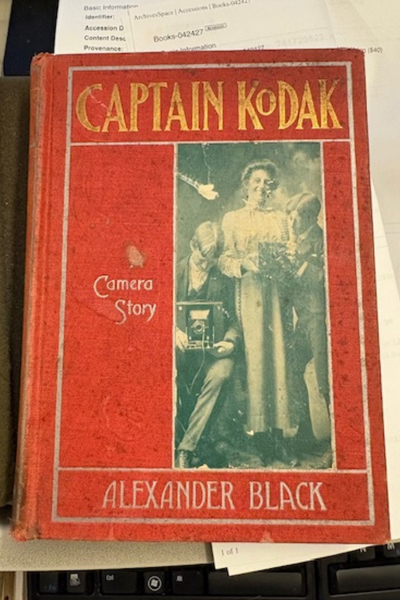
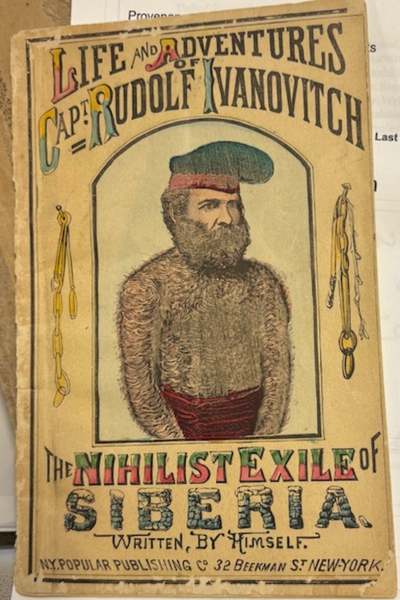
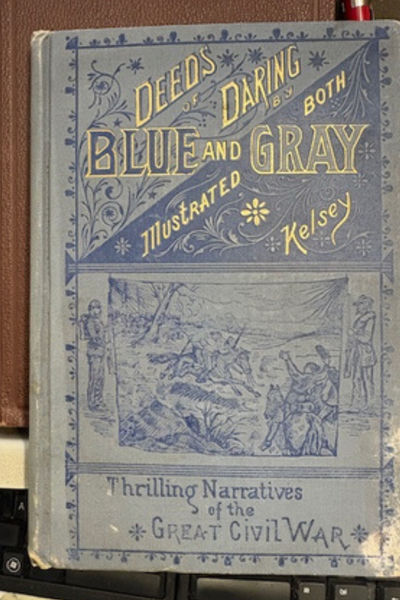
What has been your favorite book that has come into your care? What types of books are the most exciting for you to work with?
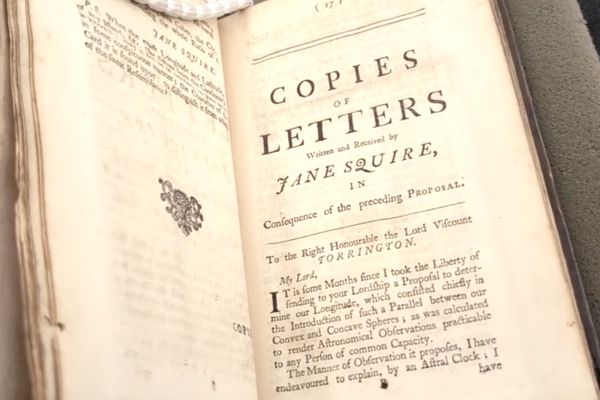
That is a really difficult question! Every book I describe is unique, every week I have a new “favorite”. Some books left a special mark in my heart and one of these books is A proposal to determine our longitude by Jane Squire. London, 1743.
What types of books are the most exciting for you to work with?
Any type of book is the most exciting to work with! I particularly love to work with books that have interesting and unusual covers. It’s exciting to catalog salesman’s dummies that may include several covers and backstrip samples. Lately I have been cataloging 19th century advertising posters/broadsides and find them incredibly interesting.
What kind of education or training did you need for your career? What do you wish you would have known about your job before starting?
To be a rare book cataloger, I needed an Masters degree in Library and Information Science and also an additional training for rare books cataloging.
If you could give one piece of career advice to people who want to work with this type of material, what would it be?
Actually it’s two pieces of advice: I think it’s important to obtain internships (or volunteer) with special collections libraries; attending rare book schools (such as Rare Book School at the University of Virginia) is very helpful.