
The work of the Clements Library is predicated on generous donations, both big and small. These contributions sustain the Clements’ mission, strengthen our collections, and connect students and researchers alike to the past. They also support and create scholarly opportunities through our fellowship program. Development Outreach Assistant Samantha Huck spoke with Mary Koslovsky, who established the Alfred A. Cave Fellowship in honor of her late husband Dr. Alfred A. Cave. Sam and Mary discussed Dr. Cave’s nearly 50-year legacy of teaching and scholarship, his research at the Clements, and the impact of her planned gift to the Clements.
Dr. Alfred A. Cave was a Professor Emeritus at the University of Toledo. His scholarship focused on the ethnohistory of colonial America, Native American history, and the Jacksonian Era. Dr. Cave researched at the Clements while writing two of his books, Prophets of the Great Spirit: Native American Revitalization Movements in Eastern North America (2006) and Lethal Encounters: Englishmen and Indians in Colonial Virginia (2011). According to Mary, he had great respect for the Clements and its mission even before researching here. During his time at the Clements, she said, Dr. Cave found the staff to be knowledgeable and willing to help and the collections to be considerable. She shared a story of Dr. Cave needing to call the Clements to obtain a copy of a map for one the books that he was working on. “He was amazed that the staff member knew exactly where the map was and that they would be able to quickly get it to my husband.”
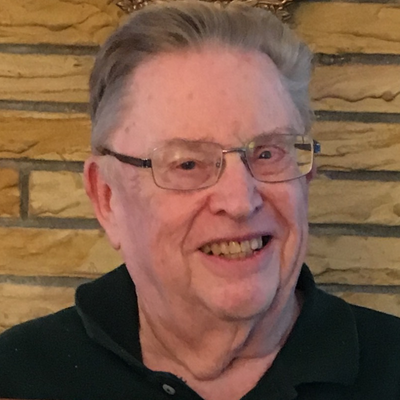
Dr. Alfred A. Cave
Inspired by her appreciation for the Clements Library and its work, Mary established the Alfred A. Cave Fellowship in 2020 to support research on Native American topics. Mary had already established a scholarship at the University of Florida, where Dr. Cave earned his Master’s and PhD degrees, but wanted to establish a fellowship specifically to facilitate historians “getting in the trenches of primary source material,” which her late husband strongly believed in. Per Mary, Dr. Cave felt it was “integral to being a historian” and that archival research was critical to deepening one’s understanding of history. With the proliferation of the internet and more easily-available secondary source material, it was important for Dr. Cave and Mary that fellows access the archives in person and follow the paper trail.
In establishing the fellowship, Mary sought to help researchers advance their career trajectory while also encouraging the use of the archives and disseminating what they’ve learned from the materials. Getting into the archives helps fellows discover new areas of interest and ways of thinking, and the subsequent publications, teaching materials, and other products of the research process help to establish the fellow in the field of history and expand the field’s knowledge. One such example is Elena Telles Ryan, who researched as a Cave Fellow during her PhD candidacy at Princeton University. She wrote of her experience, “Beyond the archive, I found an intellectual community at the Clements. My fellow researchers, the knowledgeable archivists, and the curators at the Clements asked me questions and offered suggestions that continue to shape my project.”
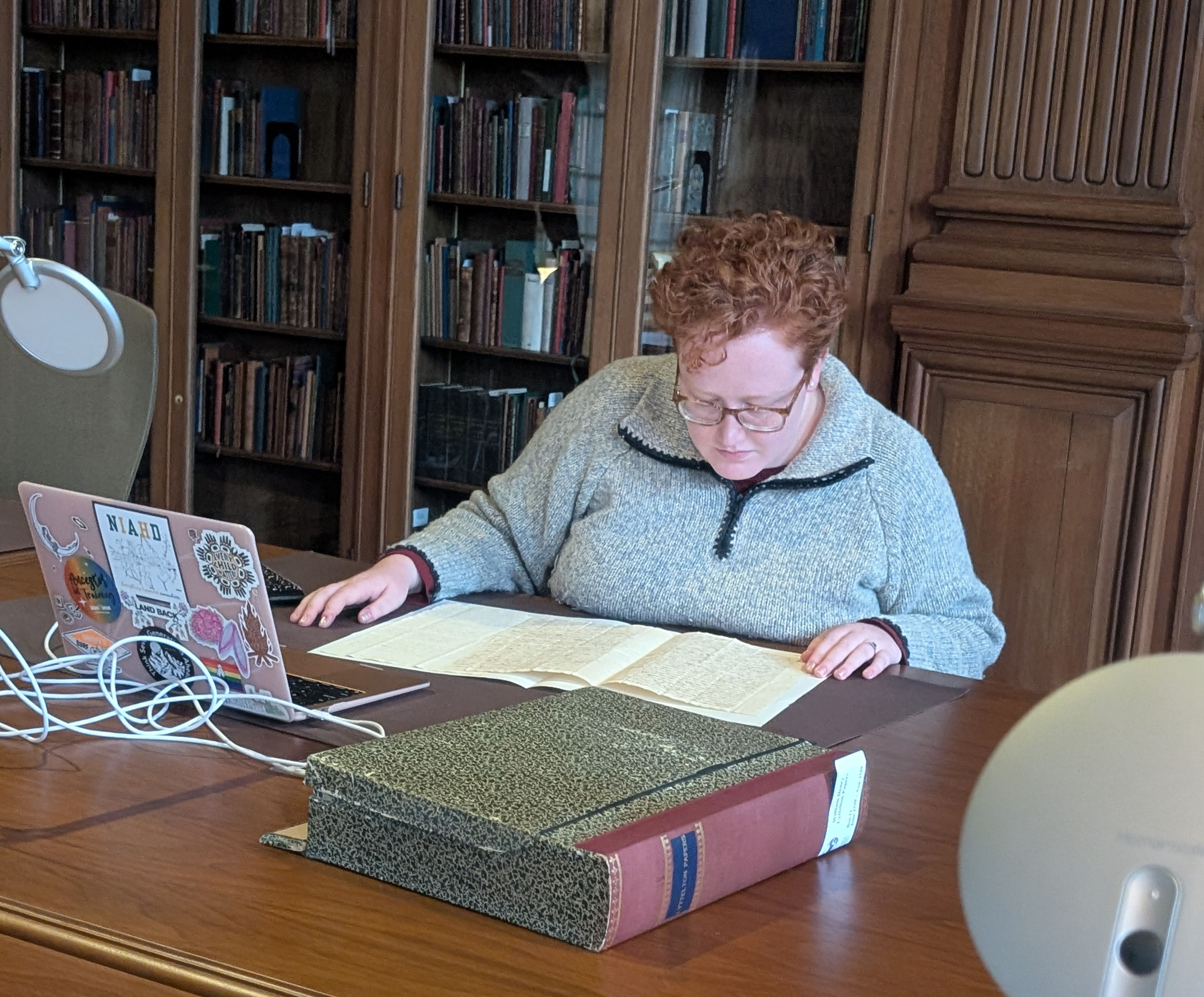
Cave Fellow Emily Dixon Magness researching in the Avenir Foundation Reading Room.
In addition to establishing the Cave Fellowship and contributing to it monthly, Mary has also established a planned gift with the Clements to support the longevity of the fellowship. For Mary, deciding to fund the Cave Fellowship wasn’t a hard decision; the Clements is well-known among historians and the fellows it attracts understand the importance of the work they’re completing. Establishing a planned gift is a great way to honor someone and to help the Clements and their mission. When asked about the impact of her gift, Mary shared that historians can’t do their work without places like the Clements existing, and there’s significant value to accessing the archives and holding history in your hands. History and the humanities were significant to Dr. Cave, and supporting the library honors those values.
If you would like to learn more about planned giving, please contact the Development Department at the Clements, [email protected] or visit the University of Michigan’s Planned Giving page.