
The Clements Library Manuscripts Division has published eight new finding aids for collections ranging from scrapbooks to financial records. These handwritten materials are now available for anyone to research!
Mercantile ledger and dollhouse collage, 1853-1854, 1875
Around 1875 an unidentified artist repurposed a mercantile ledger with financial accounts of customers from 1853 and 1854 to collage fifteen scenes of domestic interiors and exteriors. The scenes are made from printed images of furniture, household goods, hats, and people that were clipped from publications, in addition to handmade elements cut from paper, wallpaper, tissue paper, and more. The scenes include a kitchen, bedrooms and nurseries, sitting rooms, a bathroom, and an entry way.
Eleazer D. and Charity P. Farr account book, 1837-1857
Eleazer D. Farr and Charity P. Farr, a married couple, maintained this account book between 1837-1857, documenting their financial transactions related to their respective work as a carpenter, furniture maker, painter, and seamstress.
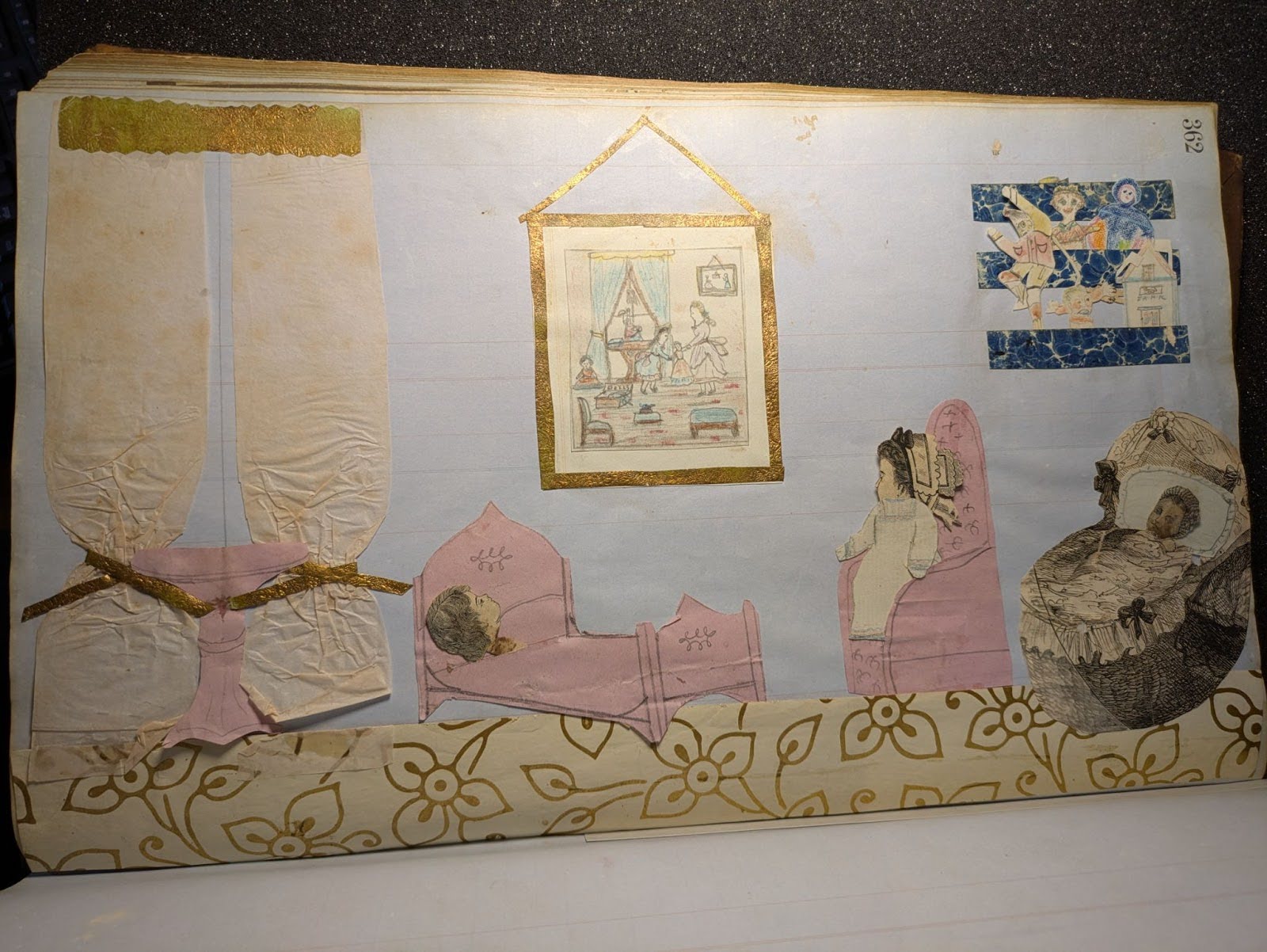
Nursery scene from the Mercantile ledger and dollhouse collage, 1853-1854, 1875.
Housatonic Lodge of Papermakers minute book, 1901-1904
This volume contains the meeting minutes of the Housatonic Lodge of Papermakers of Housatonic, Massachusetts, kept between 1901-1904 by various recording secretaries. It reflects the operations of the organization, which was part of the International Brotherhood of Papermaking, and includes meeting activities, motions, officer elections and member applications, social events, and financial matters.
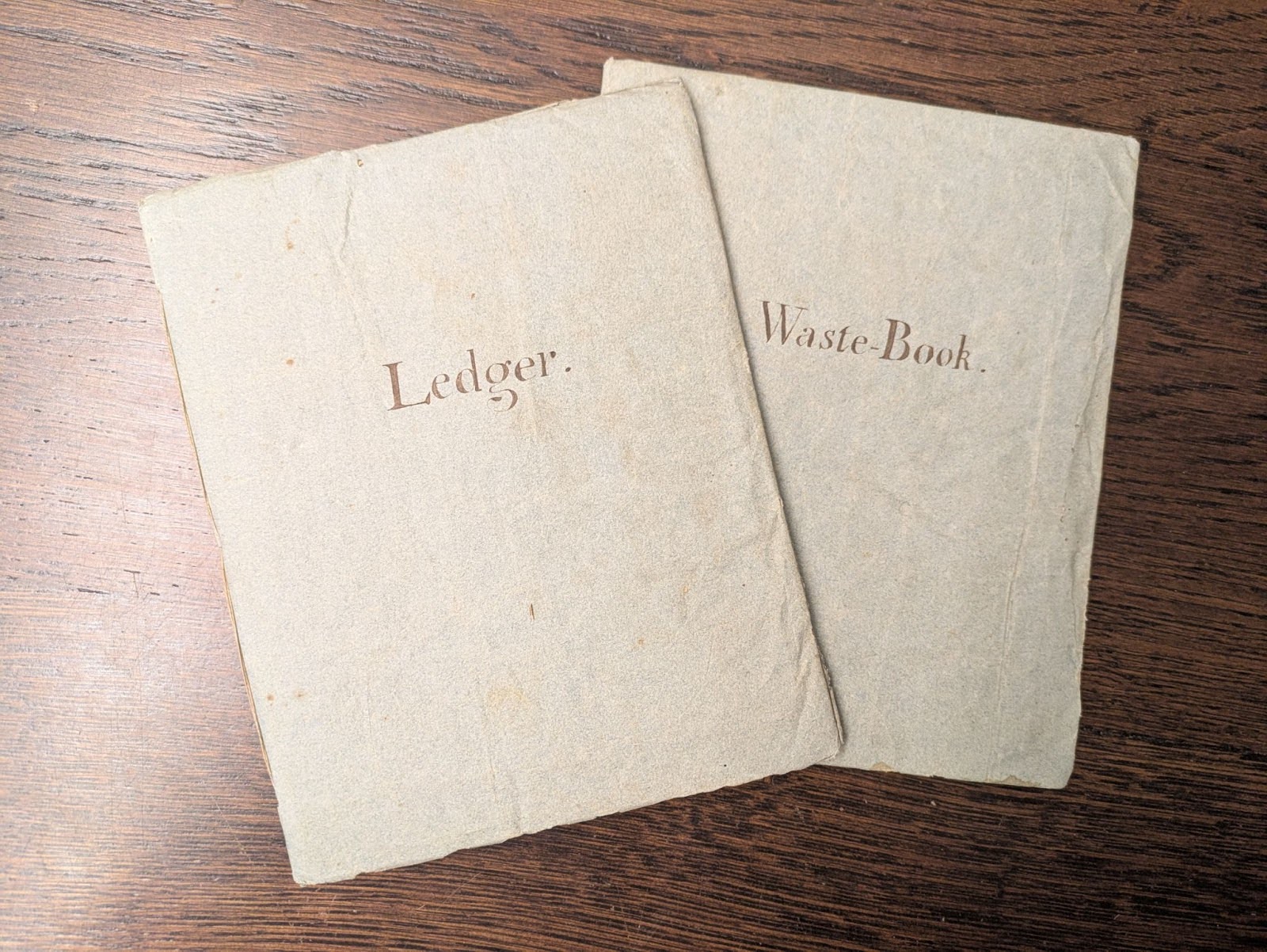
William Jeffry ledger and waste book, 1769-1771, featuring handsewn binding.
William Jeffry ledger and waste book, 1769-1771
William Jeffry of Salem, Massachusetts, kept this ledger and waste book between 1769 and 1771 to record the financial transactions relating to his management of the £1,943.5.7 principal of Elizabeth Gardner, bequeathed to her as the minor daughter of the recently deceased Samuel Gardner. He documented the incoming and outgoing principal, interest, and cash. The waste book lists out the names of individuals and the amount of the bonds owed to the estate, ranging in date from 1764 to 1768, and provides details of cash disbursements given to Elizabeth Gardner for matters like paying household staff, board, and taxes.
Jenks-Greenleaf family papers, 1804-1867 (majority within 1820-1841)
This collection consists of correspondence written between 1804 and 1867 by members of the extended Jenks and Greenleaf families who predominantly lived in Maine. The letters center around Clarina (Greenleaf) Jenks and her children Elizabeth, Eleazer Alley, and Alexander Hamilton, as well as Clarina’s brothers Jonathan, Moses, and Ebenezer. The letters include discussions of religion and revivals in Maine, social life, efforts of Alexander Hamilton Jenks to set out into business, health, and family dynamics.
Love’s Bakery daybook, 1886-1887
This daybook contains financial accounts of customers who purchased goods from Love’s Bakery in Honolulu, Hawaii, between 1886-1887. It documents customer names, items purchased, and amounts owed, as well as business expenses.
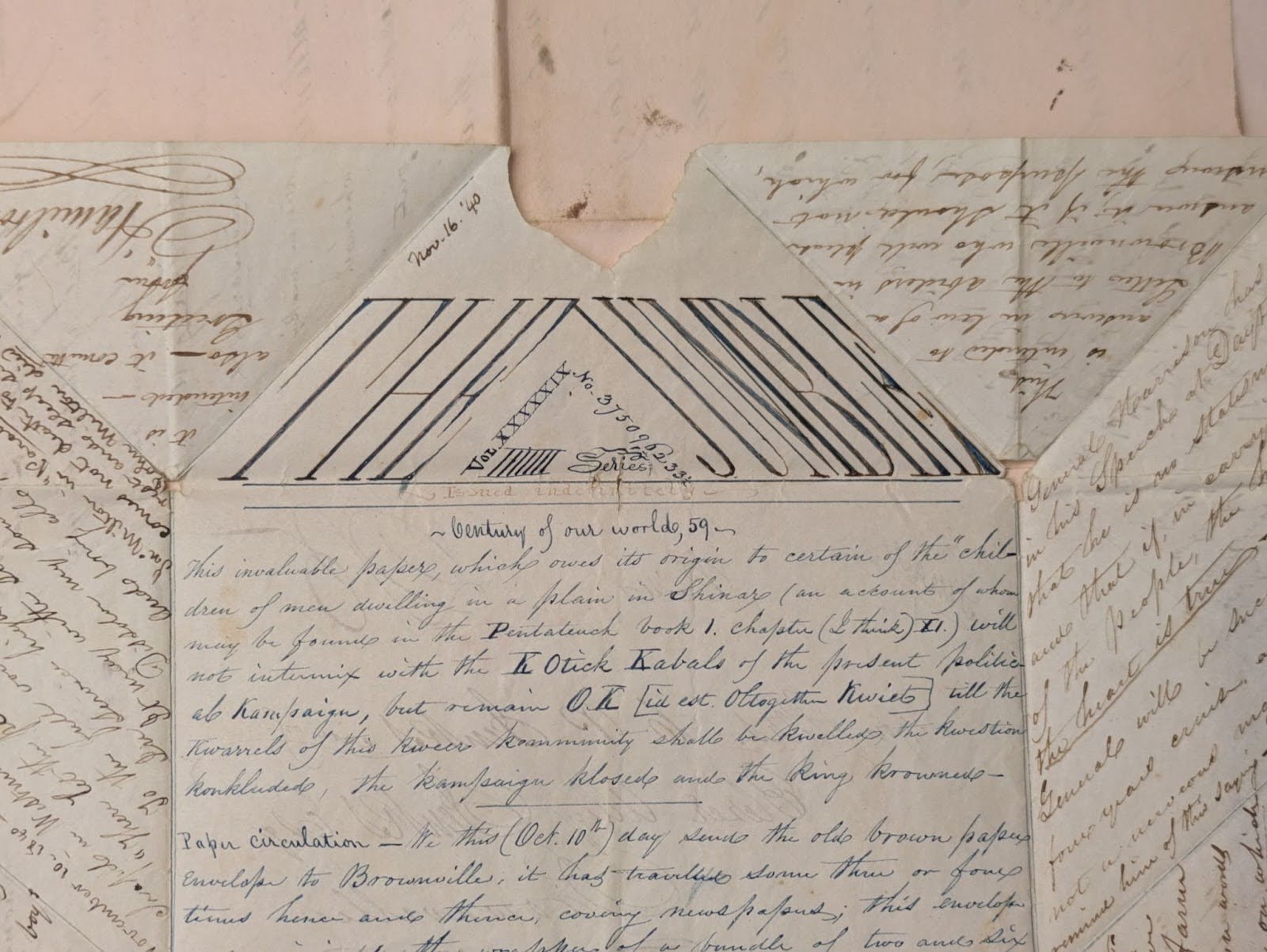
Letter dated October 11-November 16, 1840, is written in snippets and in many different orientations. A. H. Jenks gave it a title, like a manuscript periodical, “The Jumble” Vol. XXXXXIX, No. 375096233 ½. Jenks-Greenleaf family papers, 1804-1867.
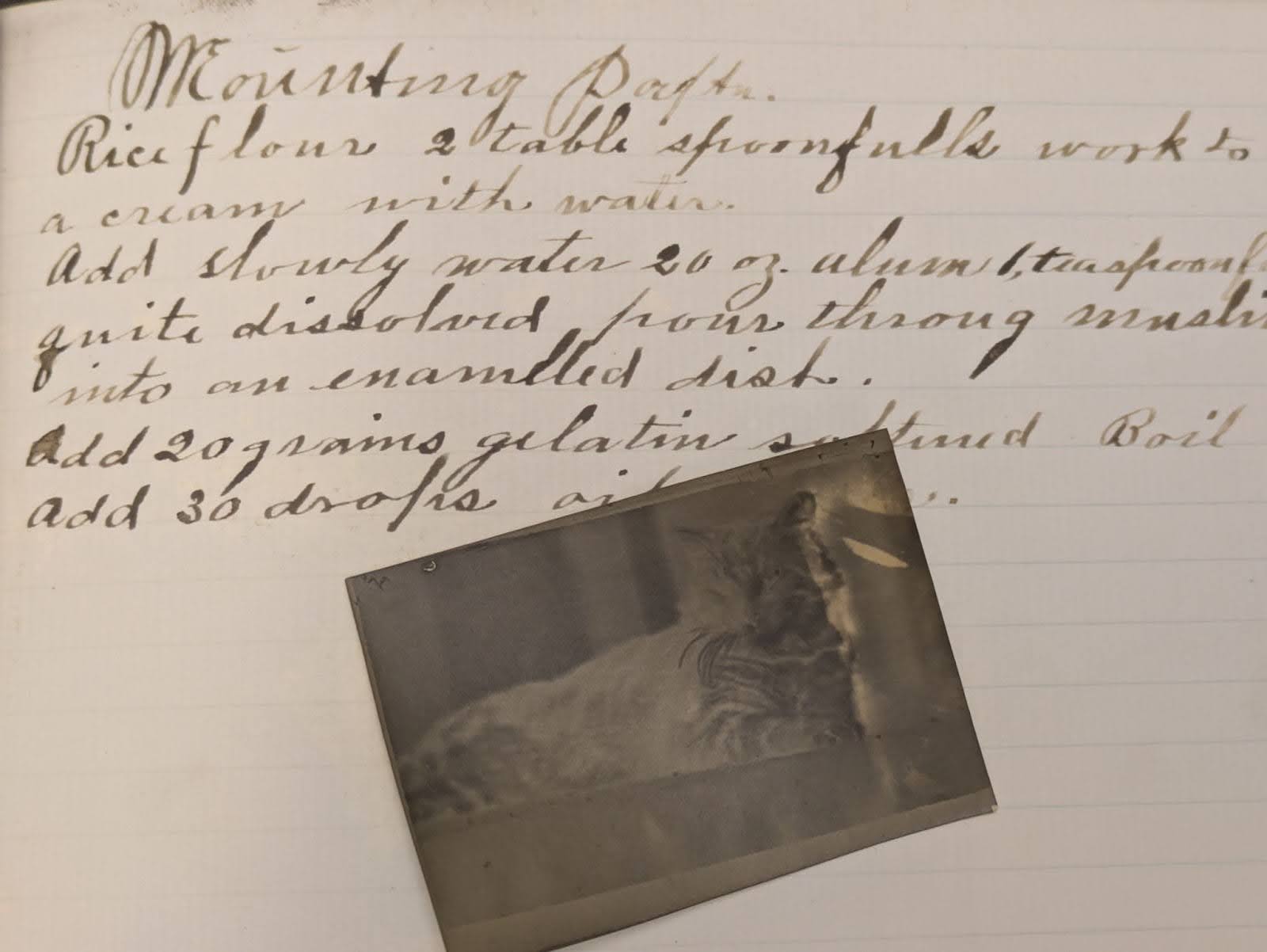
Recipe and photographic negative of a cat from the Marcus Peterson notebook, 1881.
Mount Vernon (Ohio) woman’s diary, 1853-1873
This diary kept by an anonymous woman in Mount Vernon, Ohio, between 1853-1874 includes entries noting her participation in Protestant religious services, conventions, Temperance meetings, and more.
Marcus Peterson notebook, 1881
Marcus Peterson of Bradford, Pennsylvania, kept this notebook in 1881 to record details relating to his photography business. It includes notes about photography exposure; lists of expenses; a list of subjects photographed with notes about lighting conditions; and recipes for various photographic compounds. The collection includes paper and celluloid photographic negatives that were originally laid throughout the volume. Several pages in the volume appear to be translation exercises of classical texts.