
By Meghan Arends, Digitization Technician
The William L. Clements Library would like to announce the availability of new additions to the Thomas Gage Papers Digital Collection. General Thomas Gage served as the British Army’s Commander-in-Chief in North America from 1763 to 1775, the highest level of administration in the American colonies at that time. Thanks to funding provided by the National Endowment for the Humanities, the Thomas Gage Papers have been fully digitized, and over 1,500 more letters, documents, journals, and printed items are now freely accessible through the collection’s website and finding aid. The high-resolution images, descriptive metadata, and Artificial Intelligence-produced transcriptions are certain to open new doors for our understanding of the decade leading up to the American Revolution and the first months of the conflict.
1,500+ letters, documents, journals, and printed items have been added to the Thomas Gage Papers Digital Collection thanks to funding from the National Endowment for the Humanities!
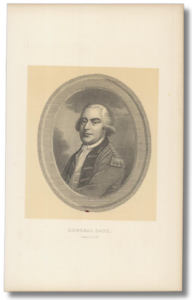
General Gage, taken in 1776. This portrait print of Thomas Gage is apparently an early 19th century production.
The newly-available digital content includes:
- American Series, March 9-April 22, 1765 (Vols. 32-34);
- American Series, December 25, 1774-November 25, 1775 (Vols. 125-136);
- Indian Treaties and Congresses, November 14, 1763-October 20, 1774 (Vol. 137);
- Journals and Reports, July 11, 1757-June 11, 1774 (Vol. 138);
- Proclamations, Documents, Broadsides, Newspapers and Clippings, and Lists of British Officers (Vol. 139);
- Warrants Series, Subsistence Warrants (Vols. 1-5).
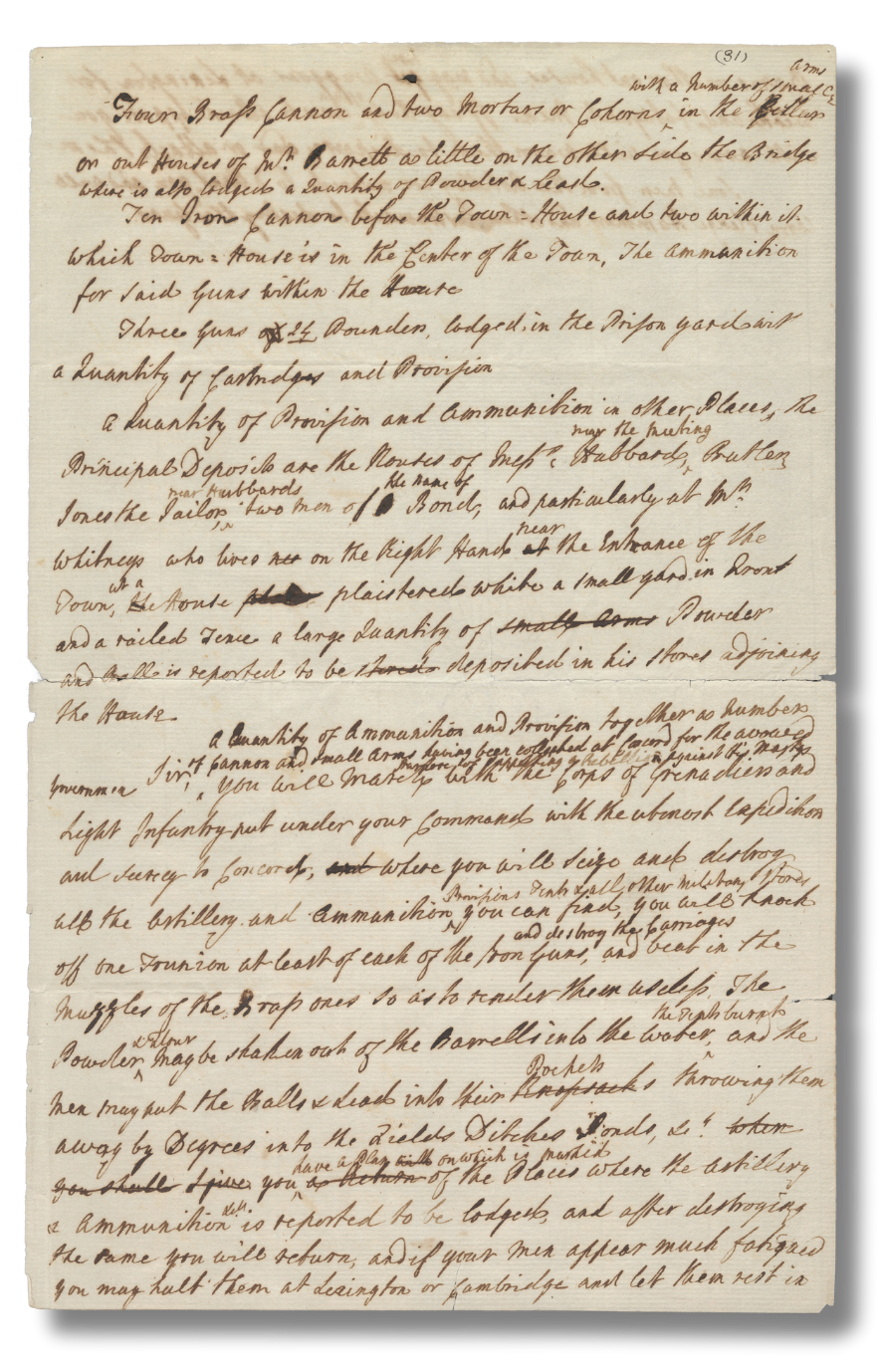
Coinciding with celebrations of America’s 250th anniversary, the digital additions include pivotal documents such as General Thomas Gage’s orders to Lieutenant Colonel Francis Smith on April 18, 1775 for the British Army’s expedition to Concord. Gage, having received intelligence of stockpiled arms and treasonous escalation in the countryside, ordered Smith to march troops from Boston to Concord with the intention of destroying armaments and military stores. Famously, these orders led to the first moments of military entanglement between the British Army and the Colonists. The collection includes both Gage’s own draft, allowing us to take a glance at the thought process behind a key moment in history, along with a retained copy of the order given.
The draft of General Thomas Gage’s April 18, 1775 orders to Lieutenant Colonel Francis Smith reveal insights into his thought processes while planning the Concord Expedition that erupted with the first shots of the American Revolutionary War. ⇒
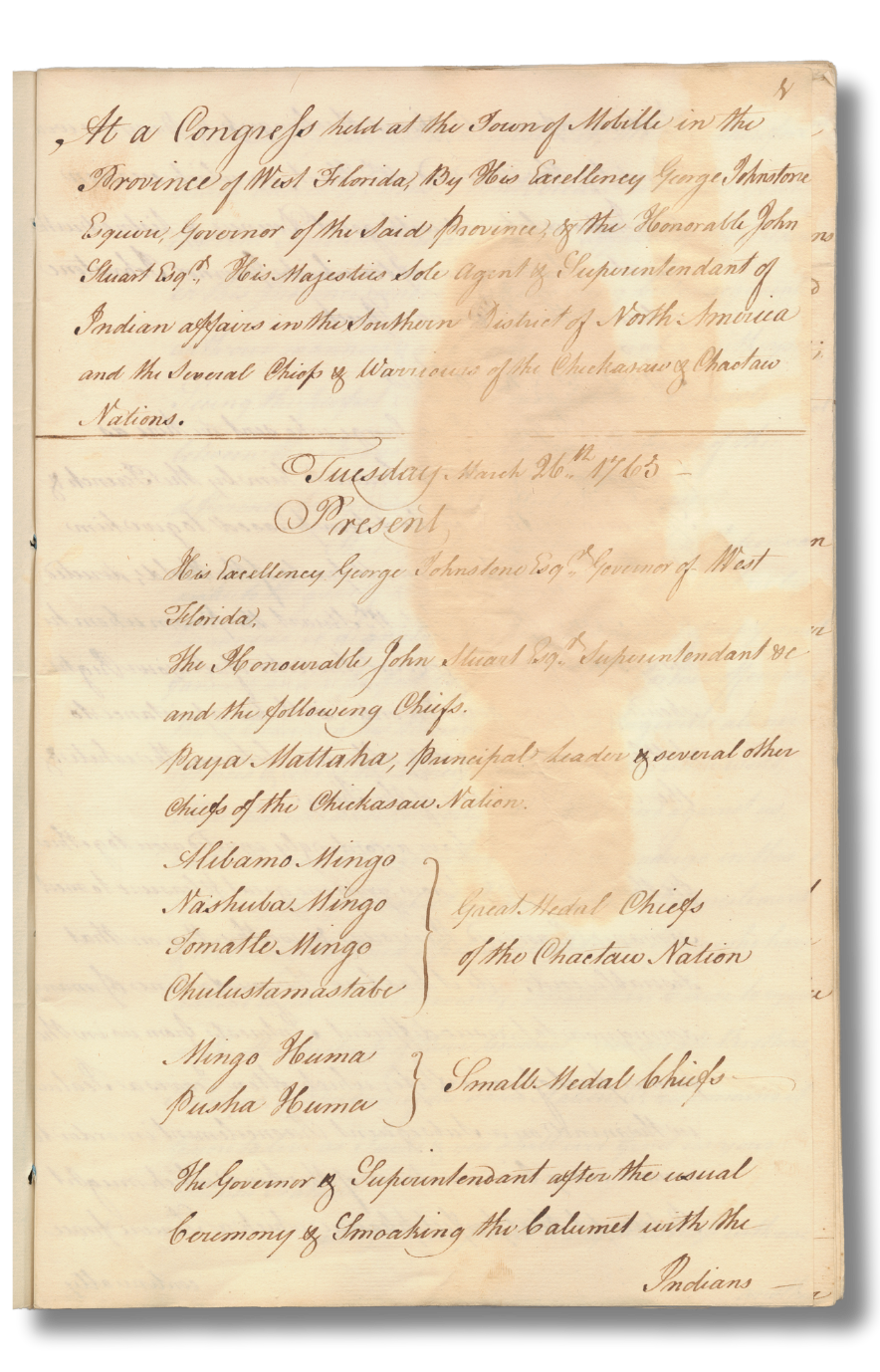
The Gage papers provide extensive documentation of Anglo-Indigenous relations and negotiations; oversight of these interactions was one of Gage’s duties as Commander-in-Chief. The journal of a Congress held between British officials George Johnstone and John Stuart and representatives of the Chickasaw and Choctaw Nations in the spring of 1765 exemplifies these official interactions. It includes various perspectives, bringing forward Native voices amongst the administrative language found in documents produced by the British. Volume 137 of the American Series in particular is a tremendous resource for analyzing the complicated relationship between the British colonial government, colonists, and Native communities.
⇐ List of those present for a spring 1765 Congress held between British officials George Johnstone and John Stuart and representatives of the Chickasaw and Choctaw Nations.
The Clements Library Digitization Team invites you to discover additional snapshots of history in this new selection of eighteenth century manuscripts, now accessible online through our Digitized Archival Collections.