
In collaboration with the School of Music, Theatre & Dance (SMTD), we have launched the Center for American Band History Research, a new initiative bringing together historical collections, scholarship, teaching, and performance to advance the study of the music, musicians, and social resonance of the wind band in the cultural life of the United States.
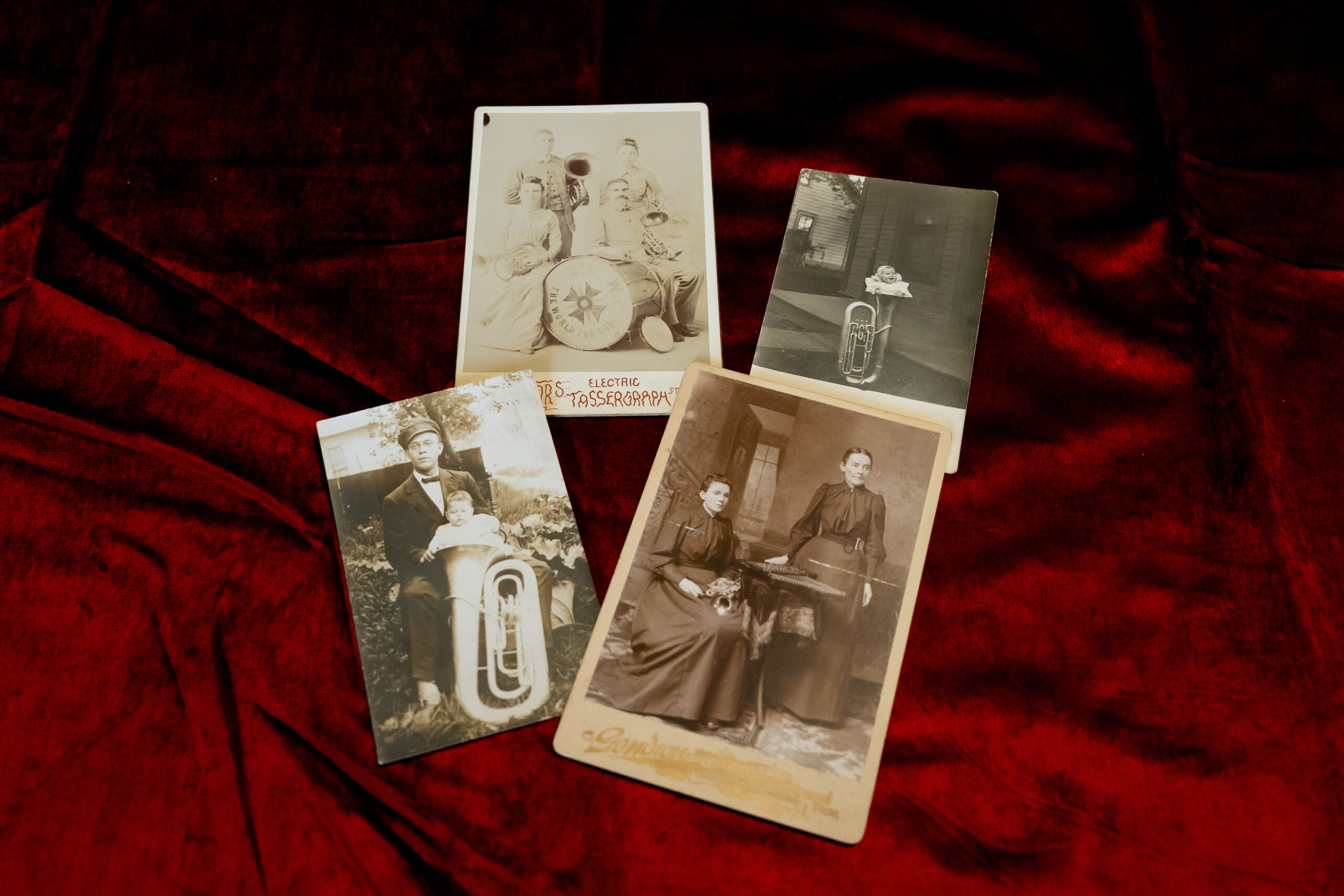
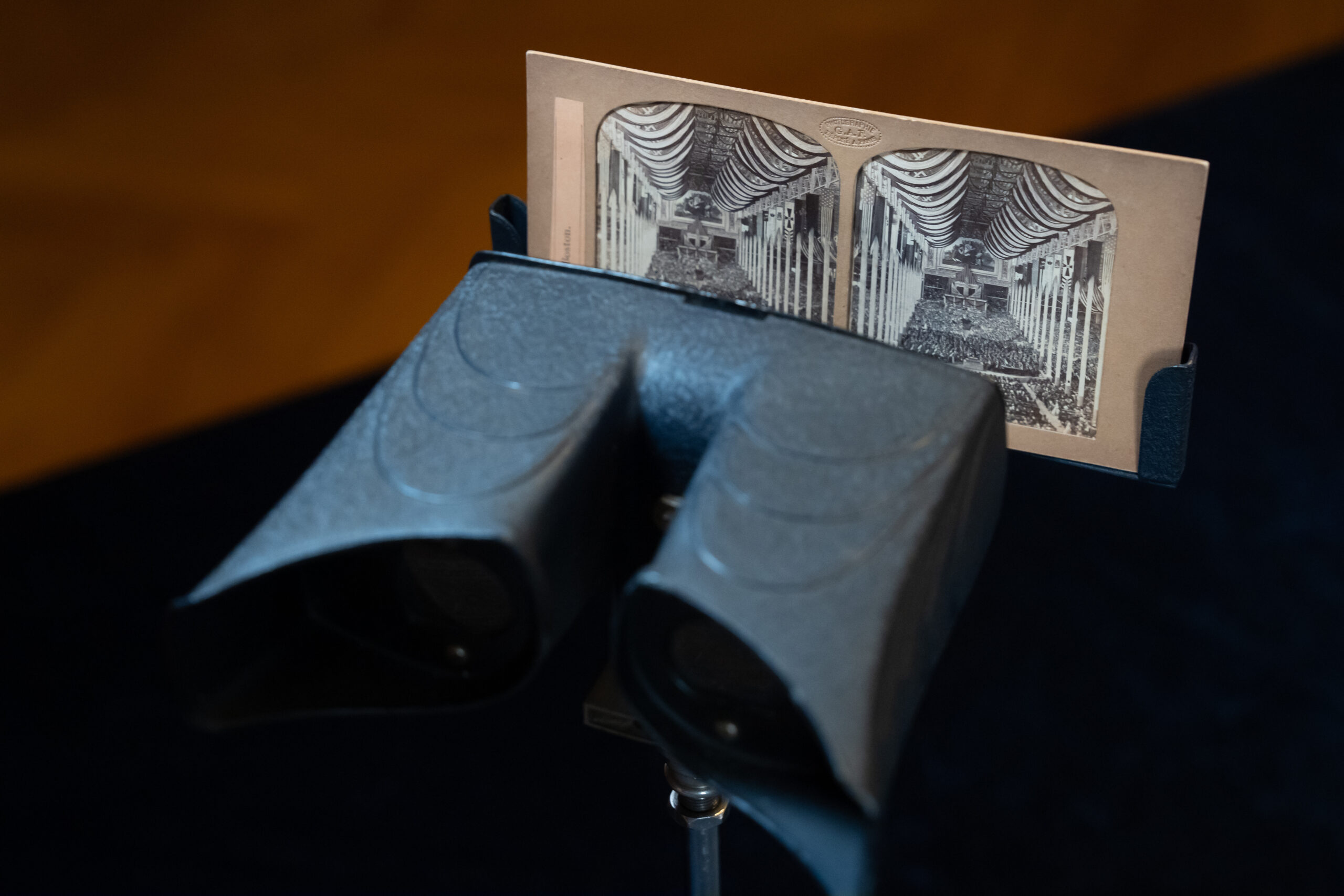
Assistant Curator of Graphics Jakob Dopp assembled a pop-up exhibit of materials from the George C. Foreman Band History Collection for a private celebration of the launch. (Photographs by Jaime Crawford)
The center is rooted in the Foreman Band History Collection, donated to the University by George C. and Lisa C. Foreman. The 162 box collection includes manuscripts, photographs, sheet music, prints, posters, books and ephemera documenting American bands, musicians, bandleaders, and performance culture. In speaking about his career during the launch weekend, Foreman remarked, “Someone once said that music can change a life, and it sure has changed mine.”
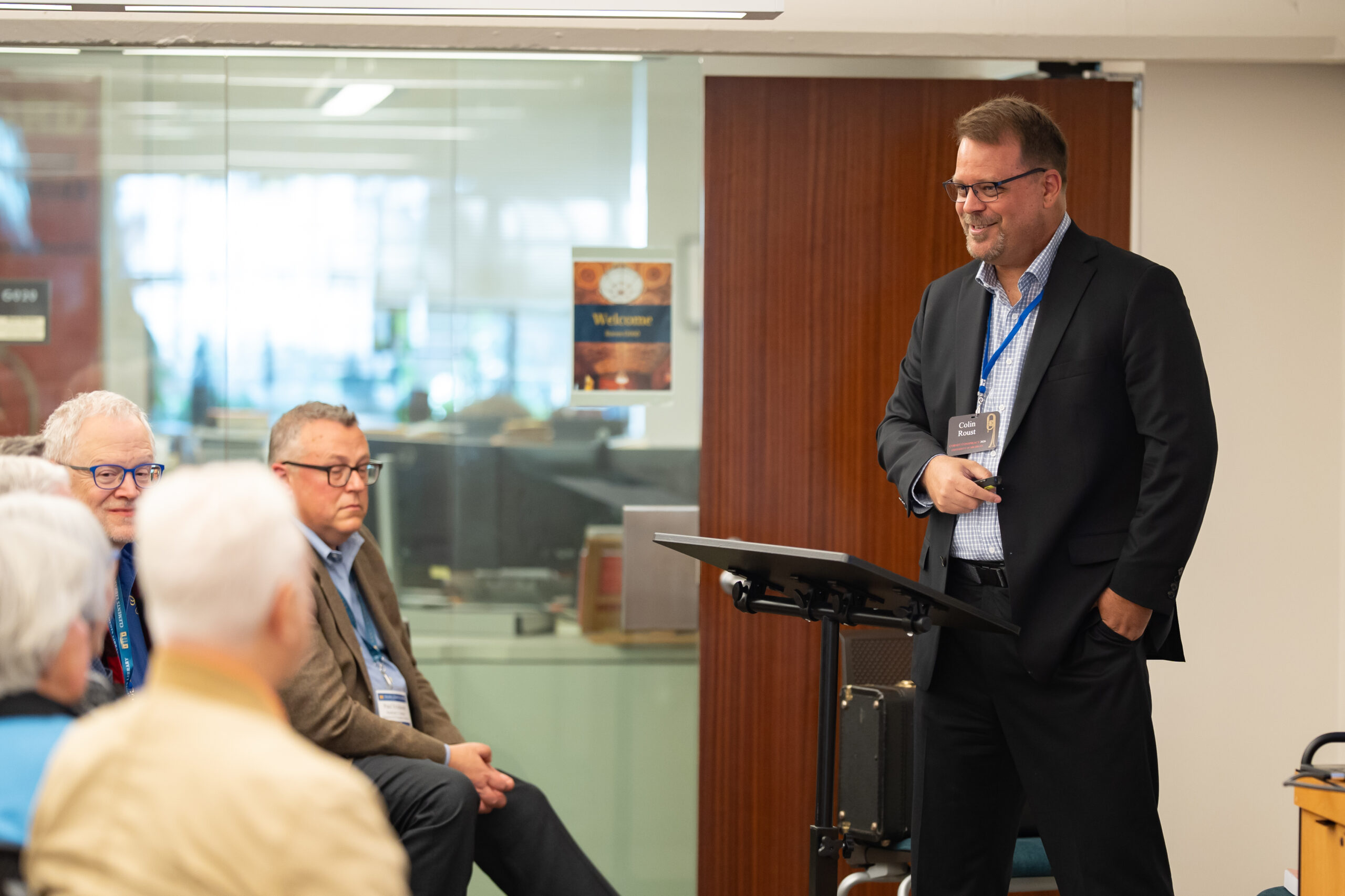
The Cornet Conspiracy, a group of collectors, researchers, performers, and more with an interest in brass band history, celebrated the launch of the center with the us. (Photographs by Jaime Crawford)
Foreman’s scholarship, collecting, and playing fostered many relationships with like-minded collectors. Once he and Lisa made the decision to donate their archive to U-M, they introduced friends and colleagues to the effort and urged them to donate as well.
Additional document collections have been added, including the Francesco Fanciulli Family Papers, which document the life and career of Italian-born cornet virtuoso, composer, and band leader Francesco Fanciulli, and the Mark S. Chalabala “Coda” Collection of Early American Band Photography, which contains more than 1,100 photographs, prints, and ephemera documenting American brass bands, musicians and musical instruments from the 1840s through the 1920s.
These new materials complement existing holdings across the university, creating opportunities to explore American band history through the perspectives of music, history, performance, popular culture, and social life.
The center will support a range of activities, including graduate instruction, scholarly research, digitization, exhibitions, and performances. Materials from the Band History Collection will be housed at the Clements Library, while portions of the Band Sheet Music Collection will be housed at SMTD. The two units will collaborate to expand digital access and connect the collection with researchers, students, and musicians around the world.
An important feature of the center is its support of both research and performance. The initiative was celebrated through a Golden Age Band Concert on October 9 at the Walgreen Drama Center’s Stamps Auditorium. Presented by SMTD and co-sponsored by the Clements Library, the concert featured music associated with the Golden Age of American Bands (roughly 1865–1932) by composers such as Arthur Pryor, John Klohr, Ralph Eisenberg, and John Philip Sousa. A thematic focus was put on newspaper marches, which promoted civic journalism and dated from the era when every town had one and probably more than one daily news publication. These compositions included Sousa’s most famous example—The Washington Post, but also The Post Dispatch March (St. Louis) and The Detroit Free Press March. As was typical of the era, the concert also featured an instrumental solo—Herbert L. Clarke’s The Debutante— performed by SMTD graduate Oliver Barron on cornet, and a vocal solo – performed by SMTD voice major Amour Bethea—who sang an arrangement of the “Habanera” from Bizet’s Carmen. Josue Villegas (MM ‘27, trumpet, chamber music) highlighted the fact that the performing ensemble was full of volunteers, which contributed to the impact the experience had on him. “Some of the most strenuous concerts I’ve performed have left me with relief to be finished, but this one? After the final notes of the last march, this one left me with a sense of pride in myself, peers, university and a sense of contentment.”
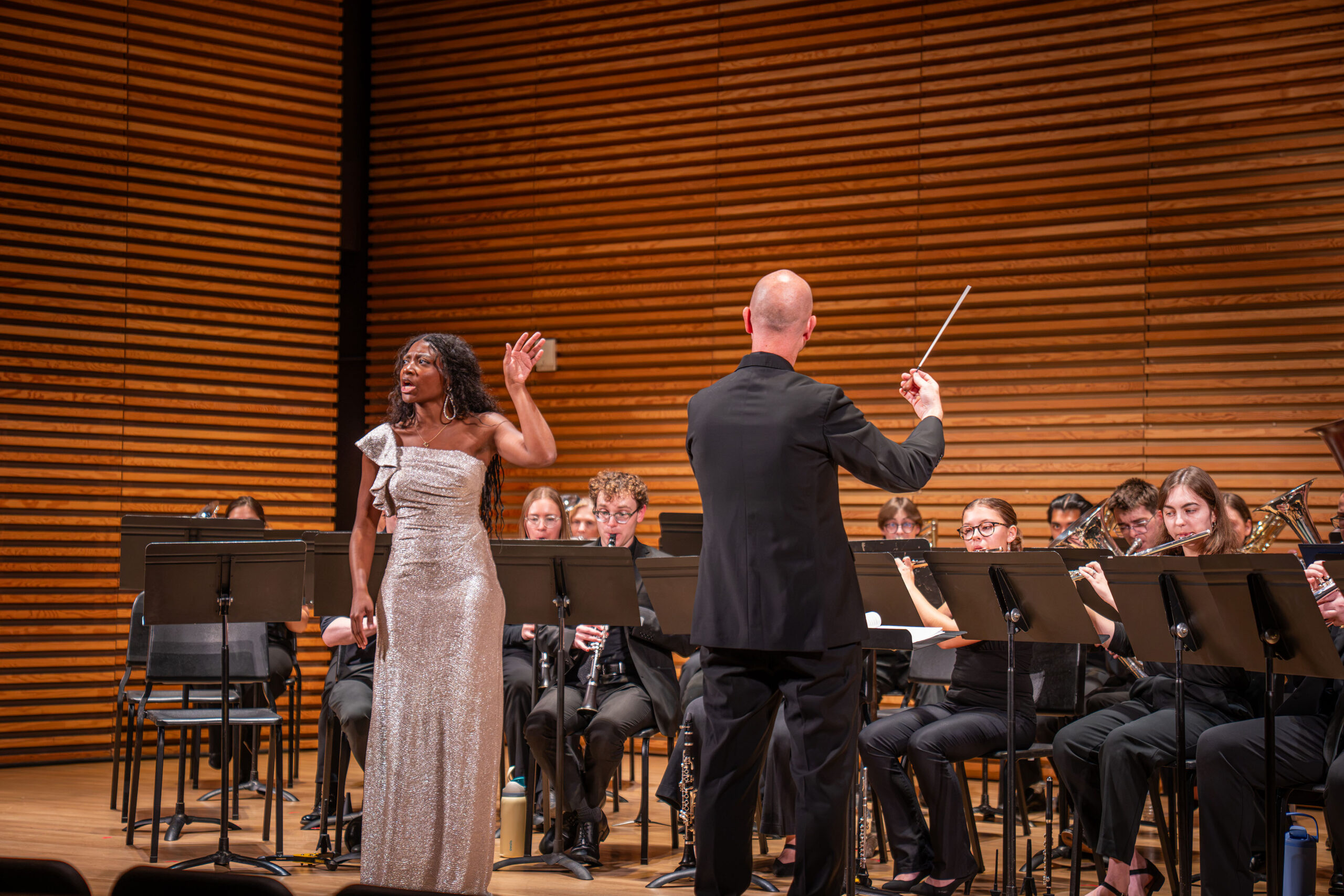
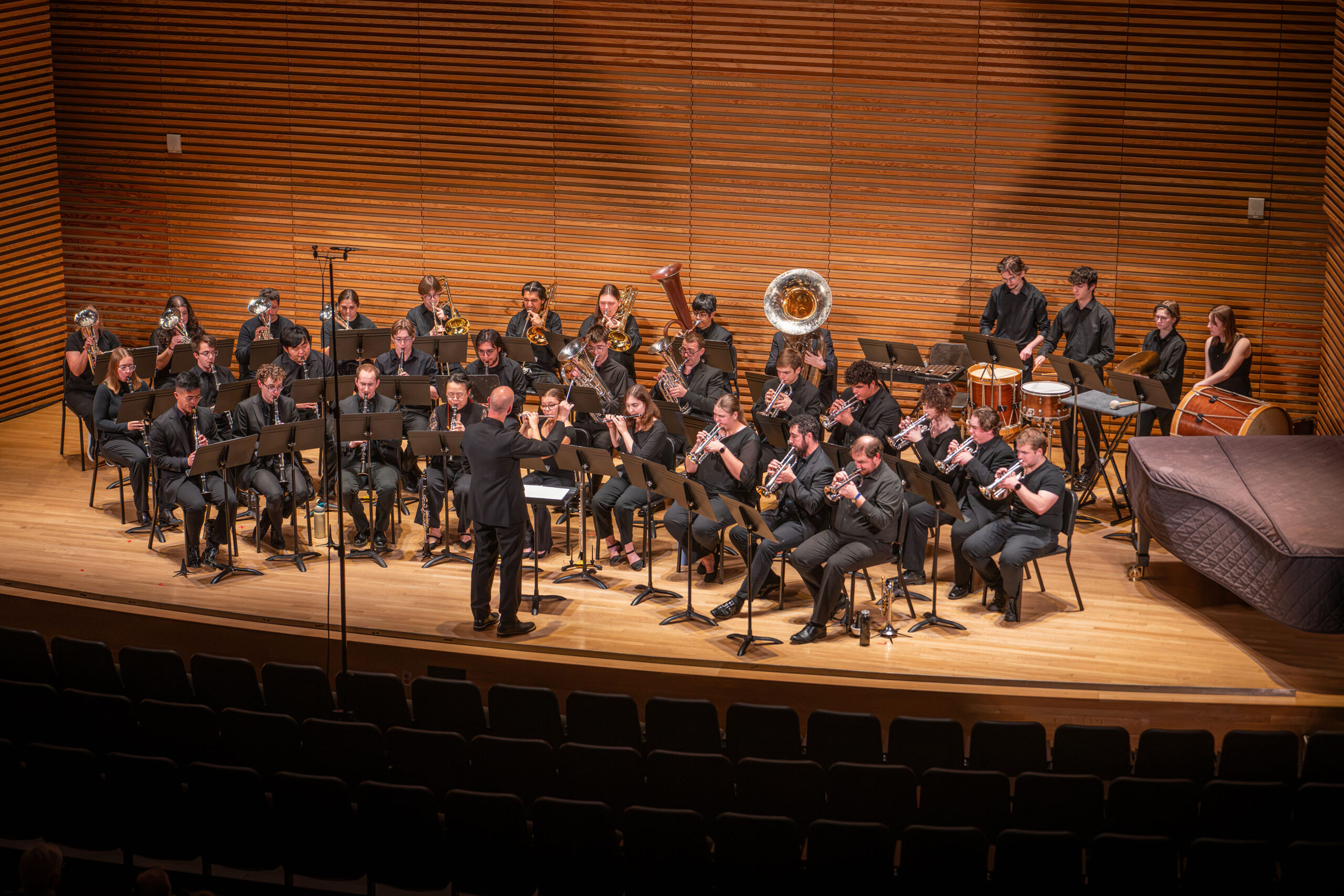
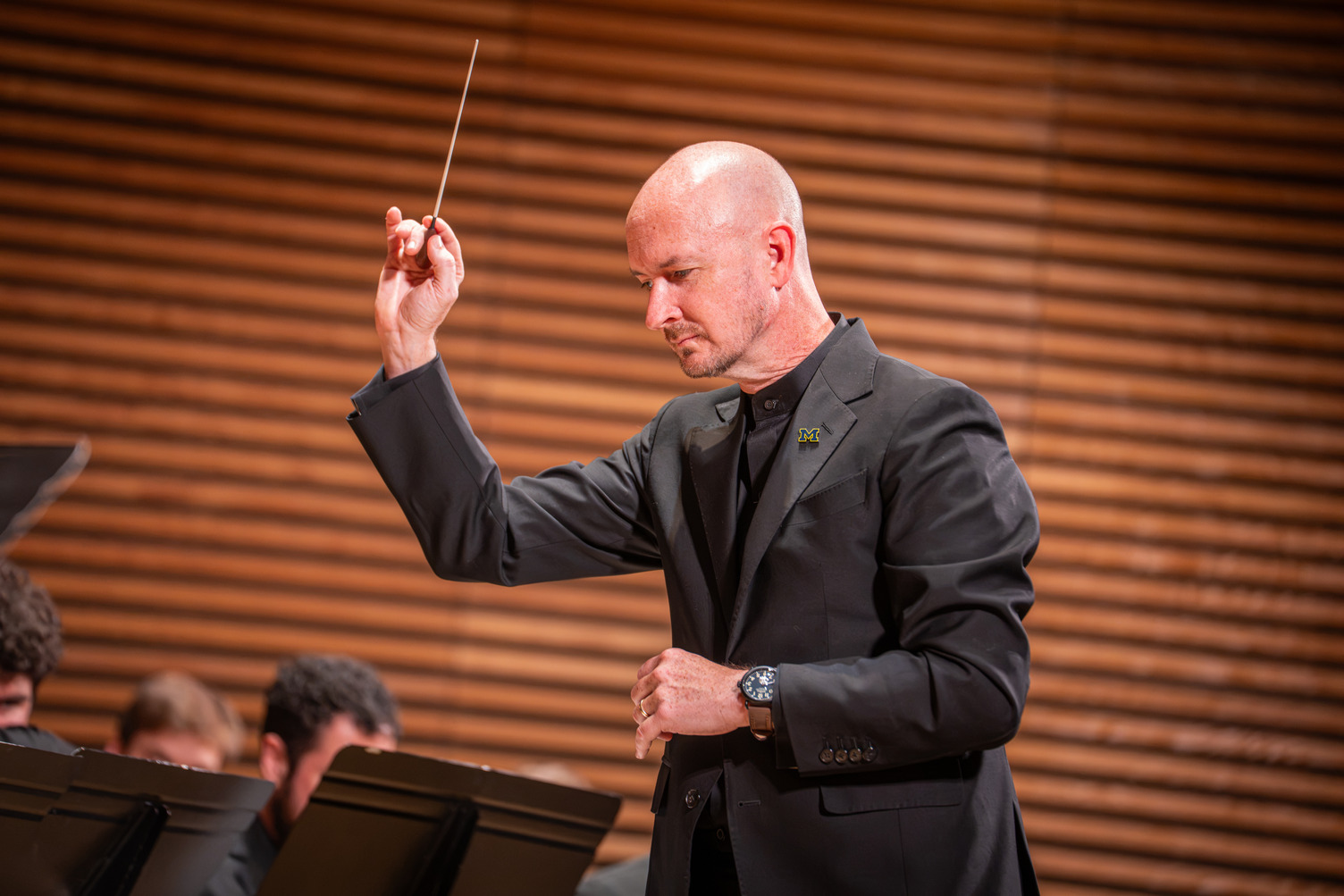
The initiative was celebrated through a Golden Age Band Concert, presented by SMTD and co-sponsored by the Clements Library. The concert featured music associated with the Golden Age of American Bands and provided an opportunity to experience historic repertoire through period instrumentation. (Photographs by Chris Boyes)
The band was formed exclusively of instrumental majors from SMTD. Many got the opportunity to borrow historic 19th-century horns and drums, modern equivalents or reproductions to experience the original instrumentation of the Golden Age band, which featured cornets instead of trumpets and alto horns rather than French horns. U-M’s Stearns Collection of Musical Instruments holds a valuable collection of original, period instruments, many in playable condition. Several bass saxhorns used in the concert were recently donated by Stan and Rusty Towers, who also provided funding to supplement grants from the University of Michigan’s Arts Initiative to purchase additional modern reproduction instruments to fill out the ensemble. Christa Naber (MM ‘27, trombone) felt “honored” to have the opportunity to perform with these historic instruments, referring to the concert as “a highlight of [her] time at the University of Michigan.”
Professor Jason Fettig, U-M Director of Bands, has made band history part of his pedagogy. He came to the University of Michigan after serving as Director of “The President’s Own” United States Marine Band and Chamber Orchestra. He speaks highly of his experiences at Michigan building a likeminded research community. “During my time in the United States Marine Band, I was fortunate to be immersed in the rich history of the American band tradition of the 19th and early 20th centuries. When I came to Michigan, I did not expect that specific focus to continue. I was elated to find the vast historical collections at the Clements Library and faculty colleagues with a specific passion and expertise for this era of music history.” Looking to the future impact of the Center, Fettig continues: “The Center for American Band History Research is a treasure trove of the unique music and traditions of the United States. Its growing collection of materials, artifacts, and instruments will continue to be one of the best living archives for students, scholars, researchers, and lovers of American band music found anywhere in the world.”
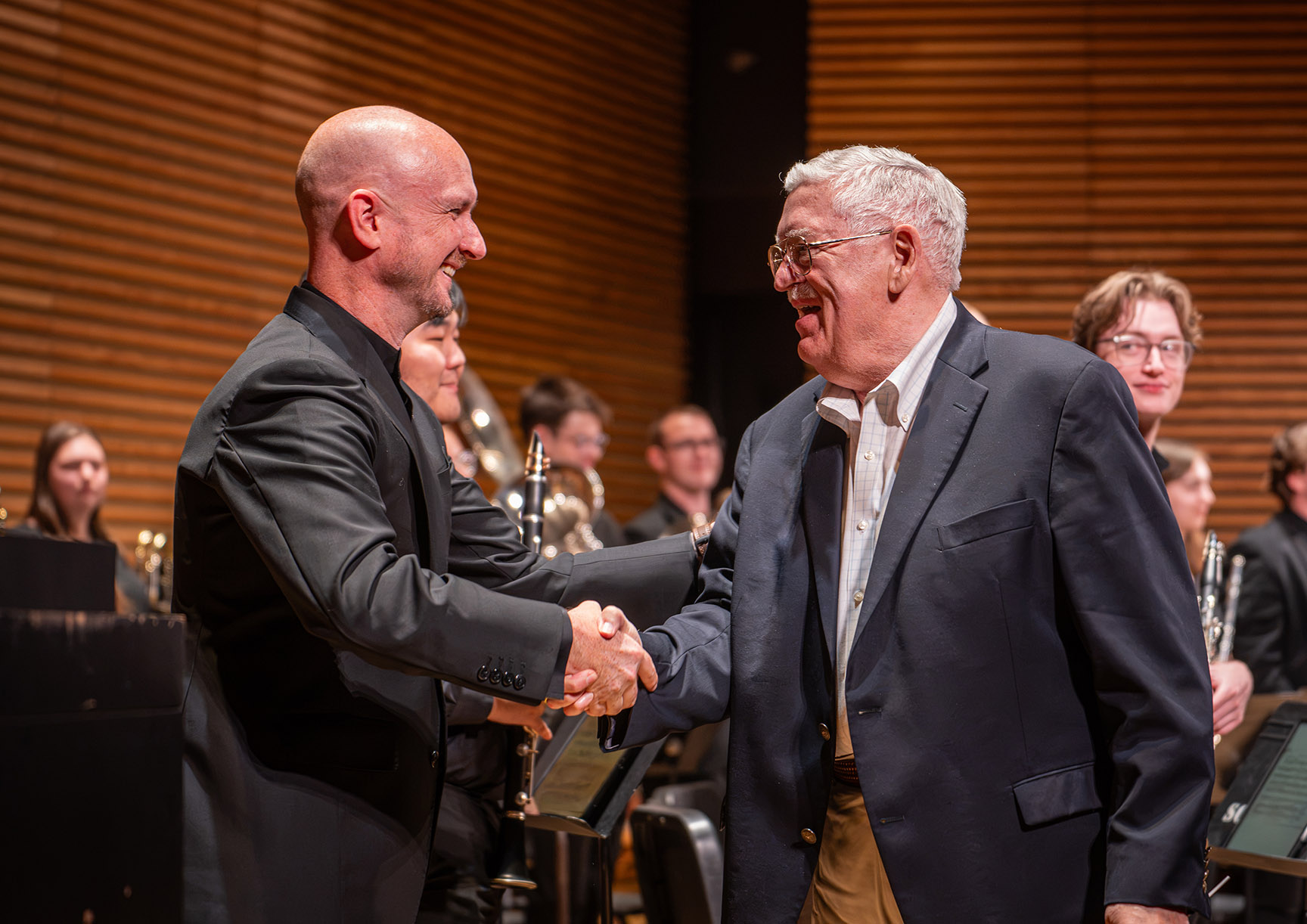
Director of University Bands and Professor of Conducting Jason Fettig shakes hands with George C. Foreman after he guest conducted a piece at the inaugural concert of the U-M Golden Age Band. (Photograph by Chris Boyes)
Mark Clague, Executive Director of the U-M Arts Initiative and a musicologist, has been closely involved in the creation of the Center. “From its inception the Center for American Band History Research puts the University of Michigan at the forefront of the field of band research in both performance and scholarship. By combining the University’s own legacy in band music from William D. Revelli to Jason Fettig and the Big House to Hill Auditorium, while expanding the extraordinary archival collections of the William L. Clements Library through such generous donations, the full history of the wind band in U.S. cultural life can be explored and celebrated. The Center truly places Michigan at the intersection of research, learning, and teaching in the American band tradition.”
To encourage ongoing scholarship in the field, George and Lisa Foreman established the Foreman Band History Fellowship, which provides funding for researchers studying band history and supports travel and related expenses for scholars spending time at the Clements Library. The fellowship will help bring new researchers to the University and encourage continued scholarship using these collections.