The staff of the Manuscripts Division spent the summer dutifully arranging and describing new collections, which are now available for research! Read on to learn about the recently published finding aids.
H. Brunner collection, 1862-1863
The H. Brunner Collection is comprised of a letter, illustration, job-seeking advertisement, and poetry/verse by a German-American Civil War soldier. He was apparently in transit as a prisoner of war in March 1862 when he drew in pencil a trainwreck, labeled “Ten Yankees Prisoners from Salsboury N.C. 1862”, “Goldsboro 24 May 1862,” and “HB Prisoner of War.” The illustration shows two train cars derailing over a bridge. On the reverse side of the drawing is a phonetic English-language advertisement addressed “For eny Body” and seeking employment in any type of hotel, merchant, or railroad work. His letter from Cleveland, Ohio (August 19, 1863) and the poetry/verse is in German-language schrift.
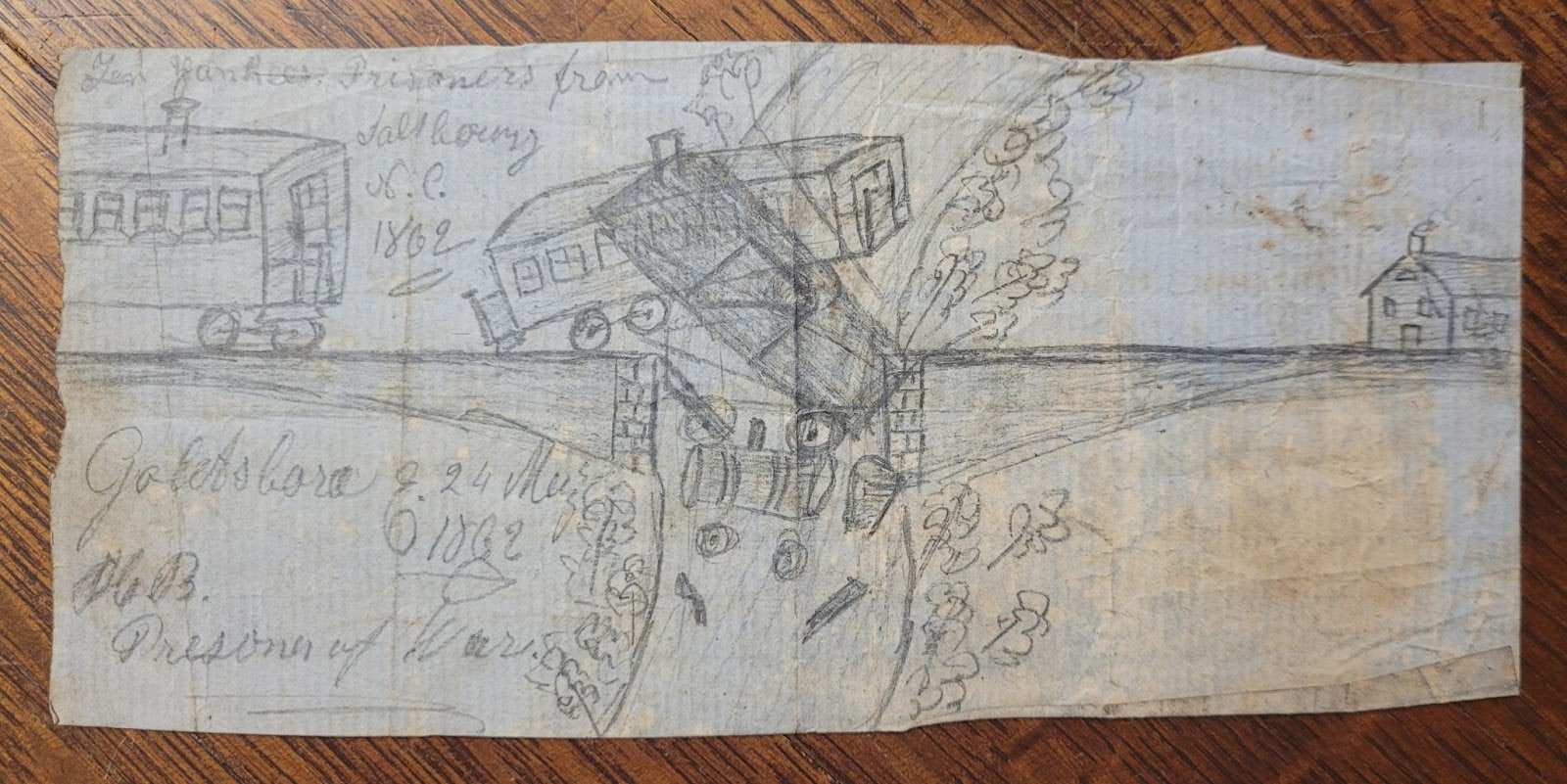
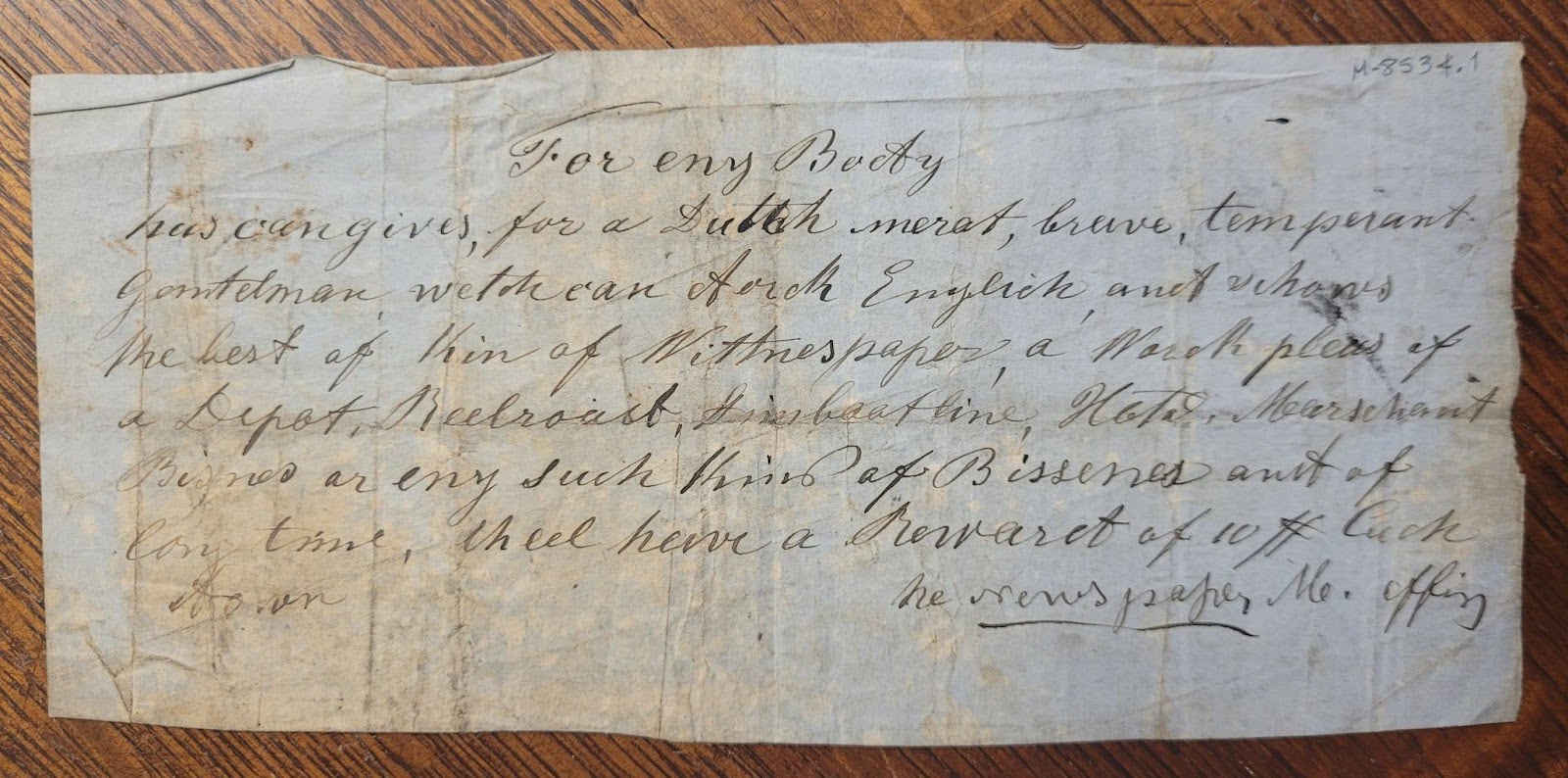
Trainwreck illustration and advertisement seeking employment from the H. Brunner collection, 1862-1863.
Benjamin Hoppin diary, 1876-1877
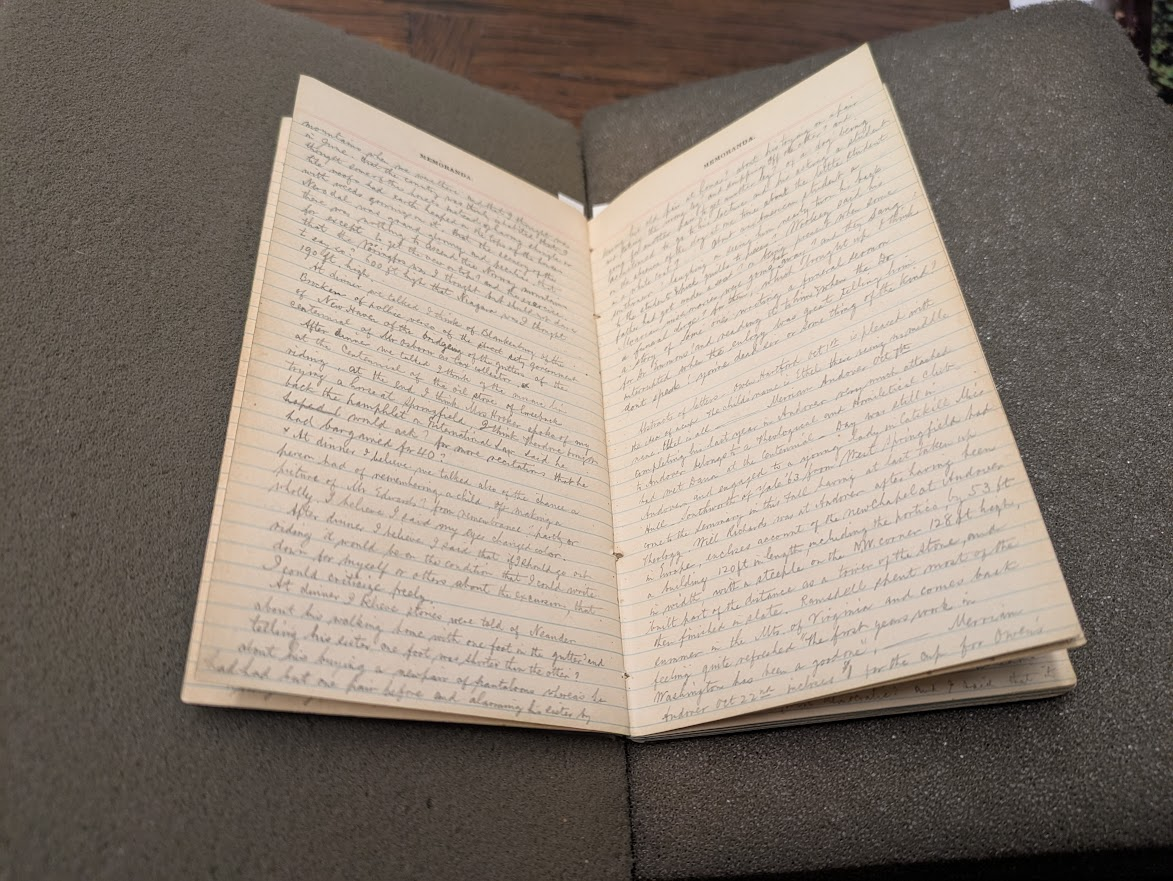
Benjamin Hoppin, a young man from New Haven, Connecticut, and member of the Yale College class of 1872, used this small preprinted memoranda book as a diary between 1876 and 1877. He wrote about social visits, books and studying, details of a recent European voyage and stay in Germany, Yale College professors and events, politics, and family affairs. Hoppin’s entries indicate that he experienced mental disturbances, sometimes expressing great uncertainty about his memories and recording instances of delusions, hallucinations, or paranoia.
Benjamin Hoppin’s diary is filled with densely written entries.
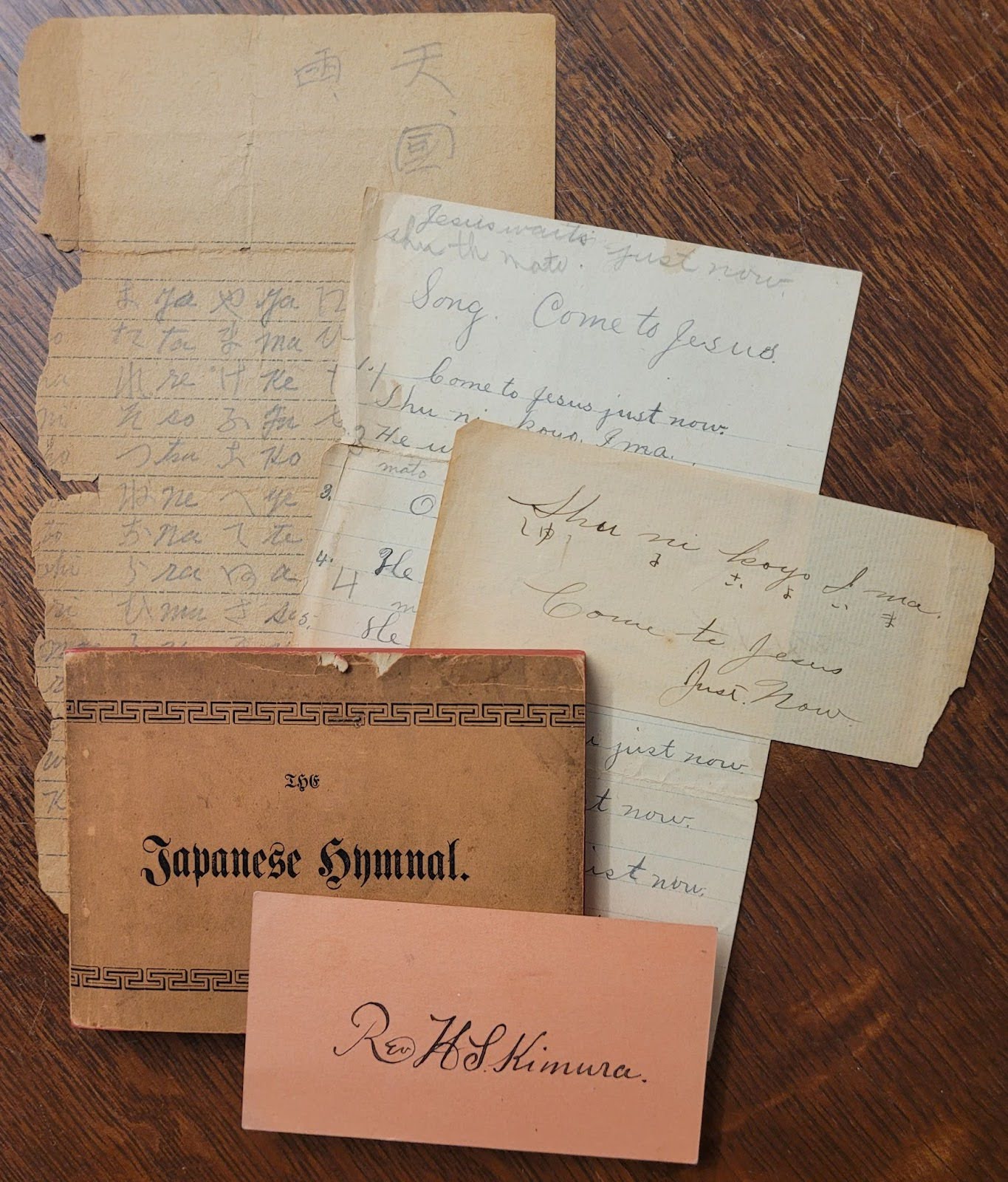
H. S. Kimura collection, 1893 and circa 1894-1899
This collection is made up of five printed and manuscript items produced by or relating to the early ministry of Christian Evangelist Kimura Kiyomatsu (木村 清松, known as Henry Seimatsu Kimura) in Japan and California, 1893-1899. They include manuscript lyrics to “Shu ni koyo Ima” and an English language, handwritten pronunciation key for Japanese Hiragana. Also present is H. S. Kimura’s Vacaville, California, “Japanese M. E. Mission” business card and the fourth edition of Hallowed Songs (Tokyo: Tokio Anglo-Japanese College Industrial Press, 1893) [cover title “The Japanese Hymnal”].
Printed and manuscript items produced by or relating to the early ministry of Christian Evangelist Kimura Kiyomatsu.
Robert Lusk docket book, 1826-1840
Robert Lusk, a justice of the peace in Cumberland County, Pennsylvania, maintained this docket book between 1826 and 1840 to record details of legal cases and their associated fees. Entries typically include the name of the parties, a summary of the case, costs incurred, and the outcome. Many disputes relate to debt or breach of contract, but other crimes such as trespass, assault, domestic abuse, larceny, sex and bastardy, and more are also present.
Moon Mania, or The Maidens Battle manuscript, 1855
This blank book (with yellow paper cover) contains five handwritten poems by four women, “The Literate of Lombard Street,” in 1855, collectively titled “Moon Mania, or The Maidens Battle.” The “Quartumverate” authors listed on the title page are Celestianna Skioria, Lunetta Skioria, Napoleana Practicali, and Earthana Practicali. The poems include two acrostics (“A Cross Stick”) on Napoleana Practicalla, and three rhyming poems following the romantic adventures of Luna as she navigates social norms of courtship. Laid into the volume is a separate one-page rhyming “Valentine” poem in which the female author, “B.N.E. Dict.,” desires marriage.
William Byrd Powell and R. P. Lewis phrenological readings of A. Chebot and Emelie Chabot, 1848 and 1871
This collection is made up of two phrenological readings: one of A. Chebot in 1848 by William Byrd Powell (Nashville, Tennessee); and the other of Emelie Chabot, possibly his daughter, by R. P. Lewis (La Porte, Indiana) in 1871.
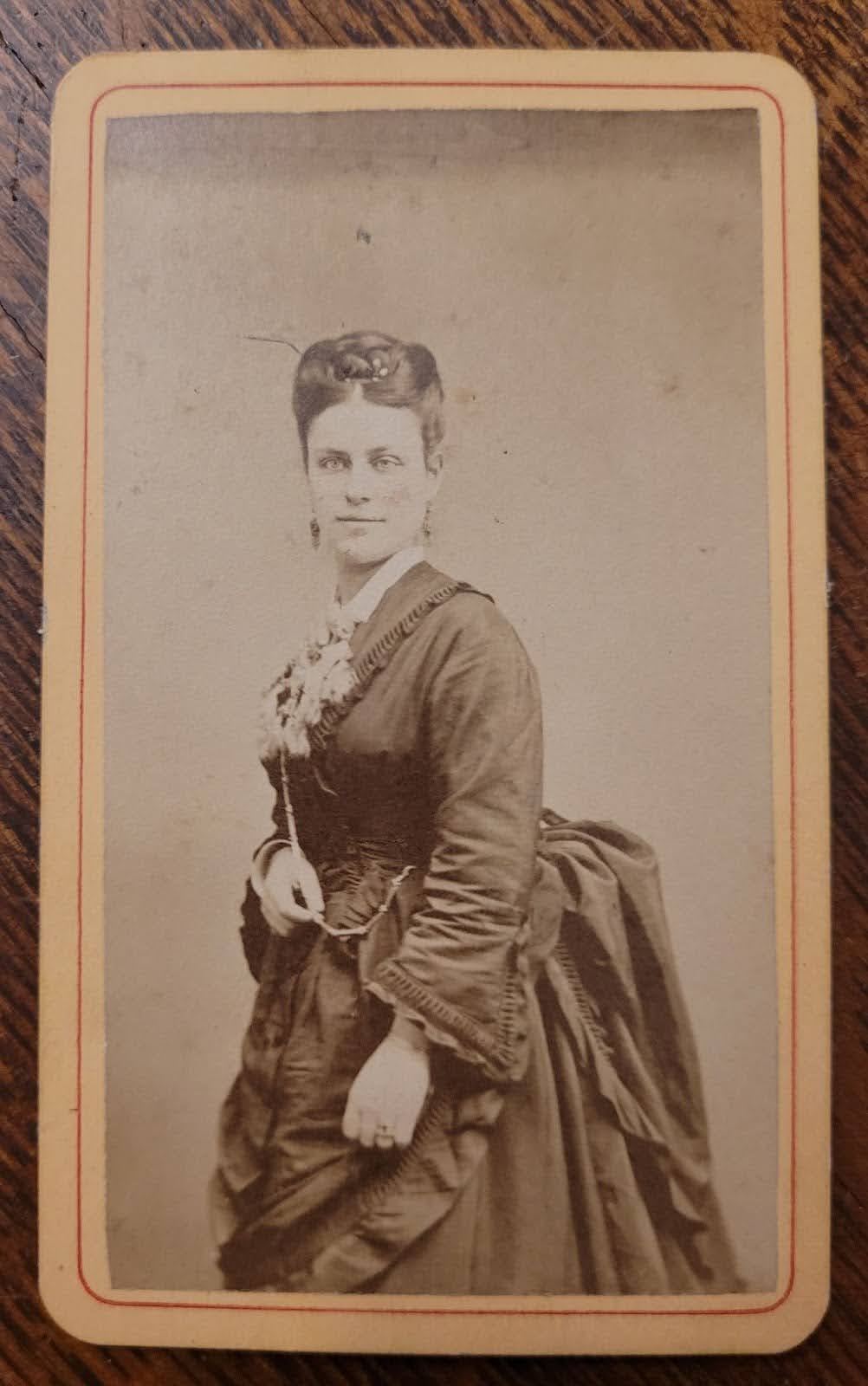
Clara L. Walmer diaries, 1870-1871
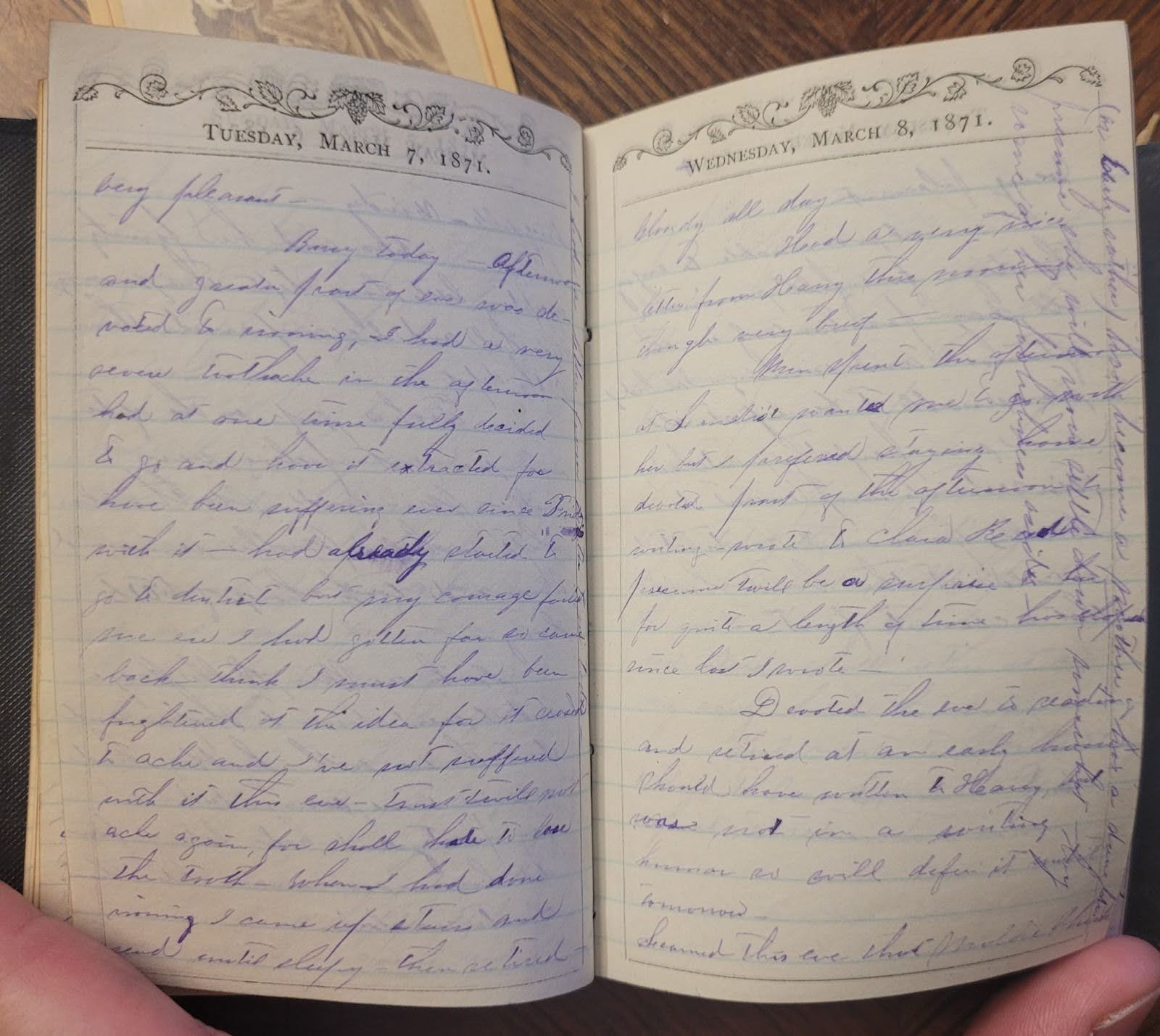
Clara L. Walmer of Hummelstown, Pennsylvania, kept these two pre-printed daily pocket diaries in 1870 and 1871, while she was between the ages of 18 and 20 years old. Walmer filled nearly every page with densely written, reflective entries on her social life, courtship experiences, domestic life and labors, health, leisure activities, and visits to areas around Dauphin and Schuylkill Counties. Among the notable aspects of her writing was an attention to descriptions of parlor visits, with remarks on visitors and contents of conversations. Another was her ongoing struggle with an undesired suitor and friend of the family, and her courtship and engagement with another.
(Left) Carte de visite of Clara L. Walmer.
(Below) Entry from Clara L. Walmer’s 1871 diary.