

CONTAIN YOURSELF
No. 62 (Fall/Winter 2025)
Table of Contents
Enveloped
Jayne Ptolemy
Associate Curator of Manuscripts
Admit it. When going through your mail, besides a cursory glance, you don’t really pay much attention to the envelope. We rip it open to get to the good stuff (or the bill. These days it’s usually a bill.) Regardless, the envelope isn’t the point; it’s just the packaging. In the library world, we’re guilty of this, too. Browse our finding aids, and you’ll see detailed descriptions of a collection’s content and then the ubiquitous phrase “… and empty envelopes.” We’ll count them, sure, but we absolutely will stack them in a folder at the back of the box and expect almost no one to look at them seriously. Like most things in life, though, once you shift your perspective and look more closely, give attention to the smaller or seemingly insignificant things, there’s so much more to learn.
An envelope can reveal a lot about the sender’s personality or intentions. Before the nineteenth century, postal charges were largely calculated by the number of sheets being sent. To save money, most letters were simply folded upon themselves and sealed with wax, and the address was written on the blank panel of the back page. By 1845, postage charges were being calculated by weight and distance, meaning that using an envelope made far more sense. With literacy booming and populations becoming more dispersed, by midcentury, letters safely nestled in their envelopes were being sent in record numbers. To meet the demands, machines were built to automate the production and gumming of envelopes. A correspondent’s trip to the local stationer would reveal a whole range of options in how to write and send mail.
While most letters would still be sent in a regular, blank envelope, the ways writers chose to indulge in different stock can spotlight some of their underlying motives. For example, the intricate, lacy envelopes used for Valentines amplified the enclosed love message, making it feel all the more precious despite being so obvious.
Stationers sold a variety of envelopes for specific occasions, ranging from eye-catching vibrant purples to somber black-edged ones to indicate mourning. The beautiful sets of mourning stationery in the Patricia Wilczak Funeralia Collection show how these goods would have been packaged and sold in stores.
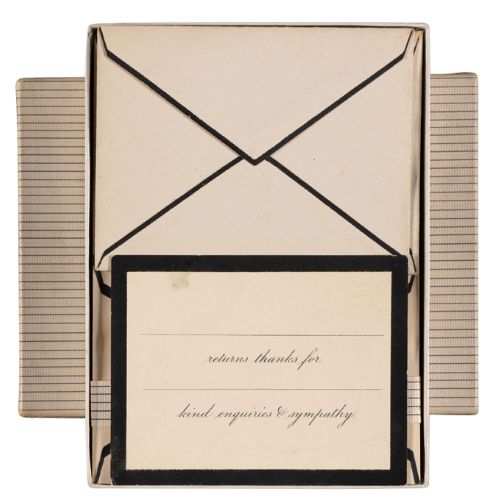
The Patricia Wilczak Funeralia Collection includes boxes of mourning stationery, with their black-edged envelopes, which would have been used by those who had experienced a loss.
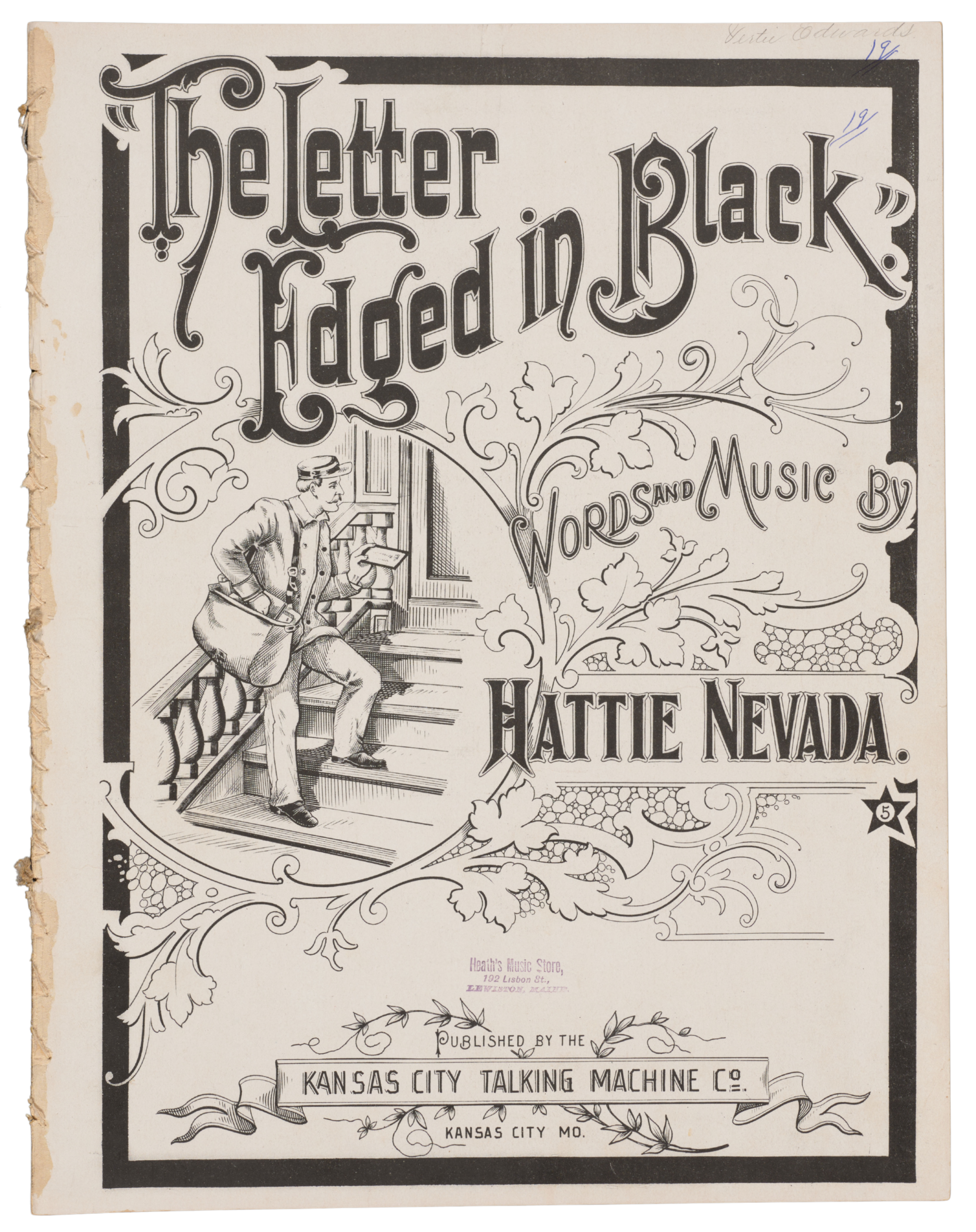
This sheet music from 1897 shows how deeply the black-edged mourning stationery was ingrained into the public imagination by the end of the century.
From the plain beautiful to the interactive to the amusing, writers used their envelopes as an illustrated complement to their written correspondence.
As part of elaborate 19th-century death practices, the bereaved could purchase writing paper and envelopes with black borders whose width signaled the “nearness of the relationship, and the recentness of the bereavement.” The chilling effect of seeing a postal delivery of such an envelope quickly entered the cultural lexicon. The illustrated sheet music for “The Letter Edged in Black” shows a mail carrier holding the dreaded black-edged envelope. The refrain homes in on this visual cue’s impact: “As I heard the Postman whistling yester-morning coming down the pathway with his pack, O he little knew the sorrow that he brought me, when he handed me a letter edged in black.” This tradition was one that lasted, as Hattie Nevada’s song would be recorded by numerous artists, including Marty Robbins, Slim Whitman, and Johnny Cash.
While options for printed envelopes were becoming increasingly available throughout the 19th century, if a writer’s talents and inclinations allowed, some chose to embellish their envelopes themselves. Examples of drawings,
fine lettering, and designs of all types indicate a widespread awareness that pouring a bit of time and artistry into an envelope was a way to have your letter stand out or to signal your care. From the plain beautiful to the interactive to the amusing, writers used their envelopes as an illustrated complement to their written correspondence. These drawings, at first glance, can seem like they’re just whimsy, but they’re also doing something quite meaningful. When mail comes to your hand and contains not just a written message but evidence that someone chose to spend time to bring you delight, you feel it. It’s no mistake that these envelopes were saved, even sometimes without their corresponding letter.
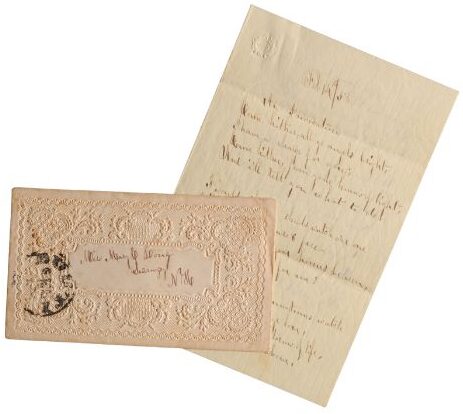
The beautiful embossed envelope lends additional romance to this rhyming Valentine’s poem from 1858 in the Women, Gender, and Family Collection.
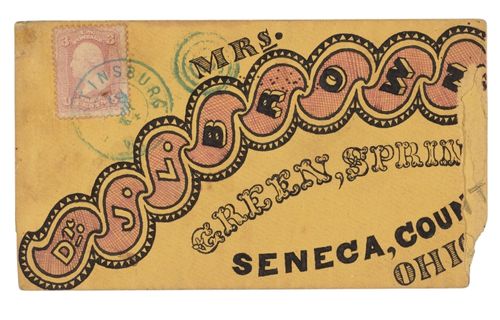
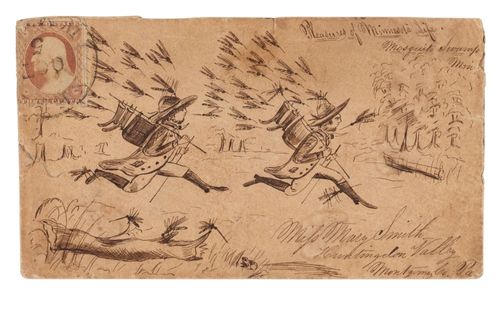
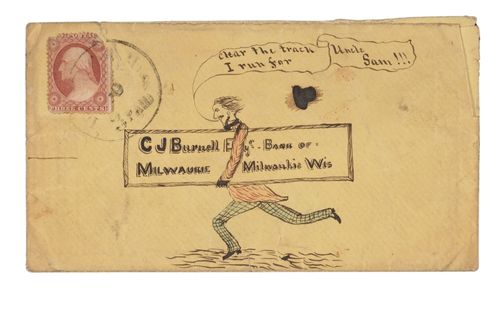
These three envelopes from the Pen-and-Ink Collection were hand-illustrated by different writers, but they’re united by their desire to stand out amid a flood of other correspondence.
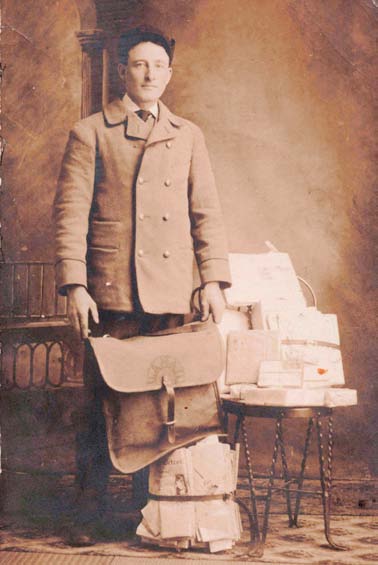
This photo postcard of a heavily encumbered postal deliveryman from Detroit can be found in the David V. Tinder Collection of Michigan Photography.
By the 1860s, the combination of chromolithography and new mechanical processes to produce envelopes changed the game. Patriotic covers became a way to declare your political allegiances in times of upheaval; businesses could advertise themselves on the outside as well as the inside of their mailings; and people’s creativity blossomed to take advantage of the medium. If you have the option to expand the scope of your message, and it’s cheap to do so, why not use every square inch of paper? Bright colors, smart designs, dense text—in the late 19th century, innovative printers revolutionized people’s ideas of what an envelope could be.
Letters, and their envelopes, can tell us grand narratives about postal history and the steady advance of industrialization, technology, and communication, but they’re also a reminder that it’s only by looking at all the evidence before us that we can really get a glimpse of the people who came before us. So zoom in and be curious. Look closely, for example, at all the mail just this one U.S. Postal Service employee from Detroit was carrying with him: newspapers, letters bundled together with twine, parcels wrapped in paper, and many envelopes with stories of their own to tell. After all, a library like the Clements is a testament to just how much people have written down in the past, and all the ingenious ways they’ve devised to carry, save, and treasure these records.
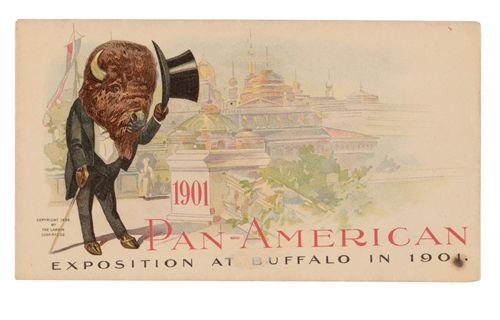
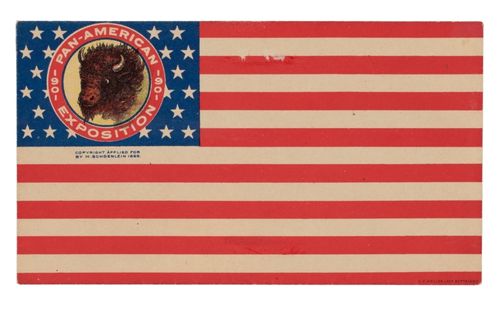
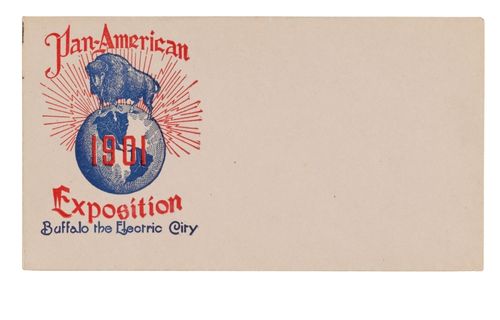
These printed envelopes from the Postal History Collection advertise the 1901 Pan-American Exposition, and the memorable visual messaging surely underscored the public’s awareness that it was happening in BUFFALO, New York.