
CONTAIN YOURSELF
No. 62 (Fall/Winter 2025)
Table of Contents
Vernaculopegy
Emiko Hastings
Curator of Books
Earlier this year, the Clements Library Book Division made an exciting acquisition with the purchase of the Garrett Scott Collection of Vernacular Bindings. Scott, an antiquarian bookdealer in Ann Arbor, coined the term “vernaculopegy” to describe the art of vernacular bindings, derived from the term “bibliopegy” for the art of bookbinding. His working definition of “vernacular binding” is “an alteration or addition to the book, pamphlet or leaf, when this alteration is made by an owner whose vocation is not bookbinding or associated book arts, when this modification is meant to enhance, protect, repair, or reinforce the structure of the item.” In other words, these are books that have been modified and repaired by their former owners. Amendments such as handmade book coverings and visible repairs are evidence of the ways that these books were used and cared for by previous generations.
The intention of the vernacular binding collection, as Scott writes, is to “open the doors to historical everyday users.” His manifesto urges book dealers and owners to notice and value these bindings in their own right, and not simply discard them as ugly or clumsy repairs. In this respect, it is as much a collection of evidence of reading and book ownership as it is of books. Including more than 300 volumes, the collection contains numerous examples of overcovers, added paper wrappers, and non-professional repairs such as rebacking and visible sewing.
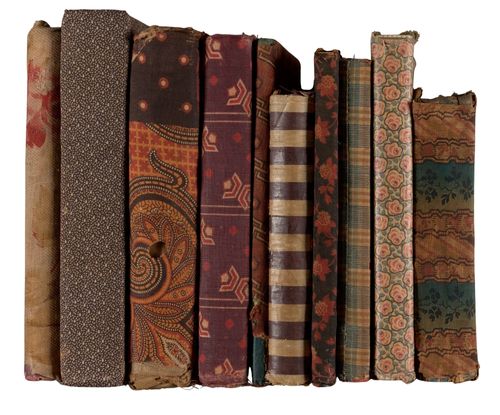
Stack of cloth overcovers
The new vernacular binding collection complements existing examples in the Clements Library collections and bolsters a long-standing interest in describing these types of bindings. A number of years ago, the binding historian Julia Miller did a survey of the library’s bookbindings and wrote descriptions of many of them that have been added to the library’s online catalog. Some of this work is discussed in Miller’s Books Will Speak Plain: A Handbook for Identifying and Describing Historical Bindings, first published in 2010 and revised and enlarged in 2023. Miller encourages readers to notice and appreciate ordinary or plain historical bindings as well as decorative ones, and respect repairs made to a book as evidence of the history of that particular book. She writes, “A book with its mends is, like a life, much worked upon, as we strive to continue whole and productive. Historical bindings, even broken and mended, still have a lot to tell us.”
After seeing the varied and creative ways that previous owners cared for and repaired their books, one can appreciate the subtle beauty of these bindings. Although at first glance the books may appear shabby or dilapidated, the mending is actually a sign of care taken to preserve the book, as well as a display of dexterity and skill on the part of the owner. At a time when books were relatively expensive, people were less likely to discard a damaged book. If they lacked the means to hire a professional bookbinder, a thrifty person might well attempt to repair it at home in order to keep the book in working order. Most book-owning households would likely include someone with the necessary mending skills and access to scrap materials of cloth, paper, or leather. Although we usually do not know the identity of the person who did the work, given the categorization of domestic sewing as feminine labor, I speculate that much of this work was carried out by women.
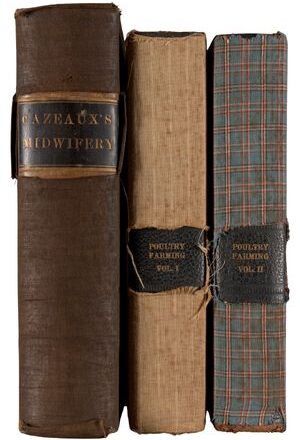
Window cutouts
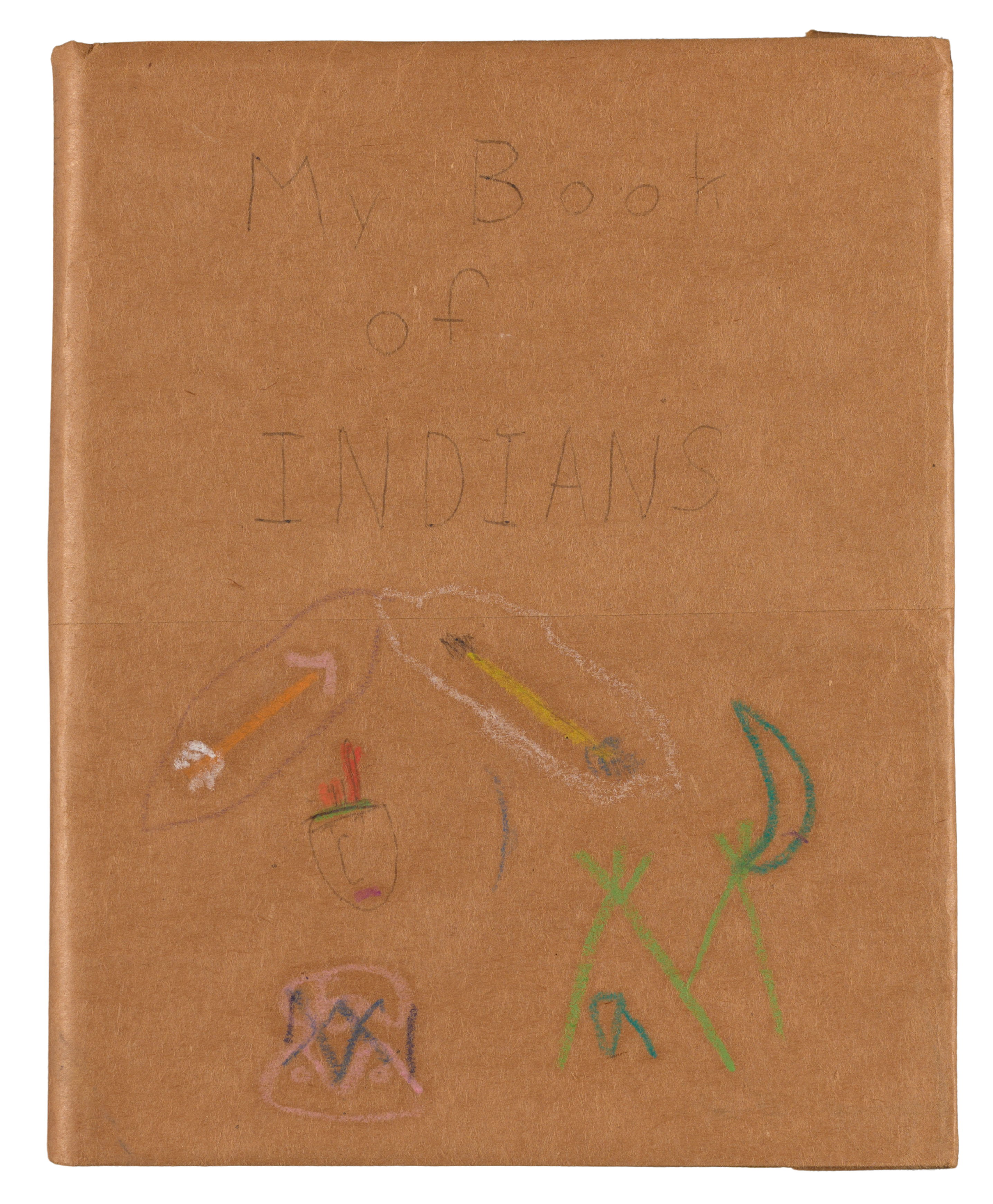
Garrett Scott paper cover
While repairs are more common for cheaper books, they do not necessarily indicate that the owner did not value the book. As Miller notes, amateur repairs are common in “working books” like dictionaries, textbooks, and manuals that would have been heavily used and needed to remain functional. Vernacular bindings are also seen on well-loved but tattered books that were “read to pieces,” such as children’s books and music books, as well as personally meaningful volumes like prayer books and Bibles. The elements most likely to need repair are the hinges of the book, which sustain damage over time as the book is opened and closed repeatedly. This can be handled by crafting an overcover to hold the boards onto the text block, by repairing the spine with new material, or by stitching the boards back to the text block.
Overcovers
The most common type of vernacular binding in the Scott collection is the overcover, an added covering or book jacket over the primary binding of a book. Some are made to hold together damaged bindings, while others protect undamaged bindings from additional wear and tear. They are most frequently made of cloth but can also be made of leather or paper. Like a modern publisher’s dust jacket, they can be both functional and decorative. Many of the cloth examples use brightly colored and patterned fabrics, likely recycled materials from clothing or other domestic sewing projects.
The overcover seems to have been a folk repair or decoration that arose naturally from the skills and materials that people had readily available, something that Miller describes as an “intuitive similarity of design.” I have yet to find any contemporary published sewing patterns or instructions that describe how to make these common overcovers. Periodicals like Godey’s Lady’s Book tended to focus on decorative velvet or embroidered silk book covers rather than functional covers for damaged books. One of the most distinctive features of the overcover, which I have not seen mentioned in published instructions, is the long zig-zag tensioning stitches usually holding the head and tail material in place. It seems likely that this method was inspired by similar fastenings for other home goods such as corset lacing or chair upholstery.
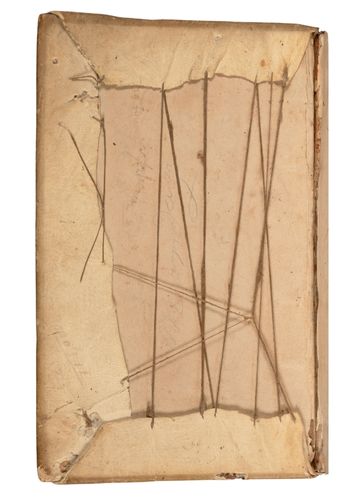
Removable cover showing original binding and overcover
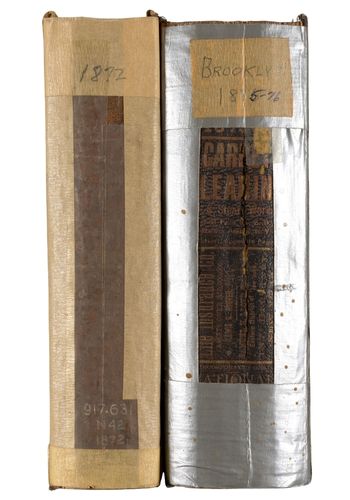
Examples of rebacking styles, duct tape
Rebacking
Rebacking a book is a technique by which a damaged book spine is replaced and the boards reattached. In traditional bookbinding, this usually involves inserting new spine material underneath the existing cover material, and the original spine is often pasted back over the new spine to preserve its appearance. The examples of amateur rebacking in this collection differ in that the new spine material is pasted or sewn over the primary cover rather than inserted underneath, making the repair more obvious but still functional. This repair method is a straightforward solution to a problem, similar to the way a modern book owner may use adhesive tape to repair their book.
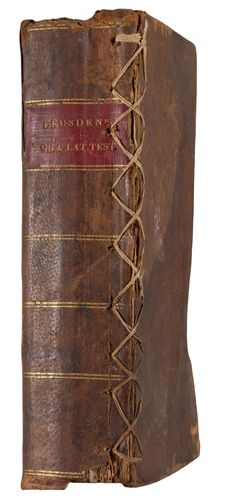
Frankenbook stitching
Stitching
Stitching is also a popular folk mending method to reattach boards, fasten loose gatherings, or mend torn paper. For women accustomed to mending their own clothing and household linens, sewing must have been a natural choice for home book repair, particularly in an era when much paper was made from cotton and linen rags, and thus was effectively a type of fabric. Before the invention of transparent adhesive tape in 1930, needle and thread would likely have been the most convenient way to mend torn paper at home. Indeed, it was even advised by at least one etiquette book, Eliza Leslie’s The Behaviour Book: A Manual for Ladies (Philadelphia, 1853). The author wrote, “If, by any unlucky accident, a leaf is torn, lay the two pieces neatly together, and sew them, lightly, with a rather fine thread.”
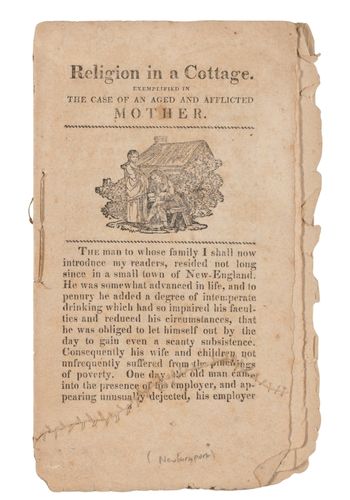
Repairing a page with sewing
Books with exposed exterior stitching repairs are also colloquially known as “Frankenbooks,” a term coined on Instagram by the American Antiquarian Society. A post by Galter Special Collections says, “Similar to Frankenstein’s monster, Frankenbooks are books that have been stitched back together to give them new life.” The stitching may look crude compared to what a trained bookbinder would have done, but if done carefully, it can still prolong the life of the book and restore its function.
Embellishment
Lastly, the definition of vernacular bindings can encompass other decorative additions to the book made by an owner, such as cover embellishments or artwork on the endpapers. These can range from doodles likely done by a child to exquisitely detailed ownership inscriptions and embroidery work.
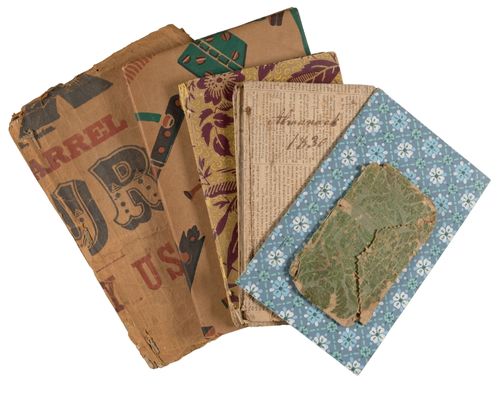
Added wrappers
Traditionally, rare book collectors such as our founder, William L. Clements, prioritized books in pristine condition or with decorative bindings made by skilled craftspeople. Likewise, librarians and book historians have often focused their attention on the most lavish or unusual binding examples rather than the ordinary styles of bindings most often encountered on library shelves. While plain bindings and folk repairs have always existed in the Clements book collection, they were not necessarily considered worth describing in detail until binding scholars like Julia Miller began to generate more interest in the subject. Today, those who study book history and bookbinding have come to appreciate such repairs and other traces of former ownership, part of a growing interest in marginalia and other provenance evidence of past readers and owners of books. Far from detracting from the value of a book, these alterations can help us learn how readers of the past used their books in everyday life. We are excited to begin cataloging the Scott Collection so that it can be made available for study and to encourage similar collecting efforts by other institutions and private collectors.