SCHEMERS, CONS, AND GRIFTERS
No. 59 (Spring/Summer 2024)
Table of Contents
Collection Encounters: Confessions of a Curator
Jayne Ptolemy
Associate Curator of Manuscripts
I have a confession. I hated early American history for much of my pre-adult life. The Jamestown colony, Federalists, the Missouri Compromise, robber barons. I hated all of it. It just felt so stuffy, so distant, and so boring. It wasn’t until I went to college and got to really study and wonder about the details of everyday life and the strange qualities of the human condition that I got hooked. In the spirit of what allowed me to fall in love with the past, I want to offer a selection of items that flag those lighthearted, quirky moments that provide openings to rejoice in the people we encounter in the collections.
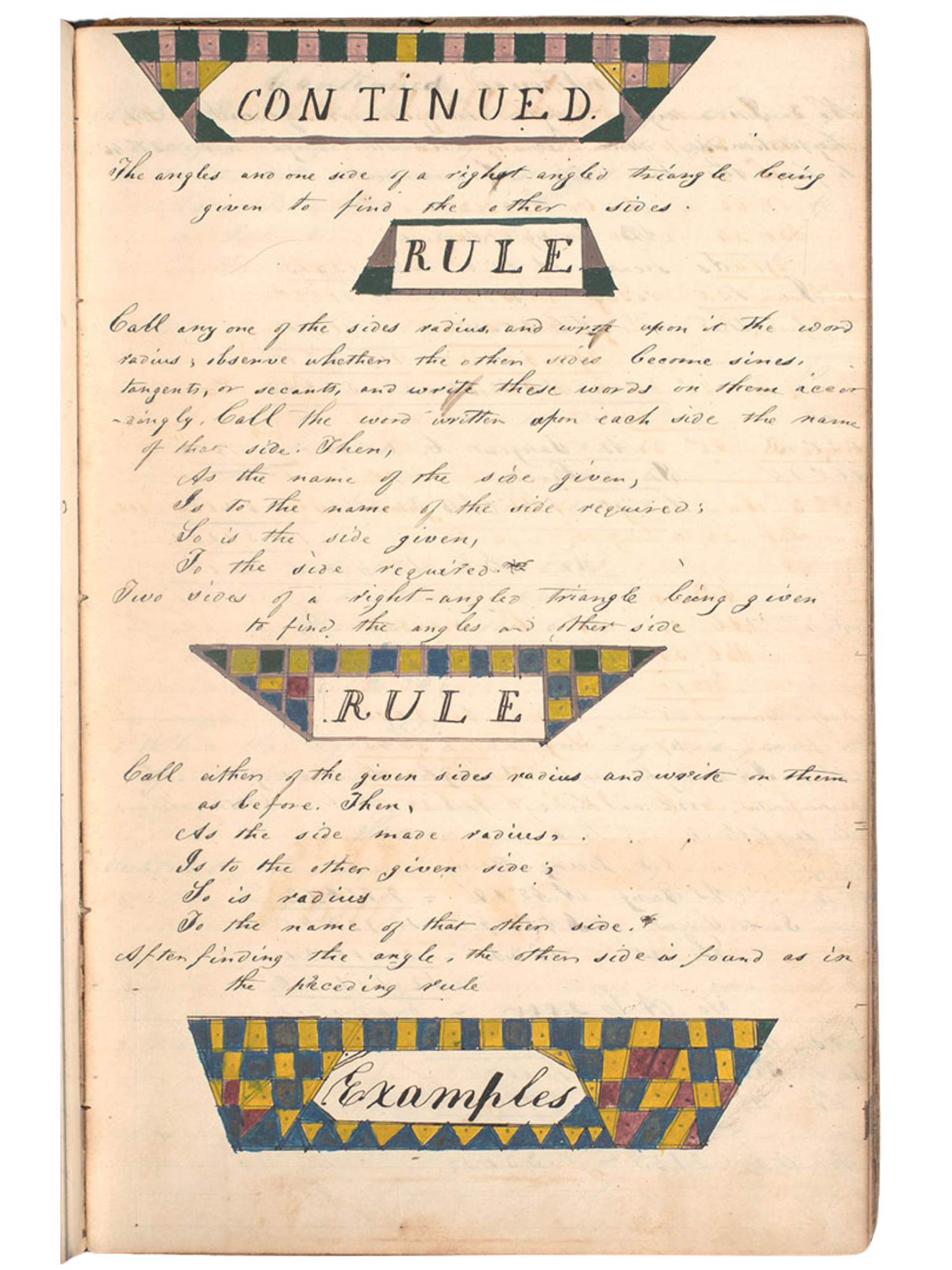
Perhaps few things seem less joyful to most of us than trigonometry. But recently, while processing new purchases, I had the delight of reviewing a young Leo Engleman’s cypher book. Mixed in with examples and problems and scratch marks made by protractors, are exquisitely colorful geometric designs doodled by a bored thirteen-year-old. They serve to remind us that math and art are not so far apart, and that even focused school work has its whimsical wanderings that help us better imagine the boy behind the problem sets.
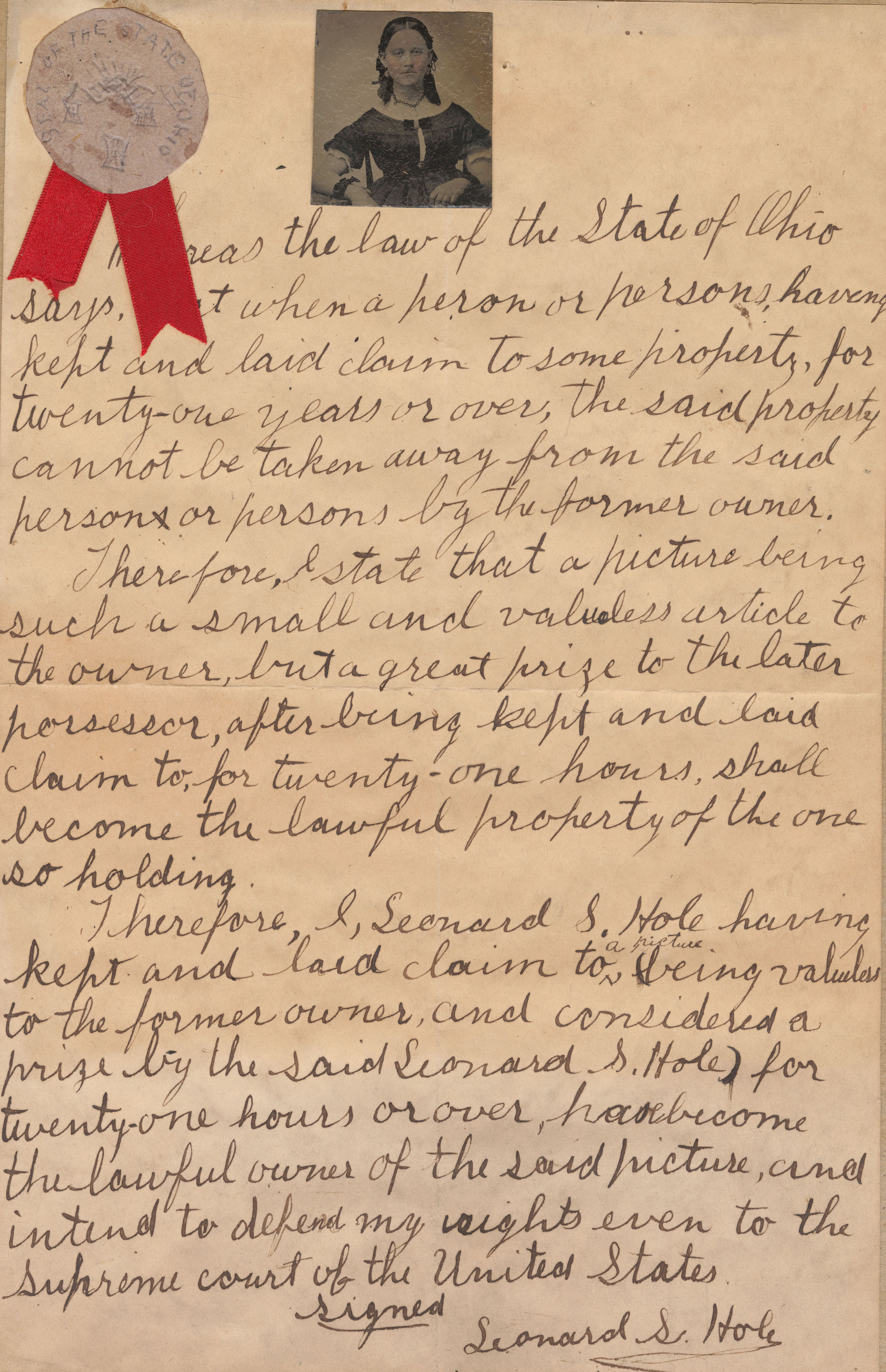
Threats of facing legal proceedings are also, generally, not much fun! It’s the subversion of those weighty expectations of confrontation and boredom that make this piece we are integrating into our Law, Crime, and Punishment Collection so stunning. Here, Leonard S. Hole created a mock legal form laying claim to a small tintype of a girl, citing Ohio law of possession to justify his holding onto the treasure. Now it is part of the Clements holdings, pointing us to the surprisingly playful ways property law can help us better understand social (and perhaps burgeoning romantic?) relationships.
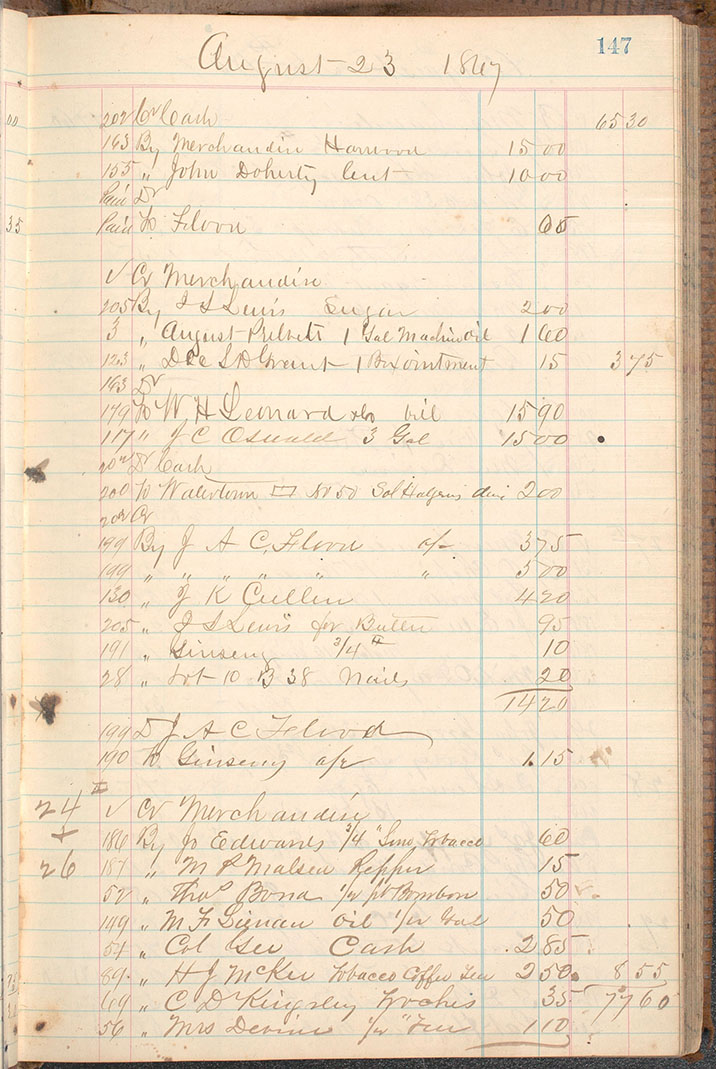
Few things can make your eyes cross faster than a 300-page financial ledger, but every once in a while you stumble across something that just makes you burst into laughter, like these two unfortunate flies splatted on the page of Georgiana Lewis’s daybook on August 23, 1867. You can just imagine her standing sweaty in the store, tending to sales of foodstuffs and general merchandise on a sweltering summer day, plagued by buzzing flies. Can’t you viscerally feel that rush of joy she might have felt when she slammed the book and got two of them! It was those two flies that rocked me out of skimming the numbers and just moving through the volume and allowed me to slow down and remember to focus on Georgiana.
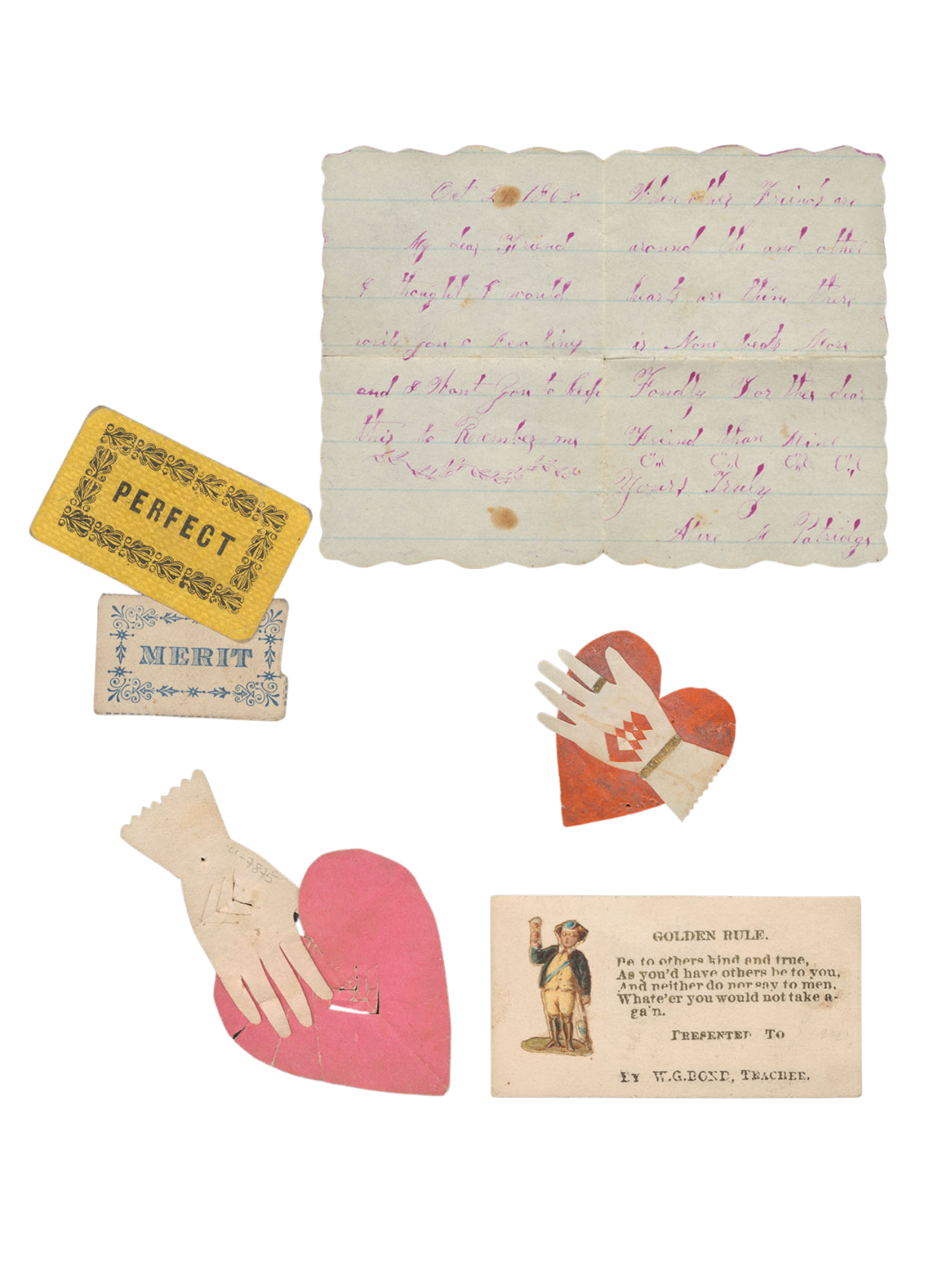
These small moments bring the people back to the forefront of our minds and enliven their histories. A small diary kept by Nannie N. Linscott reminded me powerfully of this lesson. Thumbing through it the first time, I admit to feeling a little irritated. She wrote barely anything, and when she did her entries for the day mostly read like the following: “Had a music lesson.” Well. How do I write a finding aid for that? But then, tucked quietly into the back pocket of the diary, were a handful of treasured things: hand-cut valentines, rewards of merit, a poem penned on miniature, scalloped paper. And there she was! Now I could see and connect to Nannie, be excited by her story, even if it was mostly just quiet days peppered by the occasional music lesson, because there’s personality and personhood behind it all that brings that spark to our eyes. Perfect, indeed.