
SCHEMERS, CONS, AND GRIFTERS
No. 59 (Spring/Summer 2024)
Table of Contents
A Quartet of Cons from the Collections
Cheney J. Schopieray
Curator of Manuscripts
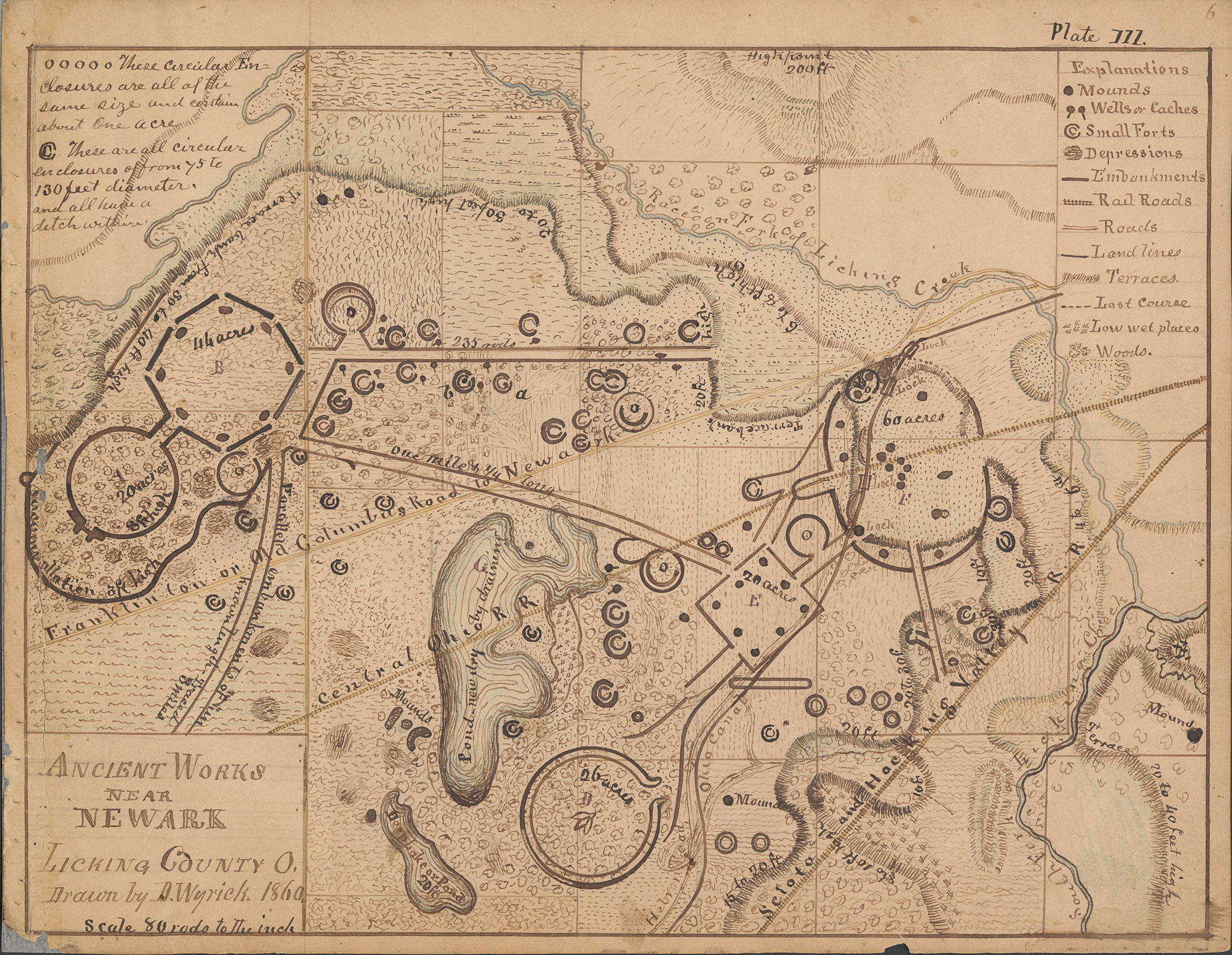
David Wyrick’s 1860 map of “Ancient Works Near Newark, Licking County O.” clearly shows the mind for organization and detail required in archeaological work by including measurements, details of topography, roads, and railroads. Wyrick depicts The Newark Earthworks, remnants of a 2,000-year-old complex that is the largest set of earthworks known. It is believed that groups of Native Americans from all over North America gathered at the Newark Earthworks to practice spiritual traditions, celebrate, and connect with one another and the world around them.
Deceiver or Deceived?
In the summer of 1860, Newark, Ohio, surveyor David Wyrick made an astounding discovery. While digging in a cluster of pre-Columbian indigenous burial mounds he uncovered a stone inscribed with what appeared to be an ancient Hebrew text. Wyrick and the so-called “Keystone” became instant sensations and topics of controversy. Beginning in the 17th century, theories circulated that Native Americans were descended from Lost Tribes of Israel. Wyrick’s Keystone supported this argument, and he postulated in a letter to antiquarian William Brockie, “This may have been a lost relic of the children of Israel—or a lost ornament by some other race who obtained it of them . . .” (September 1860). In November of the same year, Wyrick uncovered another stone, this one carved with an abridged version of the Ten Commandments and an image of Moses. This stone was aptly named “Decalogue” and, together with the Keystone, became known as the Newark Holy Stones.
His finds were lauded by some and pronounced fabrications by others, but the latter voices were proven to be correct. David Wyrick died in 1864 by an overdose of laudanum taken to treat his severe rheumatoid arthritis, and in the following decades he was denounced in archaeological journals as a forger and denigrated for being an amateur. It is true that Wyrick was largely self-educated, but he was a serious student of archaeology and natural science, and he realized the importance of careful documentation as evidenced by the hand drawn maps and diagrams in the Clements Library’s David Wyrick collection. Dr. Peter Dunham of Cleveland State University described Wyrick as a man with “a sublime mix of naïveté and incisive wit and intelligence,” and believed Wyrick was not the forger, but rather the victim of an elaborate scam conducted by a local individual who particularly disliked Wyrick. The Newark Holy Stones are in the permanent collections of the Johnson-Humrickhouse Museum in Coshocton, Ohio.

Wyrick’s drawing of the Keystone with Hebrew lettering. The stone was made of novaculite, a very hard fine-grained siliceous rock used for whetstones.
The Shame of Victimization
The variations of confidence schemes and con games are many, and they often require ingenuity, creativity, organization, skill, and at the very least brazenness in the face of potential consequences. The perpetrators often inspire curiosity, and their exploits invoke a sort of glamor. But tarnish comes when remembering the serious psychological, social, and economic harm suffered by their victims. Even the sharpest among us can be drawn into their schemes. The monetary losses and self-directed doubt and anger can be devastating. How could I let this happen? How could I be so stupid? It seems so obvious—what was I thinking? What will people think of me if they find out?
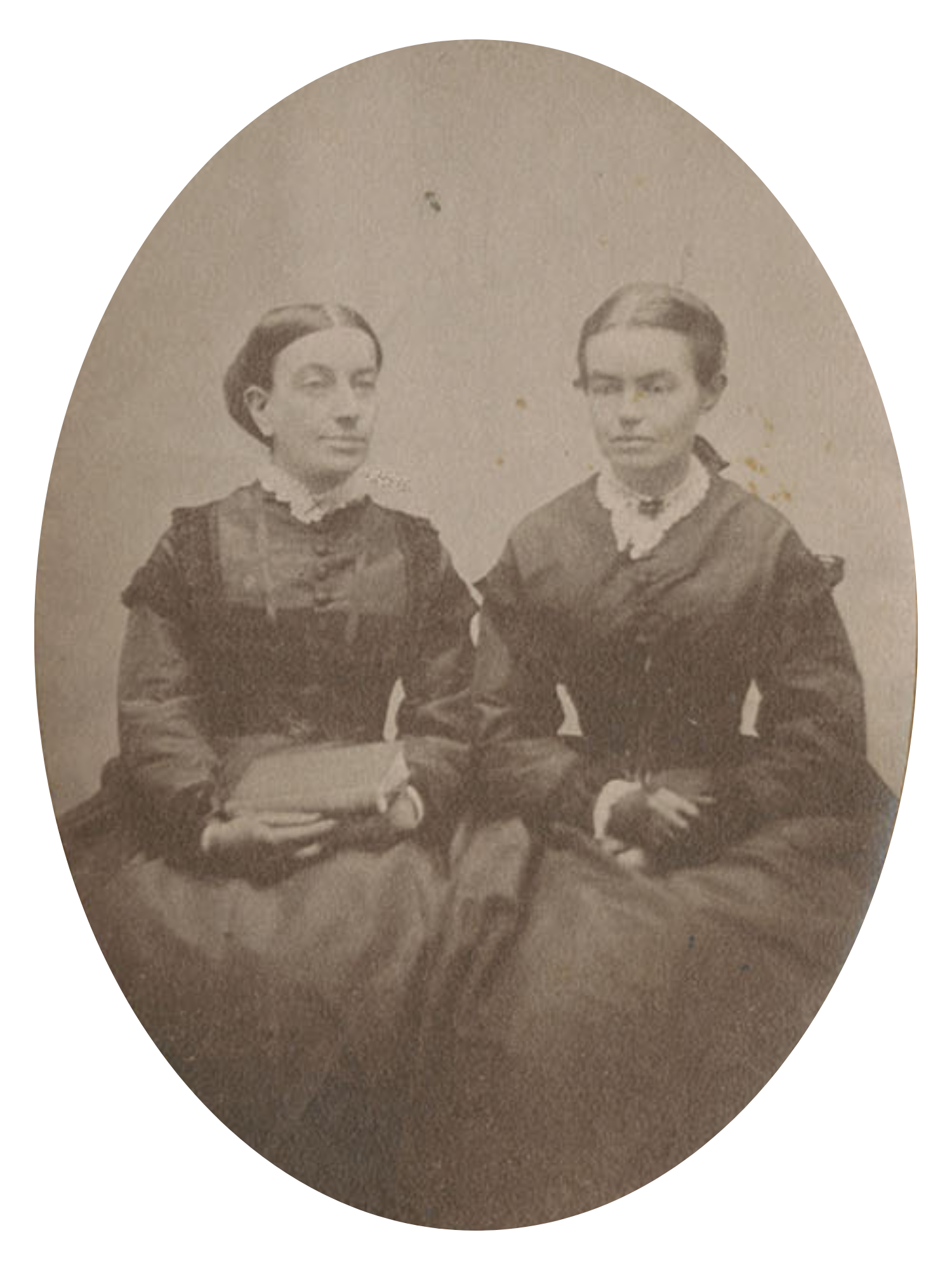
Emily Howland (at right) lived a life of activism on behalf of African Americans, with deep compassion for wrongs committed against them. Her public advocacy no doubt led to her being targeted in a scam which used a fabricated but all-too-believable tale of suffering for monetary gain.
Emily Howland (1827–1929) of Sherwood, New York, was a reformer active in abolitionism, Black education, and women’s rights and suffrage movements. She was a brilliant and steadfast woman acting on some of the most challenging and progressive efforts of her day. And yet she, too, found herself on the receiving end of deception. On October 14, 1905, Emily Howland was interrupted at supper by an unexpected visitor. It was an African American man who told her that he was fleeing to Canada from North Carolina. He had seen his sister murdered, he defended her, and was targeted for lynching on reward of $500. He had difficulty walking because he had been shot twice in the back. He told her that he met with Harriet Tubman (1822–1913) at her home in Auburn, who directed him to Howland. He needed $135, so Emily accumulated the funds. He departed but then returned the next Monday and said that men seized him en route but he escaped. He did find someone who could get him out of the country for $450 (since the railways were being watched). Against her better judgment, Emily wrote a bank check for that amount. She recalled being disturbed at his “most excited & harrowing” manner after taking the check.
Emily Howland had been close friends with Harriet Tubman for many years, so she decided to go to Auburn, ask Tubman about the case, and request that no more similar cases be sent to her. As Emily relates in a letter dated October 21, 1905, Harriet told her that “about 2 months ago a colored man brought this fellow to her house with this same story & wanted shelter for him which of course was promptly granted. He had a revolver . . . slept in her barn some more nights, wanted money. She begged some for him not enough to satisfy him. . . . Harriet said she had never mentioned my name to him. He had got it in some way. The whole affair seems like a horrid nightmare.” Emily Howland reproached herself for not listening to her own apprehensions when giving in to the second request for money. She was embarrassed about the amount of money lost, could not pay the next bill she received, and grieved over the good works for humanity that that money could no longer support. Her goal was to avoid dwelling on the events and remembering that “this too will pass.”
Spanish Prisoners and Nigerian Princes
In March 1908, L. F. Liscombe of New Hampshire received an urgent letter from Luis Rubio. Rubio wrote from prison at Valencia, Spain, and explained that he was related to Liscombe through his in-laws. He had been secretary treasurer under Gen. Martínez Campos during the Cuban Revolution, but he defected and joined the revolutionaries. He was forced to flee to England, taking £36,000 of his assets. There, he received news that his wife died, leaving his 15-year-old daughter Emily a prisoner in Santa Elena, Spain. Rubio rushed to Spain but was detained on arrival and imprisoned. Before he left England, however, he deposited the £36,000 in a London bank “on a special private contract” such that only the bearer of a particular security document could access it. The document was in a hidden compartment in his portmanteau, which was confiscated and would not be released without payment of his sentencing costs. Since he was sick and dying, Rubio pled that Liscombe pay the costs to release the embargo, which would allow Emily to be supported, and also provide an ample reward to Liscombe for his help. Since he could not receive letters at the prison, he needed Liscombe to airmail Pedro Romero at Calle del Mar, Provincia de Valencia, for more information and details on how to send the payment.

The “Mexican prisoner” letter sent to Randolph G. Adams in 1940. No response has been located.
Thirty-two years later, Clements Director Randolph Adams (1892–1951) received an urgent letter. A prisoner in Mexico City needed help, for the sake of his “dear daughter as well as [his] very existence.” Confined for bankruptcy, he beseeched Dr. Adams to pay for the embargo placed on his suitcases, one of which contained a baggage check that could be used to release his trunk, which was held at a customs house in the United States. That trunk had a secret compartment which held $285,000 and if Adams would advance the embargo release funds, he would receive $9,500 of the hidden monies. “Due to serious reasons of which [he] will know later,” Adams should airmail or wire the prisoner (signed “A”) via his contact Julio Rios at R. de Bolivia 22- Dept. 1, Mexico City.
These occurrences may sound familiar to modern readers. The “Spanish Prisoner” letters are an example of international crime and a precursor to the modern and widely experienced “Nigerian Prince” emails, which follow the structure of an advance fee scam. The con artist tries to establish connection to the recipient, provides a story with appeals for humanitarian help, and requests some amount of money needed to access a large amount of hidden capital. They appeal to potential victims’ emotional desires to help those in need as well as their own greed or monetary needs. Of course, the prisoner and the Nigerian royalty are fabricated, there are no funds to release, and there is no daughter to save; there is only that advance fee—and the subsequent silence or requests for additional funds.
If you fell for one of these advance fee scams, not to worry. Cheney J. Schopieray (b. 1980) received an email on July 24, 2011, from Gary Smith, who was duped by a Nigerian Prince scam after paying upwards of $20,000. Smith received confirmation of the fraud from FBI agent Williams D. Chase. Thanks to his [Chase’s] help, Smith was “the happiest man on earth” because he received promise of restitution of $1M U.S. currency. All Cheney needed to do was send $190 for Special Agent Chase to run the paperwork, via his contact at [email protected]. He is pretty sure his portion of the $1M will arrive any day now.
He Seen His Opportunities and He Took ‘Em
Tammany Hall philosopher George W. Plunkitt (1842–1924) famously justified political corruption by distinguishing between Honest Graft and Dishonest Graft. The former being personal and political party financial gains secured through use of insider information or bestowing salary benefits on cohorts, while simultaneously benefiting State projects. As he said, “The books are always all right. The money in the city treasury is all right. Everything is all right.” Dishonest graft, he said, is the use of political position to engage in illegal activity such as accepting bribes and kickbacks, engaging in theft, blackmailing criminals, or collaborating with gamblers and other lawbreakers.
President Thomas Jefferson appointed Philadelphian Levett Harris (ca. 1784–1839?) as U.S. Consul to Russia at St. Petersburg in 1803. Harris held the position until 1817, with a period as chargé d’affaires while Ambassador John Quincy Adams (1767–1848) was in Ghent negotiating the treaty to end the War of 1812. In 1817, Harris returned to the United States to seek appointment as Ambassador to Russia. His prospects were high, given the Czar’s favor and his length of service as consul. These hopes were dashed when a series of revelations about consular corruption came to light through other U.S. government personnel and American merchants in Russia. The accusations primarily related to Harris profiting by the certification of nonneutral ships as American at the port of St. Petersburg under false papers, and by using monetary incentive to encourage his appointees to do the same. His nomination was quietly squelched, and Harris sued William D. Lewis, whose printed pamphlet against him did much to null his potential ambassadorship. The Supreme Court of the Eastern District of Pennsylvania handled the case Harris v. Lewis, which lasted around seven years and ended in Harris’ favor after a 16-day trial with a minimal monetary award.
The Clements Library’s Levett Harris Letterbook includes one communication that reflects careful calculations undertaken to move goods surreptitiously through the customs process at St. Petersburg—in this case exporting a collection of paintings for Harris’ own benefit. Harris wrote to John Vaughan (1756–1841), Philadelphia merchant and arts patron, to inform him of a forthcoming shipment of paintings which he hoped to sell for around $8,000. Harris hoped that Vaughan would buy them and if not, that he would hang onto them until Harris returned from Russia. “As these pictures will necessarily be entered as a part of my household effects & moveables there can be no duty charged upon them. I have not mentioned this circumstance to my Bankers . . . and as moreover the Neptune is a public Ship & the things on board belonging to the public mission there will necessarily be no custom house interference.” (September 16/28, 1814).
Levett Harris used his position to claim that a collection of pictures he intended to sell were his own household goods to avoid tariffs, and loaded these paintings on a public ship to avoid customs scrutiny. If hairs were split as Plunkitt splits them, Harris would serve as an example of dishonest graft, whose corruption benefited himself without also supporting party and public. The most generous epitaph we could offer might be “Levett Harris: He Seen His Opportunities and He Took ’Em.”
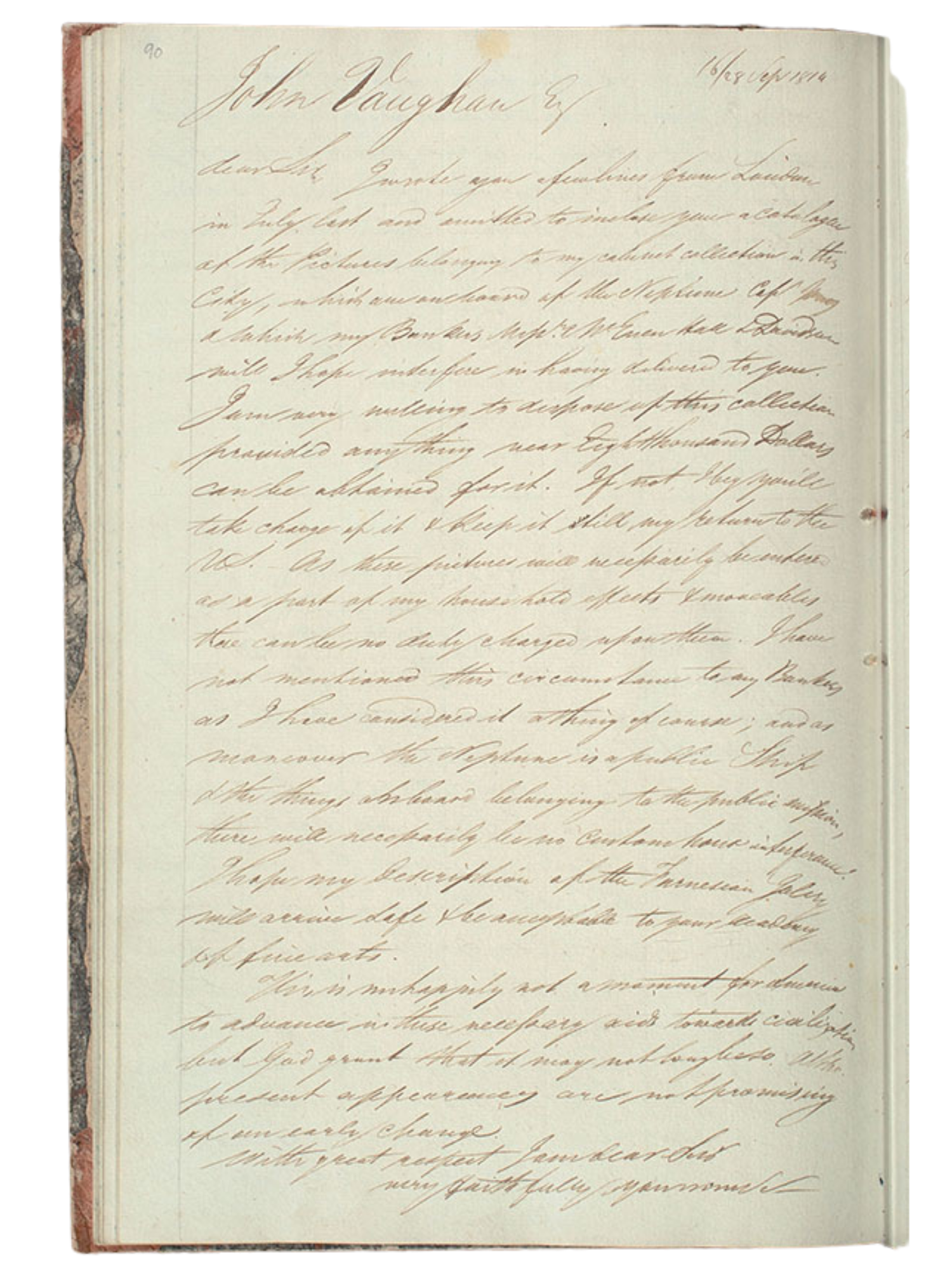
Levett Harris’ letterbook contains copies of his outgoing correspondence in the hand of his secretary, Joachim Schmidt, including this letter regarding the shipment of paintings. In addition to accusations of Harris making a personal profit, William Lewis’ allegations included the fact that Harris’ appointees were hired on the terms that they pay an annual sum to Harris, because of the pecuniary benefits that accrued to them as a result of their position.