
![Carte de Visite of Miss Maj. Pauline Cushman in uniform. "Union Scout and Spy of the U.S. secret [...] Army of the Cumberland."](https://clements.umich.edu/wp-content/uploads/2026/06/Miss-Maj-Pauline-Cushman-Portrait-in-Uniform-scaled.png "Miss Maj Pauline Cushman Portrait in Uniform")
By Graphics Assistant Sirianna Blanck and the Graphics Department, in honor of William J. Christen, who dedicated 14 years of his life to ensure that the life of Pauline Cushman would not be lost to or obscured by history and its myths.
Newly arrived at the Clements, the Pauline Cushman Collection is now available to visitors and scholars. 21 photographs highlight Miss Major Pauline Cushman (1833-1893), a famous Union spy and scout for the Cumberland Army during the Civil War. While much of her early life remains unknown, Cushman was born Harriet Wood. Per biographer William J. Christen, she was likely born in New York, not New Orleans, Louisiana as is commonly believed.
By 1863, Cushman worked as an actress in Louisville, Kentucky and began spying for the Union Army under her stage name. She left her children in Ohio with family after the 1863 death of her husband, Charles Dickinson, who had been enlisted in the Union army. Supposedly, she was approached by Confederate soldiers to give a toast to Jefferson Davis and the Confederacy. Unsure what to do, she approached the Union army, who encouraged her to give “the treasonable toast” in Union-occupied Kentucky and recruited her into their ranks as a double agent able to make contact with southern sympathizers and Confederate soldiers. However, according to Christen’s research, newspaper accounts do not corroborate this origin story.
In the field, Cushman began her time as a double agent with a public ousting from Nashville for her “southern sympathies.” In the role of the “exiled actress,” she sought to learn about the nearby Confederate camps, supply routes, and smugglers while also pretending to search for her brother, claiming he was stationed with the Confederate army. She had been advised not to take any notes or steal materials that could incriminate her; however, when captured in 1863, she possessed documents and notes such as drawings of the Shelbyville defense fortifications. She was imprisoned by Confederate General Forrest’s forces and sentenced to death by Confederate Gen. Braxton Bragg. Cushman was rescued near Shelbyville, Tennessee by the Union Army under Maj. Gen. William Rosecrans. Cushman claimed the honorary title of Brevet Major after the incident, perhaps given to her by General Gordon Granger and/or General David S. Stanley, under Brigadier General J.A. Garfield. The authenticity of this recognition remains unclear; however, it is unlikely President Abraham Lincoln himself was involved in giving her the honorary title.
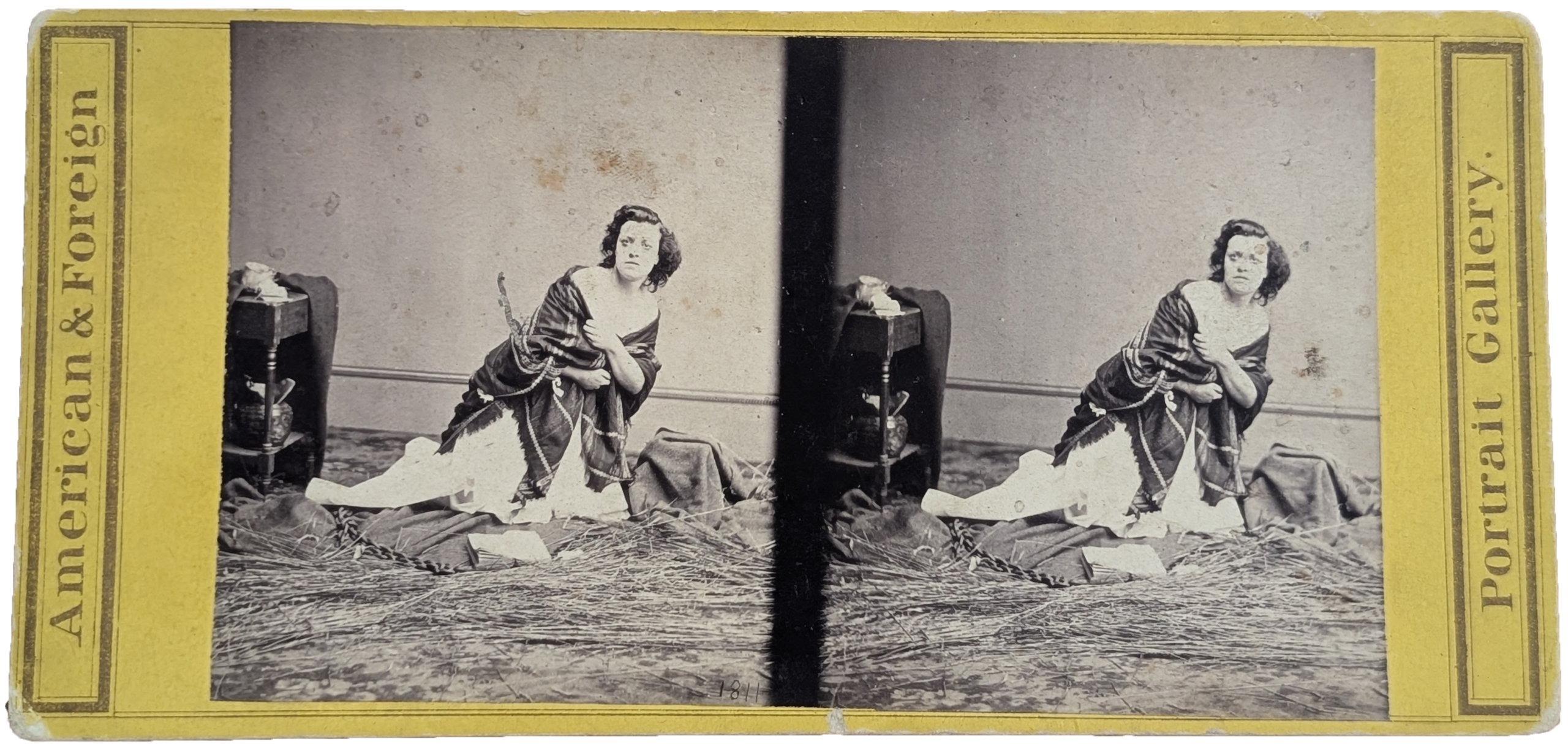
Stereoview. “Prominent Portraits No. 1811. The Prisoner, Miss Pauline Cushman, the Federal Scout and Spy. Published by E. & H. T. Anthony & Co., American and Foreign Stereoscopic Emporium.”
Capitalizing on her newfound fame, Cushman continued to work as a performer and actress. For two months in 1864, she was featured at P.T. Barnum’s museum in New York City, advertised as “the greatest heroine of the age – the modern American model of the renowned ‘Joan of Arc;’ the pure and beautiful girl revered and loved by all true friends of American Unity and Liberty.” For the next eight years, Cushman used her often-fictionalized wartime stories and notoriety to attract audiences to her appearances, lectures, and performances.
In 1864, her son, Charlie Dickinson, died of malignant diphtheria at the age of 6, while living with his aunt. He was buried alongside his father in Ohio. In 1872, her 9-year-old daughter Ida Dickinson died from typhoid fever, although Cushman had since given up custody to family.
After her time on the East Coast circuit, Cushman left for the Wild West in 1872. She made little money from performing in the last twenty years of her life, instead living off her earnings as a seamstress, cleaner, hotel manager, and food service worker. While in California, she married August Fichtner in 1872, but was widowed within two years. She was married once more to Jere Fryer in 1879, before separating in 1889. During this marriage, she adopted her daughter, Emma Fryer, born in 1881. Emma died in 1888 from a seizure, caused by chronic illness. Cushman lived in California and Arizona until her death in 1893 from a morphine overdose.
Biographies of Cushman range from highly fictional and flattering (most famously F. L. Sarmiento’s Life of Pauline Cushman, co-written with Cushman) to critical and dismissive, viewing her as a fraud or focusing on her struggles with alcoholism and her turbulent relationships. Christen was praised for his work to find the truth and contextualize her life within 19th century America. Recognizing her departure from the typical image of a Victorian woman, Christen’s biography paints a picture of not only the Civil War but also gender roles in Victorian society and the history of American theatre.
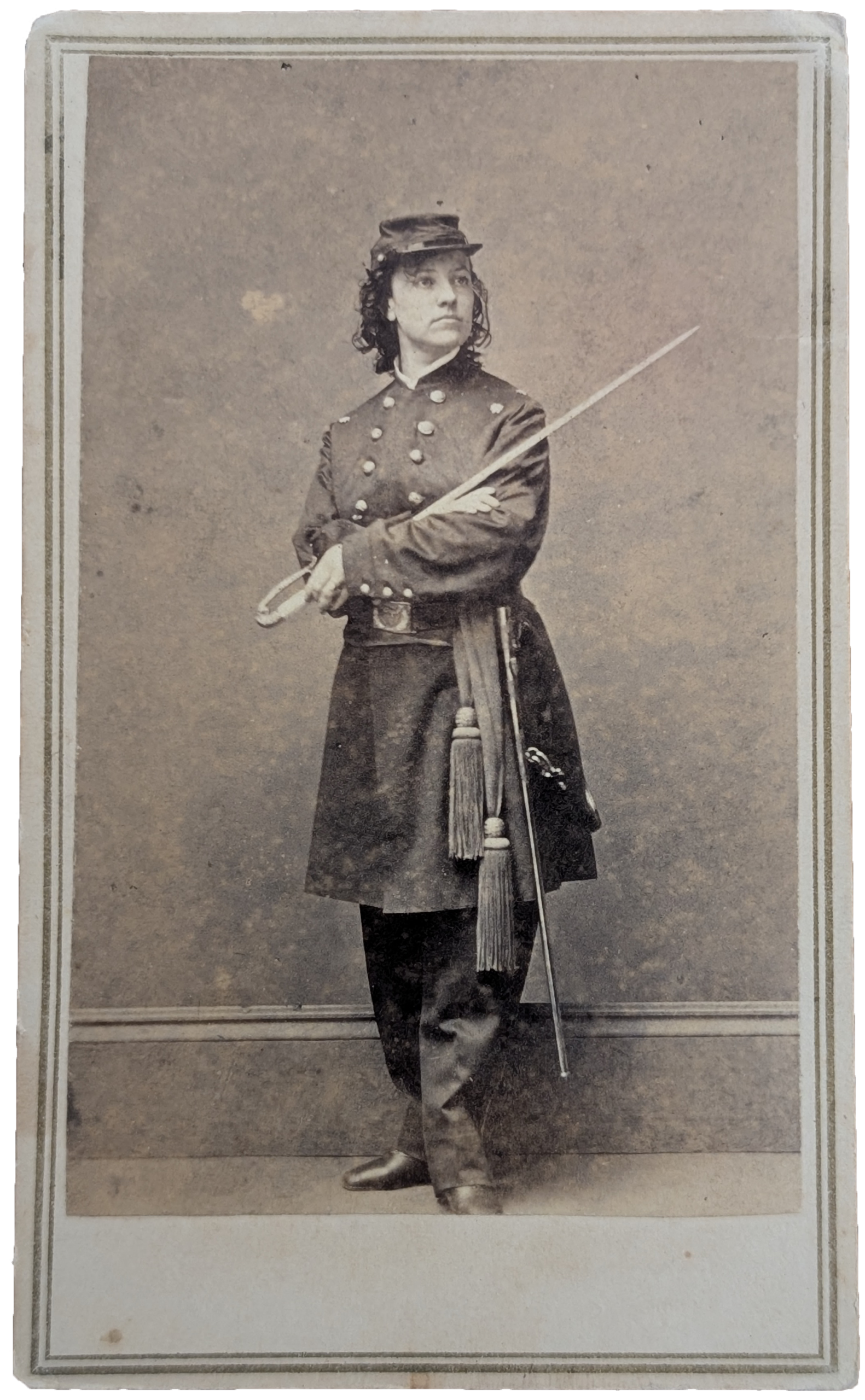
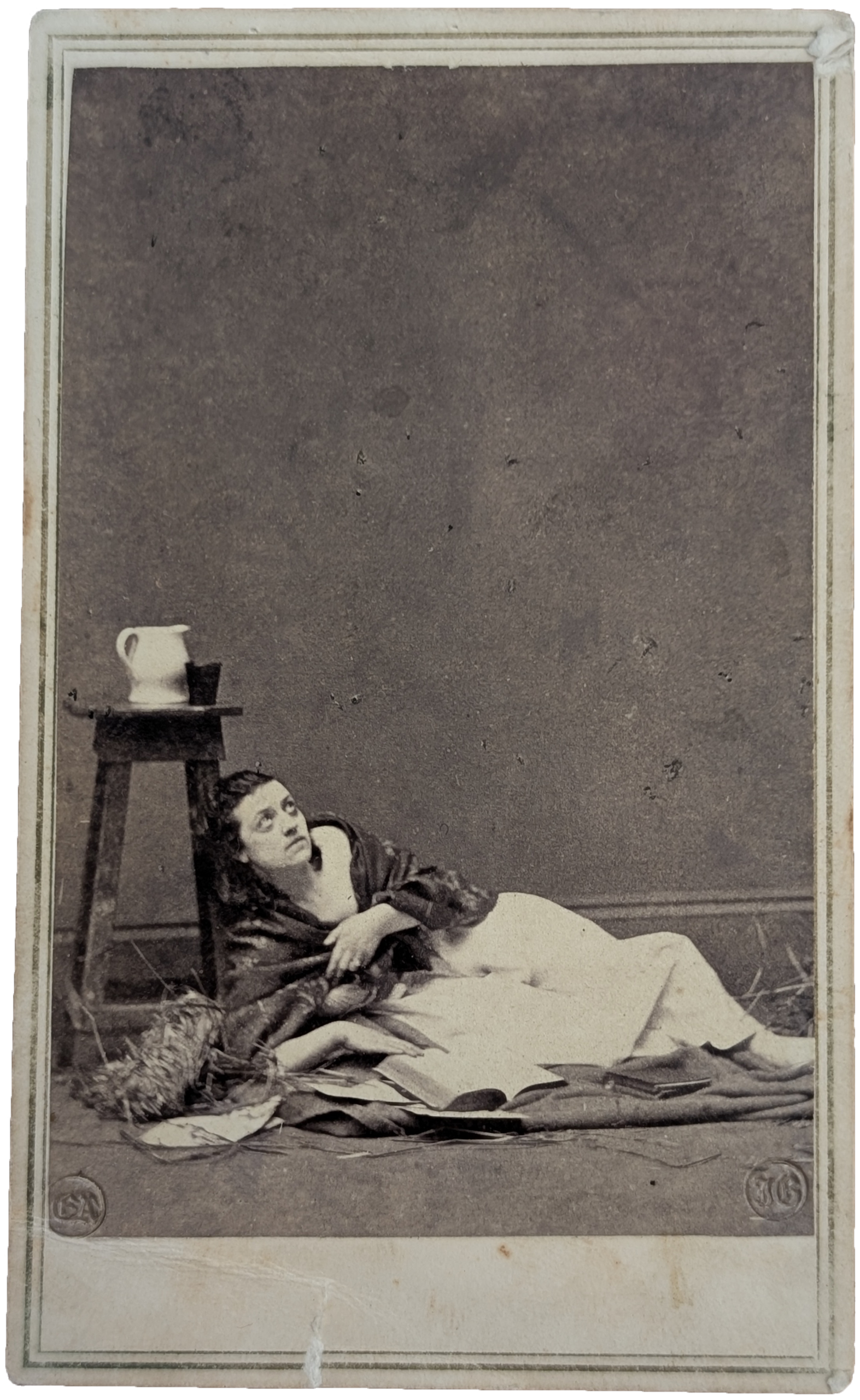
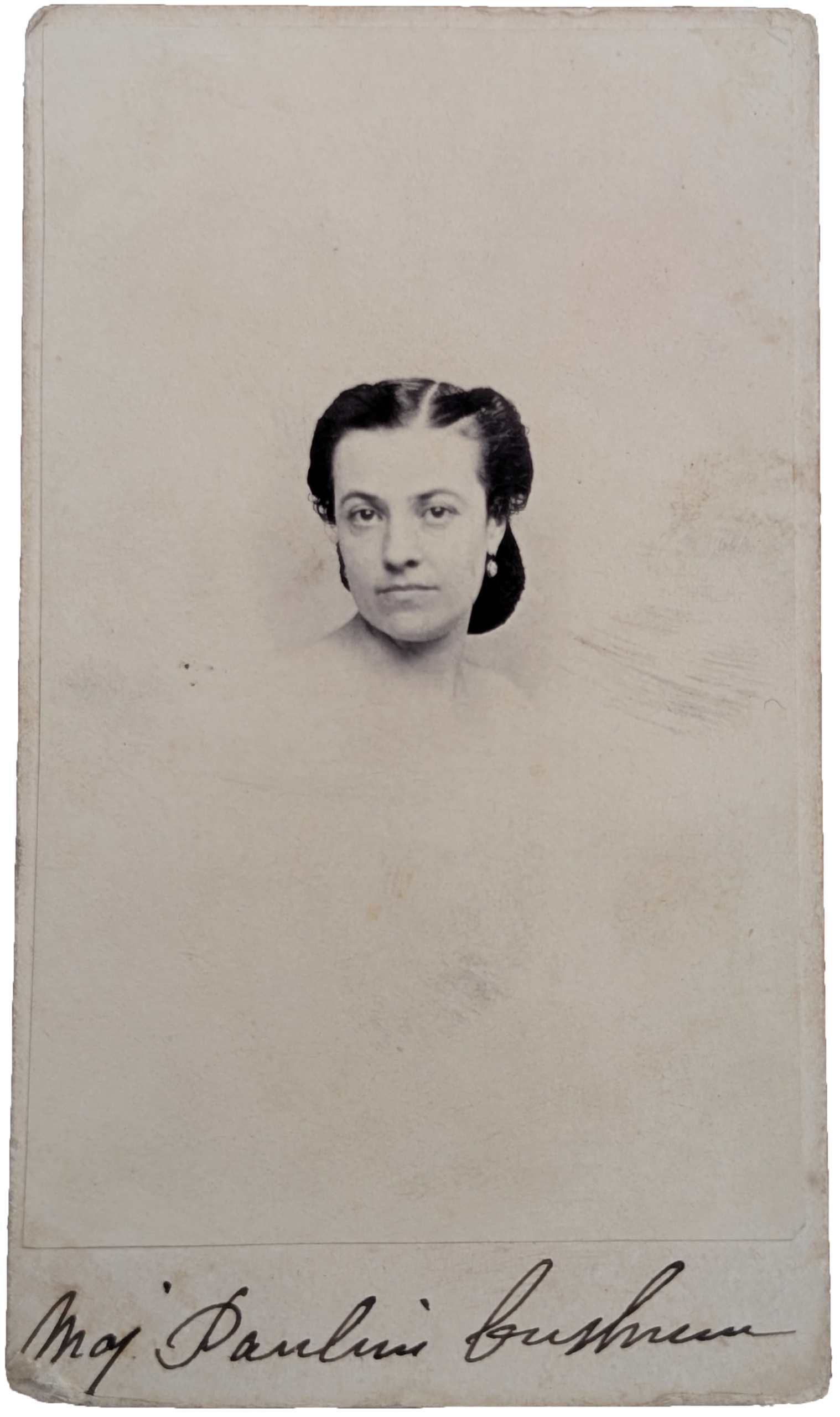
Rare carte-de-visites of Cushman, ca. 1863-1869
More about the Collection
Purchased from the Christen collection, the Clements now owns approximately 25% of the 80 known original photographs of Cushman. 21 photographs of Cushman show her in dress, in uniform, and in character as she attempted to make a living off her Civil War fame. Many of the photographs are believed to have been taken while she worked with the infamous P.T. Barnum at his museum in New York City in 1864. Some of the carte-de-visites and one stereoview depict what is likely a re-enactment of her capture and imprisonment in Tennessee. You can access the finding aid here.
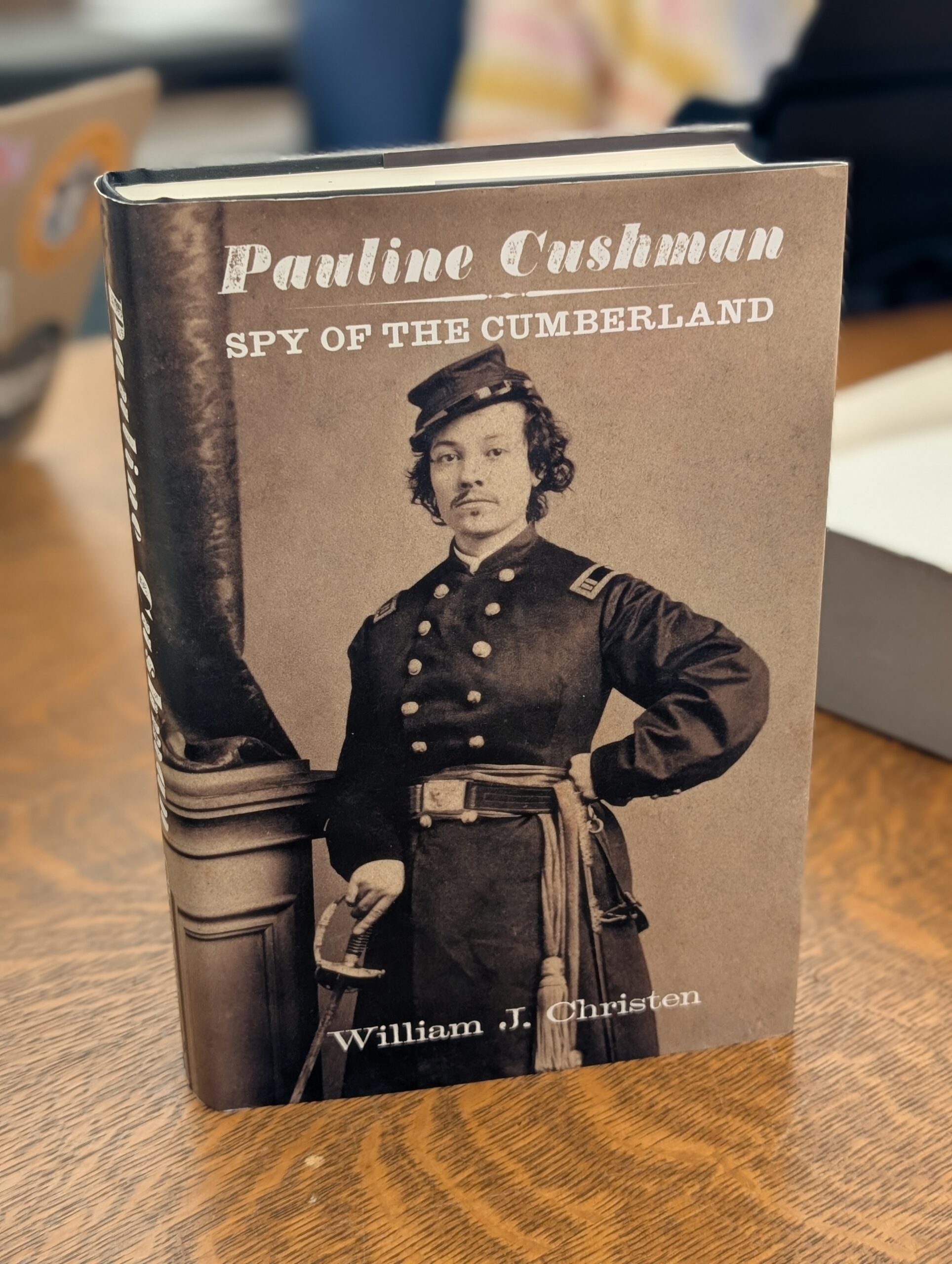
The Clements Library would like to pay its respect to William “Bill” Christen, Civil War reenactor and historian, collector of 19th century photography and clothing, alongside his wife Glenna Jo Christen, and author of the biography, Pauline Cushman: Spy of the Cumberland. He passed away on January 5, 2026.
Works Cited
Christen, William J. “Pauline Cushman: Spy of the Cumberland” 2006. Edinborough Press.