
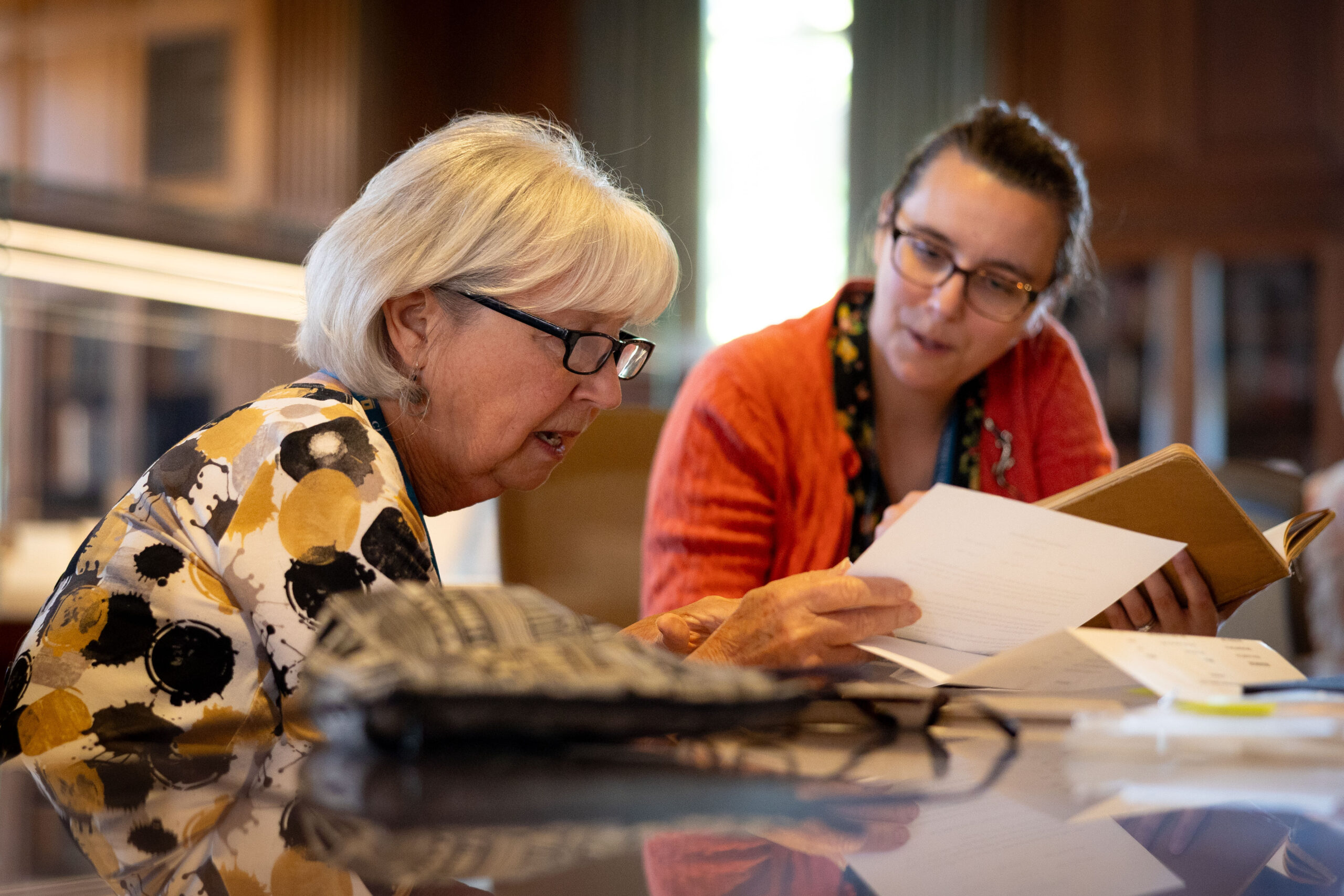
Last month, we hosted a “What’s In Your Attic?” open house-style events where members of our community brought their own paper treasures (letters, journals, photographs, prints, books, and maps) for discussion with Clements Curators and guest Americana collectors. A handful of our guests generously chose to donate materials to the Clements Library at this event, here are a few of those newly donated acquisitions!
All photos courtesy of Kaley Joy, Office of University Development.
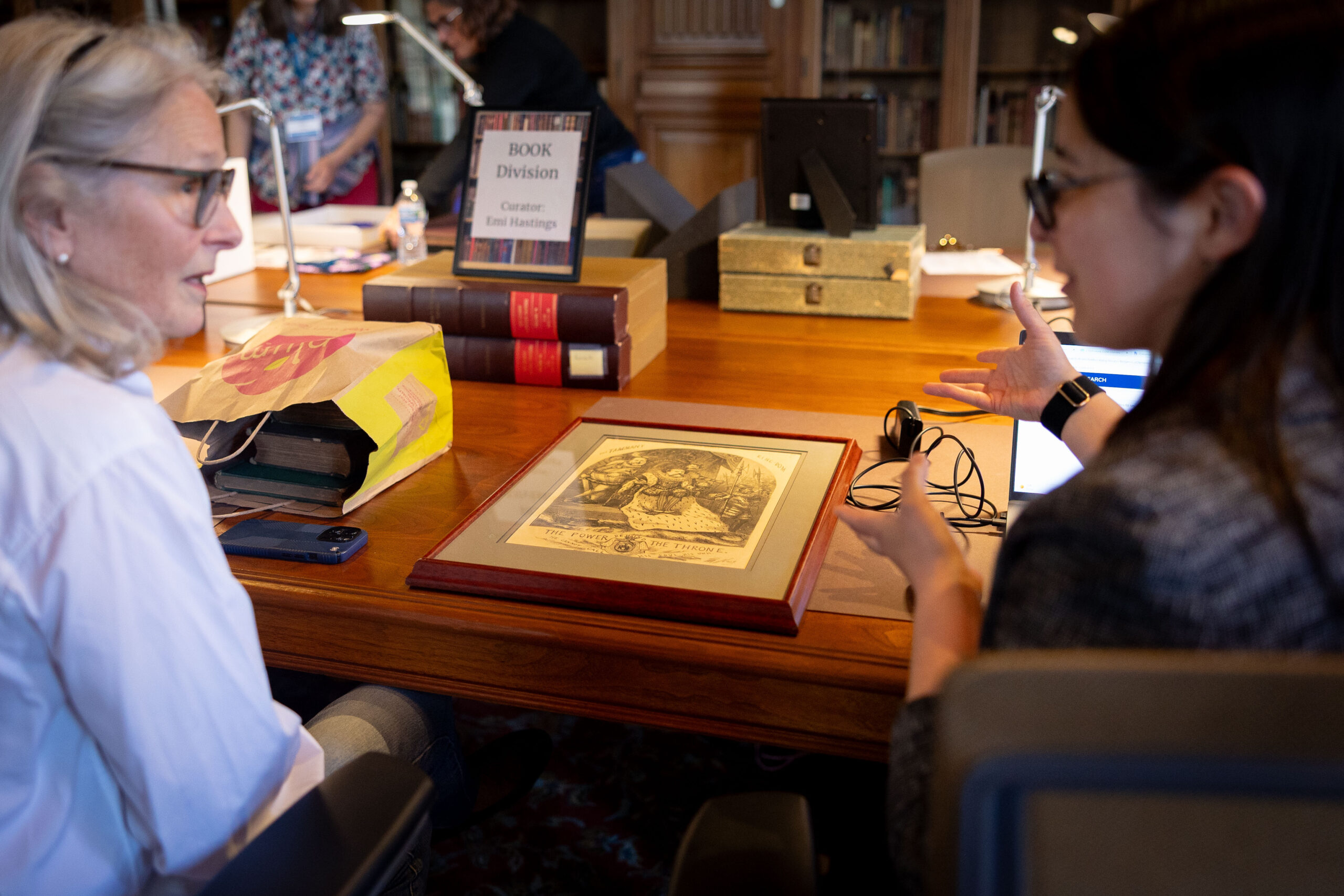
Thomas Nast. Tammany King-dom/Ring-dom: the Power Behind the Throne. Harper’s Weekly, October 29, 1870. (Donated by Anne Hiller)
Thomas Nast’s cartoon criticizing Tammany Hall’s leadership appeared as the title page of the October 29, 1870 issue of Harper’s Weekly. Tammany Hall was a political organization founded in 1786 that lasted into the 1960s. The organization was the political machine of the Democratic Party in New York, largely controlling the party’s nominations. In the 1860’s, William M. Tweed, more commonly known by his nickname Boss Tweed, became the leader of the organization and used that role to embezzle millions of dollars from New York City. In 1871, Tweed was arrested and ultimately found guilty on multiple charges of fraud, forgery, and larceny. This 1870 print shows Tweed as the power behind the Tammany throne. Nast’s negative political cartoons of Tweed helped contribute to his downfall by highlighting his corrupt actions using the cartoon format which was easily accessible to the general public.
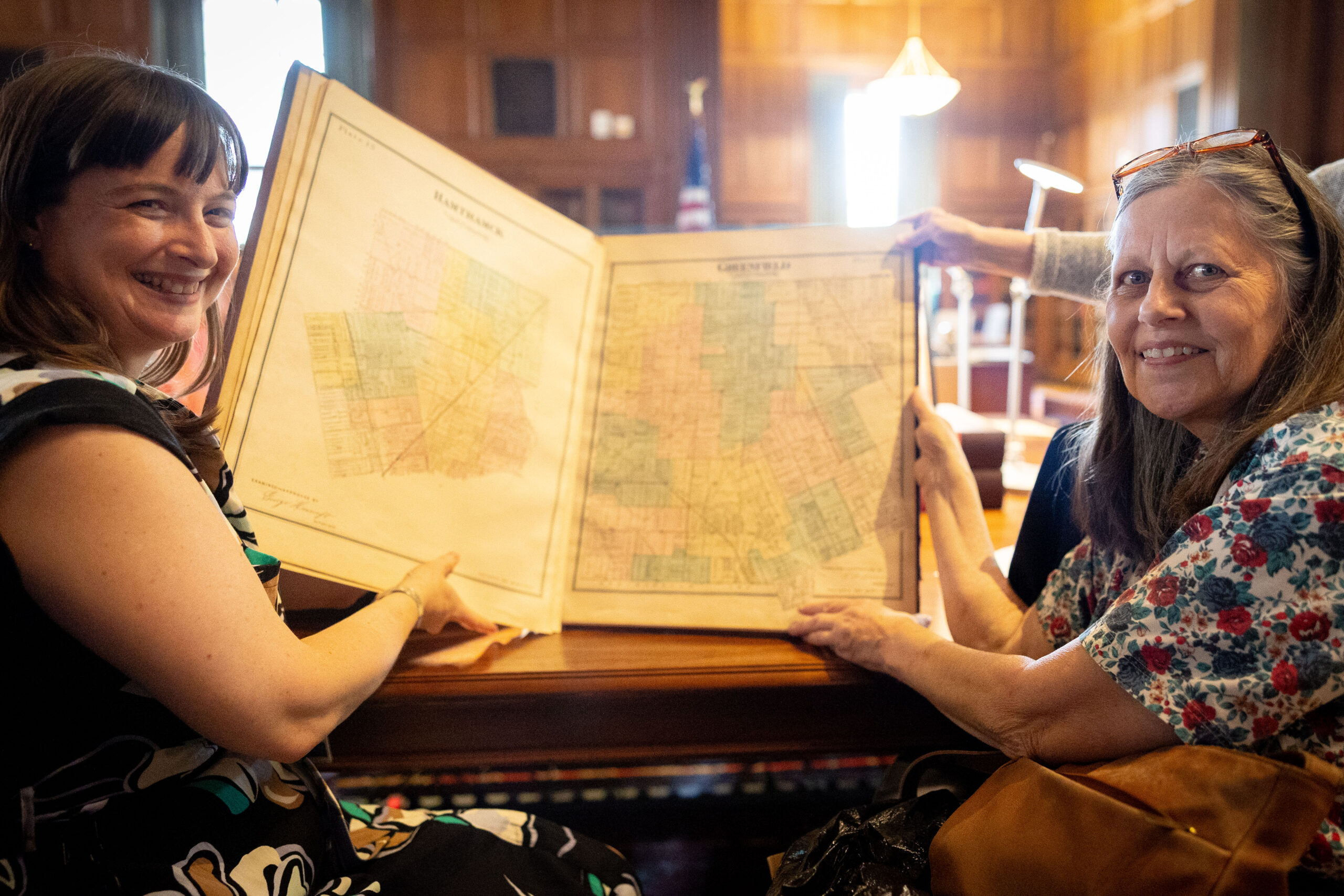
William C. Sauer. General official atlas of Wayne County, Michigan: containing general maps of Wayne County and city of Detroit, general township maps. Detroit: William C. Sauer. 1893. (Donated by Mary E. Rapai and William Rapai in honor of Grace A. Woodworth Levy)
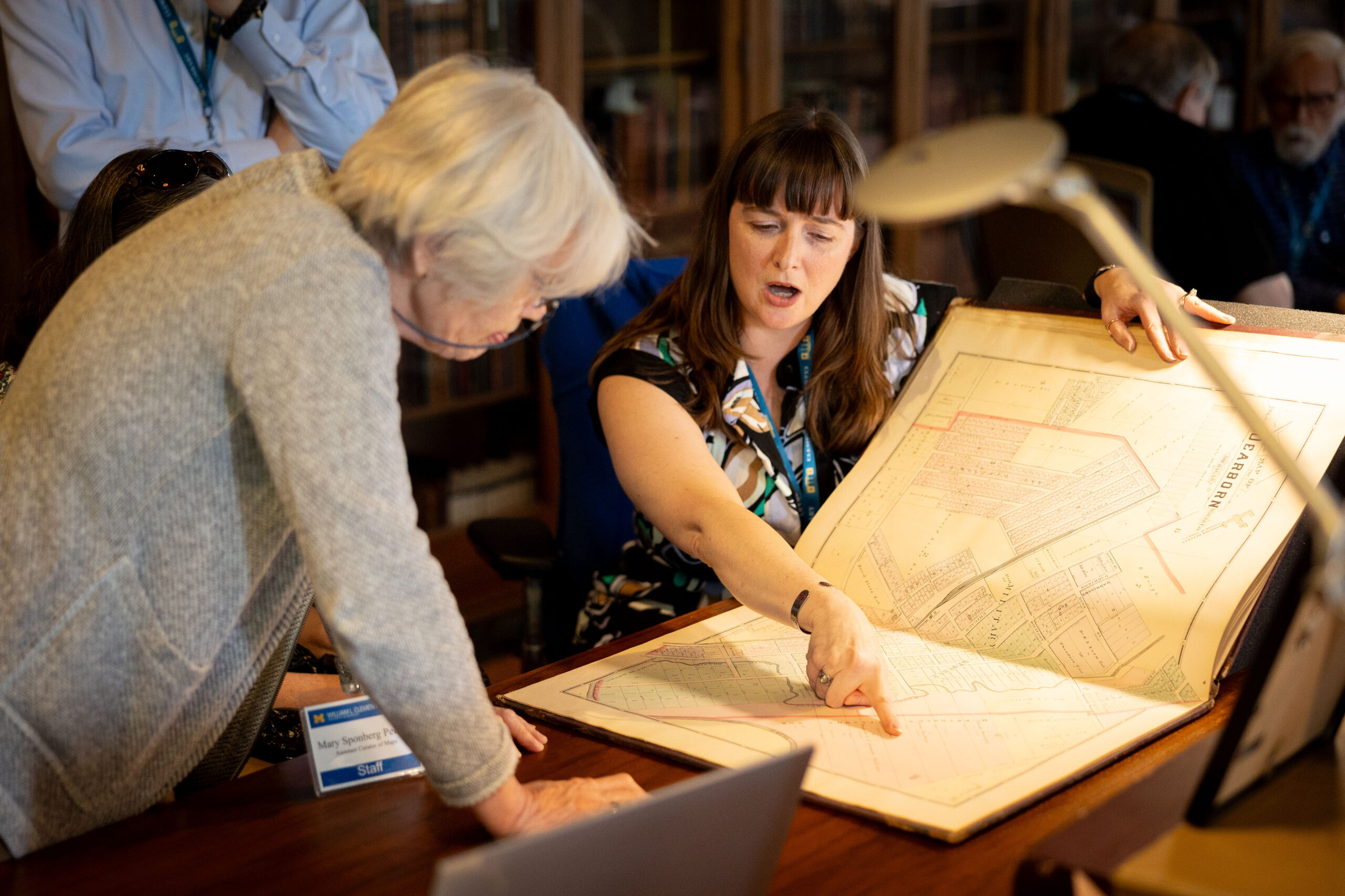
The Clements Library has an outstanding collection of New England and Midwest county atlases. Popular in the 19th century, these atlases provide a detailed view of a growing country showing roads, building footprints, and even the name of landowners. The General official atlas of Wayne County, Michigan finds an excellent home in our collection and fills a gap in our holdings, the library has a copy of the atlas’ sister publication Detailed official atlas of Wayne county, Michigan which was published in the same year. This copy of the General official atlas stands out because it shows the use of a previous owner in manuscript additions to the maps of Taylor, Ecorse, and Brownstown Townships. These manuscript notations add in roads, and their names, that were built after the publication of the atlas and the names of additional landowners.
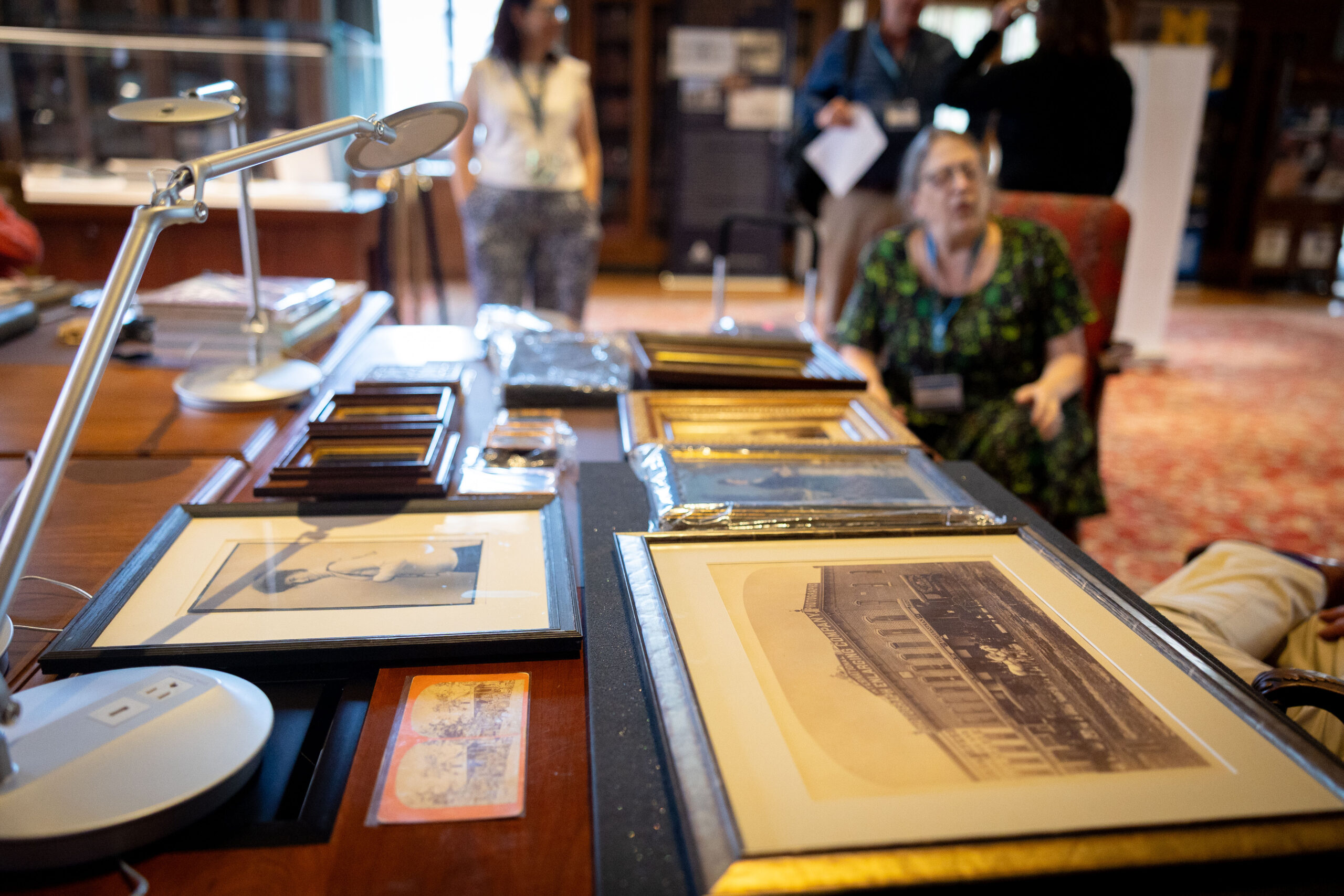
Additions to the Cynthia and Peter Motzenbecker Collection (30 photographs, 2 photograph albums, ca. 1850s-1900s?) (Donated by Cindy Motzenbecker)
The addition of 30 miscellaneous historic photographs and 2 photograph albums to the Cynthia and Peter Motzenbecker Collection will complement the Clements Library’s existing photographic holdings exceptionally well. Comparable materials can be found in the David V. Tinder Collection of Michigan Photography as well as the General Photograph Collection. Occupational portraits in which people can be seen posing with various objects related to their professions are particularly useful for research and instruction. For instance, an ambrotype of what appears to be a whip maker (?) in which a piece of a whip has been attached to the back of the portrait stands out as a fine example of this important genre of early photographic portraiture. In the nascent years of photography’s existence, many people only had the financial means and opportunity to have a single portrait taken of themselves over the course of their entire lives. Naturally, people often wanted their portraits to maximally convey who they were and what they did for a living, and so they would purposefully pose with accoutrements related to their line of work.
Louella and Helen Crugar Travel Logs, 1930-1937. (Donated by Martha Becker Valen)
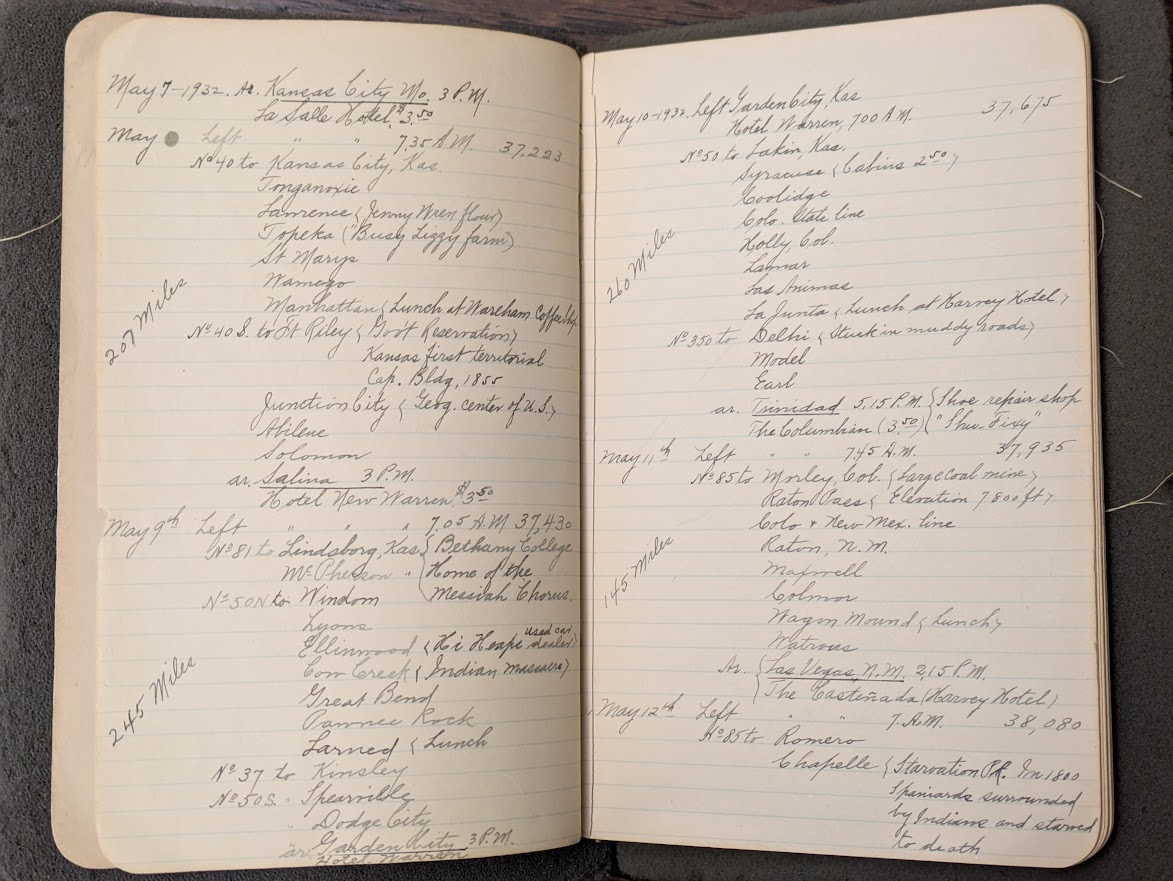
Louella and Helen Crugar were sisters from Madisonville, Ohio, with adventurous spirits. They were innovative teachers, never wed, and when they were 54 and 47, respectively, they began keeping travel logs of the extensive automobile journeys they took around the United States between 1930 and 1937. They listed the dates they were driving, their departure times, places they stopped, roads they took, mileage and gas calculations. The notebooks are unassuming at first glance, with blank, mustard-yellow covers and pages mostly filled with lists of place names. But look a little closer, and you’ll uncover a bevy of exciting stories about women, road trips, and tourism during the interwar period.
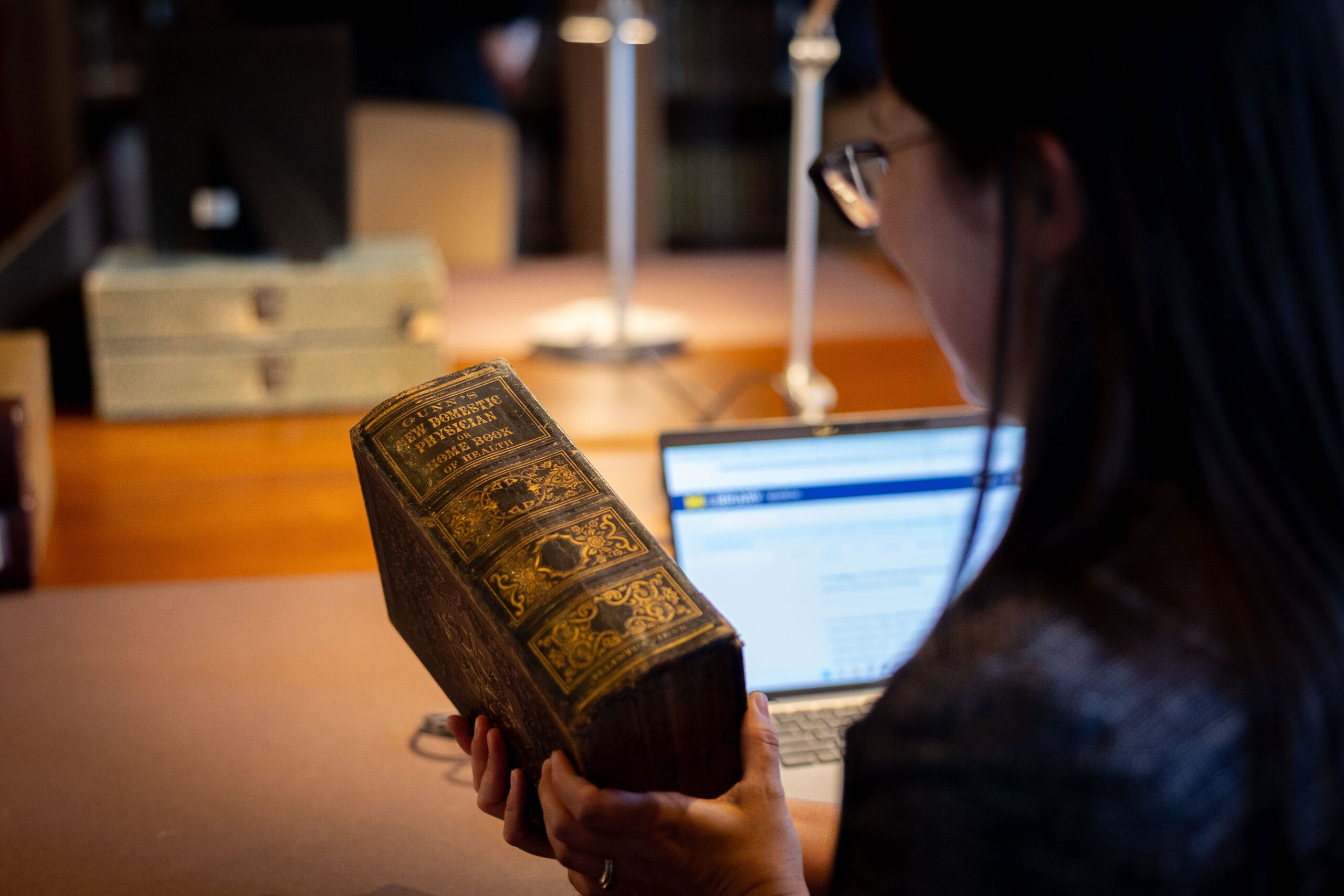
John C. Gunn, Gunn’s New Domestic Physician: or, Home Book of Health. Cincinnati: Moore, Wilstach, Keys & Co., 1861. (Donated by Shannon Hirth)
Gunn’s Domestic Medicine was a popular home medical guide in mid-19th century America. First published in Knoxville, Kentucky in 1830, it was frequently reprinted and later revised and enlarged as Gunn’s New Domestic Physician. The Clements Library already held the first edition and an edition printed in 1838 in Xenia, Ohio, and was glad to add this revised edition published in 1861. The revised text is significantly longer and contains more illustrations, including a series of botanical illustrations of medicinal plants. It provides valuable insight into the type of medical information accessible to the average household, including symptoms and treatments of common diseases and directions for the use of medicinal plants and home-made remedies.
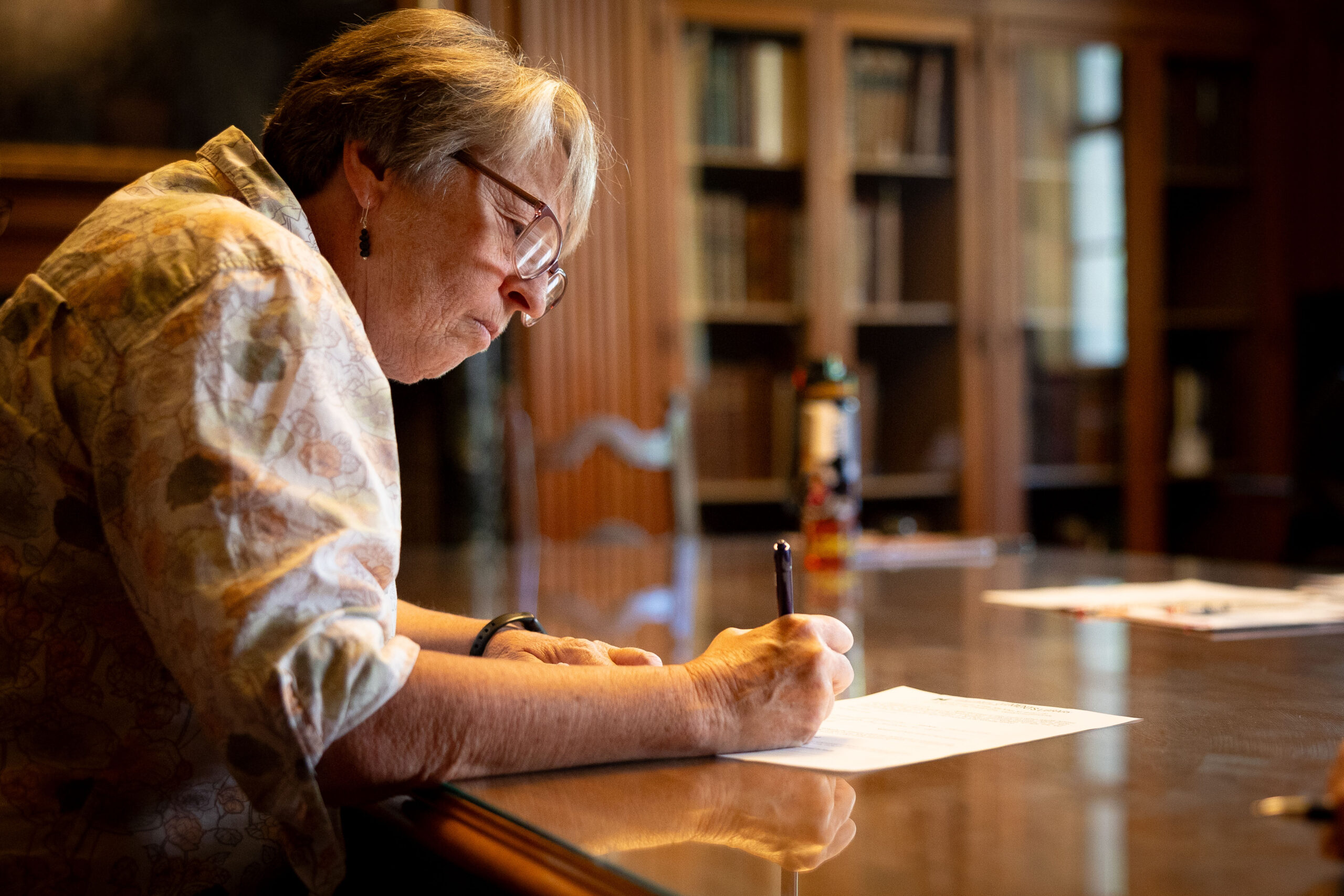
The Clements Library would like to thank everyone who attended this year’s “What’s In Your Attic?” event, it was a pleasure getting to see what treasures you all have! Special thanks to all who donated materials.