
The Clements Library’s digitization efforts help make our collections available for research anywhere you have an internet connection. If you’re looking to honor Black History Month with a deep dive into the archives that reflect this rich past, let us draw your attention to several online options.
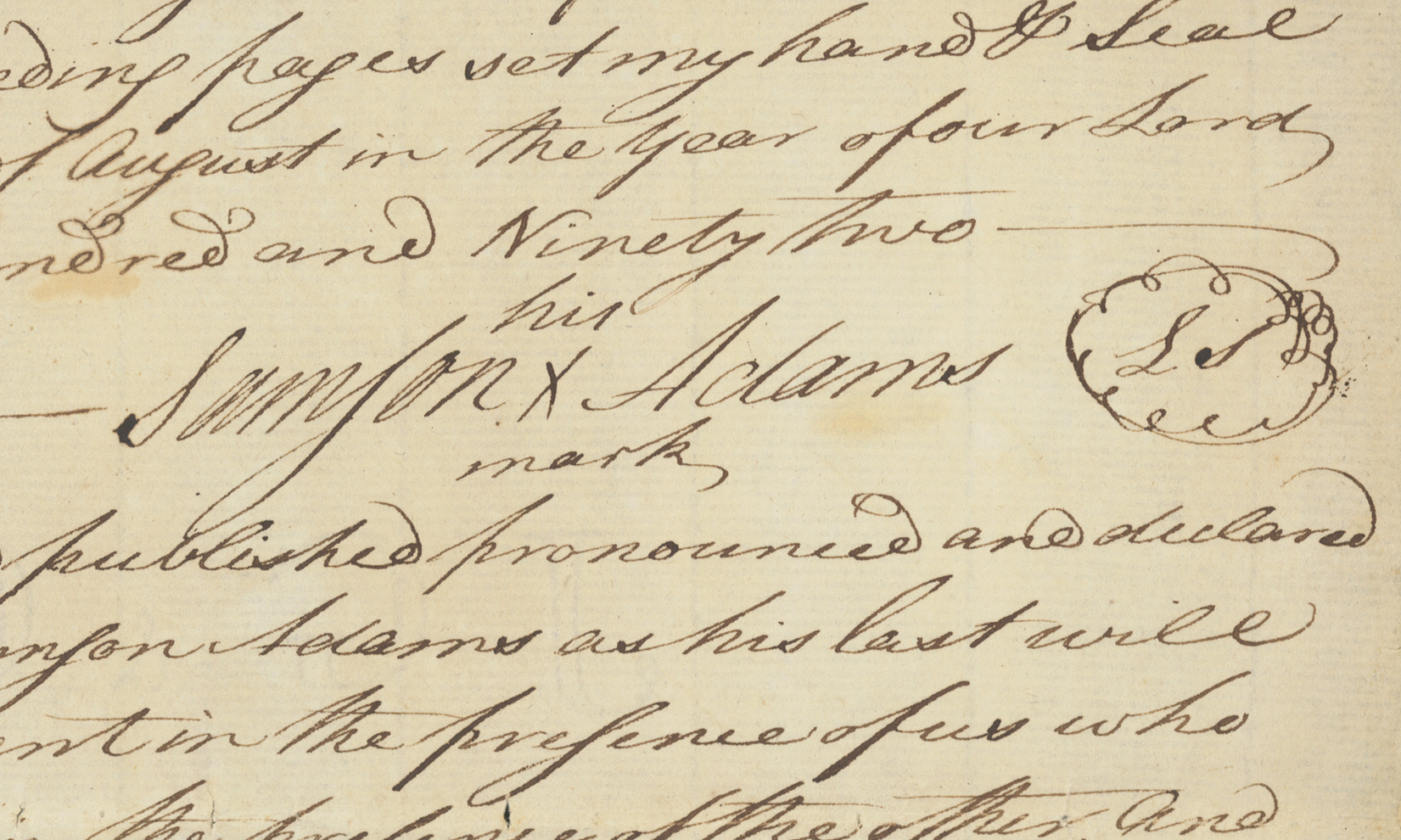
Samson Adams Papers
The Samson Adams Papers include remarkable documents detailing the life of a free Black man living in New Jersey in the mid- to late-18th century. In this collection you will find items like his sister’s pass enabling her to travel for work, likely indicating she was enslaved at the time, or a subscription list where Samson Adams’ neighbors committed to contributing funds to help him build a house. Most remarkably, however, are the exquisitely detailed estate inventories that list out item-by-item, room-by-room what Adams owned at the time of his death.
African American and African Diaspora Collection
The African American and African Diaspora Collection consists of over 300 documents ranging from letters describing the labor of enslaved people, manumission papers, and items written by the formerly enslaved. Fully digitized and transcribed, these items are worth viewing to see what might speak to your research interests.
Asiento Papers
The Asiento Papers reflect the history of the South Sea Company, which held the Assiento agreement with Spain granting Great Britain exclusive right to trade enslaved persons in the Spanish colonies between 1713 and 1750.
Harriet DeGarmo Fuller Papers
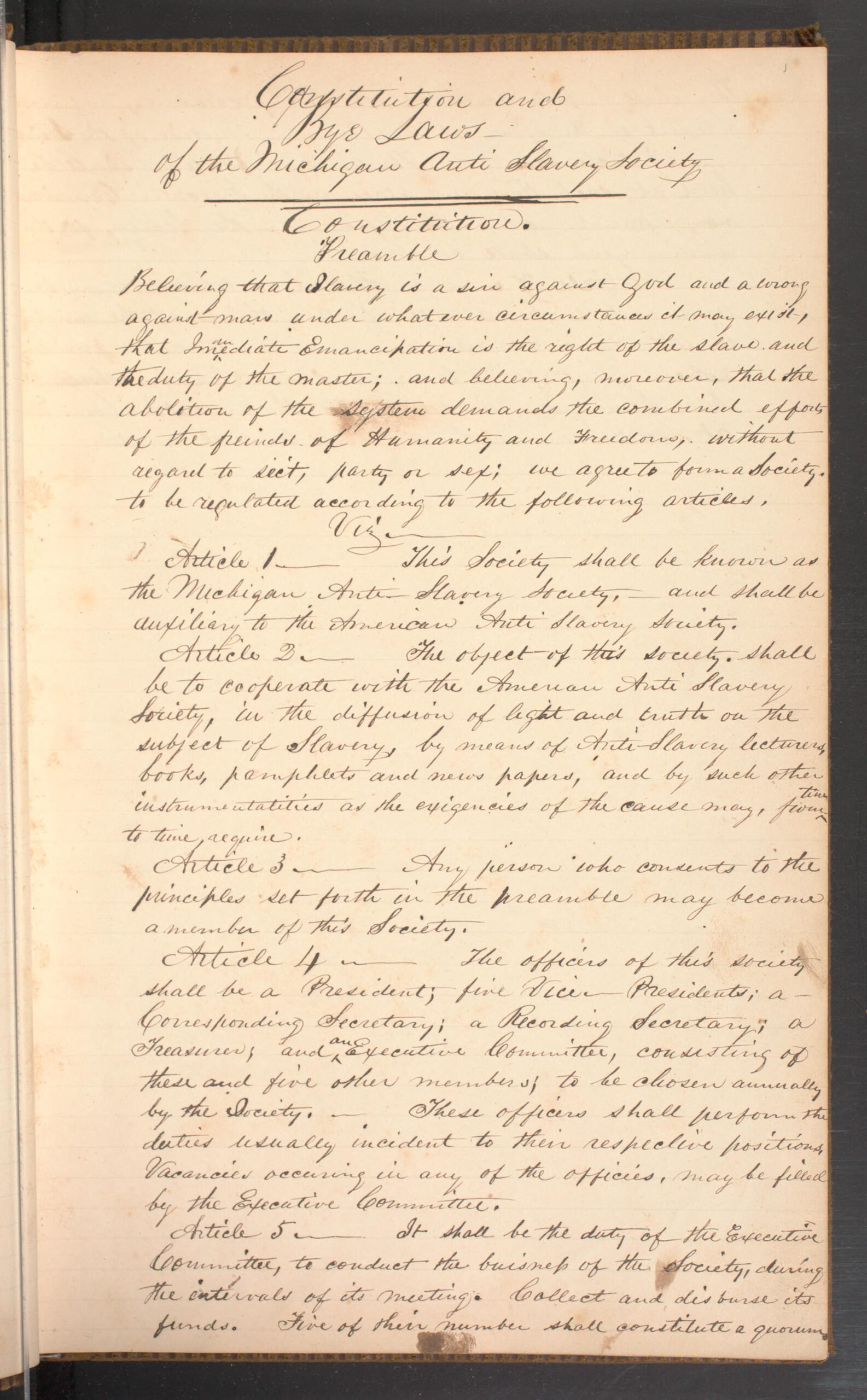
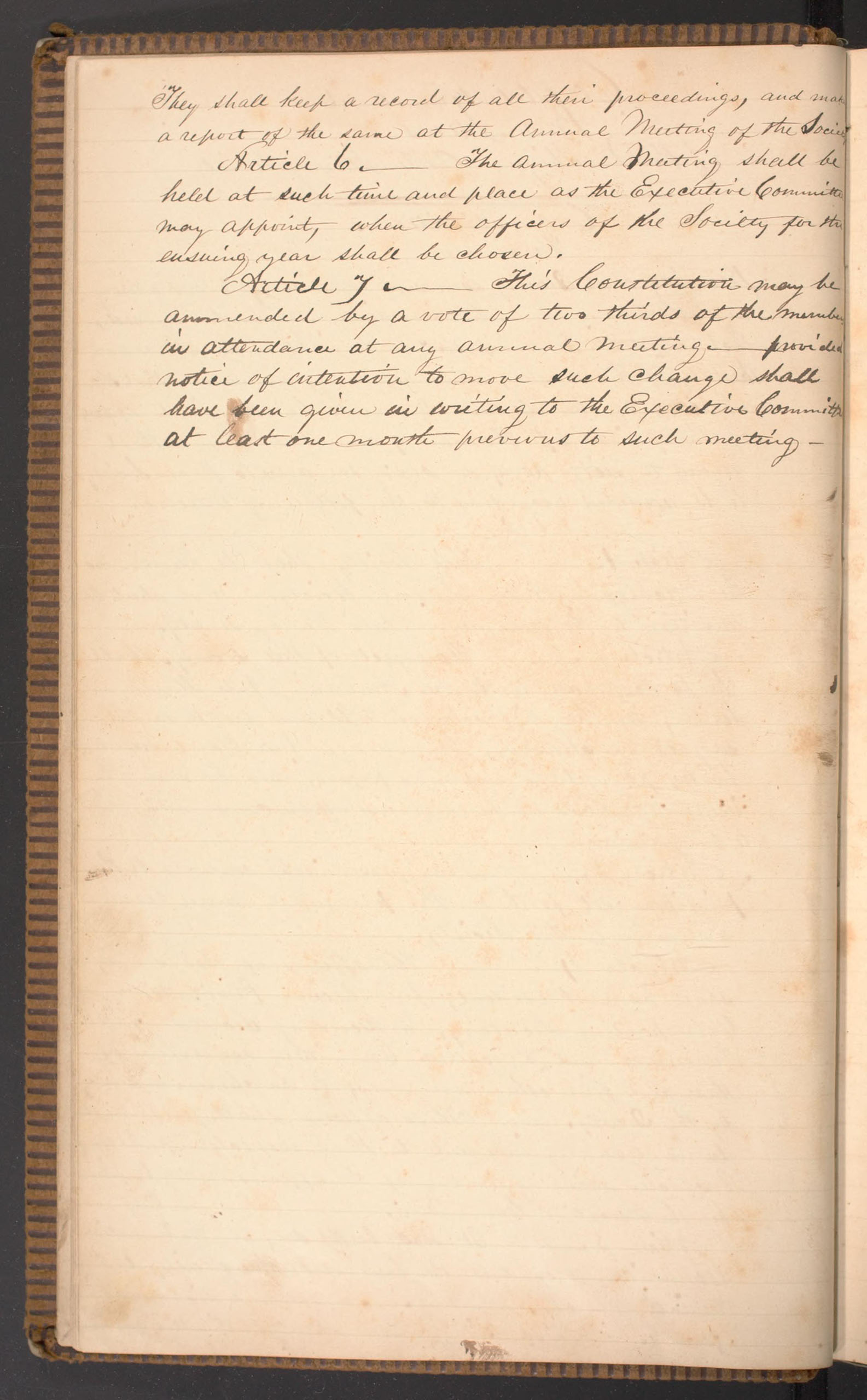
The Harriet DeGarmo Fuller Papers consist of record books and receipts of the Michigan Anti-Slavery Society, kept between 1852 and 1857, when Harriet DeGarmo Fuller was a member of the executive committee of the Society. These provide a detailed picture of the formation and early activity of the Michigan Anti-Slavery Society, with a record of their official resolutions, activities and expenditures.
Constitution of the Michigan Anti-Slavery Society.
Gardner Family Papers
The Gardner Family Papers document the management of Joseph Gardner’s sugar plantation, Estate Mount Tirzah at Savanalamar, Jamaica, particularly after his death in 1780. Most of the letters concern Joseph’s brother Theophilus Gardner, a Philadelphia merchant, who inherited the estate and attempted to manage and sell the property over the course of the following decade.
Louise Gilman Papers
The Louise Gilman Papers consist of letters written by Louise Gilman while serving as a teacher at the Hampton Institute in Hampton, Virginia, a school established to educate freed slaves. The letters describe Gilman’s activities as a teacher and her thoughts about the African American students.
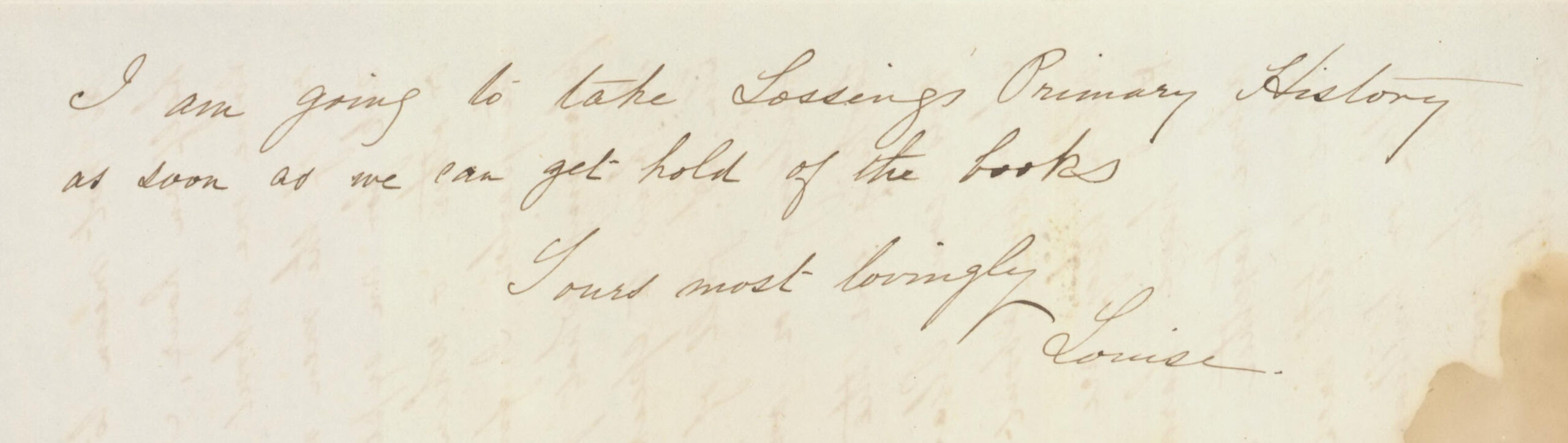
“I am going to take Lossings Primary History as soon as we can get hold of the books” from Louise [Lane Gilman] ALS to [Emily Gilman and Molly Gilman], [after April 9, 1869]
Rochester Ladies’ Anti-Slavery Society Papers
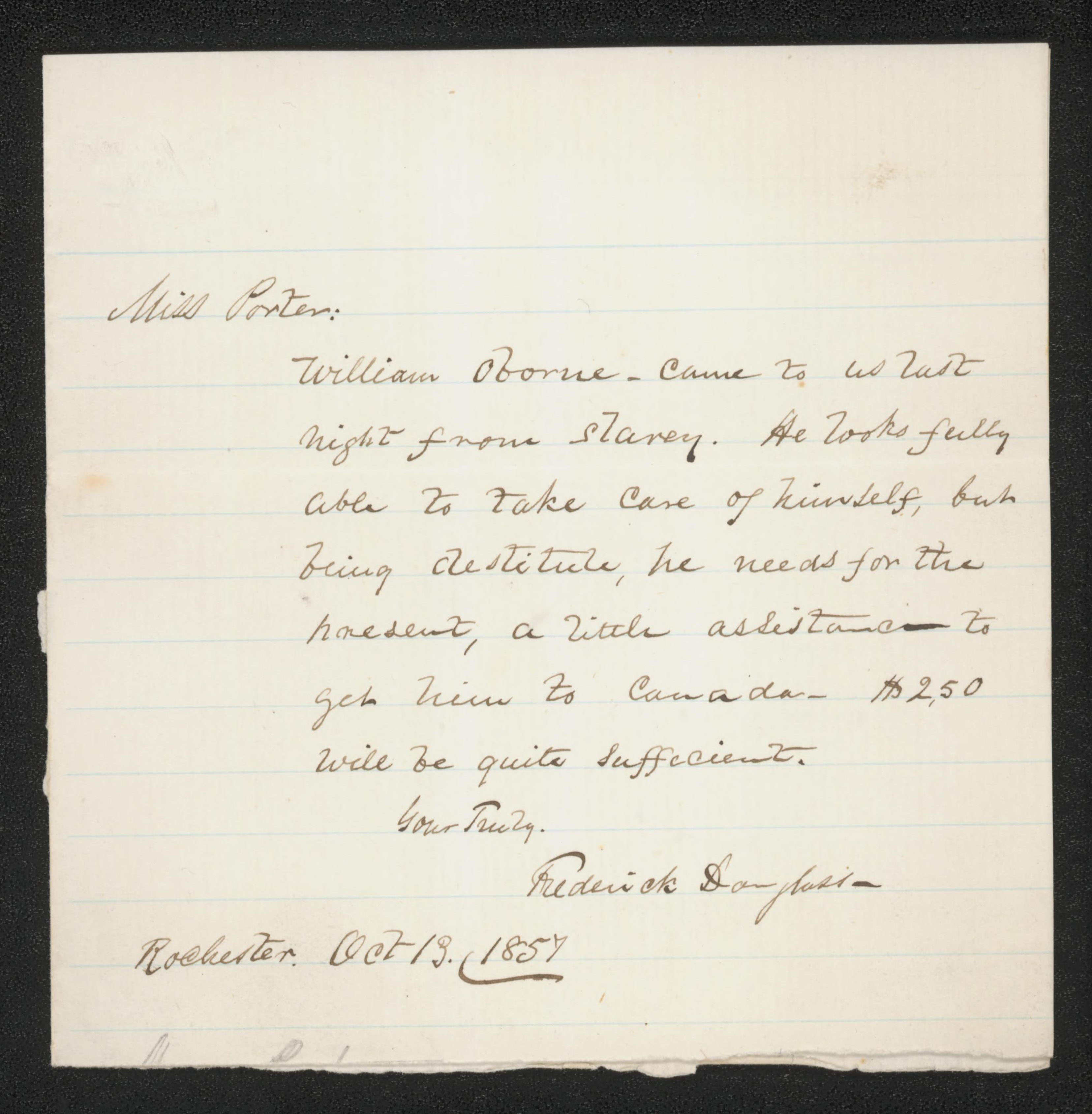
The Rochester Ladies’ Anti-Slavery Society Papers consist of materials collected by the society, including correspondence to and from various members about slavery, fugitive slaves, the conditions of freemen, and other progressive issues; printed annual reports; and other items. Letters from Frederick Douglass and content relating to his newspaper The North Star can be found within this collection.
Frederick Douglass requesting financial aid for William Oborne, a fugitive slave, attempting to get to Canada.
James Stothert Papers
The James Stothert Papers consist primarily of reports from plantation overseers in Saint James Parish, Jamaica, to their absentee landlord, James Stothert of Edinburgh. These reports include valuable information on the enslaved laborers, the profitability of crops and rents, discussions of expenses incurred in the operation of the plantations, and the routine mechanics of sugar production.
Charles Winstone Letterbook
The Charles Winstone Letterbook contains the business correspondence of Winstone, attorney general and planter in Dominica during and after the American Revolution. It includes letters relating to legal and financial issues, slavery and the slave trade, and plantation matters.
Jacob Aemilius Irving Letterbooks
The Jacob Aemilius Irving Letterbooks consist of three volumes of outgoing correspondence written from Liverpool, England, and Jamaica, 1809-1816. These volumes document experiences experienced in Jamaican sugar plantations during the years following the cessation of the British slave trade.
Thomas Leyland Company Account Books
The Thomas Leyland Company Account Books are two volumes of records for the slaving ships Hannah (1789-90) and Jenny (1792-1793), traveling from Liverpool to Africa, then across the Atlantic to Jamaica and other West Indian islands. The books record the goods sold in each port, such as enslaved people, fabric, and sugar, and contain details on seamen’s wages and instructions to the captain.
United Sons of Salem Benevolent Society Minute Book
The United Sons of Salem Benevolent Society Minute Book describes the business proceedings of a mid-19th century African American self-help organization. A hybrid of an insurance agency and charitable operation, the United Sons bound together members of the African American community of Salem, New Jersey, providing a social network, a financial safety net, and support in the event of illness or death.
These are just a small sampling of archival collections that help us study this important history during Black History Month and throughout the year. Please explore our subject guide on African American History, search our full collections to find even more sources, and contact us to plan a research visit.
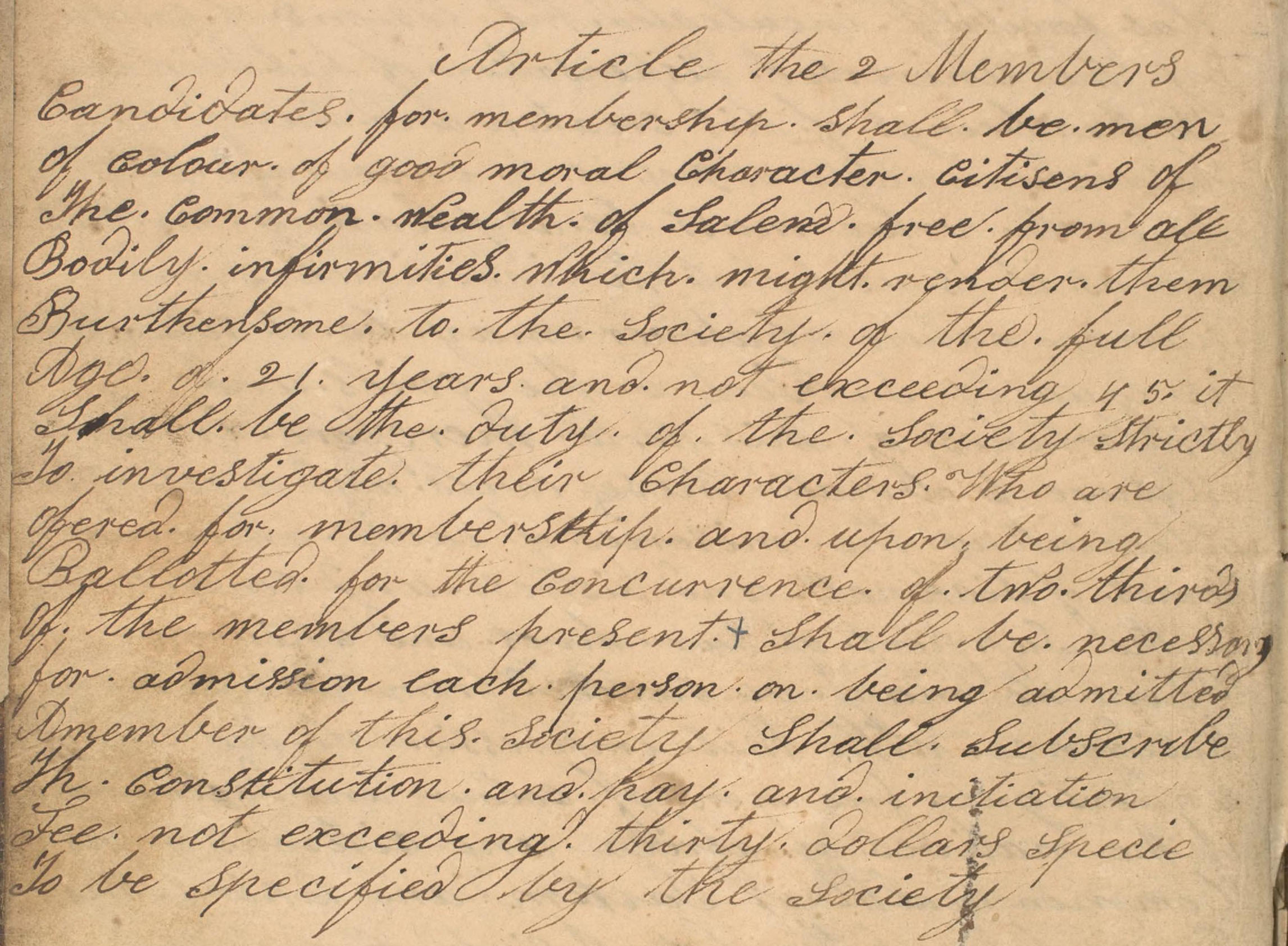
Qualities sought in members of the United Sons of Salem Benevolent Society: men of color between the ages of 21 and 45, residing in Salem, with good moral character, and a lack of “bodily infirmities.”