Guest blog post by Wendy Chapin Ford ’77. Wendy was a panelist on Bookworm #25 where she discussed her book of poetry A Frontier Romance: Tiger Bill and Kate. Genealogical research led her to be inspired by her great-grandparents’ story. Now as she continues to delve into her family history, she has written new poetry based on her relatives’ experiences during the Civil War. In a three part series, she shares these poems, and the Clements provides illustrations. This is part one of the series, you can read part two here and part three here.
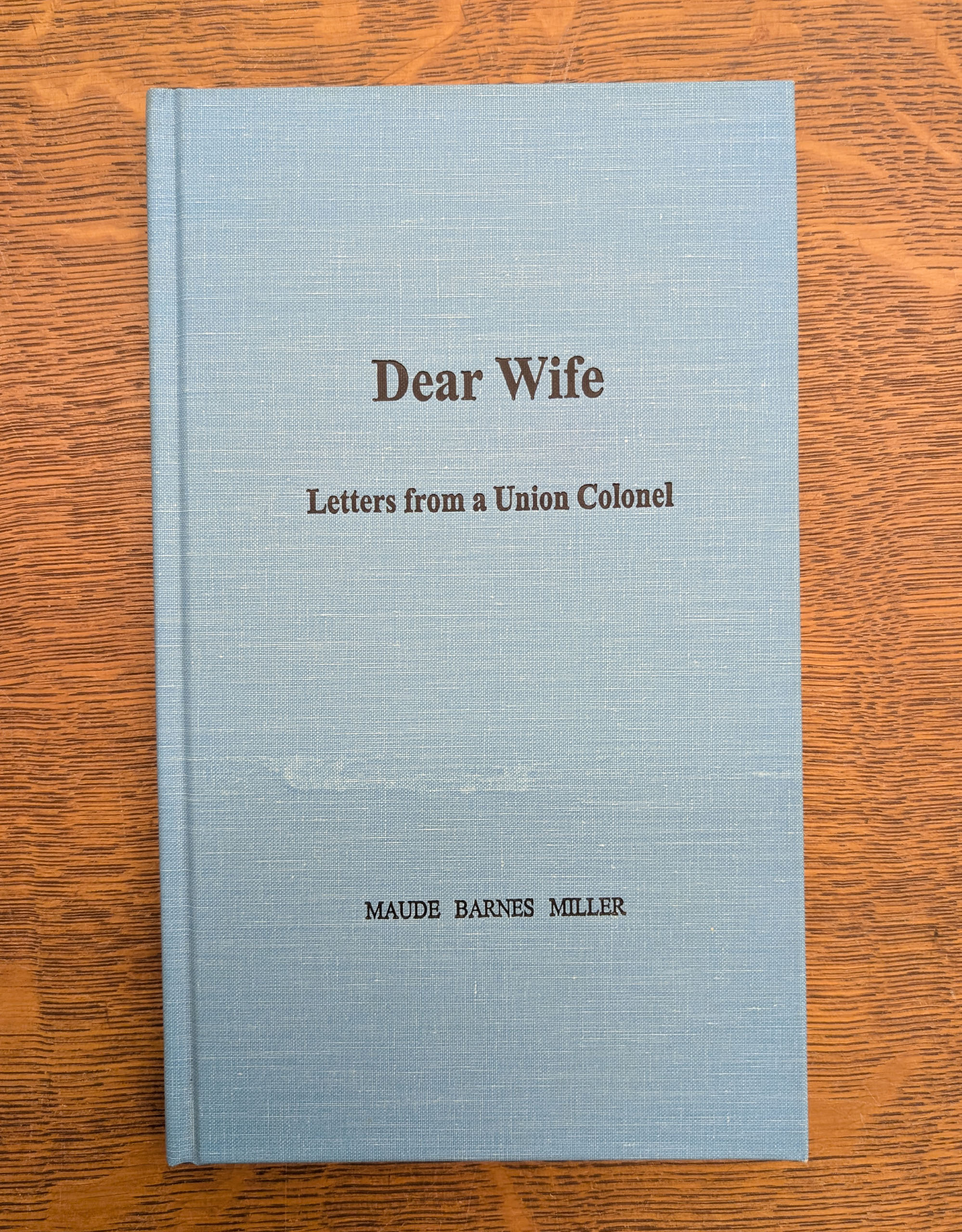
Much of this history arrived unexpectedly in the mail one day, documented in a book privately published by a distant cousin, Franklin Miller: Dear Wife: Letters from a Union Colonel (2001). His mother had hoped to publish it around the centennial of the Civil War. But there was much competition, and so it sat—for decades—with Cousin Franklin of Gambier, Ohio. He finally decided that his mother’s narrative should not be lost to time.
Maude Miller’s narrative in Dear Wife is built around a cache of my great-great grandfather’s letters sent home from the front. Sidney Madison Barnes was a Union Colonel, and also one of the largest slaveholders of Kentucky. His father-in-law was a staunch secessionist. Such divisions tore families apart throughout Kentucky.
In addition to this surprising family treasure, I was also blessed to have Cousin Franklin share some amazing oral history, which of course found its way into the poems, “Centre College, War Picnic, and After Perryville: Episodes of a Kentucky family around the Civil War”
“Centre College” springs from a letter written home by my great-uncle Thomas Barnes in April 1861.
One line in particular tugged at my heart: “…my mates and I are the only true Union boys here.” Imagine how that must have felt, with war festering all around, from both sides in that tragically pivotal state.
In Washington it was said that “Mr. Lincoln would like to have God on his side, but he must have Kentucky.”
“Abe Lincoln was playing it safe, easing along the way,” the Colonel said. “He knew nobody could come right out and tell a Kentuckian what to do. He was born in Kentucky.”
But Davis was born in Kentucky, too.
“Well,” said the Colonel, “Seems to me I’ve read somewhere that God and the Devil both started out in heaven.”
Note: Bolded portions of the poem indicate that the line comes directly from Ford’s family’s correspondence, recorded in Dear Wife: Letters from a Union Colonel (2001).
Centre College, Danville, Kentucky – April 1861
They’d never told him how to think or be,
and yet, young Tom seemed always in the right –
now in the line straight down from Captain Grubbs –
before Kentucky ever came to be.
Such dangerous alliances were building
and bearing down with hushed velocity.
He feared that soon, they’d break right through and out,
thus forcing him to stand with just the few.
Beneath the lidded eye and sidewise glance,
once cordial boys now look at us askance.
We’re passing through these halls with wary nods.
My mates and I can guess what lies beneath
the clipped new courtesies that are bestowed
by these “good” southern boys who learned the way.
We’re moving through our days in tense suspension,
as though entranced — half here, but truly not.
With war most certainly before us now,
we’re reaching to the cellars of our souls, but
we know which side we’re on and who we are.
We sorely know of whence they come, as well.
My mates and I — the only true Union boys here –
now question friendships, but was there ever trust?
Could we have ever been true mates with them?
We’re angered by the way they treat their people.
If they’re so cruel here, how must they be at home?
We’re sensing well-nigh evil at their core.
I would not relish meeting them in battle.
We share so many similarities,
but when it comes to who is right and just,
there’s no mistaking the vile certainty.
The horror of war draws nearer every hour.
The terrors sure to come are right before us.
Apprehension and tension rule the day.
Within each one of us there is a shifting,
as we take measure of old friendships and –
most tragically – the deepest family ties.
My father barely speaks to my dear uncle.
To think that we were all once kith and kin…
On Saturday, the news came down and hard,
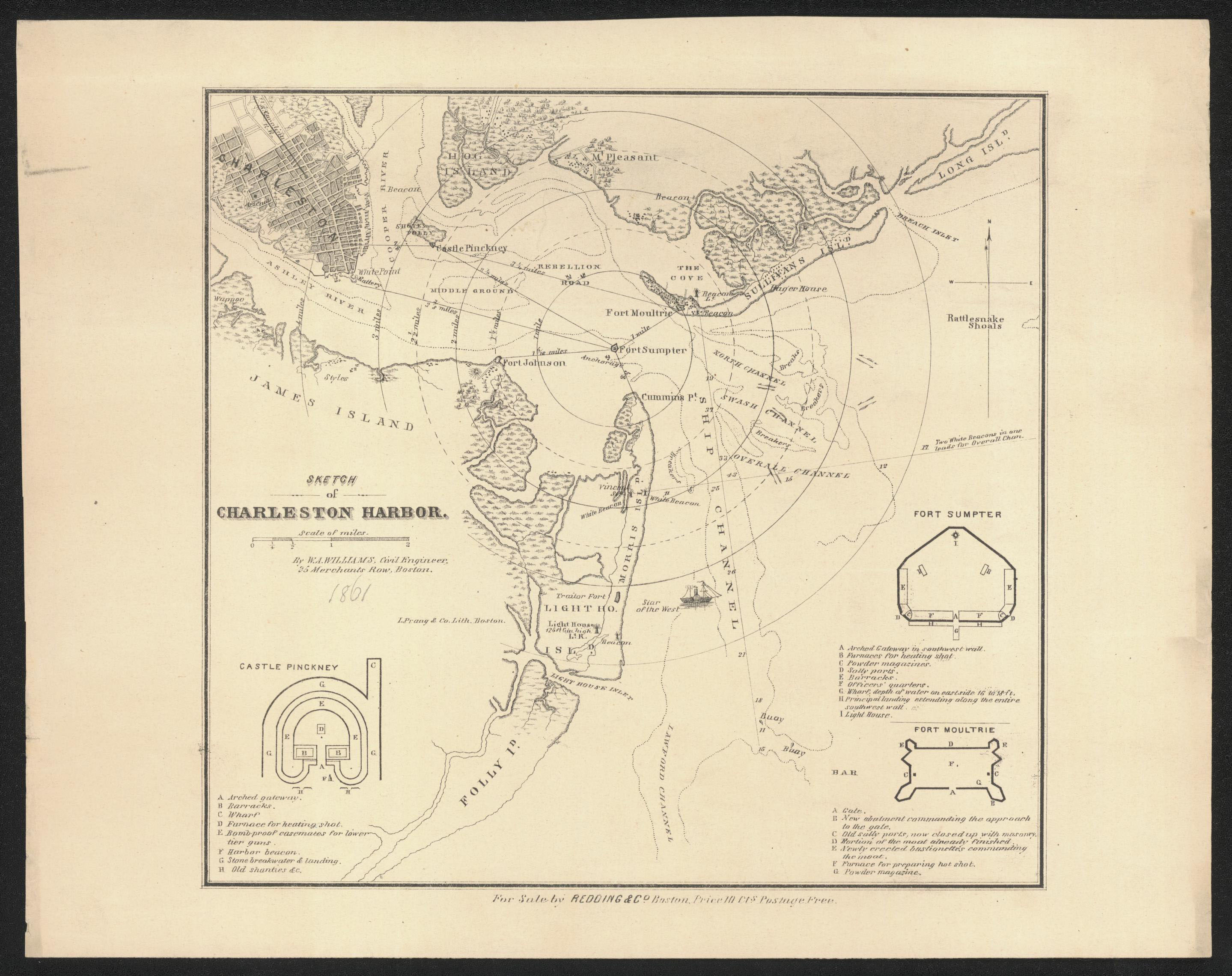
secessionists attacking old Fort Sumpter –
the fort then taken in the week since passed.
Fort Pickens, too, is soon to fall and now –
with people on both sides in high arousal –
our Northern states are rising up in arms,
with companies of Home Guards set to go.
Troops marching to defend the Capitol
are set upon by mobs in Baltimore, and
the traitor Davis — showing his true colors –
disowns Kentucky for the rebel cause.
The wise and far-seeing men here now predict
that soon – in less than twenty days – Kentucky
will be drenched in fraternal blood, our streets
the scenes of deadly strife among our brothers.
The best men here who never in their lives
have carried arms are armed now, to the teeth – yet
outgunned and overwhelmed by rebel classmates.
By far, most students here are for secession –
the tension thick within and all around –
a feud sure to erupt at any moment.
The college seems to be disintegrating.
Already, most have left for home this week,
and nearly all the rest will go the next.
On Wednesday, my fine mates are set to leave:
the most superior scholars in our class.
But none of us are clear to study now.
If die they must, they want to perish at home,
in defense of their fathers’ hearths, and under
the Stars and Stripes. I feel a like sentiment…
I shall, by study and attention to health,
do all that I can do to serve my country –
and when the call does come, I shall stand ready.
I want no nobler than a patriot’s grave,
‘no nobler winding sheet than the old flag.’
All now well sense the danger in the air –
secession a most likely certainty.
Our senators claim need for arms and money,
while all our rebel classmates have fine horses
and guns provided by their “neutral” fathers.
In broad daylight, they train at rebel camps.
No man who owns a slave or mule is trusted.
But we are Unionists, so what’s to argue?
Whoever thought that it would be alright
to own another human being, by God?
Those vaunted southern Presbyterians
are so devoted to their “Christian” teachings –
yet carry out their rough, inhuman ways.
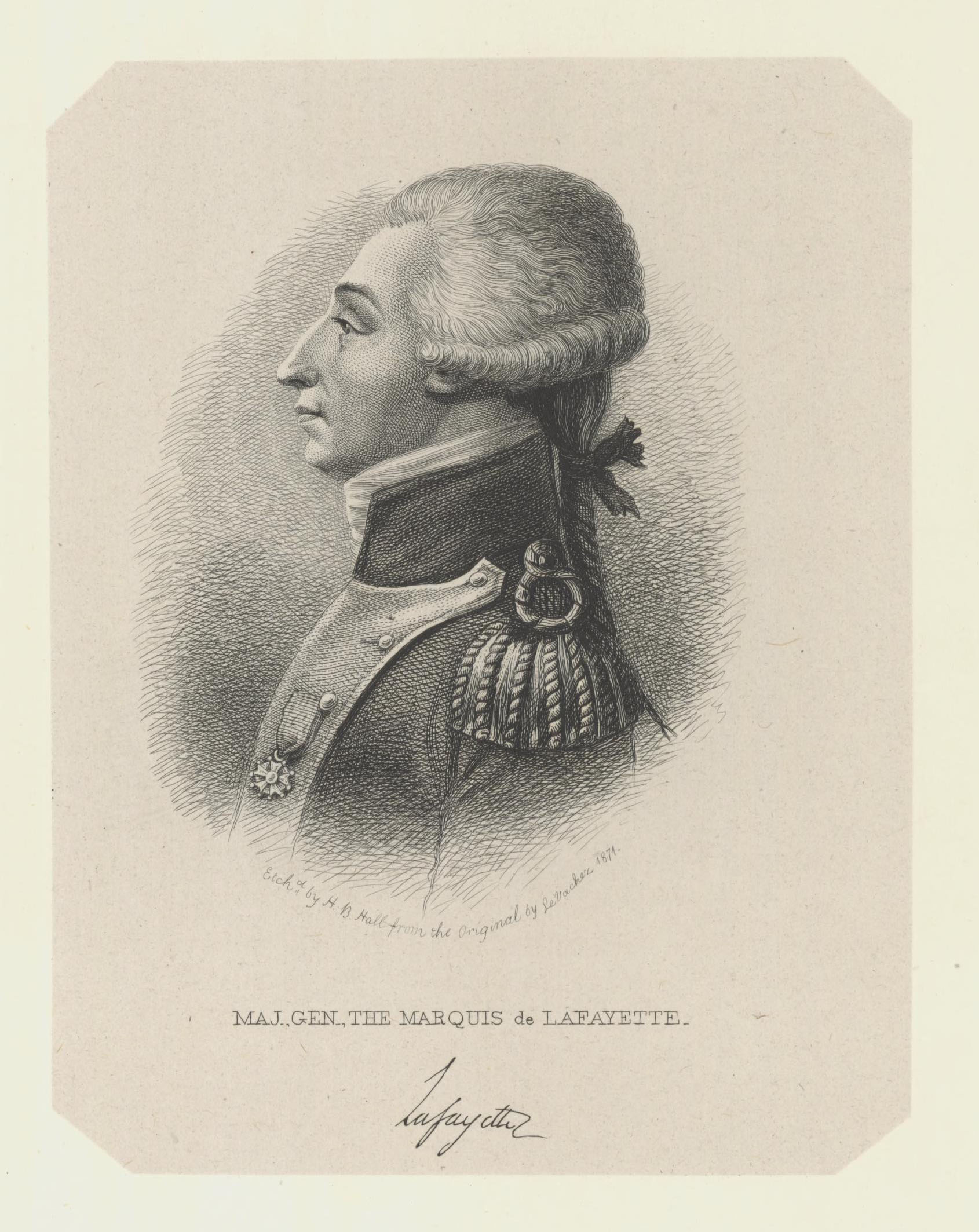
Indeed, George Washington realized the truth,
as General Lafayette had pierced his soul
on this peculiar inhumanity.
As if barbarity were not enough,
this price of doing business in Kentucky
is certain to end badly for us all.
Our world is shifting, casting us adrift –
our times so fraught we barely know the way –
and how are we to know a friend from foe?
Once carefree warmth and banter that prevailed
is giving way to suffocating menace.
This razor’s edge portends only one end:
despair and death draw nearer every day.
Still dark, this morning I awoke, unnerved.
Was it a dream I dreamt, or distant thunder?
It’s hard these days to know what’s up or down –
just who is with us or not – and what they’ll do.
Would these classmates hurt my family?
The hardness in their eyes belies a glimpse –
a shard, a glint of winter of the soul –
a hint of what’s to come, a certain evil.
How does malevolence transform a soul?
I fear that we have never known these boys.
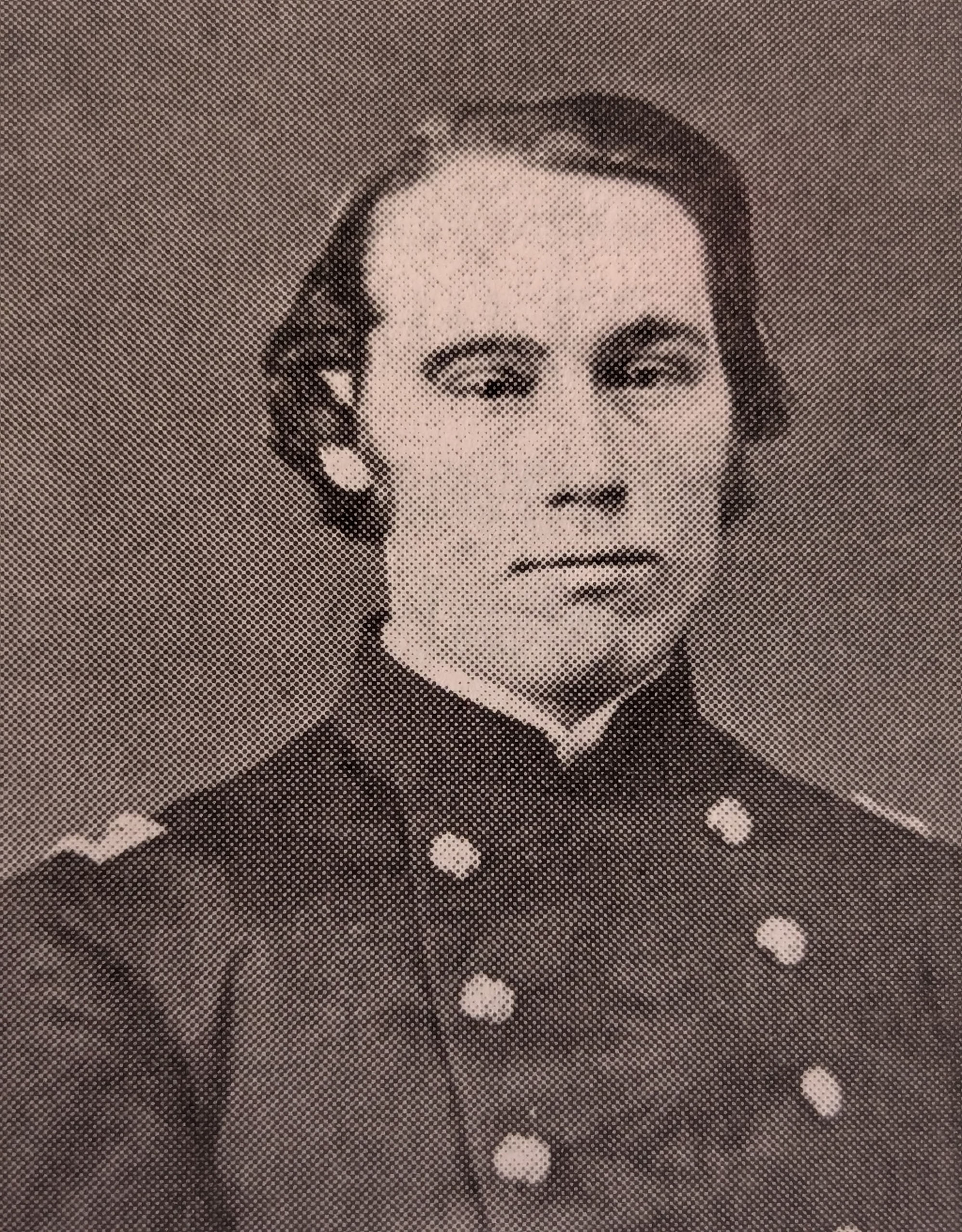
Portrait of Wendy Ford’s great-uncle, Major Thomas H. Barnes, from Maude Barnes Miller’s Dear Wife: Letters from a Union Colonel.
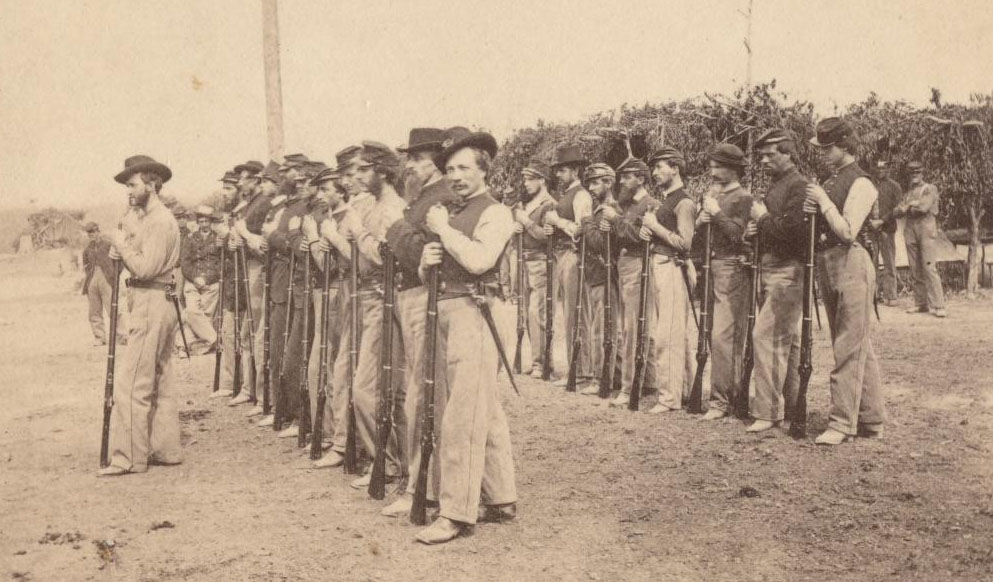
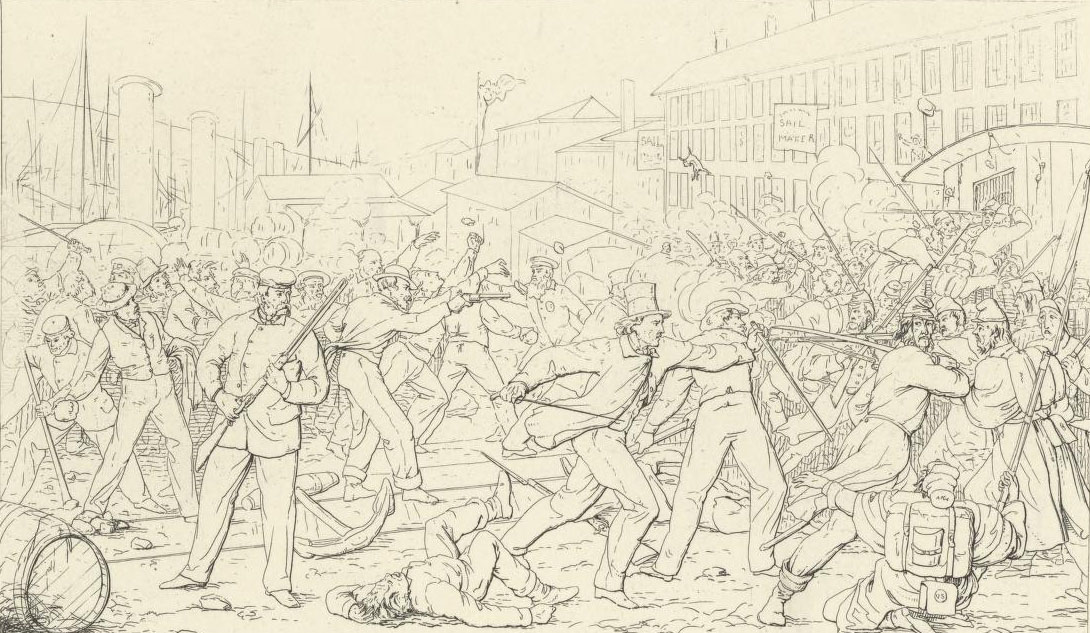
Battle in Baltimore, April 19th, 1861. From the James S. Schoff Civil War Collection.
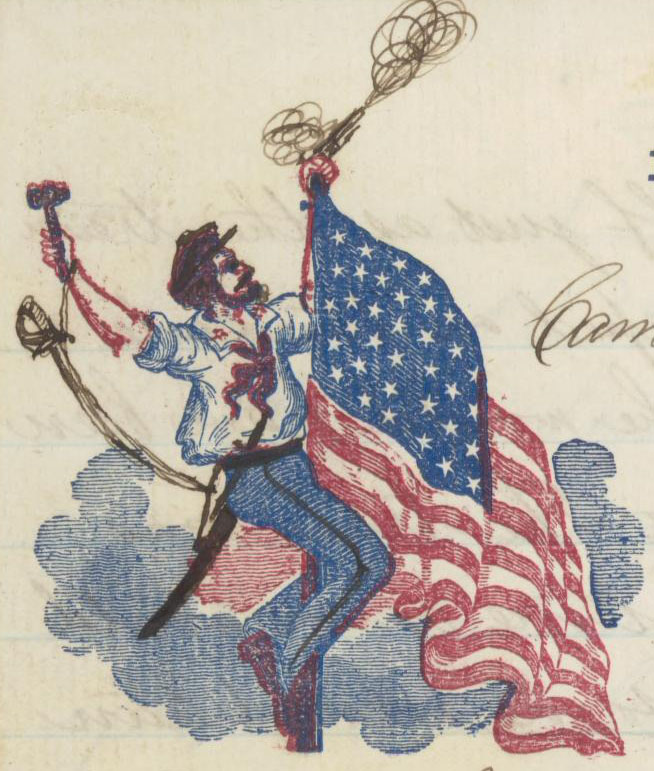
Printed patriotic stationery from the Wilson S. Beckley papers.