
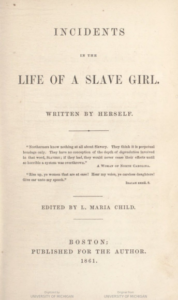
Jacobs’ Life of a Slave Girl has been fully digitized and can be read online via HathiTrust.
By James Watke-Stacy, Intern for Instruction and Engagement
I first visited the Clements Library in the fall of my freshman year for a class focused on Harriet Jacobs’ autobiography Incidents in the Life of a Slave Girl. During our visit, we had the chance to read first-edition copies of the book and other related materials. What stuck with me most was the opportunity to engage with primary sources in person and the understanding that this direct access to history is unique to the Clements.
In the fall of my junior year, I began working for Maggie Vanderford and assisting with the Instruction and Fellowships programs, which is what drew me to the Clements in the first place. In my work with the Instruction program, I was often tasked with looking through our collections for materials that would assist with class instruction or an event. As I finished my second year of work with these archival materials, I compiled some lessons I’ve learned through this process of actually finding the materials classes will use.
- Start from square one: The perfect item will not be in your first search, nor your second or third. These results are still helpful, though! Getting a sense of which materials show up initially can inform how you refine your search to find what you are looking for.
- Get creative with your searches: Trial and error is key here. Use slightly different words, use the filters for date, format, location, subject, etc., and click through subject headings. These adjustments can narrow or broaden your search as needed.
- Have patience and go slow: Don’t be afraid to slow down and read through the things that aren’t entirely relevant. Sometimes, there are surprises; other times, it gives you a sense of what you should shift focus to. Overall, looking through archival materials is a methodical process where you never know what you might see next.
- Ask for help: The Clements Library staff are experts on the materials they work on and are eager to assist with student work. If you’re having too much trouble finding materials relevant to your topic, they will be the ones to suggest new ways of searching or will have information on uncataloged materials relevant to your research topic.
The opportunity to experience even a tiny portion of the rare materials the Clements Library holds has completely changed my perspective on historical research. Working with archival materials can be tedious and frustrating, but it can also be extremely rewarding. This has taught me to be more methodical in my approach to research and has improved my ability to view materials closely for seemingly minute details. You never know what you might find when you start looking through the collections.
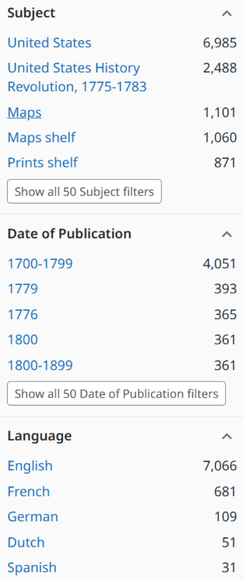
Filtering results can help you get closer to what you’re looking for.
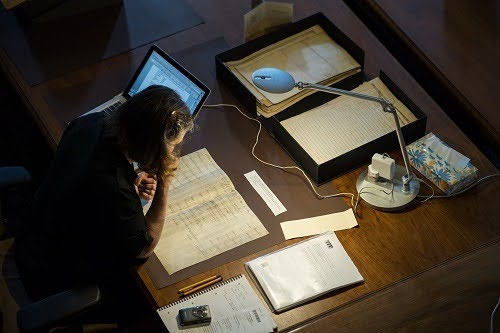
Slowing down and reading through primary sources in the Avenir Foundation Reading Room can be tedious, but rewarding!