
Happy National Nonprofit Day! Here at Clements, we are proud of the work that we do on a daily basis and are honored by the support that we get from our community. Let’s look back in time through some examples of early philanthropic endeavors.
Philanthropy is a theme that runs through much of the Clements collections; it’s everywhere, it’s why the library exists, and it’s also central to many of the sources in the collection. For a recent event held for development staff throughout the University of Michigan, Randolph G. Adams Director of the Clements Library, Paul Erickson, put together a pop-up exhibit highlighting some of these sources.
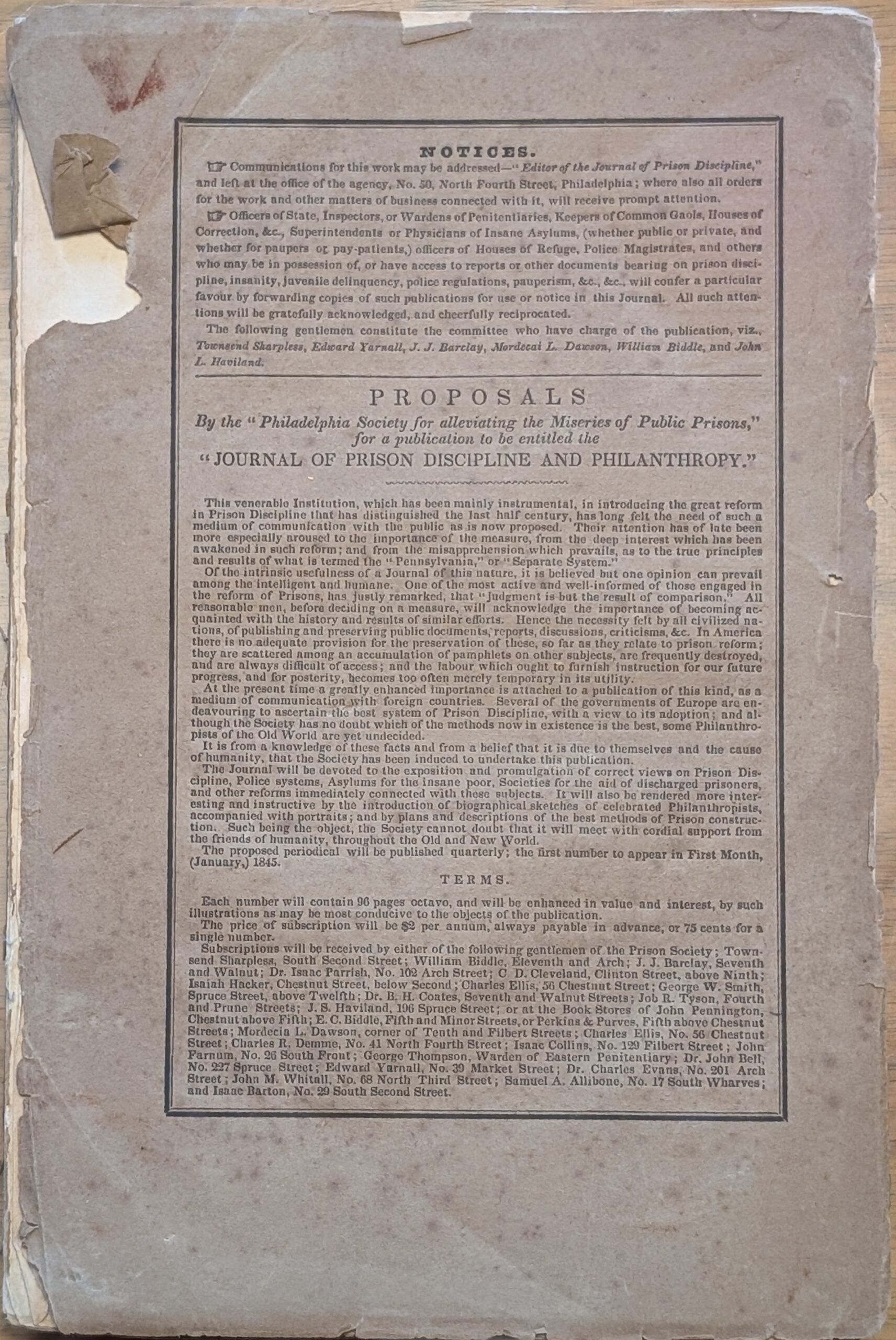
The Journal of prison discipline and philanthropy, 1845-[1919]
The first set of books in the pop-up exhibit touched on different ways the words “philanthropist” or “philanthropy” were used in the 18th and 19th centuries. The Greek root of these words means “lovers of mankind,” and the terms were used to describe people trying to improve social conditions. In particular, those interested in prison reform often used the term “philanthropy” to refer to their work because there was no personal benefit to them. Prisons were a major focus of this type of work, as prison life in early America was especially harsh and incarcerated people had very little chance of ever being released.
The Philadelphia Society of Alleviating the Miseries of Public Prisons, later known as the Pennsylvania Prison Society, published this journal quarterly through the mid-1800s and annually throughout later decades.
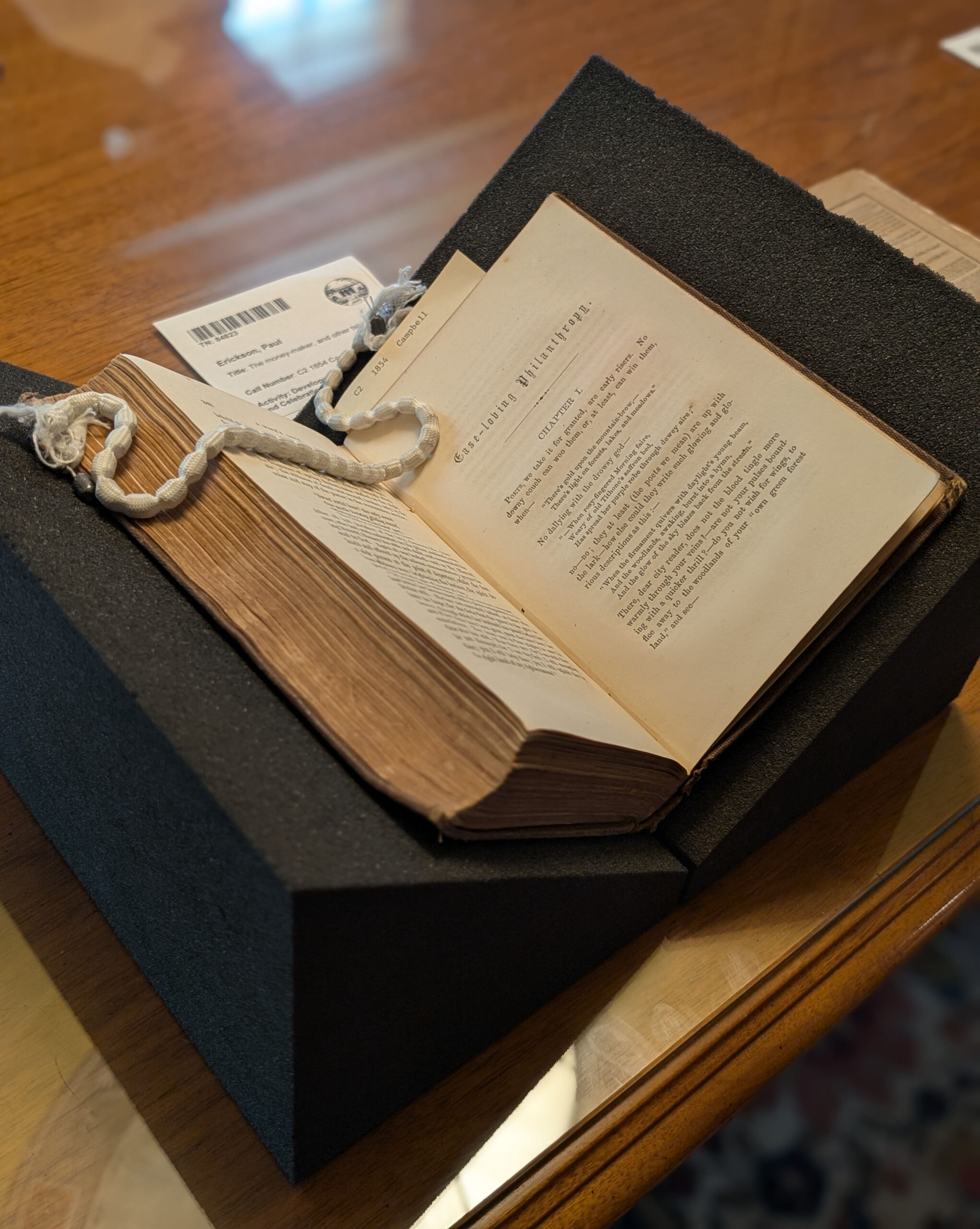
The money-maker, and other tales, 1854
This short story collection was written by a female author, Jane Campbell. For the exhibit, it was opened to a story near the end called “Ease Loving Philanthropy,” though the table of contents lists the story as “Lazy Philanthropy.” The story is about a man who enjoys writing about how much he cares for the poor and downtrodden. He describes himself as a philanthropist but never actually does anything beyond writing about his beliefs. The man’s cousin, who had been helping a local poor family, asked him to step in while she went out of town for a couple of weeks. During that time, the family comes to his house multiple times requesting help, but he is never out of bed when they arrive. When his cousin returns, she finds that the mother her cousin was supposed to help had died due to his neglect.
Jane Campbell’s The money-maker, and other Tales (1854) has been reproduced multiple times since its original publishing, which acts as a testament to the insights provided by this collection of short fictional stories.
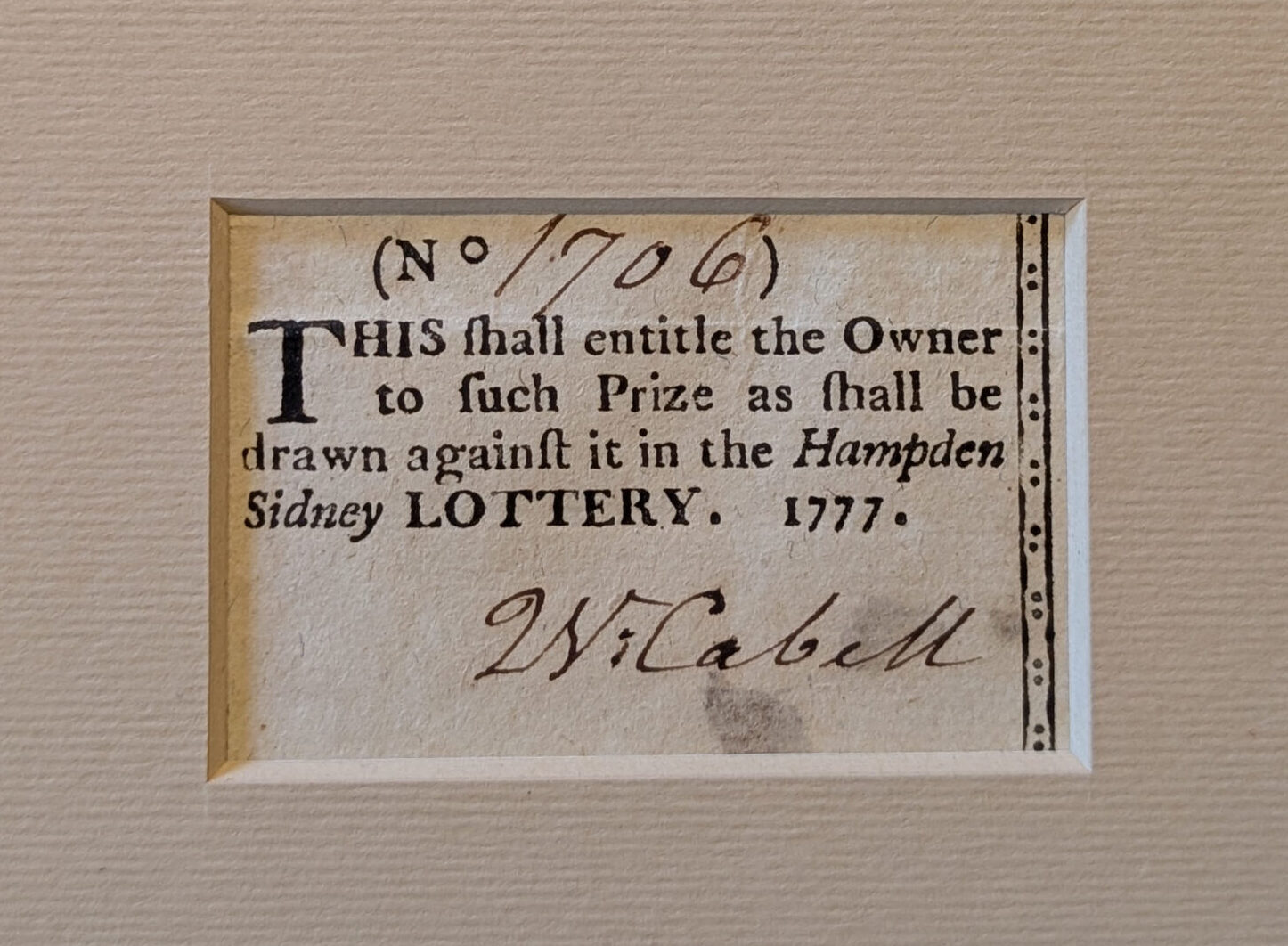
Hampden-Sydney College Lottery, 1777
If you were raising money for a college in the 18th century, unless you had a very wealthy patron supporting you, you would start a lottery. This is a lottery ticket for Hampden-Sydney College in Virginia, which still exists today. The college opened in 1776, and this lottery ticket is from the following year, 1777. Part of the money spent on the ticket would go to the college to help fund new buildings on campus. This was a controversial way to raise money, as lotteries are a form of gambling, which religious leaders opposed in the 19th century.
1777 lottery slip benefitting the Hampden-Sydney College and signed by William Cabell.
Mendicant Appeals, 19th century
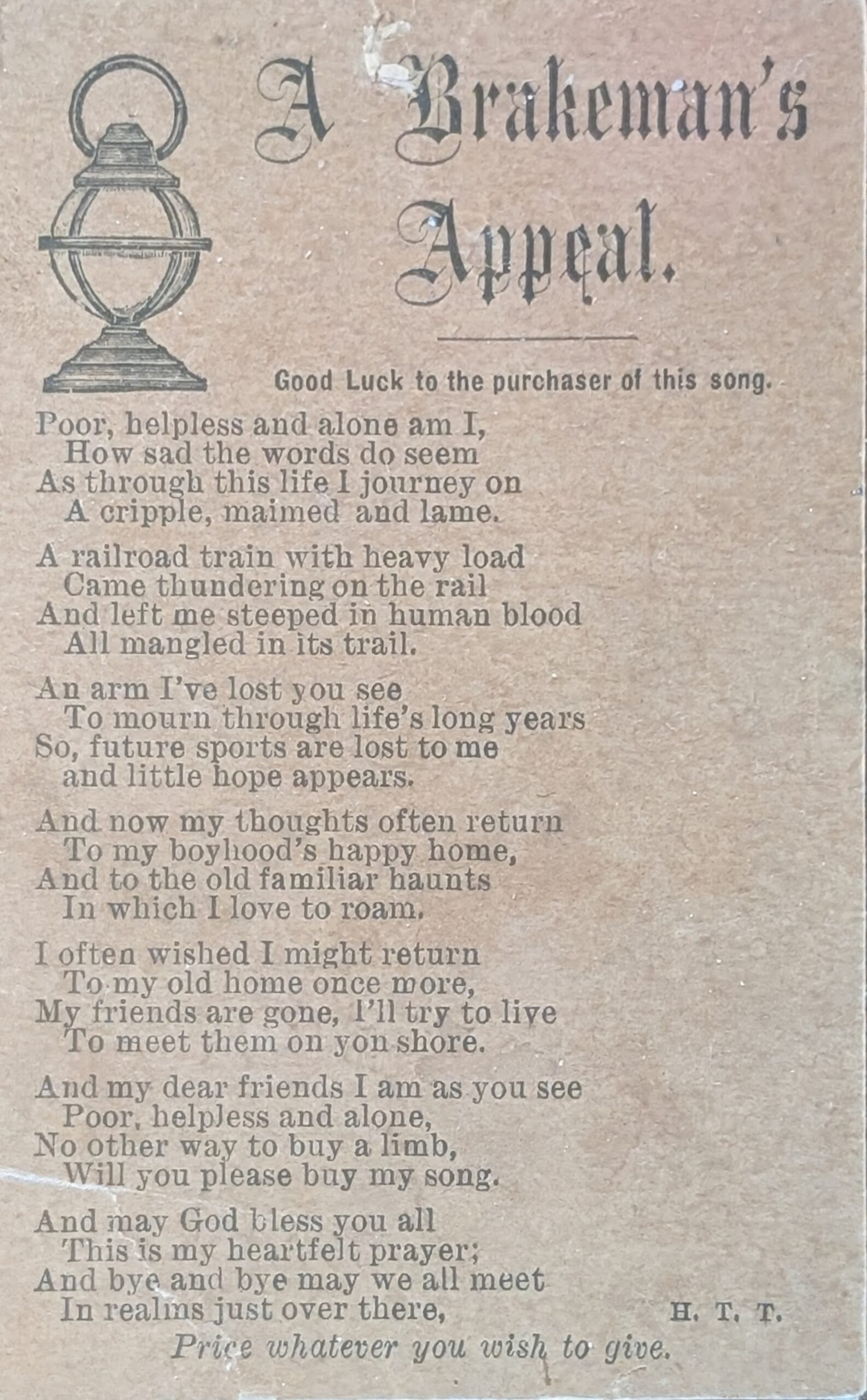
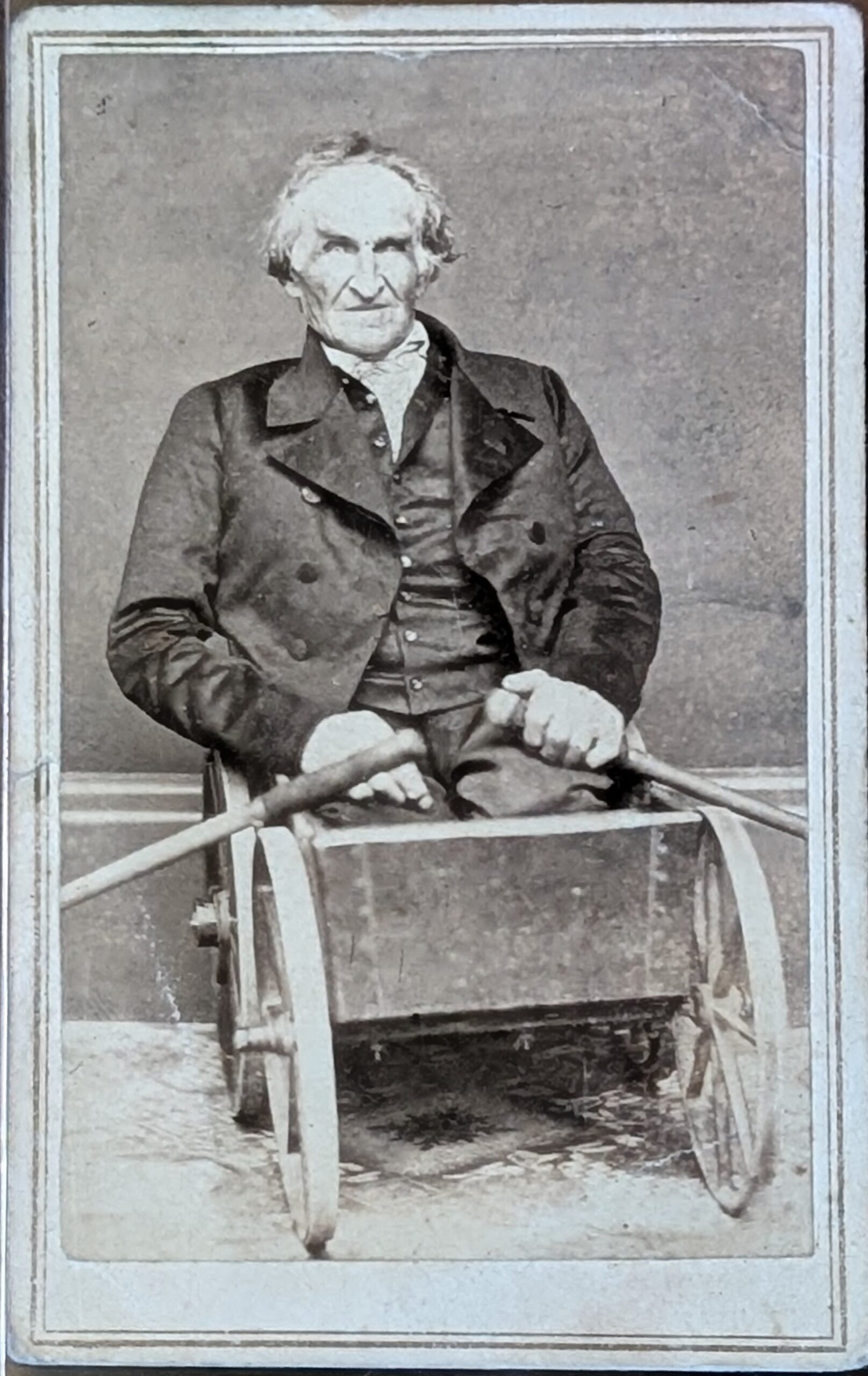
A small collection of recently acquired photographs of disabled people blurs the line between philanthropy and charity. These photographs highlight specially made wagons that many people used to go out in public and ask for support. Mendicant appeals like the one shown on the right were commonly sold in the 19th century and often included a poem focused on the cause of the person’s disability. This reflects a time when there were no government-run programs to support disabled people, forcing them to rely on family support or private charity fundraising.
Example of a mendicant appeal describing a gruesome train incident, and a disabled man in a wagon who may have relied on selling similar appeals.
Home for the Friendless, 1840s
These beautiful hand-colored stereoviews showcase an orphanage in New York City from the 1840s called the “Home for the Friendless.” Here, orphaned children were housed and educated in a trade so that they could eventually support themselves. As you can see in the image below, only white children were taken in by this organization. This was similar to many other charitable institutions at the time, which were also racially segregated.
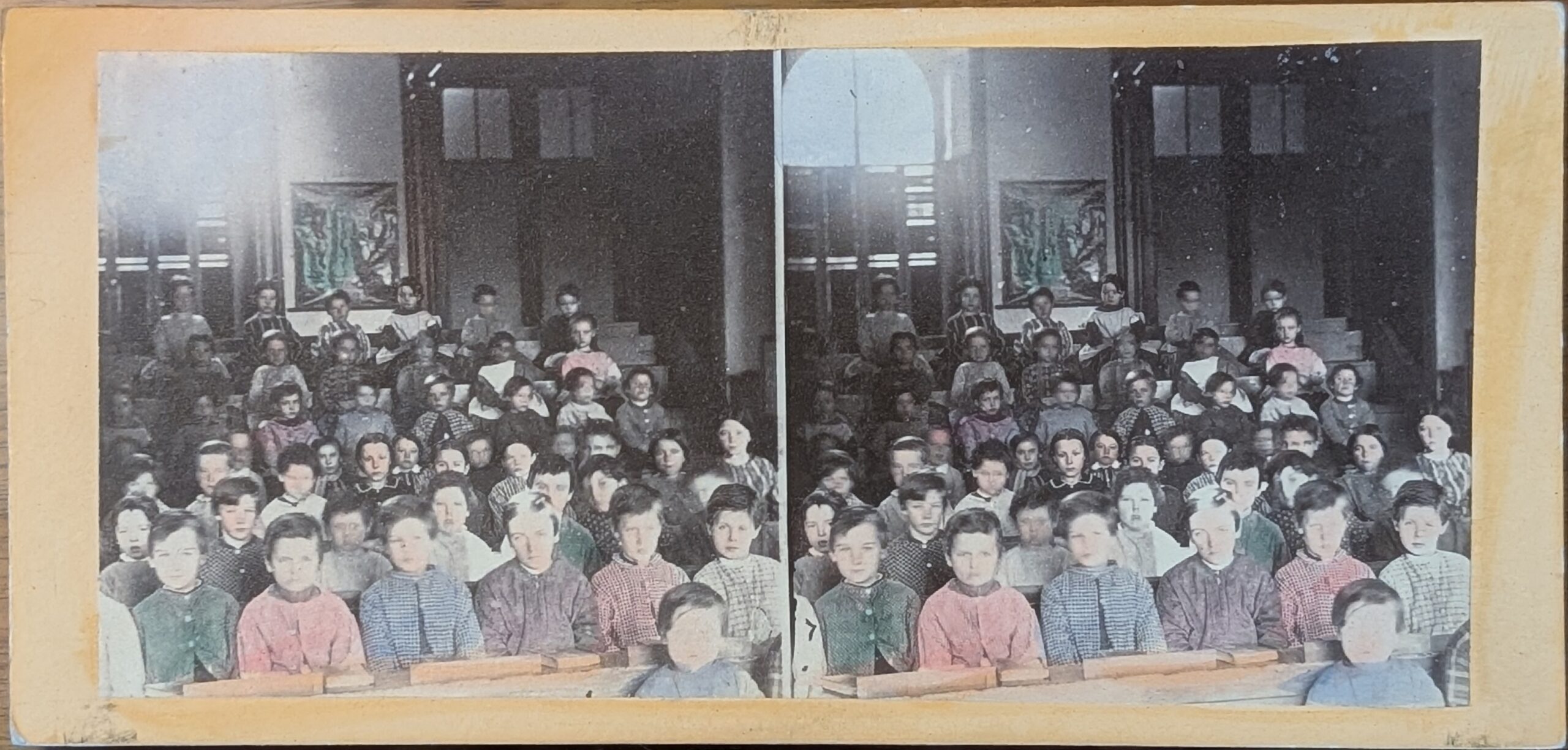
This stereoview can be viewed in 3D when placed inside a stereoviewer, which takes advantage of our binocular vision to combine the two images.
The final grouping of materials are all about the abolitionist movement and temperance, the two great social reform movements of the 19th century.
![Frederick Douglass ALS to [Maria G.] Porter, February 19, 1856. Rochester Ladies' Anti-Slavery Society papers. Douglass thanking the society for a donation of $256.](https://clements.umich.edu/wp-content/uploads/2025/08/douglass-letter.jpg "douglass letter")
Rochester Ladies’ Anti-Slavery Society papers, 1848-1868
The Rochester Ladies’ Anti-Slavery Society was a group of middle-class white abolitionist women in Rochester, NY. Much of their work revolved around raising money for their newspaper. The 1856 letter shown on the left is from Frederick Douglass to a reporter who was the head of the society. In the letter, Douglass apologizes for missing her visits to his office and thanks her for a donation of $256.
Maria Porter, the recipient of this letter, was very involved in the anti-slavery movement throughout her life.
Another function of this society was to raise money to assist fugitive slaves in escaping to Canada. The letter on the right, written by William Watkins, is addressed to a member of the society. The letter states that between December 15, 1856, and August 9, 1857, he helped 59 fugitives successfully reach Canada. The letter serves as confirmation of their relative safety and provides his accounting of how he spent the money provided to him.
Watkins listed the costs of transporting the 59 escaped slaves across the Canadian border, totaling $140 for the year 1857.
![W[illia]m J. Watkins ANS to Mrs. Armstrong, [August 1857]. From the Rochester Ladies' Anti-Slavery Society papers. Details expenses from passing 59 fugitives across the Canadian border.](https://clements.umich.edu/wp-content/uploads/2025/08/Canada-Expenses.png "Canada Expenses")
!["Black Valley Rail Road" [1863]. temperance-era print. Highly symbolic, shows the fictitious route from Sippington to Destruction. Train has crashed, and philanthropists are assisting the injured passengers.](https://clements.umich.edu/wp-content/uploads/2025/08/black-valley-rail-road-scaled.jpg "black valley rail road")
!["Black Valley Rail Road" [1863]. Detail of the train engine labeled "Alcohol."](https://clements.umich.edu/wp-content/uploads/2025/08/bvrr-alcohol-scaled.jpg)
!["Black Valley Rail Road" [1863]. Detail of a philanthropist helping injured people onto a horse-drawn ambulance.](https://clements.umich.edu/wp-content/uploads/2025/08/black-valley-rr-ambulance-scaled-e1755276478802.jpg)
This print of the fictitious “Black Valley Railroad” is meant to depict the harmful path of alcohol consumption—from Sippington to Destruction. The engine, “Alcohol,” on the train has crashed into a giant, evil serpent, and you can see people who have been thrown from the train and wounded. In the foreground, you can see what we would call philanthropists helping people into an ambulance. This can be thematically linked back to the short story “Ease Loving Philanthropist” described above. The philanthropists shown in this print are on the ground helping people harmed by alcohol directly, not merely writing about their concern for the poor.
Details from the Black Valley Railroad print.
Many thanks to the U-M Development community for coming out to explore the Clements Library and to Paul Erickson for curating the exhibit.
If you’d like to support the Clements Library, you can learn more about the various possibilities here: