
While the word “vote” appears in the United States Constitution 36 times, the meaning and practice of voting has undergone much transformation since the document’s writing. Changes over the course of the nineteenth century influenced how Americans voted and affected the material culture that surrounded voting. Our new exhibition, Who Counts? A History of Voting in America explores civic engagement, the evolution of the electorate, and the experiences of voters on election day throughout American history.
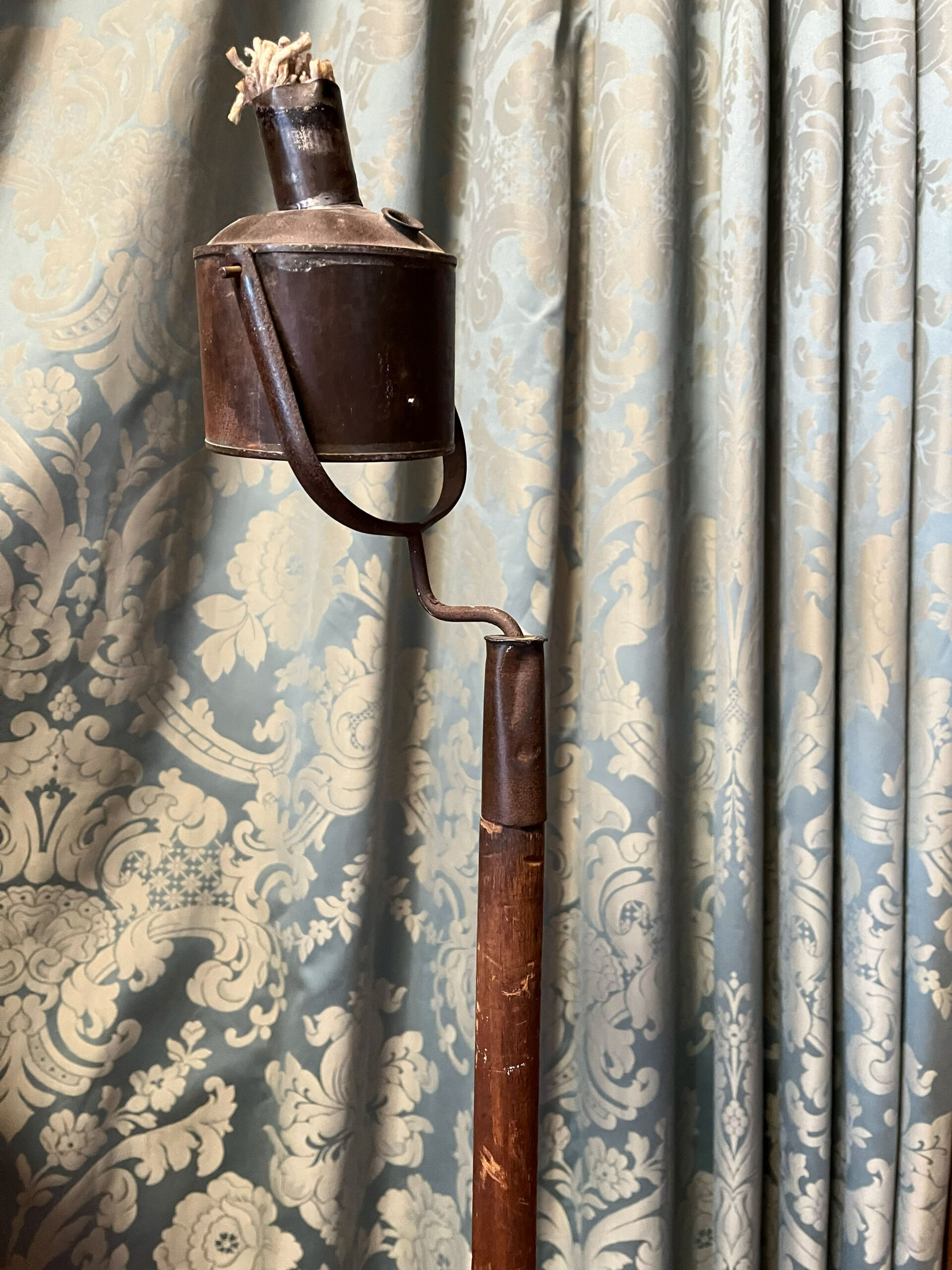
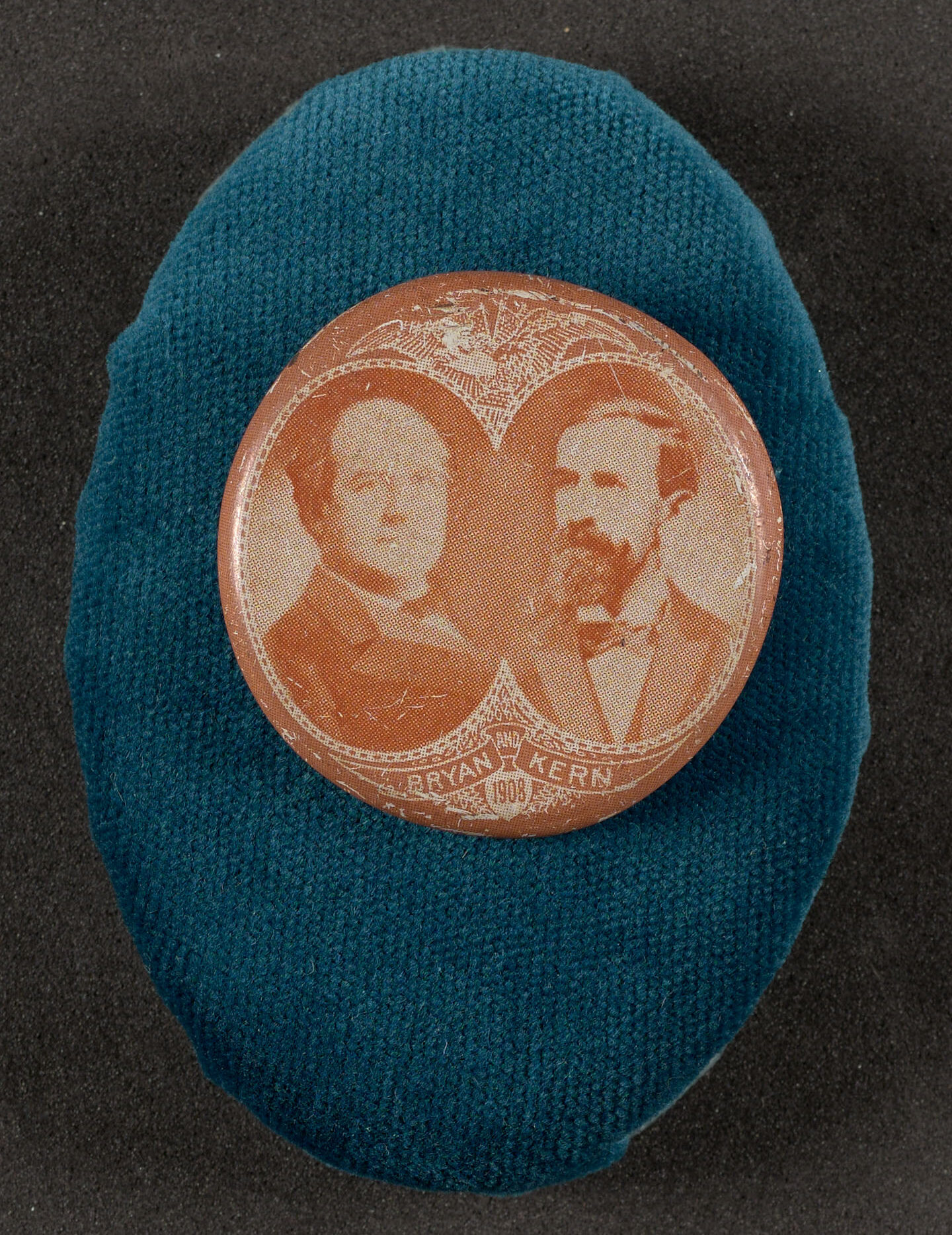
Some of the items in this exhibit will seem quite strange to us today–we don’t carry torches on poles at political rallies any longer. But other things, like the pins and ribbons, look more familiar. How do we use print, material culture, and electronic media to get out the vote today?
Librarian for Instruction & Engagement and co-curator of the exhibit, Dr. Maggie Vanderford, describes Who Counts? as, “a visually rich exhibit filled with historic textures. Ribbons, torches, ballot boxes, prints, posters, fans, and more tell the story of voting during the country’s first 200 years. Each item displayed in Who Counts? is specifically chosen to evoke conversation and dialogue about the democratic process.”
Several items in the exhibit, including many of the ballots and the ballot boxes featured, are on loan from the Landon Myers Collection of Early American Election Administration. Myers is the Program Manager for U-M’s Initiative for Democracy & Civic Empowerment (DCE) and has a personal interest in American voting history. “Landon’s exquisite private collection of ballots, ballot boxes, rare pamphlets, and ephemera add a sensory twist to the Clements’ primarily paper-based materials,” says Dr. Vanderford.
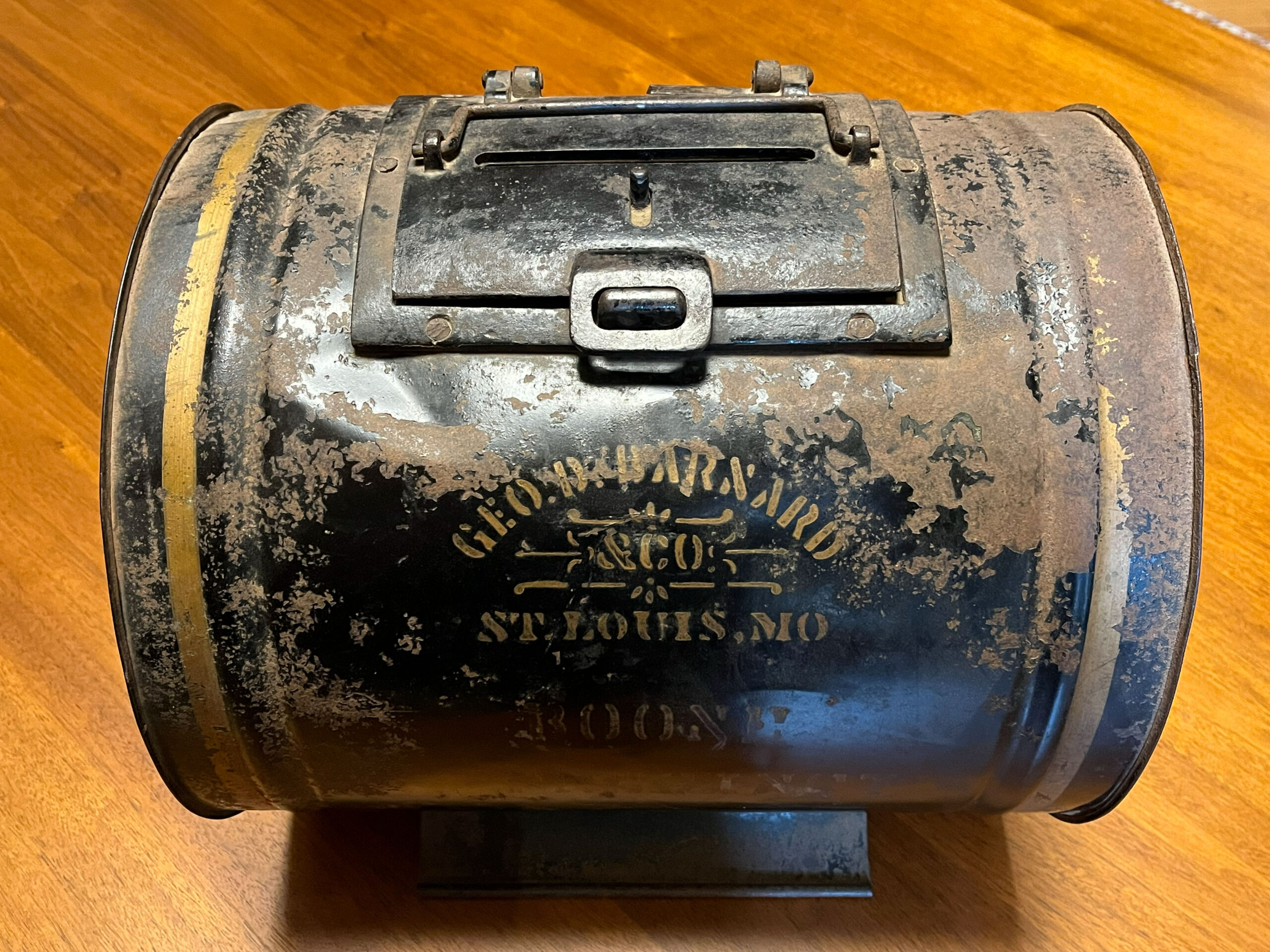
Landon Myers generously loaned many items from his Collection of Early American Election Administration, including this ballot boxes designed to be carried by mule or horse.
In celebration of the 250th anniversary of the Declaration of Independence, the Clements Library partnered with DCE and the Arts Initiative to create the U.S. at 250 project. Together, they have hosted multiple events, many with Myers taking the lead. The Clements Library is excited to continue partnering with Myers through this exhibition. Myers says of the exhibit’s relevance, “While democracy is always important, this moment of reflection on the 250th anniversary of the Declaration of Independence provides a perfect opportunity to reflect on the beginnings of our democratic experiment, but also how we can continue to shape the future through civic action.”
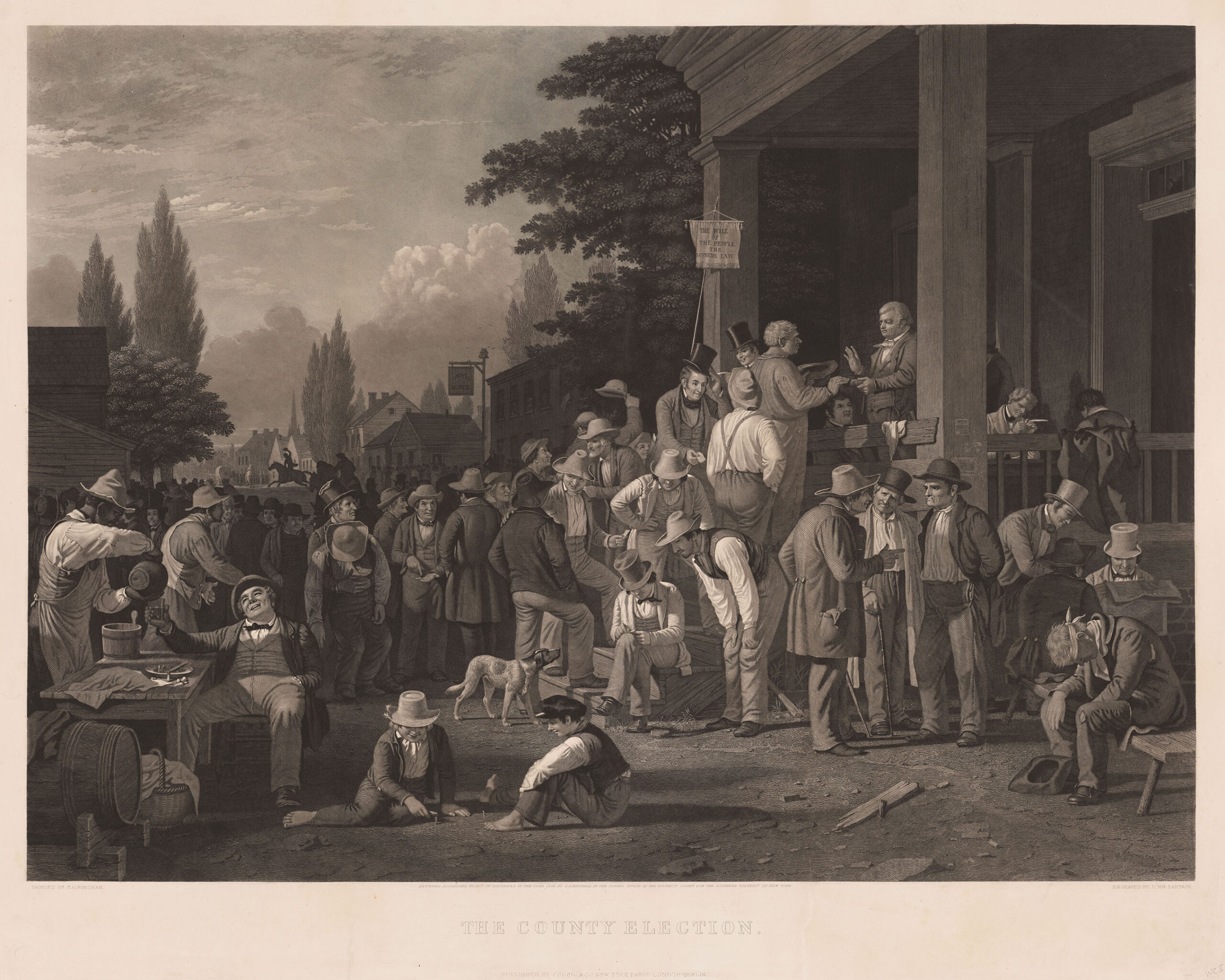
As is shown in George Caleb Bingham’s famous painting “The County Election,” election days in early America could be fairly rowdy affairs, often with freely flowing alcohol used to either lure voters to the polls or to celebrate election results.
While the ways in which we vote have shifted over time, “Questions about voting in 1800s America resonate with questions that we still ask about the process today,” according to Dr. Vanderford. “What are the logistics involved in accurately capturing and representing each ballot? What stories about fraud emerge as elections take place, and what strategies were used to combat deceit? Who is allowed to vote? What is the experience of election day like? How does new technology affect that experience?”
To support civic engagement on campus, the Clements Library has partnered with DCE for events and tabling. Throughout Democracy Week, we will be tabling on the Diag together sharing information about the exhibit and voting in 2026. The Clements Library and Turn Up Turnout (TUT), a nonpartisan student organization on campus that seeks to increase voter education and registration, are also partnering for a student-focused event on September 25 that will include information about voting as a student at the University of Michigan, historic and modern voting-themed Jeopardy, and exhibit viewing.
The Clements welcomes partnership with student organizations, faculty, and university collaborators and invites requests for private exhibit tours, programs, and more. Please contact [email protected] for information on scheduling a class tour or developing activities relating to the exhibit’s theme. The exhibit is open on weekdays from 12-4 pm from September 11–December 22.
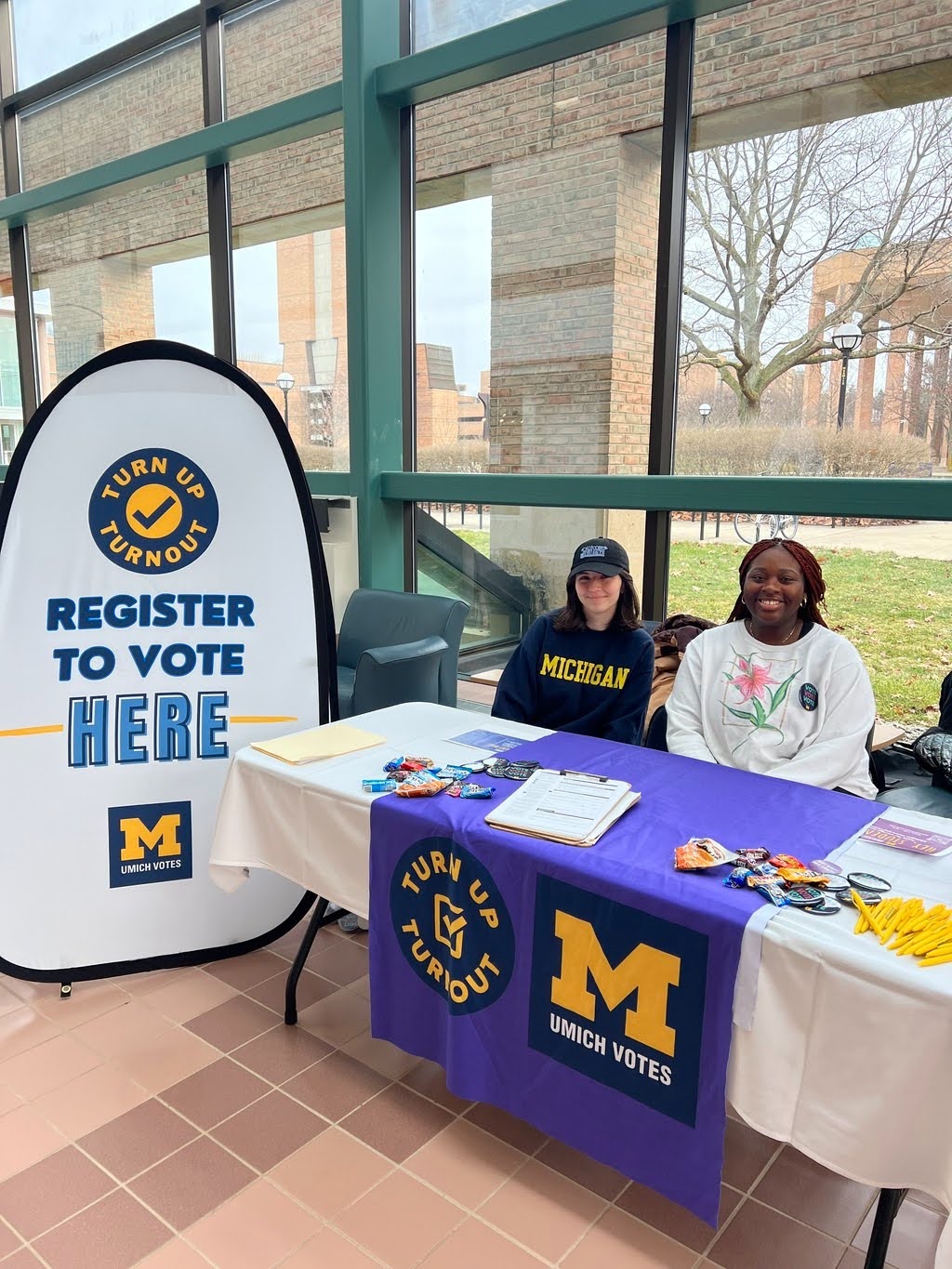
Members of the bipartisan student group Turn Up Turnout (TUT) focus on voter education and registration, engaging with students across campus in a variety of ways.