
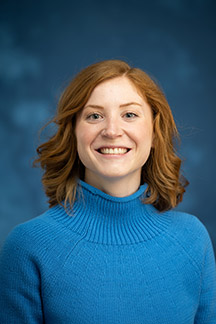
Welcome to “A Day in the Life at The Clements Library!” On the second edition of this series, we meet with Emma Schneider, an Information Resources Assistant.
Tell me about your background and what you are currently working towards.
I received my Bachelors in History and Religion from Kalamazoo College and learned I really enjoyed early medieval and modern European history. I had a research job where I would look into Catholic magazines of the late 19th century, and being able to touch archival materials was really powerful. I am currently in graduate school earning my Masters of Library and Information Science at Wayne State University and am hoping to pursue reference librarianship, instruction, and archival administration within reference librarianship. I have now been at the Clements for almost three years in the Information Resources Assistant role.
Why this field?
When I was searching for a job, I applied to many libraries. I felt drawn to a slower and more quiet environment. My dad also worked in a similar field, recently retiring from his role as the Collections Manager of the Herpetology Division at the University of Michigan Museum of Zoology, which rubbed off on me. Being able to touch tangible history like the Christopher Columbus letter he sent back to the king and queen of Spain from 1524 and feel that thick vellum paper was really cool.
Fun Fact: I am an avid Wikipedia reader, I love going down rabbit holes! Most recently, I have had fun researching the dancing plague of 1518 and also love going down the rabbit holes of official state meals and snacks, Balloonfest of ‘86 in Cleveland, Ohio and “air rage” on flights. I will read just about anything and everything that is not a book at this point in time because graduate school takes up much of my time.
What exactly is your job?
If I had to synthesize my job in one sentence, it’s connecting people with materials in person and remotely. My physical job involves paging the materials, facilitating and guiding the proper handling of them in the Reading Room, answering questions regarding the provenance of the materials and how they ended up at the Clements, as well as making other resources we have to offer accessible to our researchers . Helping researchers find very specific materials and pointing them to helpful collections in our archive is another large aspect of my job. Early American handwriting and cursive can be difficult to read, sometimes a confusing “f” is just the first “s” of double “s”s, so helping undergraduate students understand and being able to read that cursive is a frequent occurrence.
A large part of our job is paging. We receive a request on our finding aids or catalog and the reference team goes to the vault/stacks and takes the physical items off the shelves. The beauty of paging and working with a large population of researchers is that I am always finding interesting things in the collection. I get to see materials across all four collecting divisions: maps, graphics, manuscripts, and books, but my favorite part is reshelving. I actually like it more than paging!
What skills are required for your work?
Customer service is a substantial component in reference work. You have to truly care about people and the collections. We see undergraduate students, high school students, PhD candidates, people finishing their dissertations, people researching their family genealogy and looking into their ancestors’ papers. Talking to people about their research interests is a lot of fun, there’s never a boring day. There is so much breadth and width within this role. It’s easy to get siloed into physical materials and forget about the people attached to them who are making these requests. I truly love helping people, which is a huge aspect of the job. Something that Head of Reader Services Joshua Sulser and I talk about is that we are both very determined. We need to have a lot of grit. There’s a misnomer about librarianship- it’s not just about books, you really have to love the hunt and have the curiosity and drive to explore all avenues to help answer a research question.
What does your day-to-day look like?
The morning starts with a meeting with my team about thirty minutes before the library opens. We review requests that we have received and set a plan for the day. Then, we head to the vault to start paging. We only page once a day! We don’t do on-demand same day paging, so we try to have everything we possibly need to ensure that we have a smooth day in the reading room. Then, we bring the carts of materials into the reading room and review materials to see if there’s anything tricky like a large foldout map in a book that would need a second set of hands, or setting up foam book rests to support the books and their spines if they are more fragile. During a four hour shift in the reading room, I assist with handling materials. These shifts go by faster when there are more readers! But when it’s slower, I can answer cataloging questions and libanswer questions while I am at the desk. Then, it’s lunchtime! I try to be as mobile as I can by going on walks with colleagues, talk about how things are going on their teams, and learn about how the work they are doing might impact reference. Near the end of the day, we start reshelving and sometimes paging for the next day. There is a lot of planning and pre-planning.
What are some of your favorite things you have found in the archives?
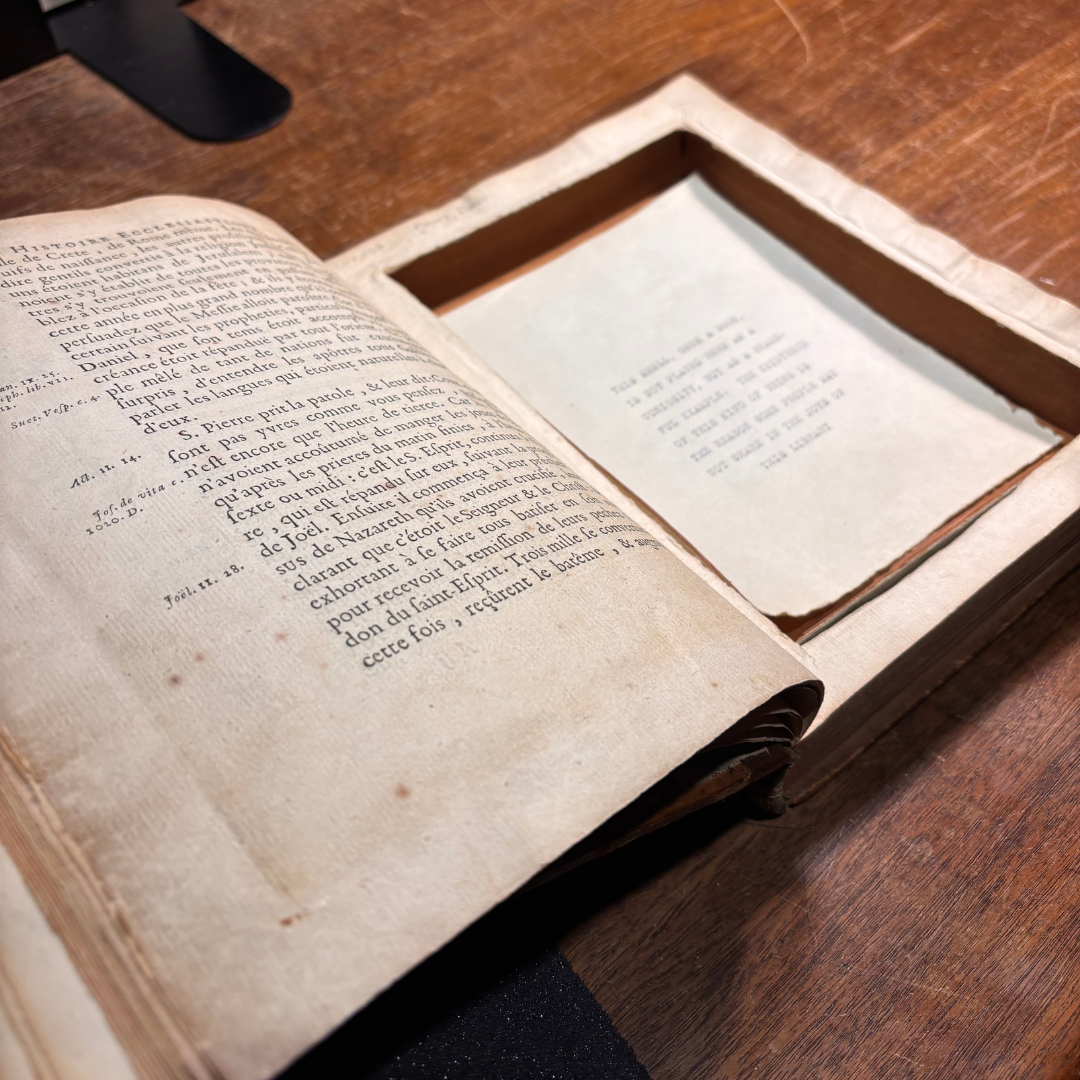
We have such weird and interesting things here. When I can take people to the vault, I like showing them the “Curiosa Collection,” which is something I would like to learn even more about! There is a safe made from a hollowed out book, and a burned book from the University of Naples that survived Nazi burnings. We also have weird items like the Society for the Prevention of Cruelty to Disabled Hats, but I really love the beautiful items within our collections of watercolors and nature prints. Within manuscripts, the Helen Buchanan Collection has a lot of interesting doodles. I am very interested in marginalia or drawings in the margins of otherwise “serious” materials. Flipping through the collections and finding these drawings adds irreverence to what you would think is reverent work. This really humanizes the collections, and I love those silly moments.
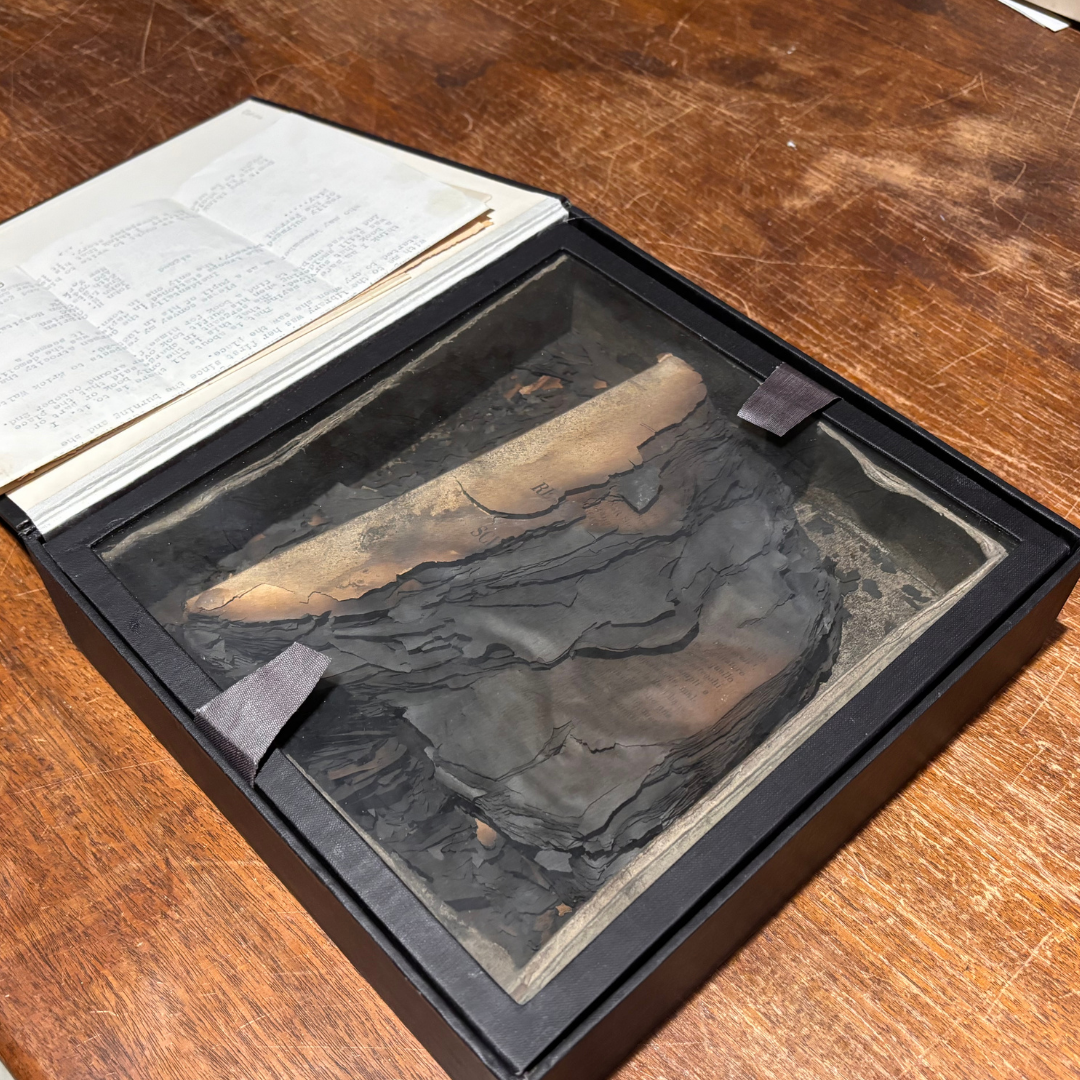
Book salvaged by Lt. John H. O’Brien from the University of Naples Library in April 1944, after it had been burned by the Germans in September, 1943.
Created to disguise and hide valuables, this French book titled Histoire Ecclesiastique was altered starting on its 4th page with an anonymous note reading “This shell, once a book, is not placed here as a curiosity, but as a shameful example. The existence of this kind of thing is the reason some people may not share in the joys of this library.”
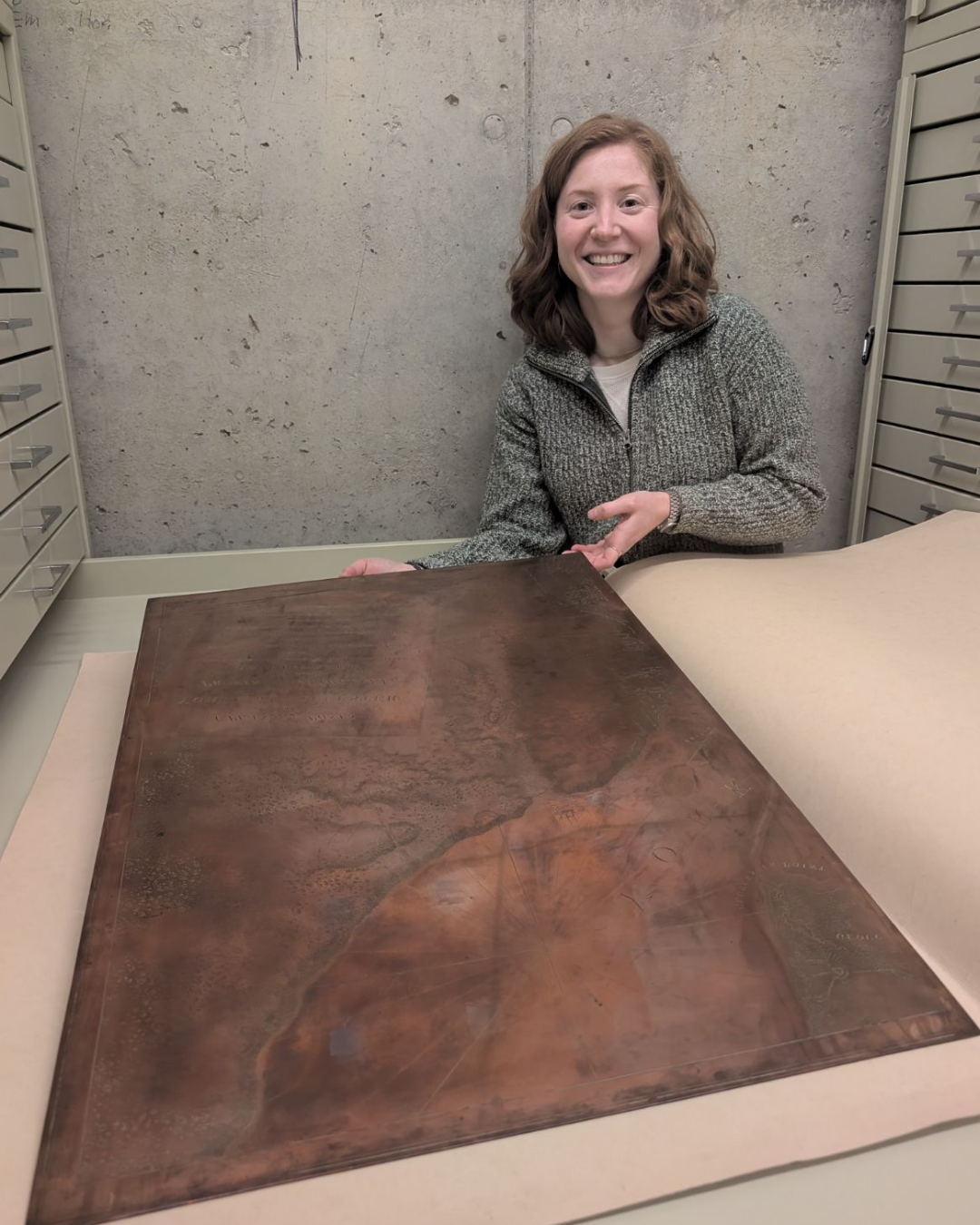
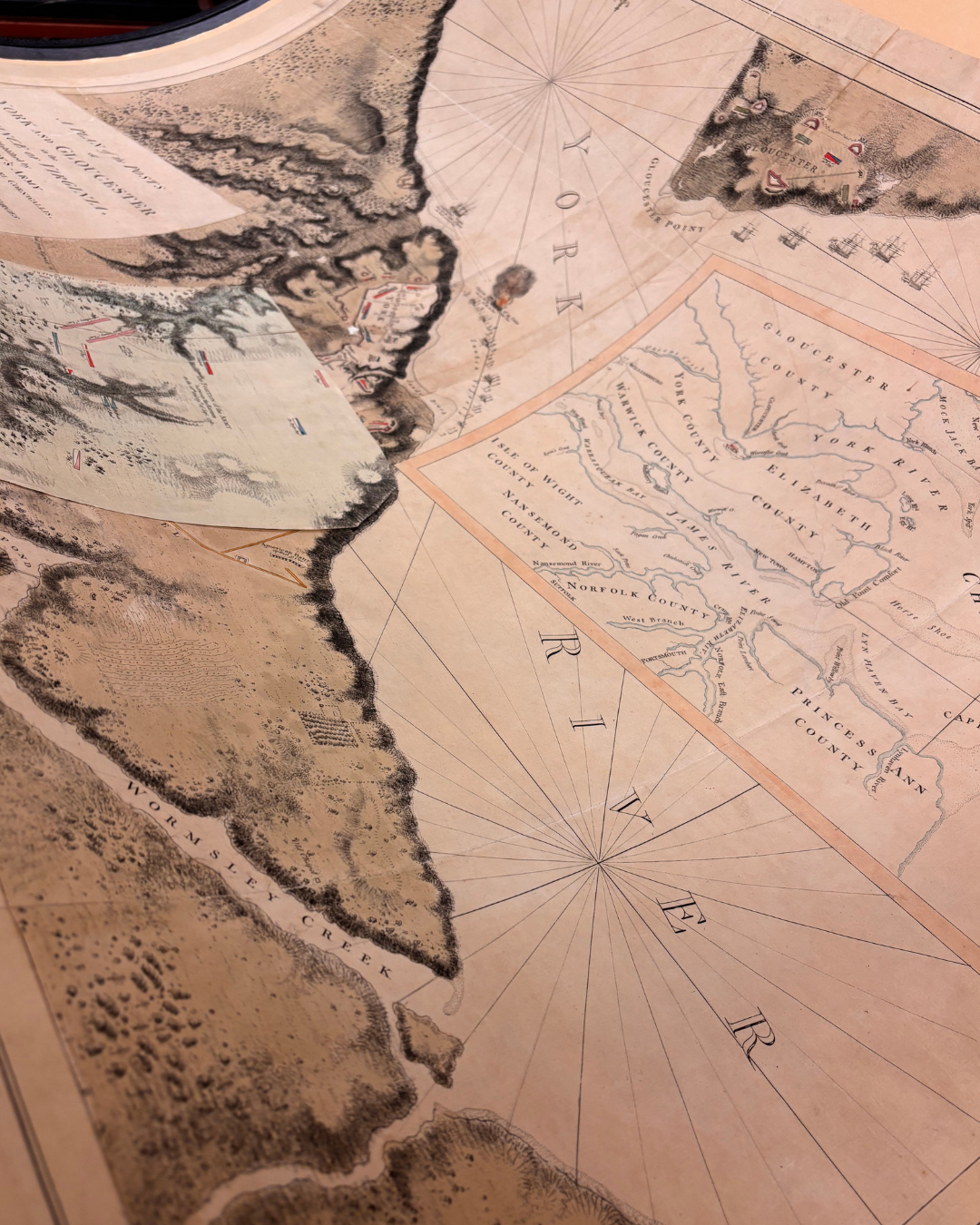
I also love spending time with Assistant Curator of Maps Mary Pedley and learning more about the maps and the craftsmanship involved in them. Seeing a copper plate for map making, feeling how heavy it was, it was really cool that I got to see that. The process of someone drawing this map, going to someone else to color it, the work and effort that went into this shows how the process is not linear, and so many people’s passions and handiwork went into this.
The copper plate for A plan of the posts of York and Gloucester in the province of Virginia, established by his majesty’s army … (1782) is heavier than you might imagine!
What do you wish you would have known before starting your job and what is some advice you would pass down?
I wish I knew how cool it was! When I applied, I had been unemployed for a while and was getting a little desperate for full-time work. We have so much exciting and engaging material andI often take that aspect of my job for granted. It can be easy to get bogged down in the day to day processes, but we have a little bit of everything for everyone. As someone who used to not be very interested in American history, there are so many more niches than I could have imagined.
Advice wise, find something that sustains you! You do your job 40 hours a week for years and years potentially. Make sure that you’re interested in some way. Even if the day to day work isn’t the most exciting, try to find a place with a positive environment.