
The Clements Library is thrilled to welcome our new Head of Reader Services, Joshua Sulser! In this Q&A, we got a chance to learn more about his path to the Clements, his research interests, and his personal collections.
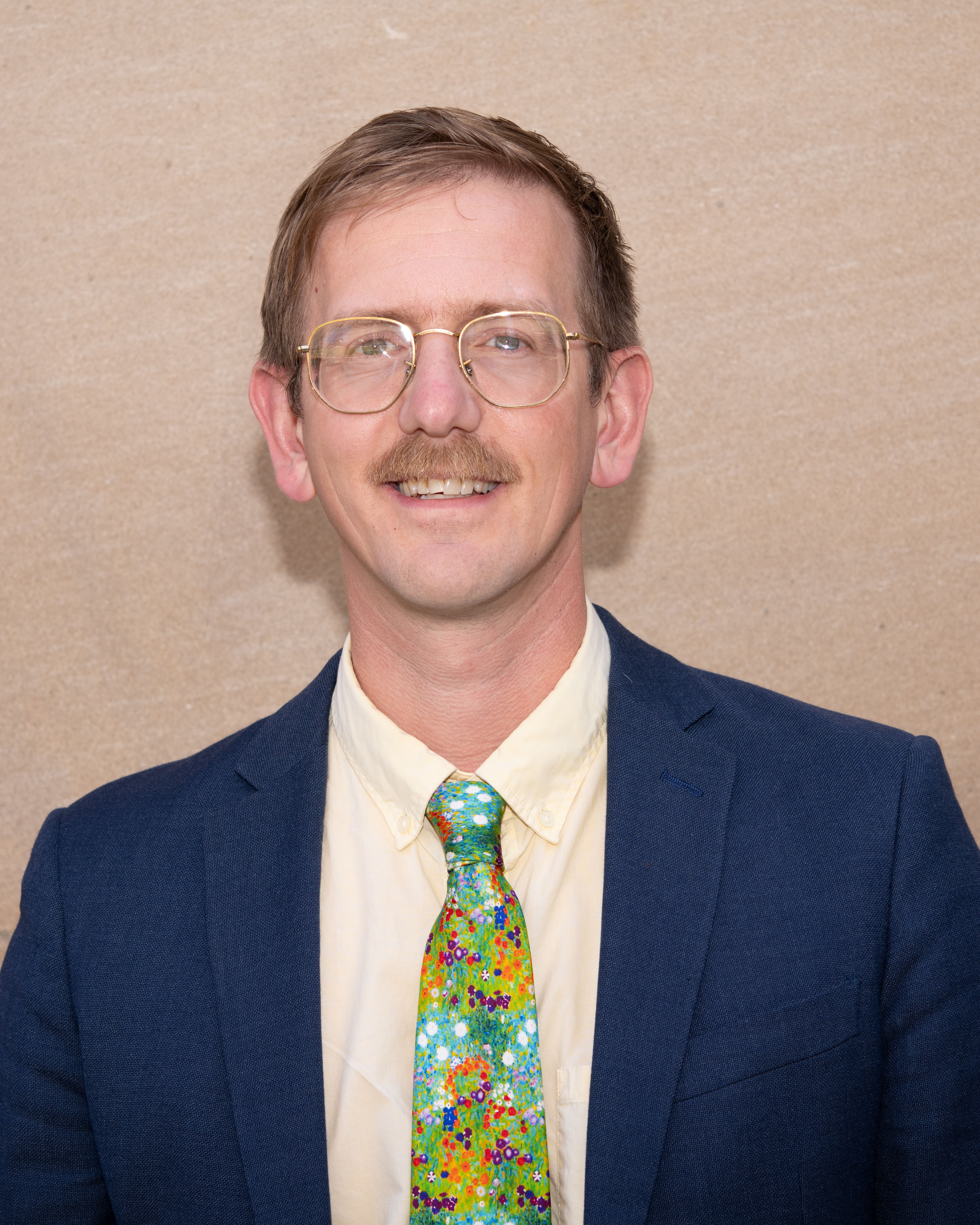
Joshua Sulser’s staff portrait, taken by Chris Ridgway.
What is your educational and professional background?
I studied English at the Ohio Wesleyan University in undergrad, with a focus on creative writing. Following my interest in English, I did some writing in the school’s newspaper and wrote poetry for the Ohio Wesleyan Literary Journal. After college, I didn’t have a specific career focus. I cycled through a few corporate jobs until 2019 when I became drawn to librarianship and began studying library science at Kent State.
In grad school, I was initially focused on digitization. I eventually broadened that to topics involving making special collections accessible to wider audiences in a variety of ways. At the time, I had two close friends working on their Masters’ theses in history who both struggled to access the collections they needed for their research. When I expressed my goal of making materials accessible to them and saw their enthusiasm, I knew I was moving in the right direction.
While still at Kent State, I brought these ideals into practice while working as the Access Services Associate and then Librarian in the Ingalls Library at the Cleveland Museum of Art. My work at the museum was centered around making the physical library accessible to all, especially for university students who may not have known they were allowed to visit. I supported the research of students, curators, and independent researchers all over the world.
What drew you to working at the Clements Library?
I wanted to work in a special collections library, and the collections here are practically unparalleled. I appreciate that the Clements is information driven; the staff here does a lot of work to protect the materials in the collections while also prioritizing making the information available to anyone who wants it. I also see the benefits of working at a library within a larger university, creating a sort of built-in audience of students and faculty who are aware of us as a resource. In addition, I have a deep personal interest in American history. While working at the Cleveland Museum of Art, I did a lot of art history research. I began to realize that my main draw to art history was the history aspect.
How are you enjoying Michigan so far?
I love Michigan a lot, though some of my family members aren’t as excited about the Ohio to Michigan move. I love to learn about local history, and am starting to get the hang of the pronunciation of the local counties. So far, the weather has been fantastic and I am enjoying exploring the local restaurants. The food in Ann Arbor is amazing! My wife and I are doing an A-Z challenge for trying new food around town, spinning an alphabet wheel to select where to eat that night. I am still struggling to find a restaurant starting with the letter “I,” so please do reach out with any suggestions.
What does your role primarily consist of?
The main aspect of my job is to get researchers access to the resources in our collection. I define researcher broadly. My work involves getting resources prepared for class sessions, working with professors on determining what can be brought out for their courses, working with remote researchers with broad queries, photo digitization for remote researchers, and more. In general, I aim to go above and beyond to help support researchers in connecting the dots between their research topics and our collections. This is always exciting for me, as I get to handle all of the cool materials and peek through anything people request!
I also work on making research appointments, making policies regarding the Avenir Foundation Reading Room, and ensuring the careful handling of materials so that they can be accessible for hundreds more years into the future. I collaborate closely with staff on compiling and editing the Clements Quarto, and am in charge of loaning out collection items whenever relevant. For example, some Clements materials are currently on view at the Carnegie Museum of Art for their exhibit Fault Lines: Art, Imperialism, and the Atlantic World.
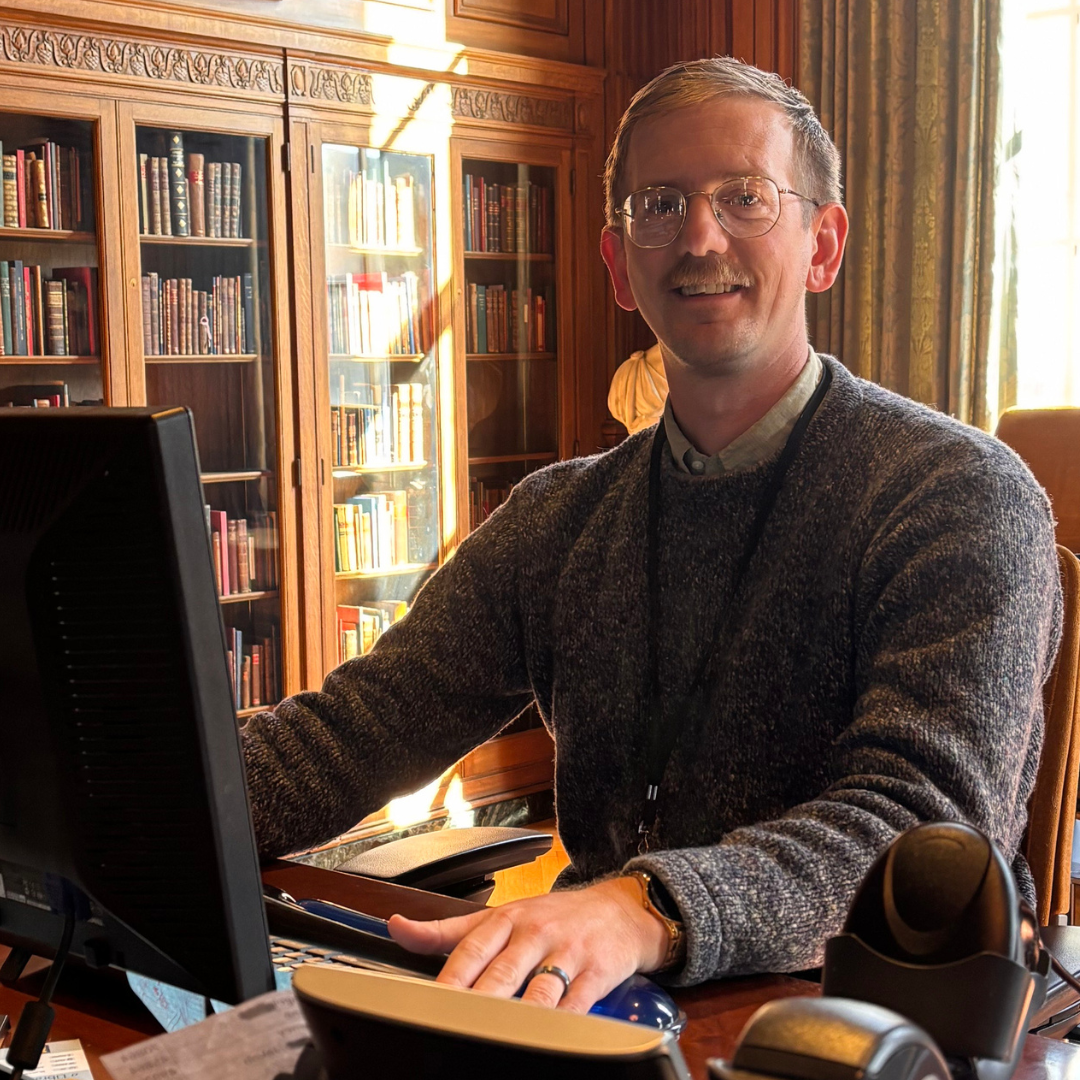
Joshua Sulser staffing the Avenir Foundation Reading Room.
What draws you to working with researchers from a reference standpoint?
I love learning about people’s specific passions and niche interests. You never know what someone will take from a particular item or collection and honestly, you can’t really learn much about a collection without engaging with the researchers utilizing it. I learn about American history every single day that I work here, there is never a day where I’m not learning something new. Working with the diverse user base of a library like ours is particularly exciting. We serve award-winning authors, people who have written television series, remote researchers across the world, and students who may be engaging with primary sources for the first time. It’s exciting to work with people from different backgrounds with different information needs.
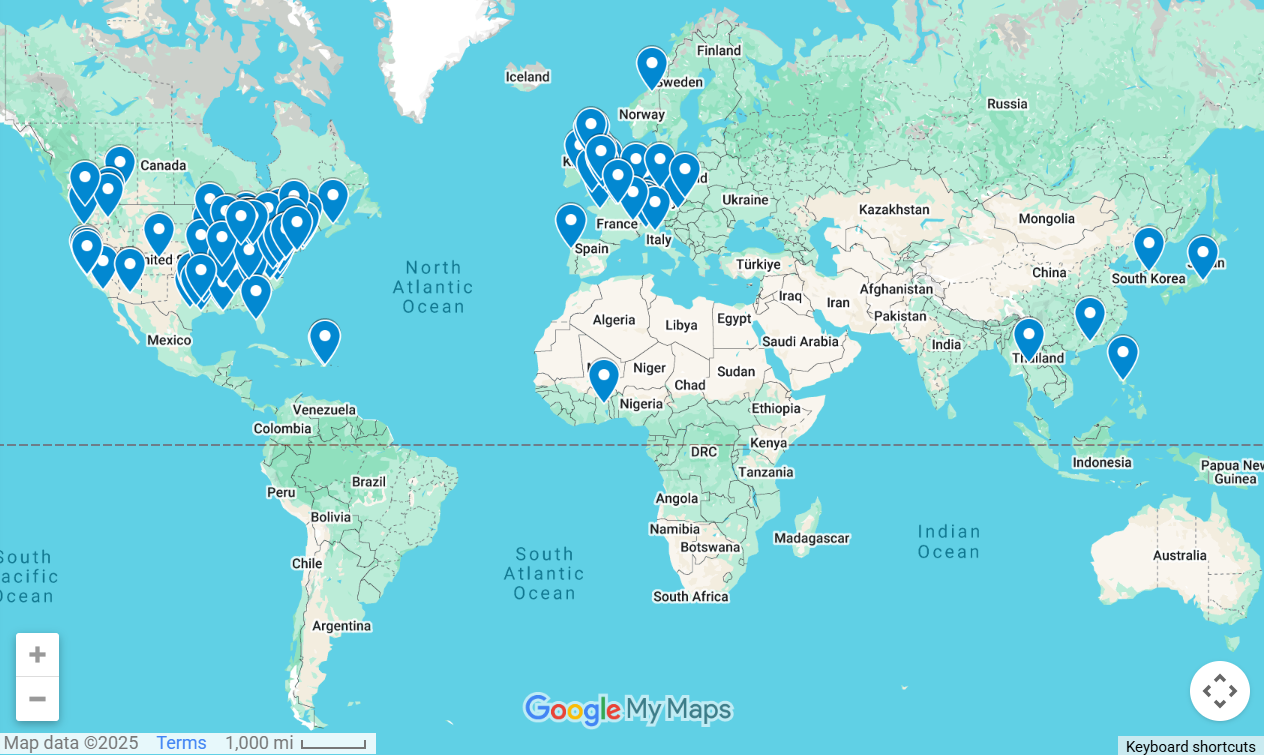
The reach of the Clements Library truly is worldwide!
Joshua Sulser’s map of the university affiliation of researchers that have registered with the Clements Library 10/3/24 – 10/3/25.
What are your favorite eras or topics to study?
I have always been interested in the Civil War and that pocket of American history. I’ve been working through the biographies of each American president (not in order) and appreciate learning more about their backgrounds and how the present-day political system was established. I’m also drawn to the histories of 19th literary figures like Washington Irving and Edgar Allan Poe. It’s interesting to read their biographies and learn about the historical era in which they became professional writers.
Finally, do you collect anything?
My primary collections are National Park postcards from the 1900-1950s, particularly linen postcards. I prefer these to real photo postcards, as they portray the idyllic vision of how people wanted their vacations to be perceived. I only collect postcards that have been written on and posted. I love collecting vacation stories, especially from the early automobile era.
I also have a small collection of art from the “Cleveland School” community, an early 20th century art movement founded by artists moving to the area for advertising jobs in lithography. This art is somewhat expressionistic and semi-abstract, especially considering its middle-America 1920’s origin. I was able to collect a handful of pieces while living in Cleveland, which now serve as very nice decorations around my house.