

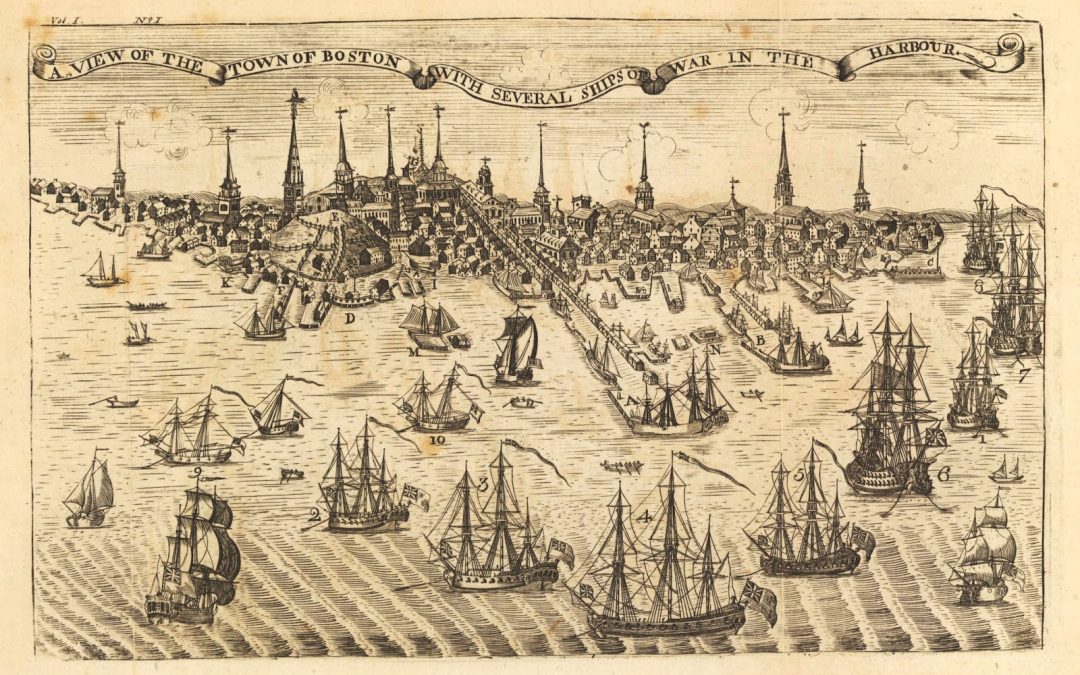
The Last Colonial Governors in Revolutionary America
Guest post by Catherine Treesh, Clements Library 2018 Price Fellow Over the course of 1774 and 1775, letters from distressed governors flooded General Thomas Gage’s headquarters in Boston. Colonial officials all across British North America were watching imperial government collapse around them and scrambling to maintain their power. They wrote to Gage – Commander in Chief of the British Army in North America and Governor of Massachusetts – looking for a solution. They wanted the money, men,...

National Winston Churchill Day
Guest post by volunteer Richard Marsh, Clements Library Associates Board of Governors Thanks to the contributions of Dr. Duane Norman Diedrich (1935-2018), the Clements Library holds selected original documents from Sir Winston Churchill (1874-1965), the great Prime Minister who led Britain during World War II (see the Churchill Collection Finding Aid). A Professor of Speech, Dr. Diedrich collected and utilized historical manuscripts in his teaching. He used documents such as original speech...

Reading a Manuscript, Which Reposes a Thousand Miles Away: Digitized Manuscripts Collections from the William L. Clements Library
The William L. Clements Library is pleased to announce that five of its manuscripts collections are digitized and accessible online. These collections mark the beginning of the Library's efforts to provide free and open digital access to its collections of handwritten early Americana. The digital versions are complete and presented in a manner that reflects their physical/intellectual arrangement. Screenshot of a July 4, 1782, muster roll from the Clements Library's German...

Impressions of France Behind the Lines
The Clements Library exhibition "Over There" with the American Expeditionary Forces in France During the Great War is open through April 26, 2019, on Fridays from 10am to 4pm. The following material is excerpted from a pamphlet produced to accompany the exhibit. Many of the American soldiers arriving overseas to serve in the First World War had never left their home state before joining the service. As a result, soldiers' letters and diaries often depict France as an exotic place. Much of the...

New Finding Aids: December 2018 to January 2019
The Clements Library is pleased to announce that the following collections are now described online and may be requested for use in the reading room. James Buchanan Letters, 1866-1869 - Processed by Cari Griffin This collection contains 10 letters written by James Buchanan, an attorney in Tidioute, Pennsylvania. Composed over a three-year period and all addressed to Philadelphia attorney John Samuel, Buchanan commented on politics and literature, as well as concerns related to his profession....
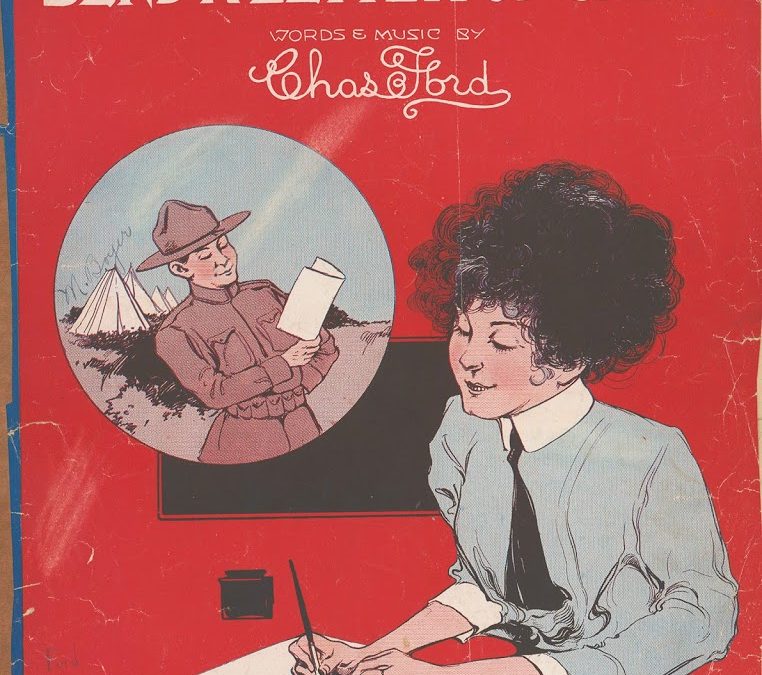
Latest Quarto: From the Front
The Winter-Spring 2019 Quarto is now available. The Quarto is a semi-annual magazine published by the William L. Clements Library and sent to the Clements Library Associates. Brian L. Dunnigan shares with readers that this will be his final issue working as longtime editor of The Quarto, as his retirement approaches later this year. Editorial duties will be assumed by Terese Austin, Head of Reader Services at the Clements. This issue of The Quarto focuses on correspondence between...

Recent Acquisition: A U.S. Government Official’s Description of a Mixed-Race Lead Actress on the Baltimore Stage, 1796
Research projects can begin in a variety of different ways. On one end of the spectrum, a query about some aspect of the past may prompt the scholar to seek out and identify relevant primary sources that help answer their question. On the opposite end, a scholar may discover source materials that lead them on an entirely new path of research, with new queries that they had not thought to ask before. That is, sometimes the questions draw researchers to primary sources and sometimes the primary...

Women’s Voices from the Starry Family Correspondence
As one of the Clements Library's Diversity, Equity, and Inclusion (DEI) interns, I was tasked with conserving and providing descriptions of manuscript collections that feature historically underrepresented perspectives and subject matter. The collections selected for the DEI projects were high priorities because of their need for conservation and for descriptive cataloging. As a result of the manuscripts' damaged states, many were unreadable and inaccessible to researchers, students, and...
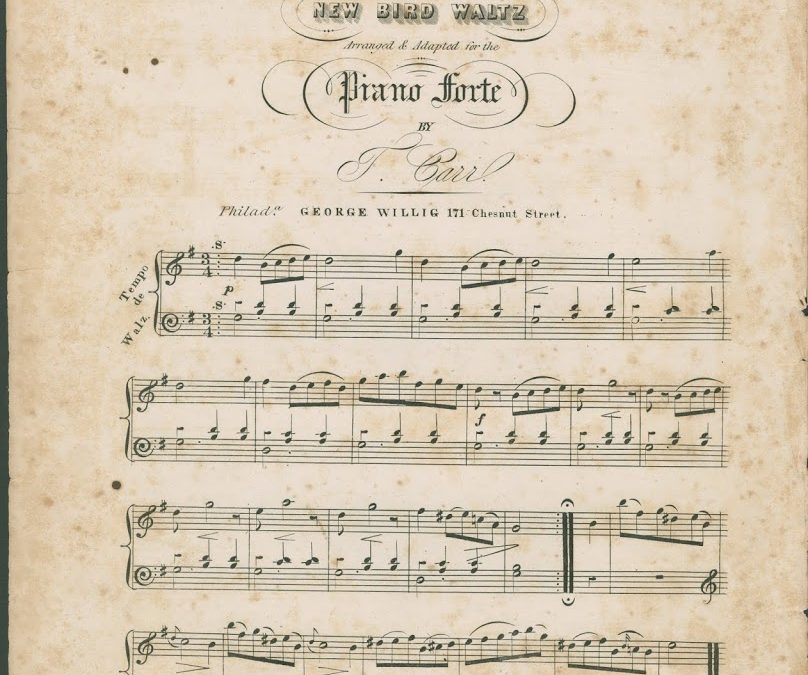
The First Published African-American Composer
Portrait courtesy of IMSLP.org The earliest published African-American composer in the United States is Francis “Frank” Johnson (1792-1844), whose international musical career first flourished in Philadelphia, the city of his birth. Johnson lived through the era of slavery and gradual emancipation in Pennsylvania. During this process, African Americans began to congregate and form societies, churches, and schools. This included religious and musical societies, which helped the Philadelphia...

The Most Beautifully-Bound Newspaper in the Library
Most of the 18th and 19th century American newspapers in the Clements Library collections have bindings that are functional rather than artistic. Many volumes have been rebound in 20th century olive green cloth and either green paper or plain gray boards. The older leather bindings are often much-repaired, showing evidence of their heavy use over the years. In some cases, layers of glue and tape are all that hold the spines together. While a number of our newspapers bindings include lovely...